Kelley B. Vlahos tells Scott about two of her recent American Conservative articles, one about the FBI’s investigation of antiwar.com on spurious grounds following the 9/11 attacks, and the other a review of the new book, Poisoner in Chief by Stephen Kinzer. The book tells stories about the American government’s experimental mind-control programs, secret programs to test drugs and other chemical and biological weapons on civilians, and general abuses of human rights in the name of...
9/13/19 Ryan McMaken on America’s ‘Underfunded’ Trillion-Dollar Military
Scott talks to Ryan McMaken about the true costs of America’s “national security” state, both in dollars and in secondary effects on the daily lives of Americans. Even though the official number is quite a bit lower, McMaken has estimated the true cost of the U.S. military and intelligence apparatus at close to a trillion dollars per year, since we should be factoring in things like Department of Energy funding that goes to nuclear weapons, medical costs for the VA, and the budgets of Homeland...
9/13/19 Dan McAdams on the Great Ron Paul
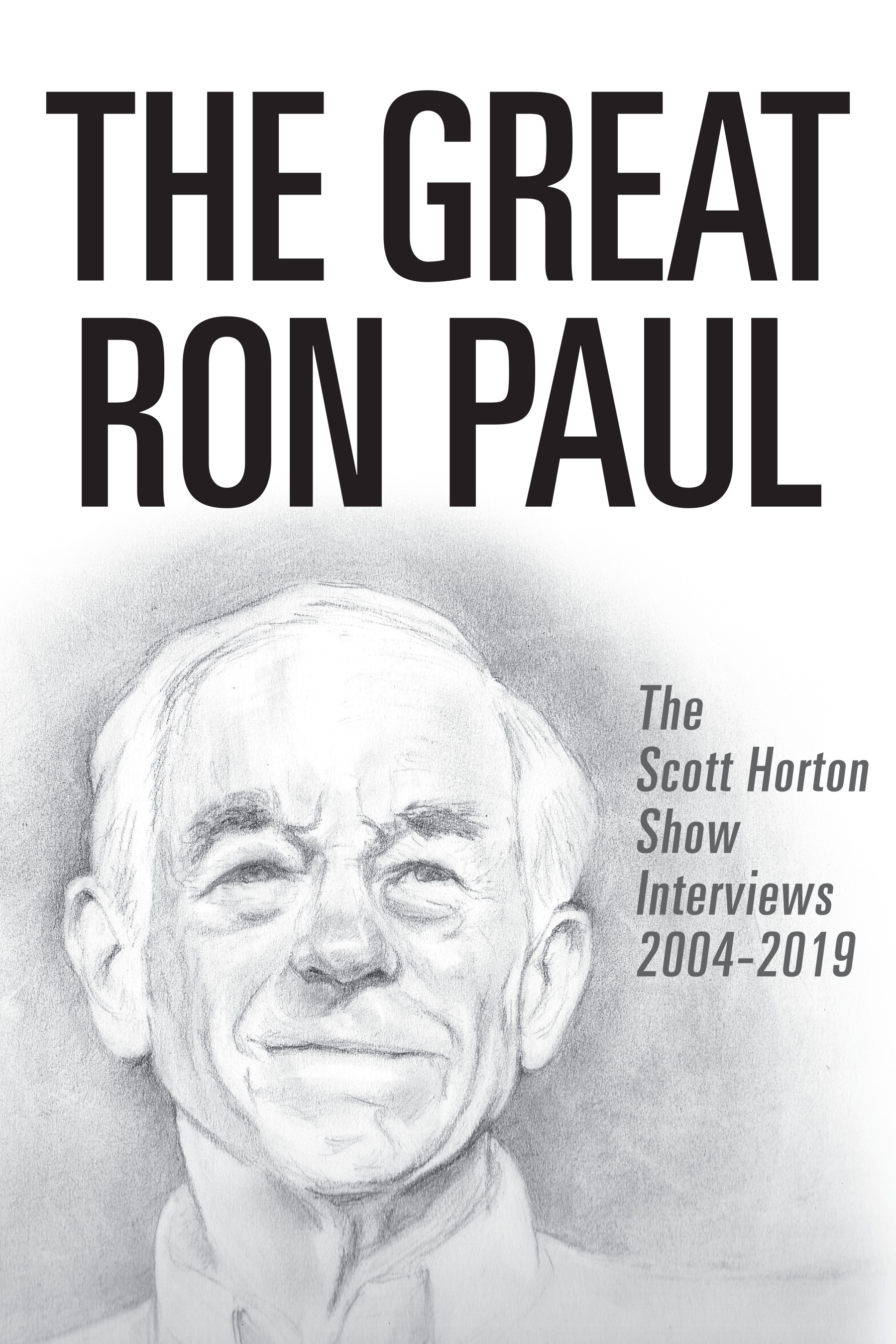
Scott and Dan McAdams rehash some of the heroic legacy of Ron Paul in light of Scott’s new book of his interview transcripts with Dr. Paul. As congressman, Paul had both an authentic charisma with his constituents, and a real passion for what he felt was his calling in Washington D.C. Both are rare in politics today. McAdams reminds us how much of Paul’s job in congress could be loathsome to him, and yet he persisted out of a drive to do what he felt was right. Without more figures like him in...
9/13/19 Daniel Davis on Bolton’s Departure and Negotiations with the Taliban
Daniel Davis is back, this time discussing his recent USA Today op-ed on John Bolton’s ouster as President Trump’s National Security Advisor. Bolton was a fierce war hawk who pushed Trump toward war on almost every front, explains Davis, often apparently contravening Trump’s own good instincts. Davis is hopeful that Bolton’s replacement will help get negotiations in Afghanistan back on track, but fears that Trump could appoint someone who’s almost as bad. Discussed on the show: “Bolton pushed...
9/9/19 Nasser Arrabyee on the Ongoing War in Yemen
Nasser Arrabyee is back with an update from Yemen, where civilian casualties resulting from the Saudi-led war there have climbed past 100,000, by even conservative estimates. This number doesn’t include any of the people who have died from malnutrition and easily preventable diseases, which surely includes tens if not hundreds of thousands more. Nasser Arrabyee is a Yemeni journalist based in Sana’a, Yemen. He is the owner and director of yemen-now.com. You can follow him on...
9/6/19 Dan Cohen on Mob Violence and Nativism in Hong Kong
Dan Cohen comes on the show for an update on the protests in Hong Kong. Though positioned as a popular pro-democracy movement, some of the protest leaders have alarming ties to American think tanks like the Foundation for Defense of Democracies, which may be trying to influence the movement in a direction that will benefit U.S. interests in the end. Cohen says the protesters certainly have good grounds for their outrage, but that we should be careful fully supporting a cause whose motives and...
9/6/19 Giorgio Cafiero on Israel’s Attacks on Iraq and the War in Yemen
Giorgio Cafiero comes back on the show to talk about how the utter disaster of America and its allies' policies in the Middle East for the last 20 years. It seems like at every turn America's wars—ostensibly undertaken to make the region free of terrorism and safe for democracy—have done nothing but strengthen our "enemies" and make the position of our allies more precarious. Unless U.S. war planners start to learn the lesson of blowback, says Cafiero, they are doomed to keep making the...
9/6/19 Melissa Etehad on the Real Toll of US Sanctions on Iran
Scott talks to Melissa Etehad about the effects of U.S. sanctions on ordinary Iranians. The “maximum pressure” campaign against Iran is meant to inflict suffering on the whole country in order to pressure its government into meeting America’s demands. Unfortunately, it is poor civilians who bear most of the brunt of these policies, and it’s not at all clear whether the pressure on the government actually works. At the moment, both the Trump administration and the government of Iran seem...
9/6/19 Matthew Hoh on a Possible Peace Deal in Afghanistan
Scott interviews Matthew Hoh about the apparent peace deal in the works between the United States and the Taliban in Afghanistan. The American side has announced such a deal as basically finalized, but as yet nothing has come from the Taliban to officially confirm that. The usual clamor has been coming from prominent neocons about how withdrawing now would be the same as admitting defeat. Scott and Hoh don’t totally disagree with that, but they know that if American troops stay in Afghanistan...
9/6/19 Sam Husseini on Katharine Gun’s Heroism and Joe Biden’s Villainy
Sam Husseini talks about the new film, "Official Secrets", which tells the story of Katharine Gun, a British intelligence analyst who leaked information about the false case for war in Iraq to the press in 2003. Scott and Husseini also talk about Joe Biden's record on opposing the war—at the time he was perfectly willing to go along with the war, but now he has to pretend he's been an opponent all along. Discussed on the show: "Film ‘Official Secrets’ is the Tip of a Mammoth Iceberg"...
9/6/19 Asa Winstanley on the Documentary the Israel Lobby Doesn’t Want You to See
Asa Winstanley reminds us about the incredibly important documentary, The Lobby USA, which was produced but then shut down by Al Jazeera, and finally released by Winstanley’s organization, The Electronic Intifada. The documentary exposes the unbelievable power and reach of Israeli lobbying in American politics through undercover reporting, meaning everything comes directly from the people involved. All four parts of the documentary are available on YouTube and at electronicintifada.net....
8/30/19 John Kiriakou on the Deep State’s Search for a ‘Russiagate’ Scalp
John Kiriakou fills in some of the details of the real story of Maria Butina, the alleged Russian spy who is said to have conspired with the 2016 Trump campaign. The problem with the official narrative, explains Kiriakou, is that Butina is not a spy at all and there’s no evidence for illegal activity, except for a Foreign Agents Registration form that she should have filled out but did not. For this relatively minor, first time offense, Butina is serving more than a year in prison and has had...
8/30/19 Danny Sjursen on the Hidden Cost of America’s Endless Wars and How Trump Could End Them
Danny Sjursen explains why staying in Afghanistan, even indefinitely, won’t make any difference in its eventual outcome. Right now the U.S. military is only enforcing the Kabul government’s grip on a small part of the country, and if they leave, either the Taliban will take over the country, or Kabul will hang on to an even smaller sliver. These are the two possible outcomes, says Sjursen, and it doesn’t make a difference if America withdraws today, next year, or in another twenty years. The...
8/30/19 Jim Bronke on Joe Biden’s Role in the Iraq War and the Media’s Refusal to Cover It
Scott interviews Jim Bronke about Joe Biden’s role, as chair of the Senate Foreign Relations Committee, in militating for the invasion of Iraq in 2002. He deliberately stacked hearings meant to examine the potential threat of Iraqi WMD with war hawks that he knew would support the conclusions he wanted them to. Today, most democratic politicians and voters don’t seem to care at all about Biden’s worst crimes, and instead like to focus on comparatively trivial issues like his stance on busing...
8/27/19 Gar Alperovitz: the Decision to Nuke Japan
Historian Gar Alperovitz shares the history of America’s use of the atomic bomb on Hiroshima and Nagasaki. Contrary to what most of us learned in school, many of the top military officers and intelligence officials were adamant at the time that use of the bombs was unnecessary to get the Japanese to surrender, which they expected to happen as soon as the Soviet Union invaded. The bombs were used instead as a political maneuver to intimidate the Russians, but which of course only led to the...