The great Ray McGovern talks about the real dangers behind the phony Russia collusion probe, namely the near-impossibility of detente with Russia thanks to the democrats’ insistence that any of President Trump’s inclinations in that direction must be based on his being a traitor to America. Scott and McGovern both think the premise is ridiculous, of course, but more importantly it increases the risks of a global nuclear war. McGovern says he would be perfectly fine impeaching Trump, but not...
8/2/19 Muhammad Sahimi on the Truth Behind Economic Sanctions
Scott interviews Muhammad Sahimi about President Trump’s new sanctions on Iran, which are even stricter than those imposed by President Obama, since they eliminate some of the previous waivers and cover even necessary goods like food and medicine because, even though not technically sanctioned, the financial institutions necessary to broker any kind of deal are not willing to operate in Iran for fear of legal action by the U.S. government. Sahimi likens these sanctions to those placed on Iraq...
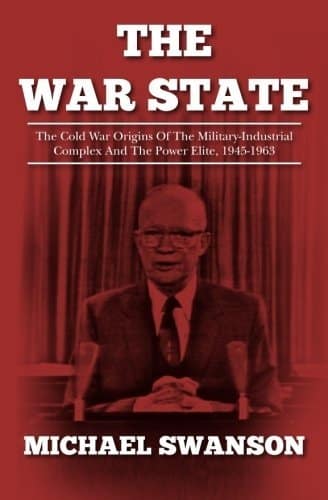
8/2/19 Mike Swanson on the Coming Financial Catastrophe
Mike Swanson discusses the recent announcement that the Federal Reserve will begin cutting interest rates again. Fed Chairman Jerome Powell has said this is a precautionary measure against a possible recession, of which there have been early signs over the last few months. The dangerous thing, says Swanson, is what happens if there is a recession even after this move—with rates already so close to zero percent, what more can the Fed do? Unfortunately it would probably mean huge inflationary...
7/30/19 David Stockman on the End of the Mueller Probe
David Stockman reminds us how flimsy the “Russiagate” case has been from the very beginning, and that we should really be focusing on how the investigation even got started in the first place. Stockman claims that President Trump’s idea that it would be better to cooperate with Russia rather than continue a new Cold War with them was intolerable to the ruling class, who want America to remain undisputed atop the world geopolitical hierarchy, which means policing the globe and flexing our...
7/30/19 Danny Sjursen on Trump Ending the War in Afghanistan
Danny Sjursen explains why President Trump could end the war in Afghanistan if he wanted to. When it comes to foreign policy, the president is basically a dictator, and Trump in particular is pugnacious enough to cover his right flank at all times, just like Nixon was able to meet with Mao in the 1970s. Negotiations with the Taliban have also continued without falling apart, which is a good sign for the possibility of ending the war on agreeable terms. By the same token, Hillary Clinton felt...
7/30/19 Tim Shorrock on the Democrats Attacking Trump from the Right
Tim Shorrock joins the show to discuss U.S. negotiations with Korea and the status of the relations between North and South. Lately soldiers from the North and South have begun patrolling together, one of several important symbolic gestures in the process of reconciliation between the two nations. Recently Donald Trump became the first president to visit the North, and Shorrock thinks his willingness to participate in negotiations, which previous presidents have not, has been hugely important....
7/30/19 Gareth Porter on John Bolton’s Role in the Iranian Tanker Crisis
Scott interviews Gareth Porter about John Bolton’s most recent efforts to raise tensions with Iran. He and Scott speculate about Iran’s ability to disrupt international trade in the region by shutting down the Strait of Hormuz, and the likelihood that they would do so given the risks of inciting more serious conflict as a result. Discussed on the show: “Did John Bolton Light the Fuse of the UK-Iranian Tanker Crisis?” (The American Conservative) “Britain Rejects Iran’s Offer to Swap Seized...
7/29/19 Dave DeCamp on This Generation’s WMD
Dave DeCamp discusses the latest in the Trump-Russia collusion conspiracy, which at this point has all but completely fallen apart. Democrats continue to cling to anything that will keep the narrative alive, and the mainstream media has fallen in line by putting out extremely misleading headlines. DeCamp explains one by one why the stories are incorrect. Discussed on the show: “MSM Coverage of Senate Intelligence Report Is Misleading” (Antiwar.com Original)”Senate Intelligence report:...
7/26/19 Hassan El-Tayyab on Congress’ Unusually Good Antiwar Efforts
Hassan El-Tayyab summarizes the efforts in congress to end America’s various wars in the Middle East, led mostly by democrats, but also with the support of some liberty-oriented republicans. Democrats have been accused of slashing the military because their proposed NDAA budget is smaller than the republicans’. But the critics leave out the fact that it too would mean an increase from last year, and is almost as large as the republican proposal. Scott theorizes that this multi-pronged campaign...
7/23/19 Pat Buchanan on America’s Endless Wars
Scott interviews Pat Buchanan about his life in politics and the lessons we can apply to today. Buchanan was a committed cold warrior during the 1980s, but then advocated withdrawal of the U.S. from Europe after the Soviet Union collapsed, and urged that NATO not expand up to Russia’s border. Much of his advice has been ignored, and the consequences have been America’s catastrophic and endless wars. Today, he is optimistic that we will not have a war with Iran, since he believes that President...
7/17/19 Lyle J. Goldstein on the Consequences of War with Russia
Scott interviews Lyle J. Goldstein about what the "Russiagate" narrative means for America's relationship with Russia. Scott and Goldstein remind us that a hot war would probably mean the destruction of both American and Russian cities with tactical nukes, and possibly the devastation of human civilization all over the world. For that reason it's incredibly irresponsible of the media to push the narrative that the Russian government attacked our country during the 2016 election, and that any...
7/17/19 Jason Ditz on Iran, Yemen, and Afghanistan
Jason Ditz updates Scott on the news from the Middle East. Recently, a missing Emirati tanker that some claimed had been seized by Iran in the Strait of Hormuz was revealed to have simply been towed there voluntarily for repairs. In other news, the UAE has announced the withdrawal of its troops from Yemen, probably realizing it can't win a ground war there, at least not without stretching itself too thinly and becoming exposed at home. Saudi Arabia, on the other hand, seems content to keep...
7/17/19 Daniel McAdams on America’s Dangerous Posture Toward Iran
Scott interviews Daniel McAdams about the influence of Mike Pompeo and John Bolton on President Trump’s foreign policy. Lately they’ve made sure to keep up a policy of maximum pressure through economic sanctions, and to avoid negotiations at all costs. It’s clear from their strategy that what they really want is a war. Trump’s good instincts on Iran may be the only thing that’s still keeping us at peace. Discussed on the show: “Rand Paul angles to become Trump’s emissary to Iran” (POLITICO)...
7/17/19 Mark Perry on the Year America Didn’t Go to War
Mark Perry talks about the history of America’s near misses on war with Iran, starting with the 1983 Beirut barracks attack that almost led to an American bombing campaign against the Iranians. According to Perry, President Reagan realized that such an attack would be both ineffective, and also beneath the “dignity” of the United States military. The point of a strong military, says Perry, is to not use it, except against major powers in extreme circumstances. The excessive use of our military...
7/15/19 Reese Erlich on What’s Really Going On in Hong Kong
Scott talks to Reese Erlich about the demonstrations in Hong Kong against the country’s proposed extradition law. After a Hong Kong man brutally murdered his girlfriend in Taiwan, and then fled back to Hong Kong, knowing he couldn’t be extradited to the country where he had committed his crime, lawmakers thought it might be time to enact new extradition treaties, of which Hong Kong has very few with any countries. Even though the proposed law is fairly moderate in what it allows, protestors...