Scott talks to Jacob Sullum about the allegations of widespread fraud in November’s presidential elections. Sullum concedes that errors in counting, illegal votes and deliberate obfuscation do sometimes happen in isolated situations—but maintains that the widespread conspiracy alleged by the Trump team would be basically impossible. Even in the handful of cases where Trump has won temporary legal victories, they simply don’t amount to anything close to what he would need to reverse the results...
11/18/20 Kevin Gosztola on the Profiteers and War Hawks of the Biden Transition Team
Kevin Gosztola discusses the abominable record of some of Joe Biden’s key transition team officials, people who are likely to become high-level members of Biden’s eventual cabinet. This list includes the usual war hawks and D.C. insiders, who are sure to return the country to the bipartisan foreign policy consensus of the last few decades, including increased sanctions on Iran and Russia, regime change in Venezuela and Syria, and increased troop levels in the Middle East and Eastern Europe....
11/14/20 Gareth Porter on Trump’s Foreign Policy Legacy
Gareth Porter is back for a retrospective on Trump’s foreign policy. Despite campaigning on a relatively non-interventionist platform, and indeed despite explicitly denouncing the policies of the Bush and Clinton families along the way, Trump has not been especially effective in delivering on his promises to bring American troops home from the forever-wars. Porter lays the blame for this failure primarily on the fact that Trump surrounded himself with terrible people who worked to actively...
11/13/20 Ray McGovern on the Revenge of an Outgoing Trump Administration
Ray McGovern discusses the recent personnel changes in the Trump administration and what they could mean for his final months in office. McGovern thinks that John Brennan and his allies are getting nervous that as a lame duck, Trump might decide to simply release documents that incriminate these deep-state officials for their roles in the “Russiagate” plot, and potentially even worse things. Brennan is trying to make it seem like Trump could be endangering national security with these...
11/13/20 Doug Bandow on the Lost Opportunities of the Trump Administration
Scott interviews Doug Bandow about the missed foreign policy opportunities of the Trump administration. Bandow laments that Trump didn’t push harder to get U.S. troops out of our wars in the Middle East, theorizing that he was worried the political cost in the eyes of wealthy donors like Sheldon Adelson would outweigh the benefits in terms of popularity with voters. Bandow hopes that Trump’s policy toward North Korea, at least, will be preserved in the next administration—a policy that...
11/13/20 Mike Maharrey: Saving the Republic by Abandoning the Empire
Scott talks to Mike Maharrey of the Tenth Amendment Center about the shameful state of U.S. foreign policy. In particular, Maharrey explains the way that congress has completely abdicated its role of declaring wars—instead, they have ceded that power fully to the president. Maharrey reminds us that all empires collapse eventually, and indeed that empire is often the final stage in a civilization’s existence. If we want to preserve our republic, he says, we must do so at the cost of abandoning...
11/13/20 Mark Perry: the Revenge of Colonel Douglas Macgregor
Pentagon reporter Mark Perry discusses the recent appointment of retired Colonel Douglas Macgregor to a senior advisory position under President Trump’s new secretary of defense. Perry calls Macgregor one of the greatest military minds in America; after a distinguished Army career that included one ofAmerica’s swiftest and most lopsided victories in the Persian Gulf War’s Battle of 73 Easting, Macgregor became a military historian and scholar. He continues to openly share his sometimes...
11/13/20 Grant Smith on the Israel Lobby’s ‘QME’ Scam
Grant Smith discusses the concept of “QME”, or “Qualitative Military Edge,” and how Israel and their lobby in the U.S. use it to get billions of dollars from the American taxpayers. Smith explains that during the Cold War, the doctrine of QME was used to keep the U.S. ahead of the Soviet Union and its allies—today, the same doctrine is being advocated by those who see Israel as a beacon of freedom and goodness amid a sea of enemies. And they use this concept to justify billions of dollars...
11/11/20 Danny Sjursen on the Profitable Post-Military Careers of his Afghanistan Commanders
Scott interviews Danny Sjursen about where his former commanders from Afghanistan have ended up in the years since the surge. Sjursen goes through a handful of these men: almost without fail, his former generals have ended up with profitable jobs in the arms industry or at hawkish think tanks, and his colonels have been promoted to take the place of those retired generals—and will surely join them in the private sector soon enough. The fact that none of this surprises us should be a reminder...
11/11/20 David Swanson: Leaving World War II Behind
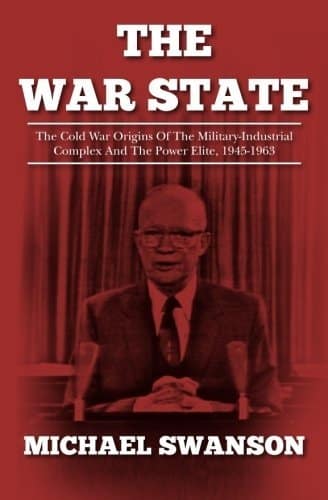
Scott interviews author and peace activist David Swanson in honor of Veterans’ Day, or Armistice Day, as it was originally known. Swanson begins by describing the way World War II has become the justification for just about every use of military force by the United States since then. This particular part of American history has made an impression on many people that war can be necessary and good, and that America can be the world’s police force. In a new book, Swanson tries to shift that...
11/6/20 Dave DeCamp on the Foreign Policy of a Biden Administration
With Joe Biden apparently poised to be America’s next president, Scott talks to Dave DeCamp about some possible foreign policy changes under the new administration. To begin with, DeCamp worries that Biden will use a recent uptick in violence as an excuse to keep American troops in Afghanistan indefinitely, basically the strategy he advocated as Vice President. On Israel, DeCamp says that Biden was known as one of the strongest zionists in Washington until Trump showed up, and so we can expect...
11/6/20 Jeff Deist on the Cancerous Growth of America’s Federal Government
Jeff Deist discusses the idea that the best path forward for America may be some kind of peaceful breakup. He reminds us that America has never truly been one country, the way that, for instance, many small European nations are—and indeed the United States was never really supposed to be a single unified monolith. With such a diversity of culture over such a huge geographical area, a federal government was meant to serve a very limited purpose while leaving most decisions up to the individual...
10/31/20 Nicolas Davies: Bolivia Repudiates Yet Another Western Coup Attempt
Nicolas Davies joins the show for an update on the situation in Bolivia, where President Evo Morales was forced to flee the country last year after allegations that his party fixed the elections to give him another term. Davies argues that the elections probably were fair after all, but at the time these allegations were enough to set in motion a military coup that saw the installation of an interim government more aligned with America’s interests. Interim President Jeanine Áñez twice delayed...
10/30/20 Matt Taibbi on Tech Censorship, Glenn Greenwald and the Hunter Biden Laptop Story
Matt Taibbi discusses the controversial new developments surrounding possible corruption in the Biden family. Taibbi takes us back to the original controversy of Biden’s supposed pressure on the Ukrainian government to dismiss prosecutor Viktor Shokin when Biden was Vice President. The mainstream press, says Taibbi, remains united in their view on this issue: the dismissal had nothing to do with Hunter Biden’s activities on the board of Ukrainian energy company Burisma, and anyone claiming...
10/30/20 Giorgio Cafiero on the Normalization of Israel-Sudan Relations
Scott talks to Giorgio Cafiero about the latest push for Sudan to join the group of countries officially normalizing ties with Israel. Cafiero thinks these official normalization deals are somewhat significant, but reminds us that none of the countries to sign such deals have actually been at war with Israel, and so the deals do not accomplish nearly as much as the Trump administration claims that they do. In Sudan in particular, Cafiero fears that a new deal with Isreal could jeopardize an...