
Q & A Shows
5/27/15 Full Show
by Scott | May 27, 2015 | 0 Comments
You are listening to the Scott Horton Show. 5/27/15 Full Show
5/26/15 Full Show
by Scott | May 26, 2015 | 0 Comments
You are listening to the Scott Horton Show. 5/26/15 Full Show
The Stress Blog
Today’s show: Jerome Slater, Gareth Porter 12-2 eastern
by Scott | Jun 23, 2015 | 0 Comments
Today's show: Jerome Slater, Gareth Porter 12-2 eastern time http://lrn.fm http://scotthorton.org/chat
Today’s show: Bad News 12-2 eastern
by Scott | Jun 22, 2015 | 0 Comments
Today's show: Bad News 12-2 eastern time http://lrn.fm http://scotthorton.org/chat
Recent Episodes of the Scott Horton Show
9/12/24 Connor Freeman on the Horror in Gaza and the West Bank
Scott brought Connor Freeman onto Antiwar Radio this week to talk about Gaza. Freeman runs through the latest developments in the ongoing slaughter of Palestinians that us Americans are forced to fund. They also discuss the recent Israeli moves in the West Bank.
Discussed on the show:
- “Nineteen Palestinians Reported Killed in Israeli Strikes on al-Mawasi Camp in Gaza” (Antiwar.com)
- “Ben Gvir Says He Wants To Build a Synagogue at al-Aqsa Mosque” (Antiwar.com)
- “Washington’s Reaction to IDF Killing of Aysenur Eygi is Disgraceful and Hypocritical” (Antiwar.com)
- “Two Girls Reported Killed in US Strike Near School in Yemen” (Antiwar.com)
- “Is Israel intentionally attacking aid workers?” (Responsible Statecraft)
- “On the Road to Annexation, Israel Is Turning the West Bank Into Gaza” (Haaretz)
Connor Freeman is the Assistant Editor of the Libertarian Institute, primarily covering foreign policy. He is a co-host on Conflicts of Interest. His writing has been featured in media outlets such as Antiwar.com and Counterpunch, as well as the Ron Paul Institute for Peace and Prosperity. You can follow him on Twitter @FreemansMind96
This episode of the Scott Horton Show is sponsored by: Roberts and Robers Brokerage Incorporated; Tom Woods’ Liberty Classroom; Libertas Bella; ExpandDesigns.com/Scott.
Get Scott’s interviews before anyone else! Subscribe to the Substack.
Shop Libertarian Institute merch or donate to the show through Patreon, PayPal or Bitcoin: 1DZBZNJrxUhQhEzgDh7k8JXHXRjY
6/19/20 Mike Maharrey: End Qualified Immunity for Cops
Mike Maharrey untangles the complex web of legal history that has given America the system known as qualified immunity, which in practice shields police officers from just about any civil lawsuit. The doctrine, which has emerged out of the precedents set by repeated federal court rulings, makes it almost impossible to sue state agents for constitutional violations or other damages suffered during the performance of their jobs. This is mainly because the courts have decided that unless there is specific precedent for the situation the officer finds himself in, discretion must be left up to the officer. In the prominent cases this has meant that if a cop shoots a civilian, as long as other cops say that the shooting was reasonable at the time, the officer will walk free. Maharrey calls for a system that doesn’t rely so much on strict interpretation of specific legal precedent, but instead can allow a judge and jury to use some common sense in adjudicating each situation, the way common law systems operated prior to the founding of the United States. However qualified immunity comes to an end, Scott and Maharrey agree that it is the most important first step in creating a more just police system.
Discussed on the show:
- “How Federal Courts Gave Us Qualified Immunity” (Tenth Amendment Center)
- Bivens v. Six Unknown Named Agents of Federal Bureau of Narcotics
- Cop Block
- “Rep. Justin Amash Wants To End Qualified Immunity. Where Are the Republicans?” (Reason)
- “Tamir Rice’s Basically Reasonable Murder” (Simple Justice)
Mike Maharrey is National Communications Coordinator for the Tenth Amendment Center. He is the author of three books on nullification and hosts the Thoughts from Maharrey Head podcast. Find him on Twitter @mmaharrey10th.
This episode of the Scott Horton Show is sponsored by: NoDev NoOps NoIT, by Hussein Badakhchani; The War State, by Mike Swanson; WallStreetWindow.com; Tom Woods’ Liberty Classroom; ExpandDesigns.com/Scott; Listen and Think Audio; TheBumperSticker.com; and LibertyStickers.com.
Donate to the show through Patreon, PayPal, or Bitcoin: 1KGye7S3pk7XXJT6TzrbFephGDbdhYznTa.
The following is an automatically generated transcript.
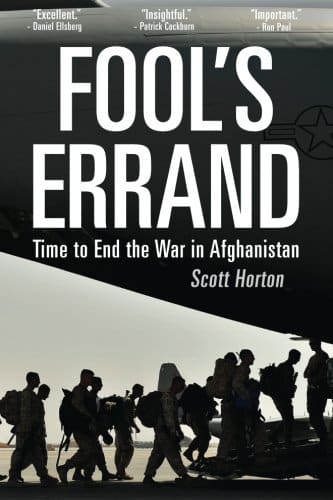
All right, y’all welcome it’s Scott Horton Show. I am the director of the Libertarian Institute editorial director of antiwar.com, author of the book Fool’s Errand: Time to End the War in Afghanistan. And I’ve recorded more than 5000 interviews going back to 2003, all of which are available at ScottHorton.org. You can also sign up to the podcast feed. The full archive is also available at youtube.com/ScottHortonShow. Alright you guys introducing the great Mike Maharrey from the 10th amendment center and also from the libertarian Institute where he writes sometimes, but this one’s at the 10th amendment center. And I think we reprinted it too anyway. But yeah, it’s called how federal courts gave us qualified immunity. Welcome back to the show my carry you
Mike Maharrey 0:59
Hey, Scott, I’m doing great. Always happy to be on with you.
Scott Horton 1:03
Great. I hate this subject, but it’s so interesting. But it really is right where the rubber meets the road. So make everyone understand everything there is to know that you know about this subject. Go.
Mike Maharrey 1:19
I’m gonna try to make it as simple as I can because
Scott Horton 1:22
no man make it complicated. I want to know everything, everything.
Mike Maharrey 1:26
Well, I don’t want people to get lost in it.
Scott Horton 1:28
Okay, start with a summary and then tell me everything.
Mike Maharrey 1:32
All right. Well, let’s let’s first off just in case some people don’t know what qualified immunity is that we probably ought to start there. Qualified immunity is a legal doctrine that basically shields cops from liabilities, when they take actions in the line of duty. So, you know, cop shoots your kid while he’s trying to kill your dog. You can’t sue the cop for shooting your kid because he was doing it in the line of duty and the crazy –
Scott Horton 1:57
criminal liability or just civil liability
Mike Maharrey 1:59
This is civil liability. So and really when you get down to violating the Constitution, and that’s really what you get down to, with these with these types of lawsuits, you know, it’s not criminal, it’s always civil. And that’s how you ended up with with this mess in the first place is that people had to sue in order to protect their quote unquote, constitutional rights. So let’s go back kind of to the, to the beginning, where all of this started really kind of started with the passage of the 14th Amendment, which ensured that every citizen is is protected based on their basic privileges and immunities, as they call them. And it was passed, in essence, to make sure that black people who had just been freed from slavery would have the ability to access all of the things in society that any other citizen could access. So, you know, things like being able to buy land or travel across state lines or access the court system. So that’s what the 14th The minimum was really intended to do in the 1870s, they passed this law was one of the Civil Rights acts. And it gave people the right to sue, or to sue a state agent under federal law in the federal courts. And so this was to really kind of put teeth into 14th amendment. So if some state agent somewhere, you know, denied your rights to transfer land or whatever, you could sue in federal court, and it makes sense when you think about it, you know, if it’s the, if it’s, you’re in a southern state, and there’s all these racist, black codes and all this stuff, they wanted to give people a remedy, a way out, in order to hold the government responsible, really no problem up to this point. There was always a presumption of immunity to some degree for a state agent doing their job. And think of it simply Imagine if you know you’re arrested on legitimate probable cause You eventually go to court, you’re proven innocent. You can’t sue the cop for arresting you falsely, you know, he’s trying to do his job. And there’s always there’s always nebulous situations and evidence, new evidence comes to light later. So it was always presumed. But in the early days, the way qualified immunity was handled is basically handled on a case by case basis, under what was known as common law. You know, so going way back to the 17 1800s back into the British court system, the judges would have some discretion in protecting state agents from doing their job. It wasn’t until the Supreme Court got involved in the 1970s that we really started to see this doctrine of qualified immunity grow up to what it is today where virtually every police officer in the entire United States is protected under this, this giant legal umbrella and essentially it allows them to Do whatever the hell they want to, without having to worry about any kind of recourse whatsoever. It started with this case called bivins. And you hear about people suing under bivins. And it was originally just applied to federal agents, it allowed people for the first time to sue federal agents for violating their rights. that’s it in a nutshell, that statute that I talked about under the Civil Rights Act passed in 1870, that only applied to state agents. So bivins was a court case, that kind of stablished this idea that you could sue a federal agent for violating your rights. Then there was this series of court cases that came after bivins that created this idea of qualified immunity. And as these court cases evolved, it got more and more difficult to actually hold a federal agent accountable. And what eventually happened the criteria today is that it has to be A willing violation of an established right that’s already established in law, which means it’s already established in the court system. Well, if it hasn’t happened yet, it can’t be established. So you have this vicious circle, it’s almost impossible to prove that they violated a, an established, right? Because there’s so many, you know, multiple situations that can happen. And a defense attorney can always say, well, that’s never happened before, how could he have known? And so that’s where we are today where we’re ultimately it’s almost impossible to to sue police officers to hold them accountable, to ensure that they are punished for doing things that are, you know, obvious violations of our rights. And all of this was created by the federal court system. Now, the incorporation doctrine which we talked about the last time I was on this show, kind of gets involved here too, because like I said, the ribbons case only apply applied to federal agents, but eventually the took that bivins criteria and through the incorporation doctrine, applied it to state and local agents as well. So you’ll very rarely if ever see a state agent sued a cop sued under that Civil Rights Act, that original statute, it’s always through the bivins cases, which are now just completely a product of the Supreme Court. So that’s that’s kind of the the nutshell of where we are today. The qualified immunity is not anything that’s written into law. It’s something that supreme court justices have created over time. And it’s a it’s a prime example of how government protects its own. You know, we always think, well, then the courts are going to protect our rights. So we’re going to sue in federal court and we’re gonna get our rights protect, it never works, because the federal courts are part of the federal government. They’re part of the government system. These are government employees. They may have, you know, law degrees, but they’re still just government employees. Their bread is buttered by the government. They’re not getting To protect your rights, they never protect your rights. And this is why we’re in a situation today, where you see cops getting away with these egregious horrible things. And nobody can do anything about it because they just plead qualified immunity. And since it has gone through this incorporation doctrine, you can’t sue in state court because it’s going to get bounced to the federal level, the any cop that sued is going to insist that it’s remanded to federal court where he has these protections. So you can’t even have a situation where, you know, maybe some states could do something and, and in qualified immunity, you can’t do it. It has to be done on the federal level, it ultimately is going to have to either be an overturning of the doctrine by the courts, or Congress is going to have to take action and actually pass a law to get rid of qualified immunity. So hold your breath through either one of those things happening but, you know, puts me in a weird situation. I almost always say don’t try to do things through the federal government, but really, Congress is the only the only people that can solve this because just last week, the Supreme Court rejected several cases where they could have actually gone back and rein this in a little bit. But they said, Now, we’re gonna let these stand in. The cases that they turned down are pretty egregious One of them was a police officer who shot a 10 year old kid in the back of the knee. The cop was trying to shoot the pet dog. I mean, this is this is like the this the, the mocking stereotype of cops, right, you know, shoot the dog. Well, you miss the dog and shot the kid. And the federal courts up through the appellate court have held that Yeah, the the COP is not liable for doing that because he has qualified immunity. He was doing it on the job and it doesn’t violate a quote unquote, established right. So the supreme court could have gone into that and, you know, maybe overturned that and reined in this qualified immunity but they said they didn’t want to do that. And then another one of the cases that was there was that a, a cop? Basically sicked his police dog on some poor soul who was already basically in custody live On the ground. And the The court said that the law did not, quote clearly establish that it was unlawful or unlawful for police to deploy a Khaimah canine against the suspect who has surrendered. So it’s not established in law, so therefore the cops can do it, and it can never be established in law because the courts will never hear it. And again, the Supreme Court in its infinite wisdom passed on reviewing this this case, and so, you know, qualified immunity stands. So that’s where we are we have a federal court system that’s supposed to be protecting our rights, and they’re allowing cops to walk all over our rights and and not doing anything about it. So that’s it in a nutshell. So
Scott Horton 10:45
well, you know, it’s interesting because on the dog issue, I mean, cops do have the authority under law to initiate confrontations with people and use force if they have probable cause to take someone into custody and all these kinds of things, but one that seem much more clear cut. I’m not saying it’s right or wrong on that. I’m just saying it is what it is. But the one that was more clear cut was the case where they just outright stole a quarter of a million dollars from these businessmen, and they just stole it. And the Court refused to hear that there’s not a law on the books that says, or there’s not a court precedent anywhere in America that they could cite where cops ever got in trouble for stealing. And so how could a cop know that it’s against the law to steal money?
Mike Maharrey 11:29
Right? Yeah, it’s absurd.
Scott Horton 11:32
And we’re not saying to buy themselves a fancy new police cruiser, but for their own personal they just put in their own accounts. Yeah. bought their wives gifts or whatever with it.
Mike Maharrey 11:42
I mean, even looking at some of the things like you know, like you said, yeah, of course police have the authority to utilize the canine to to, to subdue a suspect. We can grant that and we could debate you know, whether that’s that’s,
Scott Horton 11:57
hey, I was only conceding a kernel of truth to the Aside there just say, you know, at least they have some kind of argument. Whereas when it comes to just putting money in your pocket, there’s no argument for that.
Mike Maharrey 12:07
All right, let’s, let’s, let’s kind of flesh that out a little bit. Think about, you know, let’s think about this in this particular situation. You know, every situation has limits, right? I mean, you know, obviously, cops have the right to detain you, they don’t have the right to detain you under any circumstance. So you could say that the police have the right to utilize these dogs, but not under any circumstances. It seems to me that any person utilizing an ounce of common sense, is going to look at a situation where a police officer deploys a dog on a person who is already lying on the ground who has given up who is not running, not resisting who’s just laying there, that that’s not right, in in a sane judicial system, even in the system as it existed back, you know, say in 1870s, when they passed the Civil Rights Act, in this statute, that statutes number 1983 case anybody wants to look it up. But, you know, under that situation, the courts would have to look at that and make a determination of did he crossed the line? The world we live in now they don’t even look at it. They just say, Oh, well, he was doing his job qualified immunity. We’re not going to examine this. That’s the problem. There’s no discretion anymore. It’s just blanket Oh, the cop was just quote unquote, doing his job. Okay.
Scott Horton 13:23
Mike. So what do they call it, their criminal immunity that they have? Because it’s not just lawsuits. Don’t they cite the qualified immunity doctrine to say that they can’t be prosecuted unless in the most absolutely egregious circumstances?
Mike Maharrey 13:40
I don’t think that that that’s not so much like, like, qualified immunity civilly is a legal doctrine that is cemented into the the statutes. When you get into criminal liability, then it really comes down to the discretion of the prosecutors.
Scott Horton 13:58
So it’s just de facto qualified,
Mike Maharrey 14:00
I was getting ready to say it’s de facto because again, not only do the Supreme Court protect their own, but all government agents tend to protect the government. Think about the the prosecutors work with these cops on a daily basis. They’re not they don’t want to, they want to prosecute their buddies, you know, they hang out and have doughnuts together and stuff, you know, not to play on a stereotype but to play on a stereotype. And, and so yeah, you have a de facto situation. So what happens is you have prosecutors who are reluctant to bring a case. criminally, you have a population who by and large, still respects police officers, I think, you know, despite maybe that’s changing for the good, but, you know, generally in the population people defer to authority. So they think, Well, you know, what did the that’s the first question people ask when you talk about excessive force. Well, what did the guy do? Did he resist you know, so it’s hard to get a jury to prosecute a cop. So what happens is Prosecutors are reluctant to take the case to prosecute it unless there’s a lot of public pressure. I guarantee you that if it had not been videoed, the guy that stomped on George Floyd’s neck would never have been prosecuted, right? That’s just that’s just a given. Right? There’s video. So you know, that changes the equation. So what happens is the only reason not only that
Scott Horton 15:21
the video went viral, right, because there are a lot of times where there’s video and they still skate.
Mike Maharrey 15:27
Well, yeah, that’s true. And it’s interesting, because, you know, I’ve been telling people not to, not to side track with too much here, but I’ve been telling people for years I’ve been talking about police violence, I found an article that I wrote like in 2013, talking about excessive force. The case was actually in New York City, where this poor I think he was Chinese didn’t speak English very well. He’s 84 years old, got nabbed for jaywalking. So the cops are, you know, they’ve got them and they’re trying to write him a ticket for jaywalking. He doesn’t understand what they’re saying why they’re detaining him. He doesn’t speak English. He kind of decides he’s gonna walk away. So they throw them on the ground, they rough them up, they beat the hell out of them. And, you know, I’ve been talking about this for years and years. And people who follow police violence, you know, if you follow some of the the websites cop block different websites, you can find these examples almost every single day. So you right, you have to have this huge upswell of public pressure in order for prosecutors to to take action. So what happens is people think, Okay, well, one remedy I have, I can sue in federal court, and because he violated my rights, and then that’s now blocked, because we have this doctrine of qualified immunity. This has to change this is when you talk about police reforms. This is this should be the number one top of the list is to is to roll this back, because it makes it impossible to hold people accountable. And the basic premise of the justice system is that every individual should be accountable. And just because, you know, I work for Government agency doesn’t let me skate but in the world we live in working for a government agency every single time. Let’s escape. It’s pretty disgusting.
Scott Horton 17:09
[ADS]
Yeah, I was just reading thing this morning. It must have been a reason I guess about how a mosh has a bill to abolish qualified immunity, and the democrats in the house, are wrapping it up in a big bill with a bunch of things that will never pass, right as a poison pill essentially. And then they’re up against john Cornyn and the Republicans in the Senate who’ve already vowed to kill it. And corns excuse is that? Oh, yeah, right. Then From now on, everyone who’s ever arrested, gets to sue the cops who arrested them and put them through all this hell, which as you were explaining, was never the case. before the Supreme Court instituted this, judges love to throw out a lawsuit against a cop on a summary judgment without even glancing at it. It’s set in the most egregious cases anyway. Right.
Mike Maharrey 19:46
Right. And you know, as with a lot of things, the market kind of handles some of that stuff anyway, if you’re an attorney, you’re not going to take some frivolous case and in and try to prosecute, prosecute a cop. You’re not gonna do You’re not going to risk your reputation. You know? And, you know, yeah, you’re gonna get flipped frivolous lawsuits. What would you rather have a few frivolous lawsuits or a situation where, you know, a guy can shoot a kid because he’s trying to shoot the kids dog. And there’s no remedy for that. I mean, I’ll take I’ll take the frivolous lawsuit side of that thing every single time.
Scott Horton 20:22
All right now, here’s my problem. I tried and failed to get Scott H. Greenfield to be a guest on the show. He has a rule. I don’t do interviews, growth, growth growth, he said, and so that was it. But everyone should follow him on twitter at Scott Greenfield on Twitter, and he’s a civil rights lawyer guy. And his blog is called Simple justice, a criminal defense blog. And I tell everybody to read this thing. And I don’t know Mike, because I tell everybody I don’t remember if that includes you. In the past, I tell everyone to read this piece. Tamir Rice’s basically reasonable murder. And this is about of course, this story of the 12 year old boy Who was playing with a toy gun at the park and the cops pulled up and the guy in the passenger seat just jumped out and blew the kid away without a moment’s notice. And they had an independent investigation. And as Greenfield says here, the conclusion was foregone. The murder was reasonable. And then what’s great about this piece, and I’m not sure if you’re familiar with this, and and, you know, I should have gone to law school, but I never did. Okay, I don’t know about this stuff. But um, he kind of takes us through layers of different qualified immunity decisions here. So it’s not just that, well, there’s no explicit precedent for this exact crime. So how was he to know which is part of it? But it’s also that whatever they do, the only kind of question, well, I guess the way to put it would be, whatever the exactly as the wording, the law in your state is, if you kill me, then you have to prove essentially the burden is on You to show that you absolutely had to do it, you had no choice but to but to commit a justifiable homicide. But for them, the only question is whether it was reasonable. And then reasonable, as he writes, and this is, you know, four or five different decisions on down the line kind of anything. reasonable, it turns out can only be defined by other cops because only they know what cops know. And all other cops know is that whenever a cop kills somebody, of course he had to. And so they’re the only ones who can decide it’s not up to the jury to decide what’s reasonable. It’s only up to, you know, the cops, lawyers, experts to say, Oh, yeah, I would have taken the shot to and then you have to go with it like you’re bound by that if they have a witness who will say that, then you have to defer to that perspective of what was reasonable or not rather than your own and all of this kind of thing, and I’m not exactly Fisher, this is the exact same qualified immunity doctrine or this is all parallel, you know, decisions that go along to passing out and essentially licenses to kill to these cops.
Mike Maharrey 23:13
Yeah. Yeah, actually, ironically, I just read that article. Maybe when I was researching researching for the article that I wrote, thank goodness within the last so you
Scott Horton 23:24
can comment on what I just brought up out of the blue then. Thank goodness.
Mike Maharrey 23:29
Yeah, absolutely. So you know, there’s a couple of things that you can that you can pull out of that. And the first thing is that it is such a twisted web of court decisions and I didn’t go to law school either, like working for the 10th amendment center for the last 10 years. I’ve spent a lot of time reading bills I’ve written some model language for legislation so I’m, I’m pretty fluent in legalese, probably like somebody who who is not a native speaker, but lived in another country for a few years. So, you know, I kind of get it. But you have to be a lawyer to really untangle the entire web of things. And, you know, I went through about five or six Supreme Court cases in my article, but he goes through a bunch more. And there’s even more than that. I mean, you, you get into appellate court cases, and it’s this huge, tangled web. And, to me, I think one of the things that it shows a weakness in the legal system as it has evolved over the last hundred years or so. And, you know, it’s kind of evolved along with the whole idea of statute law, that we have to interpret law in the way that some legislator somewhere has written it. So we have statutes now, as opposed to what we used to have, you know, prior to the founding of the United States where law was primarily what was known as common law. And I think a common law system is a much better system than this kind statutory and judicial precedent law that we have today, in a common law case, a judge and jury is going to look at every individual case. And they’re going to rule based on the situation that’s in front of them. And they’ll apply past rulings and past, you know, precedents and whatnot, but they’re not necessarily bound to it. It’s more of a common sense system if that if that’s a good word to use, where you look at it, and it’s it’s the reasonableness in the mind of the juror, as opposed to what we have today where everything has to defer to the court case, we have to defer to Well, this judge said X, Y and Z at this point. So we have to go with what this judge said and the jury doesn’t have any discretion. It’s it’s a horrible system that first off it’s impossible to really untangle it and understand it unless you’re an attorney and second off it pulls common sense out of the equation, it all comes down to how do you interpret these words that are written on paper somewhere? And so you end up in a situation where like you said, the the cop has to decide what is reasonable, because that’s what the precedent says in the in the legal system, and there’s no room for the jury to look at it and go, Wait a minute, maybe gunning down a kid with a toy gun isn’t reasonable, which obviously it’s not. And I think I got it.
Scott Horton 26:30
So that’s where, see I just had the two and the two, but I wouldn’t equal in four here. It’s this is why the clearly established doctrine is there is because otherwise, it’s left up to the cop to decide. And in that case, anything he decides is reasonable. And so the only exception then, would be if there’s a specific ruling that said that the exact same scenario was illegal, which is He said, we’ll never be established because it’s never been established. So it can’t be established.
Mike Maharrey 27:04
Exactly. So you end up with this this weird legal I got Whirlpool that you can never got out yet get out of it’s perfect. And and then the second thing that I think is important to understand about the US legal system is that judges and lawyers put so much weight on precedent, that once something is established in jurisprudence, it’s almost impossible to get rid of it no matter how awful and bad that it is. So this is a prime example of what we’re talking about with the Supreme Court rejecting hearing these other cases because they don’t want to have to go back and say that the court was wrong. They don’t like to undo things that are already done. So when you see an awful court ruling come down from the Supreme Court, you’re almost always stuck with it forever. They might try to finagle out of it someday using a different road. But they’ll never go back and say, Oh, we were About that just doesn’t happen, because precedent is almost set to the level of, you know, Holy Writ handed down on stone tablets from on high. And, again, it’s a horrible system because in a sane world, a court would go back and say, you know, that ruling back there in 1967 was stupid. And Ill, Ill thought, and we shouldn’t have this. So we’re going to overturn it almost never happens. They’re going to defer to the wisdom of the prior courts. And I’ll give you a perfect example. Dred Scott awful decision, effectively said that, that black people, even if they weren’t, even if they were free, black people couldn’t be citizens of the United States because they weren’t part of the compact. Dred Scott stood for ever until the 14th amendment came along and actually changed the Constitution. There was no court that ever overturned Dred Scott. They had to actually amend the constitution to ensure that black people actually had citizenship. Yeah, courts don’t like to own Return precedent. That’s why even today, you know, the Supreme Court has said that it’s perfectly constitutional to locked up Japanese Americans in an internment camp. Because we think they’re a quote unquote security threat or, you know, a threat to national defense or national security. That’s still in effect, there’s no turn that they’re not going to because they don’t like to admit that they made a mistake.
Scott Horton 29:22
Yeah. I’m so sorry that we’re out of time, because I could talk with you for the rest of the afternoon. But I sure appreciate you coming on to address this important subject with us here, Mike.
Mike Maharrey 29:32
Yeah, I appreciate having me. I hope people check out the article because it lays out the court cases, and you can kind of get a better you know, how this came about.
Scott Horton 29:40
I’ll be another minute late for my next guy. Um, it’s important to read because this came up earlier in the show about how this is really a matter of keeping your eye on the ball. And we have this huge cultural shift toward police reform right now what’s it going to look like? And there are a lot of takes Some of them pretty wild. Meanwhile, there are some very clear and narrow things that could be changed that would make a world of difference such as overturning qualified immunity, legalizing cocaine and heroin and methamphetamine and getting rid of, you know, a few other things that really are like flipping switches and changing everything. abolishing the 1033 program and the Department of Homeland Security melts, you know, some of these things. So that’s really the point of me doing this great interview with you who wrote this great article is to show that this is where the rubber really meets the road here. This is the license to kill. Is this a fight immunity?
Mike Maharrey 30:42
I’ll say something here that you’ll very rarely hear me say. But, uh, Matias bill needs to be supported because this is something that has to be done at the congressional level. Normally, I’ve tried to find state solutions. You can’t fix this at the state level because everything gets bounced to federal court. So you know, if you’re inclined To call your congressman which I never had been, this would be a good reason to do it because this needs to go through this needs to be passed.
Scott Horton 31:07
Okay, great. Thank you again so much. My appreciate it. Thank you, buddy, everybody. That is the great Mike meharry. He is at the 10th amendment center. That’s 10thamendmentcenter.com. This one is called how federal courts and gave us qualified immunity a great one. The Scott Horton show anti war radio can be heard on kpfk 90.7 FM in LA, APSradio.com antiwar.com ScottHorton.org and libertarianinstitute.org
Podcast: Play in new window | Download
6/19/20 Jacob Sullum on the Inescapable Reality of Racially Skewed Policing
Scott talks to Jacob Sullum about the many ways policing in America disproportionately targets black and hispanic communities, both by means of explicitly racist policies, and also those that have racially skewed impacts without necessarily having been conceived that way in the first place. Sullum cites many examples of the disparate treatment of black and brown people that are difficult to dismiss with explanations based on differential crime rates or heavier police presences in certain neighborhoods. He also reviews some of the history of the war on drugs, a policy that has, perhaps above all others, been responsible for the cruel victimization of American minority communities for decades.
Discussed on the show:
- “Racially skewed policing is not a statistical mirage” (Chicago Sun-Times)
- “The Wire (TV Series 2002–2008)” (IMDb)
Jacob Sullum is a senior editor at Reason and a nationally syndicated columnist. Follow him on Twitter @jacobsullum.
This episode of the Scott Horton Show is sponsored by: NoDev NoOps NoIT, by Hussein Badakhchani; The War State, by Mike Swanson; WallStreetWindow.com; Tom Woods’ Liberty Classroom; ExpandDesigns.com/Scott; Listen and Think Audio; TheBumperSticker.com; and LibertyStickers.com.
Donate to the show through Patreon, PayPal, or Bitcoin: 1KGye7S3pk7XXJT6TzrbFephGDbdhYznTa.
The following is an automatically generated transcript.
All right, y’all welcome it’s Scott Horton Show. I am the director of the Libertarian Institute editorial director of antiwar.com, author of the book Fool’s Errand: Time to End the War in Afghanistan. And I’ve recorded more than 5000 interviews going back to 2003, all of which are available at ScottHorton.org. You can also sign up to the podcast feed. The full archive is also available at youtube.com/ScottHortonShow. Alright you guys introducing Jacob solem, senior editor at Reason magazine and writer of great stuff all the time, too much for us to fit. In today’s show. Unfortunately, I have a hard stop in quarter of an hour here. But I want to start at least with this really important racially skewed policing is not a statistical mirage. And this goes to a very important debate about systemic racism in America in American policing. And what that even means exactly and who may or may not actually be collectively guilty of it, and all kinds of stuff. So welcome the show. Thank you for joining us, Jacob. How are you?
Jacob Sullum 1:26
All right, how are you?
Scott Horton 1:27
I’m really good. appreciate you joining us here. So well, do like you do in the piece here. Take us through some of the statistics. Help us understand the landscape and then tell us what it all means you think.
Jacob Sullum 1:41
Okay. Well, I mean, there are very clear racial disparities in law enforcement. I think a lot of conservatives and republicans want to say that you have to look at crime rates. Perhaps you have to look at I don’t know how to say this without sounding racist. You have to look at how black people react when they have encounters with police versus how white and black. I’ve heard that as well. But I think that if you look at the data, these are not adequate explanations very clearly. And I’ll just give you a few examples. When people do have encounters with police, according to a national survey that’s sponsored by the Bureau of Justice Statistics. Black people are much more likely about two and a half times as likely to report that the police officers use or threatened to use force. That’s hard to explain by reference to differential crime rates. When you look at drivers who are stopped by the police for routine traffic violations. One study after another all across the country has found that blacks Drivers are much more likely to be searched than white drivers. And when they’re search, the searches are much less likely or less likely, in any case, to turn up contraband. So that suggests that the amount of evidence that’s required to search black people is less than the amount of evidence that’s required to serve wipers. I don’t see any any good explanation of that other than racial bias either, you know, conscious bias bias or, or unconscious bias. It has to do with which drivers sample at least some police officers doesn’t have to be every police officer deemed suspicious, right? What makes you think this guy might be carrying drugs? And of course you have lots of anecdotal reports. This is less systematic but still very striking. If you talk to any black man in America, it’s likely that he has more than a few stories to tell about being pulled over by blue I’ll just give you a couple of examples that are striking because they come from sources. On the right. You’ve got Tim Scott, who’s the only republican senator who is black. And a few years ago, he gave a speech where he talked about his experience with police stops. And he said he’s been stopped seven times in a single year. Typically, for no clear reason, and he suspected it was because he was driving a nice car in the wrong neighborhood. He’s even been hassled by police on Capitol Hill, who challenged him, you know, asking what what was he doing there even though he has a pin that identifies him as a senator. Now, seven times I don’t know about your experience with cops and seven times in a single year. That’s a lot of traffic stops. You have a similar story from theater Johnson, who wrote a piece for National Review recently. Who said that between his 16th birthday when he retired from the military, which is a 20 year career in the military even stopped about 40 times by police. Now, in my entire life, I’ve been stopped fewer than 10 times I would say, certainly not more than 10 times. So that’s a lot of traffic stops. Now this is anecdotal, obviously. But but but the more people you talk to you more, the more you realize how common experiences. So that doesn’t mean every cop is a bigot. It doesn’t mean that American society is systematically racist. But it does mean that there is a problem here that goes beyond just a few bad apples, which is how the president puts it. It’s not just a matter of a few bad cops who are prone to abuse, but it looks like a substantial portion are driven by bias and some of the decisions they make. There’s also this issue of race neutral policies or policies that have nothing to do with race, but have striking disproportionate impacts on black people. So one example is enforcement of marijuana laws where black people are nearly four times as likely to be arrested for marijuana possession as white people, even though they’re only slightly more likely to be marijuana users. Now, does that mean that they’re being systematically targeted because they’re black people probably not probably has to do with where police are putting the resources. If they’re focusing on high crime, low income neighborhoods, then you’re going to expect a disproportionate number of black people to be arrested for marijuana possession just on that basis. That might also be the case that people with smaller homes are more likely to smoke pot outside in which case they’re more likely to be caught by the police. Right? But that sort of thing is very troubling, I think, even if you don’t believe that it is actually motivated by racial bias. Now, I mean, marijuana prohibition in historically was very clearly motivated by racial bias, but we don’t have to believe that Police nowadays continue to act based on that bias. to note the fact that you have these great troubling disparities.
Scott Horton 7:07
So I think a lot of this goes to the definition of systemic and what exactly it all means here it sort of Well, I think it means a lot of different things to a lot of different people. It seems like one definition could be that if I Dream of Jeannie made every cop black, that the issues would still exist, because they’re built into the system itself rather than even necessarily the attitudes. Have any particular cops, although, obviously that does come into play.
Jacob Sullum 9:04
Yeah, I guess I’m leery of that term systemic racism. Okay. It’s not clear what it means it’s ambiguous. I think it is definitely true that we have a bunch of policies that lead to these outcomes. Those policies are not necessarily motivated by racial bias at all. But just to give you a few examples, police have vast discretion to stop drivers. The Supreme Court has said anytime a police officer thinks someone has committed a traffic offense, no matter how trivial, they have the authority to pull somebody over, even if their motivation is to investigate other matters. Right. So if I think this guy seems suspicious, I think he might be carrying drugs or maybe some seasonable cash. I just noticed that there’s something tail light or he didn’t properly signal a lane change or whatever, you know, basically complete Police can stop you at will, given how many different rules there are about maintenance and operation of cars. So that so the Supreme Court has said they can do that, even if their real intent is to see maybe this guy is carrying drugs or maybe he has some cash vacancies. So, if you create a situation like that, then even if not that many cops are racially biased, whatever cops are racially bias haven’t now have an opportunity to exercise that bias. And what that means is that black people are going to be searched more often on average, and they may may be victimized more often by not just please going through the cars but perhaps seizing whatever cash they have on hand because larger amounts of cash and considered inherently suspicious. And once the cash is seized, you know this has to do with civil asset forfeiture. Once the point for cash is seized a police it’s very complicated and expensive to try to get it. back. So especially if it’s a relatively modest amount of money, people are inclined to just give up, especially if they don’t have other savings that they can use to pay lawyers fees. Right. So that’s a real problem. And that’s not to say, oh, when they created civil civil asset forfeiture, they really wanted to stick it to black people. I don’t think that’s true. But it’s just a consequence of that policy. And you have similar issues when it comes to pedestrian stops. And the Supreme Court has said, police can stop a pedestrian if they have reasonable suspicion that he that he’s engaged in criminal activity, and then they can pack down that person if they if they have reasonable suspicion that he is armed, you know, to protect themselves. So those are the rules, but those rules are routinely flouted in stop and frisk programs across the country, especially if you look at New York City. You see that in nine out of 10 cases, people are being stopped, supposedly based on reasonable suspicion. There’s no arrest. There’s no citation. Even more striking when the people are searched extensively for weapons, right? They first of all, almost never find guns. And that’s that was the main justification for Neeraj Bergen was to get guns off the street, and then they rarely find any other kind of weapons. So that tells you that police very often are making stops and doing pat downs that are not consistent with the Fourth Amendment as the Supreme Court has interpreted it. That’s a very broad problem. And it is not a racial problem, per se, but it has racially disproportionate consequences.
Scott Horton 12:33
Right. You know, I’m thinking of, it’s a common touchstone for these sorts of issues is the TV show the wire, where the cops, one of the lessons from there is the cops refer to all these people who live in the government projects. They’re all shit birds, and everybody else is a taxpayer, where taxpayer is a human being actually worthy of, you know, possibly protection. You know, if they don’t get there had been in but everybody else who’s not a taxpayer they’re, you know, essentially dehumanized and and treated so much worse. And it’s obviously as you’re saying here, it’s not directly related to race, but boy, is it indirectly related to race, right? And that and then the only thing that counts only thing that can protect you is juice. That’s what they call it. If you know somebody who knows somebody with a little political power, and to me, I always thought that this was the most obvious thing that if cops go picking on a random white guy, there’s like a one in 20 chance that his uncle’s a judge or something like that, and it might cost them their ass, but if they go picking on a random black guy, there’s much less chance that he knows somebody who knows somebody or is going to have a lawyer who golf’s with the judge or is going to be able to get out of it in a way or or even. You know, it makes it much less likely that’s gonna blow Back on them, they’re actually gonna get in trouble for enforcing an unjust login somebody like could happen if they go to the nice side of town.
Jacob Sullum 14:08
Yeah, I mean, look, it’s impossible to imagine something like stop and frisk happening in a white affluent neighborhood. Now the police will say we’re going where the crime is right. And that tends to be a poor poorer neighborhoods, which tend to be disproportionately black and Hispanic. And that’s why we that’s why you see these numbers. It’s not because we’re racist, which is fair enough. But the reality of it is that that middle class white people do not have to be worried about being hassled by police for no good reason. Whereas black people do, so that he can say, Well, our motives are pure, which may be true, but the result is not equal treatment under law. for sure.
Scott Horton 14:51
Yeah, and the important point here, I think, well, there’s a lot of different ones, but one of them is that you know what, even if this is not all directly about Race. It sure is understandable why it sure does seem like it to black people. When when did it stop being about race, it was always about race going back all into history. And so now it maybe, obviously is less worse than it was. But it’s not like they were ever free and everything was fine. And now, things are slipping back for some different reason. You know, certainly from their point of view, it makes sense. Also, I think that they would imagine that the average white guy has any kind of political power, certainly, they would probably assume that we would have more power than they do. And so they feel like forsaken that it’s not just the cops. It’s the 65% white population of the country, because they’re not going through it. Don’t give a damn what happens to them if they’re stopped and frisked and thrown up against the wall or their son. You know, and so no wonder they are so upset. I would be too.
Jacob Sullum 16:07
And and if you look at the history of the war on drugs, it was explicitly racist when it started out openly and explicitly racist in terms of which drugs were targeted. They were the drugs used, not our drugs, the drugs, the those people use, right. So Mexicans, blacks, Chinese immigrants, those were the drugs that were targeted. Does that doesn’t mean that that sincere drug warriors nowadays are racist, but you still see these racially disproportionate impacts. And what one really telling example, I think, is the legal distinction under federal law between the smoked and snorted forms of cocaine where even today I mean this the disparity has been reduced, but it still exists. crack cocaine offenses are punished more severely powder cocaine defenses. Now that distinction was supported at the time was established by black politicians. They said, you know, the crack is devastating our neighbors, we need to do something about this. So they supported these heavy penalties. But it turned out what that meant is that federal crack defendants who were overwhelmingly black, we’re getting more severe sentences than powder cocaine offenders who are much more likely to be white or Hispanic. First, actually the same crime. In other words involving the same amount of the active ingredient, right? Same drug, just different forms of it.
Scott Horton 17:37
I’m sorry, we were so out of time here. I’m over. I gotta go. I just got to add to and I know, you know, to the SWAT rates. I mean, imagine the trauma of having a Delta Force type, you know, paramilitary night rate at 4am. How your children would feel if that happened at your house, and it does happen on the poor and the darker side of town in a way That local news doesn’t cover most of the time and even when they don’t shoot somebody kid or dog still going through that is just it’s far more than than this society should tolerate anyone having to put up with it’s just crazy but I’m sorry I gotta go but thank you so much and I’m so sorry I didn’t get to all these other great things that you wrote that I wanted to ask you about but everybody go read Jacobs solemn at reason. calm. Thank you again.
Jacob Sullum 18:25
You’re Welcome.
Scott Horton 18:28
The Scott Horton show anti war radio can be heard on kpfk 90.7 FM in LA, APSradio.com antiwar.com ScottHorton.org and libertarianinstitute.org
Podcast: Play in new window | Download
6/19/20 Jeff Abramson on America’s Bloody Arms Industry
Scott interviews Jeff Abramson about America’s convoluted process for selling weapons to foreign governments. The arms trade is a multi-billion dollar industry for private firms like Raytheon—but it’s also a process that is highly controlled by the U.S. government, muddying the incentives and leading to a public-private partnership with very little accountability and unfailingly terrible results. Abramson describes the circular way in which weapons companies and various branches of government push both their own selfish interests and what they believe to be in the country’s interest, to create a self-perpetuating system that no one can quite take the blame for. The result, tragically, is nothing but money in the pockets of the arms manufacturers and more dead civilians abroad.
Discussed on the show:
- “Leahy Law Fact Sheet” (United States Department of State)
- “U.S. to Allow Expanded Landmine Use” (Arms Control Association)
Jeff Abramson is a senior fellow for conventional arms control and transfers at the Arms Control Association. Follow him on Twitter @jeffabramson.
This episode of the Scott Horton Show is sponsored by: NoDev NoOps NoIT, by Hussein Badakhchani; The War State, by Mike Swanson; WallStreetWindow.com; Tom Woods’ Liberty Classroom; ExpandDesigns.com/Scott; Listen and Think Audio; TheBumperSticker.com; and LibertyStickers.com.
Donate to the show through Patreon, PayPal, or Bitcoin: 1KGye7S3pk7XXJT6TzrbFephGDbdhYznTa.
The following is an automatically generated transcript.
All right, y’all welcome it’s Scott Horton Show. I am the director of the Libertarian Institute editorial director of antiwar.com, author of the book Fool’s Errand: Time to End the War in Afghanistan. And I’ve recorded more than 5000 interviews going back to 2003, all of which are available at ScottHorton.org. You can also sign up to the podcast feed. The full archive is also available at youtube.com/ScottHortonShow. Okay guys, introducing Jeff Abramson. He is Senior Fellow for conventional arms control and transfers at the Arms Control Association. That’s arms control.org. Welcome to the show. How’s it going?
Jeff Abramson 0:54
Going? Well, thanks for having me on.
Scott Horton 0:56
Great. Really happy to have you here. And typically We’re not talking about banning small arms in, you know, Second Amendment stuff. We’re talking about International Military arms transfers here. And in fact, unlike usual, we’re not basing this interview off a specific article that you’ve written so much as a question that came up in the Reddit room, which was, hey, Scott, could you get a good expert on to explain really the nuts and bolts so I can imagine how it works about how these massive military arms transfers are arranged. It’s clearly nothing free market about it. It’s all state licenses and different agencies and politics and congressional leaders involved and who knows what kind of lobbying and favoritism and all kinds of mechanics. So, hey, Scott, find somebody who can really teach us the mechanics. And so I asked bill Hartung because he’s about the best on this stuff. And he says, You should talk Dr. Jeff Abramson. So that’s why I’m talking to you. What if, say I was a Raytheon salesman, and I was trying to help commit genocide in Yemen for the bucks? How would I go about doing that?
Jeff Abramson 2:18
That’s an interesting way to frame it. But yeah, thanks for bringing me on. The US does have a really complicated system on how it sells weapons. And it’s true that there are all sorts of actors, including the government, including companies. And I’m happy to sort of piece that through. There’s lots of bits to it. So I’m not quite sure where to start. But this administration in particular, definitely is involved. They want to be and have talked about selling arms as a core part of their arms policy for the economy. other presidents have also talked about the economic benefits to nowhere in the same way that Trump has. So you will see him talking about how great it is to see weapons to Saudi Arabia anyway, and he meets with the prince he shakes hands and holds up big posters of weapons were selling. So the United States government is definitely involved. That’s one piece. But let me let me ask you how you want to go through and I can talk about the different players in whatever order makes the most sense.
Scott Horton 3:17
Sure. Yeah. I mean, I was just kind of picking the Raytheon point of view at random but it could be you know, if I was a Saudi Prince wanting to commit genocide, or if I was a senator trying to make a couple of thousand bucks and so I was committing genocide or whichever, you know, to you is the most interesting way of approaching it, I guess is fine with me. I you have an open floor, I guess, you know, right. Yeah. You know, what would if I would if I was a senator, and I had a lobbyists, lawyer, pay me $2,000 so now I’m pro genocide has been Freeman has shown that’s exactly how it works. And so now I want to make sure that Raytheon can sell as many weapons as possible. To the Saudis and the UAE, to use against the civilian population of Yemen, what all is required? What do I need to do to make sure that this works so I can have my $2,000?
Jeff Abramson 4:12
Yeah, hopefully you’re not committing to genocide for $2,000. But if you’re if you explicitly say you want to commit genocide there, I hope enough safeguards in place that we would stop you, but certainly weapons and ended up doing that. So it is a big concern. At the large level, the United States government has to approve arms sales. Congress has a role in this. So if you’re a senator, especially if you’re a senator on the Senate Foreign Relations Committee, which is the committee in charge of arm sales, you can help grease the wheels. You can have the conversations with the State Department, and the government and other governments to try to make the pieces work and come together. It’s not that hard to do, I suppose but it’s also a lot of procedure and it takes a lot of time, but those senators on that committee and on the house, the House Foreign Affairs Committee, by law are supposed to be consulted in arms trade, and some of them will actively promote the arms trade. So having a congressional outreach strategy is a good one. You also need to have insights within the Defense Department in the State Department. They’re the ones that end up helping with negotiations, or at least approving negotiations, depending on how you do it. And that’s when you start getting into the really confusing mix of different programs and ways the United States sells weapons. Sometimes the United States government actually makes a deal with another country. They may say, I will sell you these weapons, and that’s a foreign military sale. That’s kind of what we do with Saudi Arabia and a lot of countries they come to the United States government itself and say we want to do this. Sometimes the deals are made in more of a commercial transaction, which we call direct commercial sales, where the companies and the foreign government might work out the deal, and then they’ll bring it to the United States government floor. approval. But generally the United States government is involved in all those along the way too. So there’s lots of players, but if you know who the right players are, that are making the decisions, you can make things go.
Scott Horton 6:11
And then so essentially, even though these are sort of pseudo private companies that these are all licensed deals, essentially the government is involved. The State Department especially is involved in deciding what all is allowed to go or what I guess do D too.
Jeff Abramson 6:29
Correct. Yeah, I mean, it’s technically it’s an interagency process, which might involve the Defense Department Defense Department is heavily involved, especially on these foreign military. So they will say, hey, you want to buy this, but we think maybe you should have this equipment better, would be better suited for your needs. Sometimes countries care what the Defense Department thinks you might actually need, and sometimes they just want to get prising equipment. But officially the State Department notifies the Congress. Now obviously by the time the State Department does It’s been bought off by the it’s been agreed to by the administration so that the Commerce Department often as well. And then the Congress can block it rarely rarely blocks in arms sales. So that’s why you don’t often see a lot of controversy. But I’m happy to talk about those moments where there are controversy because the process is getting a bit murky here, and I’m very concerned about it. But yes, these are all these major arm sales are approved by the US government and they have to not be blocked by the Congress before actually those deals can be agreed to the Department of Commerce or the Department of State will present to Congress. This is what we want to do. Generally, Congress last 30 days to block it. They generally don’t. And then you can see an agreement made but often it’s then years later before those weapons go out the door.
Scott Horton 7:50
Well now, so I’m not sure this specific session, I guess I really should read the law. I hear references to it all the time, the Leahy law, but I know there are others that are a lot like it that say If a country is involved in committing human rights abuses, I don’t know if this is just domestically or in international conflict, that the Americans are supposedly forbidden from by the law from dealing with them either given them military troops to use, you know, deploying Special Forces in support of them or anything like that, or selling them weapons or anything else. But I don’t know the specifics of that. How’s that work?
Jeff Abramson 8:29
Yeah, let me give you a big picture piece of that. It’s certainly true. The Foreign Assistance Act in 1961 is really where they started. And then the arms Export Control Act in the 70s. Put a lot of this in place with the provisions that if we’re selling weapons, they should be used for legitimate self defense purposes. They shouldn’t be used for human rights abuses. And in theory, if we actually applied our laws to arm sales, a lot of them wouldn’t move forward. The American Bar Association has looked at a lot of deals, especially those to Saudi Arabia. Given a conflict in Yemen, I would say these just don’t seem to pass muster. But Congress has kind of punted in a lot of cases. And those deals even though our laws are good, are going through the Leahy law in the one you mentioned, there is probably the best known one it’s not as involved is his people think it lady laws, it’s currently being implemented generally has to do with training of forces. So forces that have been known to commit abuses are not supposed to get training. The Leahy law could be applied more broadly, but generally hasn’t been but that is one of the strongest laws we have and has has made a difference. But when we’re talking about these big sales, and delay, the law may not always be taken into account. But the larger laws that do exist are but you will see, and this is probably a controversy. I know you’ve talked with others about in the past last year, the President said, Hey, I need to get weapons to the Saudis and the Emiratis. And it’s an emergency to get him there. And he he asked for when we use this sort of emergency provision, which really wasn’t meant to be used the way he did. And that’s what’s been in the news lately with the linic. Firing who was investigating the sale last year of whether this emergency was for real. So there are ways that the President gets around it. And we saw in our Congress the first time we’re not the first time but an important effort to block and the president actually had to veto Congress’s effort to say, No, you can’t do this. And that, you know, had some Republicans on it as well. So this issue is getting a ton of attention. And it’s confusing also to people in Congress, not just the American public.
Scott Horton 10:31
Right. And now, so, about that, that recent story that’s, you know, a good hook for you know, the overall picture here where Congress had said we want to block some arms sales, they won’t defund the whole thing or, or pass the correct kind of War Powers Resolution, that would be veto proof. Not by numbers, but just by forum. But they do things like say, okay, no, but we want to, you know, block the next Have bomb shipments at least. And then pompeyo says the Secretary of State says, well, we’re gonna check the box that says it’s an emergency so we can do it anyway. And then he was under investigation by the Inspector General. And it seemed like there was a limited hang out there where they talked about walking the dog and baking the cookies and whatever this kind of thing when what was really going on was he was possibly going to be in trouble for as well. I don’t want to misquote you, but you just put it something about, Miss applying the rules there in order to invoke that emergency and send the weapons anyway. Can you be more specific there about? I mean, do you agree with that, that he, you know, twist to the letter of the law to get away with what he did there?
Jeff Abramson 11:48
No, I it certainly seems possible. You know, I’ve tried to pay a little bit of attention to linic testified and he was really careful. Although if you look at it, it does seem that pressure was applied on him early on not to investigate this wasn’t directly by pompeyo, but looks like by others. But certainly the scandal that has arisen about this has shown sort of the murky side of the arms trade, and whether or not compelled did it? I just I can’t tell. It certainly is not impossible for high ranking officials within the government to make things happen, even though they shouldn’t. And that’s I think one of the questions.
Scott Horton 12:28
It seems like it’s up to him to say what’s an emergency or not right, as long as the President agrees with him is right?
Jeff Abramson 12:37
I think the President is the one who’s making the decision and his his secretaries are following his lead. I think they’ve all learned that if you don’t do that pretty quickly, you’re out of the job. I don’t know if I blame them fail as much as I would say this is probably the president.
Scott Horton 12:53
Well, I mean, certainly pumping out supports the policy. So you know, same difference, but yeah, Donald Trump, of course, you know, it should never go without saying even though it should go without saying we should also be mentioned every time. But Donald Trump could stop this war right now with a spoken word, he wouldn’t even have to pick up a pen. He could just tell the chief of staff to tell the secretary defense to turn it off. And that’s it and it’d be over. Nevermind the arm sales, but the overall war itself in Yemen, as it’s continuing now. And so, yeah, there’s a lot of responsibility there. And that ain’t my Mike Pompeo is not in charge of the Pentagon. And it’s Donald Trump. That is
Jeff Abramson 13:34
I’m not gonna disagree with you. I think the United States could pick could certainly be doing a lot more to stop this or instead of fueling, which is what I see them doing right now.
Scott Horton 14:15
[ADS]
So now, it must have been funny to be sitting over at the Arms Control Association and see the democrats impeach a republican president for holding up an arms deal that they wanted weapons to go to the Nazi infested national security forces of the Government of Ukraine. So I wonder where it came down on that one.
Jeff Abramson 15:52
I don’t want to comment too much on the Ukrainian forces, the law you have. What was really interesting is that many of the vetoes And many of the attention that have happened in this Trump administration had to deal with war and arms sales. We have attention on this issue like you’ve never seen, it was certainly amazing that there have been changes of opinion on whether it made sense to arm the Ukrainians. But once that sort of general opinion was out there, the way that Trump misused his authority, leading to an impeachment was was just an amazing show of how he is acting in ways that are not in the norm for what we expect the President to do. He is using power, however, that is not supposed to be used in that way to try and change behavior. And it’s really, I think, unacceptable. So I think it was good that that impeachment process went through, and it was good. We have attention on it. I think most of the attention wasn’t really on the weapon so much as on the process, but I think it wouldn’t be better if we were also paying much more attention to the weapons themselves.
Scott Horton 16:57
It seems like they should have impeached him for sending money weapons to Ukraine.
Jeff Abramson 17:04
I think there’s pretty Yeah, I don’t want to get too much into all the possible reasons for impeachment. I think there’s lots of them.
Scott Horton 17:11
Yeah, like arming Ukraine. But anyway, and the humanities, whatever. But, of course, we understand how it works. It’s not the secret bombing of Cambodia. It’s the burglary at the headquarters of the opposite political party that gets you in trouble. You know, we know how it goes. But same thing here. Okay, so now what about like Taiwan? And there’s one where it’s so politicized and they can afford it? I guess that, you know, we send them all kinds of F 16. And I have no idea what all America has armed them with. I know. You know, f 16 fighter bombers are no joke. As far as naval resources and defensive missiles or whatever, I have no idea. But that is also something that is almost completely decided at the National Security Council in consultation with the different arms companies. But I wonder, you know, how often does it seem like the arms manufacturers are really driving the car there and telling the NSC? Okay, look, we’ve got these weapons we need to sell. What customers do you have for us?
Jeff Abramson 18:27
Yeah, that’s a it’s a great question. And some of that does occur. But I think it’s also you need to have if you’re a seller, let’s say you need to have a government president and a government in place that is amenable to your approach, which I think this president passed. So it’s, it’s a bit harder if you have someone who is in charge who is hesitant or reticent to provide arms this President Trump is not, I mean, he is certainly pivoting towards providing more weapons into the region. You know, he has in his defense department has sort of redefined our security concerns as having a great deal to do with China. And so the army and of Taiwan is certainly consistent with the trumpian approach to the world. past presidents have done it as well, I think they’ve been much more careful about doing so. But I think you can look to arms to Taiwan and other activities that are happening around Asia, to see that this President certainly has a desire to see a military option available, or at least a buildup of capabilities in the region. And, you know, the relationship between the US and China is one that also deals with trade, and it’s a big it’s a big issue. But we have defined China as a threat in a way that wasn’t defined previously, in the last few years, and so does sign up weapons. Taiwan is not a surprise the Chinese is pushed back Immediately, which is also the dynamic mean that this has been going on for quite some time.
Scott Horton 20:05
Well, in fact, on the question of China policy, does it seem like the shipbuilders really have a lot to do with lobbying for more hawkish policy here? I mean, that’s a lot of money for naval capacity.
Jeff Abramson 20:19
Yeah, I, I’m just going to be careful, because I don’t follow the ship industry that closely. So I don’t know exactly what they’re doing. But in general, if you are a weapons provider and a builder, you are in the business of helping to convince the government that your services are needed. So I don’t –
Scott Horton 20:36
that is very polite of you.
Jeff Abramson 20:38
Yes. The best way to put it but I don’t follow quite shipbuilding. And you say, you know, I try to be careful, like, a lot of the people in the defense industry get painted is is evil incarnate. And a lot of what I think happens is not good and it should be stopped. But generally that those people will have a different point of view and they think that what they’re selling isn’t enough. commodity toward safety and we can just disagree about how that works. But it’s got to be we got to be careful because if we demonize which we are doing more and more on all sides, we stopped being able to communicate and move forward.
Scott Horton 21:14
Sure. Yeah, no, that makes sense. Of course, most evil especially in government, bureaucracy and related industries is perfectly bagel, right? It’s not nefarious, you know, secret plotting in the dark, as much as as you just said, perfectly rationalized professional behavior. Hey, Senator, we’ve got some great new hydrogen bombs to sell you here. And then, of course, it’s for defense. No, no, whatever. You’re still making money selling h bombs. That’s just how it goes. In fact, I know a guy used to make h bombs during the Cold War days. He was the former chief scientist of the army and worked at the laboratories and stuff and I asked him, man, how could you make a change? bombs. And he wouldn’t h bomb salesman he actually made them. And he says, Well, I mean, we believe we were keeping the Soviets out of the fulda gap. You know, we’re protecting Western Europe from being conquered by the reds. Now, maybe it’s different, but then perfectly easy to rationalize no question about it, even though you’re talking about building city killers, things that go off in the 10s of megatons
Jeff Abramson 22:23
that somehow there’s certainly good. Someone from the Irish Association, such as I am is anti h box, right. And we’re not billions of selfies now at this time. I certainly hope although we have some concerns about where Trump’s going with nuclear testing as well. Yeah, but this is the this is the common defense or the common statement that the defense industry will sell will say is that anything we sell has been approved by the United States government. So the onus then becomes on changing the mind or the practice of the government, it’s easy to paint and see a lot of the defense industry as pushing for this which I believe they do, but the buck needs to stop at the government policy level and policies that are making this world less safe are really the problem here.
Scott Horton 23:10
Right? And that’s really kind of the fun of it right is the paradox of the diffusion of responsibility all the way around to where the senators are saying, Well, I don’t know, all the experts are telling me that this is what we have to do. And it just goes around in a circle and all of that, but I was just, you know, essentially trying to agree with you that these are not demons at all. These are human men doing jobs, is what they are. And they will even build h bombs if that’s their job. And so yeah, you’re right. It’s up to people like you, and the broader civil society to say that we actually do not have a demand for H bombs, we don’t want them and you can stick your very best salesman on us and it’s not gonna do you any good. But that takes a real consensus against the status quo, which we just don’t have.
Jeff Abramson 23:56
Yeah, it’s interesting, and I want to sort of pick up a little bit on what you Sit in there for your audience might be interesting as well. And that, you know, I, I professionally keep track of the arms trade, right? I’m not the H bomb, there’s not a trading nuclear weapons, but there’s a trading conventional weapon. And we as the public you know I’m part of the public I don’t have security clearance I’m losing transparency what we do it’s a real it’s it’s absolutely true that the public needs to have the capability to pay attention to this and actually public opinion polling shows that a majority of Americans across parties, don’t believe arm sales making it safer, you know, even a larger majority. I think nuclear weapons are crazy. So, you know, it takes a while sometimes it’s a change of politicians. But the way the policies are developing over time right now is we’re losing, losing transparency in terms of what weapons we’re selling. We are trying to convince the Congress to maybe flip the script on how we do this instead of Congress having to lock arms sale them to actually have to approve themselves because there’s a lot more transparency with Congress does sometimes. And then what’s happening in the administration, the reporting on what we are selling is getting worse, can jump into that if that’s helpful. But this issue areas, one where the public does need to pay attention, I think that they get it I think they get when they see images of people in children killed in Yemen with American bombs, that they don’t want to see that kind of behavior happen. They don’t want our weapons going out the door that way, or they don’t want our weapons being used against us, which also happens when we’re not careful. So I think there’s a lot there a lot of awareness that could grow and there’s already some that exists, and we just need to make it a little stronger.
Scott Horton 25:40
And I see you have this recent article about landmine policy and some lawmakers getting good on it and trying to force the issue with the Secretary of Defense can tell us about that.
Jeff Abramson 25:50
Yeah, certainly. So this is another crazy step by this Trump administration to reverse the policy of the past initiation because at least moving us closer to never using landlines again The Trump administration says, well, actually might need to use these, let’s open up to use them around the world. And let’s instead of making the president in charge of the decision, let’s let the combatant commanders do it. And he’s really sort of couching This is a great power competition. And the idea that somehow we need to use these weapons which essentially kill civilians, you put them down on the ground, or you toss them down artillery, and they can’t tell a soldier from a civilian and people getting killed or kids a lot of the time. United States when to use these weapons just is insane. And that’s what the Trump administration is kind of moving in the wrong direction on for years, there’s been a, you know, I’d say a bipartisan consensus that there needs to be a lot more tear around using these weapons. So there’s a lot of questions that have just gone in. We haven’t gotten answers from the Defense Department on this. But 162 countries around the world have agreed never to use these including all of our NATO allies, to the fact the United States wants to go the wrong way on this is just really alarming and another sign of this president not wanting to be a part of the global consensus but wanting to go his own way.
Scott Horton 27:09
Yeah. You know, I don’t know, I think to the broader American culture has got to have a reckoning with land mines. And, you know, for that matter, the cluster bomb units, the old bomb beezus they call them that are left everywhere that kill innocent civilians. We still have hundreds I think it’s what 600 something, Cambodians a year continue to die from the cluster bomb units. After 50 years. Since Nixon, the Iraq war there is just incredible.
Jeff Abramson 27:41
Yeah, that legacy and allow and the countries around there have continued depths after the 60s and the 70s when these were deployed is atrocious. We’re seeing some improvements. It’s it’s easy to be pessimistic, like the problem ever be solved. But I do think it can be over time. But that legacy, I think a lot of Americans do understand that, wow, I can’t believe 50 years later, the weapons we’re using, so killing kids, it’s, it is alarming. And I think most Americans, if they think about it wouldn’t want our country using these weapons. And for the most part, we don’t, but we refuse to say we won’t. And we refuse to sort of be with a global consensus that says against them.
Scott Horton 28:25
You know, one of the coolest things I’ve seen in recent years was a project that was, you know, relatively inexpensive, to have drones that have metal detectors on them go flying around out in the jungle, searching for cluster bomb units and land mines, and then they drop tiny little shaped charges on top and fly away and then detonate them. And they’re just going around and they’re, you know, extremely cost and time efficient. That’s the kind of thing where, if you don’t real money into a project like that you could actually solve the problem and a place or You know, make major headway in a place like Laos or Cambodia or Afghanistan, or Iraq. I don’t know how many land mines are in Iraq, but certainly in Afghanistan, there’s cluster bomb units laying around.
Jeff Abramson 29:11
You have a omnivorous reading list I think that’s it. People know about these, these programs? Yeah, there’s tons of different ways of trying to figure it out. One thing that’s really difficult about mind clearance and cluster mission clearance, is you got to get it right. So there is a lot of promise in some of these drone systems, but you got to really know that it works. So the people who do this stuff are pretty careful. And if you think about it, if you were living next to a minefield, you would never go over there until you were sure it was clear. So you don’t want to make even one mistake. But there’s promising stuff happening in drone technology. There’s all sorts of ways to look at this. And you know, you you probably know and it’s really kind of amazing. The United States is by far the world’s largest funder of these types. efforts and clearances, old weapons that are in the ground or just in stockpiles by far the biggest funder, and then to suddenly come around and say but we want to make it easier to use these weapons it causes problems is really nonsensical. But yeah,
Scott Horton 30:14
it actually makes perfect sense. very horrible in cynical way as a as a continuing racket but yeah, on the face of it it is completely crazy. Um, let me ask you this I’m sure the answer must be yes, it you’re good on all these new treaties with Russia that are expiring right now. Can I ask you about them?
Jeff Abramson 30:32
And they’re not not my specialty, but I’ll see what I can do. Sure.
Scott Horton 30:37
It seems like it matters a lot that Bush Jr. pulled us out of the anti Ballistic Missile Treaty and now Trump is letting three expire the intermediate nuclear forces treaty, the open skies treaty and start to correct.
Jeff Abramson 30:52
New START. We’re hoping Yeah, we’re hoping something can happen on New START before the end of his term. But yeah, he’s backing away from a whole range of sensible arms control agreements, which, you know, threaten new arms races, which makes no sense. And so yes, you’re you hit the nail on it right there that all these agreements that give us transparency into what’s happening and help limit what other countries do. He wants to walk away from for no really good reason. They can all be worked out. And there’s more. I mean, we’re hearing rumors about windy changes on something called the Missile Technology Control Regime to make it easier to sell armed drones which could lead to litigation and those weapons around the world as well. And the the idea of a US going alone approach really starts to fall apart when you realize other people need to agree to process moving forward. Yeah. Now, the new spark the New START one is, you know, just super crazy.
Scott Horton 31:57
Yeah, talk about that. I mean, what’s in the New START treaty. I mean, they Really watered it down to get it passed back in the Obama years I know, or at least they had to make major compromises on building up certain aspects of the industry as a trade off to get it through. But what is it saying? What’s it about to not say anymore?
Jeff Abramson 32:15
Yeah, I’m gonna be a bit careful here on this because my colleagues are much more expert on this. But there were some compromises in any negotiation. But essentially, the New START treaty puts limits on us and Russian weapons, nuclear weapons systems and culture reduction in terms of the numbers that were pre existing. And pretty much we’re reducing, when the treaty expires will no longer be an inspection regime, they’ll no longer be agreements to limitations on how many nuclear weapons you could have, which is nuts. And that’s sort of the basic core of it, and it doesn’t take much to extend it. They just have to say we’re going to extend it for another five years. But the Trump administration has not said that he’s going to do that or he’s trying to convince China to come on board as part of this process, which is not the right way to go about this. But that’s that’s the core of it is we remove the agreement on limits and the transparency we have in looking at what countries what the Russians have.
Scott Horton 33:15
Alright, well, thanks very much for your time. I really appreciate it, Jeff.
Jeff Abramson 33:19
Sure. Good luck, Scott. Thanks for bringing me on this conversation.
Scott Horton 33:23
Aren’t you guys? That is Jeff Abramson. He is Senior Fellow for conventional arms control and transfers at the Arms Control Association. And that is arms control.org. The Scott Horton show anti war radio can be heard on kpfk 90.7 FM in LA, APSradio.com antiwar.com ScottHorton.org and libertarianinstitute.org
Podcast: Play in new window | Download
6/19/20 Patrick Cockburn on the Heinous Mistreatment of Julian Assange
Patrick Cockburn joins the show for an update on Julian Assange, who continues to languish in jail as he awaits the results of his possible extradition from Britain to the U.S. on charges under the Espionage Act. Scott and Cockburn revisit the important role Assange has played in exposing government malfeasance over the last decade, including, notably, by enabling the heroic leaks by Chelsea Manning, which provided the source material for tens of thousands of news stories that the public needed to hear. Many in the mainstream media have been quick to vilify Assange, even though the supposed crimes he is in trouble for could be equally applied to them.
Discussed on the show:
- War in the Age of Trump
- “Julian Assange in Limbo” (London Review of Books)
- “Iraq War Logs” (WikiLeaks)
- “Afghan War Diary” (WikiLeaks)
- “State Department Cables” (WikiLeaks)
- Espionage Act of 1917
- Collateral Murder
- “A murderous system is being created before our very eyes” (Republik)
Patrick Cockburn is the Middle East correspondent for The Independent and the author of The Age of Jihad and Chaos & Caliphate.
This episode of the Scott Horton Show is sponsored by: NoDev NoOps NoIT, by Hussein Badakhchani; The War State, by Mike Swanson; WallStreetWindow.com; Tom Woods’ Liberty Classroom; ExpandDesigns.com/Scott; Listen and Think Audio; TheBumperSticker.com; and LibertyStickers.com.
Donate to the show through Patreon, PayPal, or Bitcoin: 1KGye7S3pk7XXJT6TzrbFephGDbdhYznTa.
The following is an automatically generated transcript.
All right, y’all welcome it’s Scott Horton Show. I am the director of the Libertarian Institute editorial director of antiwar.com, author of the book Fool’s Errand: Time to End the War in Afghanistan. And I’ve recorded more than 5000 interviews going back to 2003, all of which are available at ScottHorton.org. You can also sign up to the podcast feed. The full archive is also available at youtube.com/ScottHortonShow. All right, you guys on the line. I’ve got the great Patrick Cockburn. He is the author of chaos and caliphate. And he’s got a brand new book coming out can’t wait for this war in the age of Trump, the defeat of ISIS, the fall of the Kurds in the conflict with Iran. All right, and here he is it The London Review of Books, Julian Assange in limbo. Welcome back to the show. Patrick. How are you, sir?
Patrick Cockburn 1:08
I’m great. Thank you.
Scott Horton 1:10
Great to have you back on the show here and great to see you sticking up for Julian Assange again, you know, I think, Well, a lot of his most important work really came out took place a decade ago. And there are a lot of people who may not really be familiar with the saga of Julian Assange, maybe they only know him as being accused of rigging the election for Trump or this kind of thing. But he is in a lot of trouble. And according to your article, he should not be so I was, you know, hoping, or Well, I was looking forward to this opportunity give you a chance to explain to the people who is Julian Assange. Why is Wikileaks so important and why is his prosecution so important, sir.
Patrick Cockburn 1:59
I think You know from us to start with trying to sum it up in a few phrases is that what Julian Assange and WikiLeaks did in 2010 was really just that a weaponized freedom of expression. They had I’ll go into this a little more detail in a moment. But they were given or got access to a great trove of American documents. the Iraq War Logs, the Afghan War Logs, hundreds of thousands of diplomatic cables. And they gave them to the press. They were in the in the New York Times and The Guardian, the Mondale pace, you name it. And this was very revealing about American, the American government and the way it operated. I should say this came from a thing well, you know, the way it was set At the time, but names of us agents were revealed by this. Now the Pentagon afterwards spent three years and 128 counter intelligence officers trying to find somebody who was named and all the oceans of facts revealed by WikiLeaks who’d subsequently been killed by Al Qaeda and Taliban or somebody. They couldn’t find a single person. And they admitted this at the sentencing hearings of chelsea manning the but the private who’d given this information to WikiLeaks in 2013. You know, so that accusation should have sort of disappeared hasn’t disappeared, but it’s still there as one of the reasons the main reason I tried to get him extradited from the UK but you know, that should have been that accusation should have been buried dead and buried a long time. I think that was really important that this really showed you the inside of the government. And governments really don’t like that. It affects their party legitimacy. It affects their credibility. That’s why they spent 10 years pursuing a source. And, you know, people talk about Daniel Ellsberg and make films about him as the patron saint of whistleblower whistleblowing. He gave the pentagon papers to the media in 1971. You know, and is locked up as almost a saint but by many people, but Julian Assange is currently in Belmarsh prison. In a maximum security prison in Britain. The party can’t even get a radio sent to him 23 and a half hours a day in his cell. You know, this is very bad stuff. And they’re seeking to extradite him to the US under the explanation act of 1917. passed at the height of War fever in the First World War. And he could spend 175 years in prison because of this. So I think this is the most important sort of case about freedom of the press that I’ve seen in my lifetime as a journalist. And I’ve also think it’s one of the, the most ill reported, you know, rumors are reported as fact, people think that source was accused, you know, was charged by the Swedes with with rape, you know, that, you know, once you have a rape suspect attached to somebody’s name, they become a sort of pariah. The newspapers, including all the enormous newspapers, powerful newspapers, who which originally published soldiers and WikiLeaks revelations, or distance themselves from him. I think because they got nervous, you know, they didn’t I saw the government’s were coming after him. And they didn’t want to be there. They did sight sort of minor things they didn’t get on with him. They didn’t like his character or something. But these are really trivial excuses that nobody should pay much attention to. But I think what they should pay attention to, is that this is a tremendous challenge for freedom of the press, freedom of expression. And because of this sort of multiple charges that have been hurled at a soldier, that hasn’t been enough resistance or discussion to what the government is seeking to do in this case.
Scott Horton 6:36
Alright, so, you know, a lot of important points there. But on that last one, I think is really the most important is the possibility of the precedent set if he is extradited to the US and convicted under the Espionage Act. You know, it’s commonly said that we don’t have an Official Secrets Act here in America. Like you guys do over in the UK. But that’s not really true we do to it is the Espionage Act. And it’s very broad. And as written, it would include anyone who disseminates classified information, not just a source in the government, who links it to a reporter, but a reporter and his editor too. And yet, they just don’t have a history of prosecuting that we have a tradition of not going after journalists for that, but they could. And of course, it wouldn’t apply to David Sanger and Michael Gordon and all of their favorite pets. It would apply to good reporters doing important work and exposing real scandals. And you could see not just Assange, but a lot of other great reporters start going to federal prison after him if he is convicted of this.
Patrick Cockburn 7:53
Yeah, and then intimidate a lot of people. I mean, what’s important about this and is that You know, the US, you know, lots of other people have been down this road. You know, Turkey used to have a wonderful Free Press. Loads of, you know, newspapers and magazines and television and radio stations. It doesn’t anymore. You know, the government has criminalized dissent. It has put people in jail, who produced reports on things the Turkish government had done, which are completely true and refutable. But the Turkish Government just didn’t like this stuff appearing and accuse them of terrorism and put them in jail for the same thing or didn’t even charge them a toll just put them in jail. You know, worse than the, the tide against free freedom of the press is happening all over the world. But if it’s sort of if this happens in the US, this gives an extra an extra charge to two states that want to do that, you know, Philippines, the main television station there has been taken off the air by the by the government there, the India, freedom of the press increasingly under attack that’s happening all over. But this is the most, the most important place it’s happening is the US was freedom of expression. The press was greatest there. And this is a signal to all these other sort of pop up dictatorships all over the world. Yep.
Scott Horton 9:35
And ain’t that the truth to that there really are very few other societies in the world that have such an iron law as our First Amendment with as much protections as we’ve had, and Lord knows without it, our government would run roughshod over our right of, you know, free speech and freedom of the press and everything to the nth degree if they could, and that’s, you know, the wall in their way and this Looks like a great loophole through that wall. And as you said, and this is the most infuriating part of it, right, is the way that Julian Assange has been forsaken by the entire rest of the media, even though their skin is on the line to, they’re willing to say, you know, go ahead, feed him to the lions and leave me alone, which is never gonna work. And they cry all day, the way Trump insults them and call some fake news and D legitimizes them. But then when it comes to a real concrete threat to their right to continue doing their job, they’re all a wall.
Patrick Cockburn 10:35
Yeah, I think that that’s, you know, it’s a real decline. From what we saw, at the time of Daniel Ellsberg and the the Pentagon Papers, you know, then a lot of papers went in fighting for their Juno famously, probably their degree of attachment to freedom of the press, and finally, government’s grip was greater in the movies, and it really was, you know, but it was there in a way that it’s not now. And, you know, it’s not that difficult in most countries to eventually intimidate the press or drive dissent to the margins. You know. You know, there are some free papers in Russia, you know, but the main, the great mass of the media is controlled by the state or allies of this state. You know, that that’s, that’s the pattern all over. So the fact that they’ve managed to extradite might be able to extract somebody from the UK shows that this new level of repression in the US can be used outside the country as well as inside.
Scott Horton 11:51
And by the way, does it is it pretty much accepted that he will be extradited to the US
Patrick Cockburn 12:00
No, no, I don’t think that’s true. You know, but it’s sort of their various legal things they have to go through, you know, and then there will be appeals. It’s not automatic, you know, but you have a government, you know, which is in power here, which is Boris Johnson and the Home Secretary, Priti Patel, you know, these these, these are the rather muted UK equivalents of Donald Trump. So, they’re likely to be sympathetic to us or on the other hand, you know, let’s know. So, you know, there’s there are still courts, there’s still laws here. This doesn’t all happen automatically.
Scott Horton 12:43
It seems like there’s more law there than there is here. When Bill Hodge been last night that America fought the Libya war for once he won that war, he sued the EMI six for torture, he didn’t even bother suing the CIA. It would have got thrown right out of court. But the Brits actually settled with him. Because somewhere there was a guy with a powder when he talked.
Patrick Cockburn 13:12
He told me on Sunday that after he got back to Libya, and he told me he was going to sue the suit British intelligence, I thought I thought, you know, that sort of thing that people say when they’re angry, I was actually going to do it. So middle of it was sort of, but it’s but you know, the whole case the whole, extraordinary, reckless pursuit of souls, you know, at a number of levels. Immediately after the revelations were produced about Assange. He was accused of betraying American informants and agents who’s who would Then the murder unit. So I mentioned earlier, you know, 120 counter intelligence officers going through all these WikiLeaks documents trying to find somebody, and you would have thought somebody would have been killed by accident, you know, be or just happenstance, you know, that somewhere in Afghanistan, some guy would have been hit by a Taliban rocket. And you could have said, Well, you know, he was mentioned his name was mentioned by WikiLeaks, they couldn’t find a single one, you know, so that accusation should be dead and buried longer, but many people still believe it. Yeah, yeah, they did that again.
Scott Horton 14:33
This court martial.
Patrick Cockburn 14:36
Yeah, the more general thing? Sure, yeah. And then you have the more general thing of sayings of espionage letting classified secrets but you know, I was in Cabo when this when these were first released, and just by chance I was talking to an author record, talk with a
US official
You said we don’t want to Cody on top of these and I can’t remember exactly the circumstances, but these must have been released. And I gave it to them then gave him the code number and he said, Oh, well that’s not really secret. You know, this came from a particular network, which was used by original videos by the Pentagon but after 911 within the the US government bureaucracy and particularly the security society or military side of it, you know, they discovered that there were pockets of information that one lot had that others would have been deeply interested but they didn’t know it was there so they set out for expanded this database called SEPA net that really about half a million people could get access to they would have had to get a password but you know, within the but people who had the right security ratings could have reached this but of course, you know, is this I was talking to her in Kabul said, you know, the US government is not so dumb, but its deepest secrets or things it really doesn’t want to know, in a system which half a million people can get into but you know, Manning was that was a private in the army, he was able to access this, you know, the people all over the place. So it actually it’s not whether deep secrets or even the sort of seek real Secrets of the US. Government sort of things are talking about the names of agents and so forth.
Scott Horton 16:25
Yeah, that’s a starting point that this is stuff that they had clearly taken a calculated risk would get exposed in order to give more people access to it. I was just reminded yesterday that john bolton said that Manning should have been put to death for this leak, even though as you’re sent, this is just secret and confidential level stuff. In fact, it was the perfect leak, right? Because it wasn’t sources and methods and highest level stuff, while at the same time it was the source for 10,000 important news stories about Iraq and Afghanistan and then also with the State Department cables. Stories. So, going back to the 70s,
Patrick Cockburn 17:04
you know, with the most, you know, the most famous part of this was this extraordinary and chilling film taken by the gun camera of a US Apache helicopter in Baghdad in July 2007. And I remember the incident where I was I was in Baghdad, that a 12 civilian 12 people on the ground had been machine gunned and killed by a US helicopter. in Baghdad, the US said they were all terrorists. Two of the people are writers photographers. And so we kind of knew it was very unlikely this was true, we couldn’t quite prove it. And they went on. They went on sort of saying this, and it was known that there was a video of what had happened and The Freedom of Information Act requests, but it was never released until Manning and WikiLeaks released it. And then it showed that, you know, guys on the ground that a, you know, very unlikely that armed insurgents would have been wandering around in the open with our guns, the US helicopter overhead, but leave that aside, you know, they’d mistaken a camera for a journalist camera for a rocket propelled grenade launcher and so forth. And they’ve been sort of laughing and shouting and shooting, getting these people and then kill the people who do you know, in a van that stopped to rescue some of the wounded and so forth. So it was very horrible. This was shown in 2010 pretty intense embarrassment to the US government. Most of the stuff isn’t quite like that, you know, there are kinds of people who’ve been shot at checkpoints and so forth. An awful lot of it just embarrassed the us you know, that as to what you know, diplomats were saying about Saudi Arabia or and stuff like that.And I think they saw that information just released like that, you know, it means a real loss of power for any state for any government that loses, that no longer controls that information, although it’s not really sort of secret. You know, given the ease with which basically, WikiLeaks was able to take it over, you know, foreign states hostile, foreign or hostile or not, I don’t think would have had too many problems getting into that system, you know, and then the UN the Pentagon would have known that. You know, the third thing which and this is what gave us our pariah status was the accusation of rape. In Sweden, and this was pursued by the Swedish government from the beginning, in very sort of murky circumstances. The two women had gone to the Swedish police and they wanted they had sex with Assange. But they want to have him to, to they wonder if you could be forced to have an HIV test. And almost immediately, the Swedish police so leaked to the press that he was being accused of rape. You know, and once that’s one of those sort of allegations, which means that the person can’t really defend themselves because their reputation is so damaged by the accusation itself, that they don’t really get a hearing. The Swedes kept dropping this they kept on bringing it back. Now in my piece when I do quote, at some length, Nils melt melted the UN, rapporteur on torture who did a long judicial review of the treatment of someone And eventually, last year wrote an 18 page letter to the Swedish government asking for to, you know, to explain what had happened, why they’d maintained, you know, for over a long period asking to interview, the source wanting him to go from UK worried, and the Ecuadorian embassy where he taken refuge back to Sweden, but when he offered to talk to them, you know, on video and other circumstances, didn’t really seem to want to do so they didn’t want us the preliminary investigation, which went on for 10 years, it was dropped three times it was returned three times. The it’s pretty clear the British did not want them to drop it because in this report, the Crown Prosecution Service in UK is quoted as saying that The writing to the sweets to Sweden’s chief prosecutor saying Don’t you dare get cold feet? In other words, don’t you get a drop this? Right? Your efforts? Your pursuit of source. So I think this was very much you know, extraordinary persecution of a very long period.
Scott Horton 22:25
Yeah. And I’m really glad you mentioned that report. It’s by Nils Melzer if people just search that and Assange, as Patrick mentioned, 19 page report, it’s the single best piece of investigation on the issue of those accusations. But to wrap up here real quick, Patrick, I wanted to ask you, because it seems like we’re at a real turning point here and it makes sense that Wikileaks would be the thing that really pushes the issue to a head because it is such a step forward in the evolution of journalism and posting so many Raw documents at once like this in a way that neither your times or mind would ever dream of. Right? And so but now it’s sort of given the government the opportunity here then to overreach in their own way. And maybe it, it threatens a future of sort of a Chinese style censorship regime over communication here in the West. And but it really could go both ways. As you said, even with the extradition in England, it could go both ways. And it could be that a jury or Well, I don’t know about a jury in Virginia, but at least maybe the Supreme Court would throw this out and would not allow it to go through in the US there. There would be chances for the right thing to happen. But I wonder if you have a prediction about the future, either without Wikileaks, very reasons,
Patrick Cockburn 23:52
you’re quite right, Scott. That’s what makes it such an important case. You know, it could go either way. But if it goes against it, So, you know, Justice is a tremendous blow to freedom of the press and freedom of expression. You know, governments don’t much mind freedom of expression, the freedom of just expressing things which don’t affect real power, you know, this, it did affect real power. And that’s why they’ve pursued it so long and I’m still pursuing.
Scott Horton 24:21
All right, well, I gotta tell you, while we were talking, I went ahead and ordered the new book. And so it’s coming out on July the seventh, I’ve got my order in, brand new coming out everybody. It is called war in the age of Trump, the defeat of ISIS, the fall of the Kurds, the conflict with Iran. And thank you so much again, for all your time on the show, and especially for sticking up for Assange and all that he represents your Patrick. Thank you. Aren’t you guys and again, this piece is in the London review of books lrb.co.uk Julian Assange in limbo. The Scott Horton show anti war radio can be heard on kpfk 90.7 FM in LA, APSradio.com antiwar.com ScottHorton.org and libertarianinstitute.org
Podcast: Play in new window | Download
6/19/20 Dave DeCamp on the Killing of David McAtee
Dave DeCamp shares the tragic story of David McAtee, the owner of a barbecue restaurant in Louisville who was killed by National Guard troops during a recent night of protests. McAtee was cooking for a group of friends and customers several miles away from the nearest crowds of protesters, but the police showed up to enforce the city’s new curfew nonetheless. A small crowd began to rush toward McAtee’s restaurant, and thinking that it may have been looters, McAtee retrieved the gun he legally owned, possibly firing into the air as a warning. Some National Guard troops accompanying the police then immediately opened fire on McAtee, killing him with a live round through the chest. It is another senseless tragedy for a city still mourning the death of Breonna Taylor.
Discussed on the show:
- “The Danger of Sending in the Troops: The Killing of David McAtee” (Antiwar.com Original)
- “UHF (1989)” (IMDb)
- “Breonna Taylor Was Always Essential” (Rolling Stone)
- “82nd Paratroopers Forward Deployed near Washington DC” (Connecting Vets)
This episode of the Scott Horton Show is sponsored by: NoDev NoOps NoIT, by Hussein Badakhchani; The War State, by Mike Swanson; WallStreetWindow.com; Tom Woods’ Liberty Classroom; ExpandDesigns.com/Scott; Listen and Think Audio; TheBumperSticker.com; and LibertyStickers.com.
Donate to the show through Patreon, PayPal, or Bitcoin: 1KGye7S3pk7XXJT6TzrbFephGDbdhYznTa.
The following is an automatically generated transcript.
All right, shall welcome and Scott Horton show. I am the director of the libertarian Institute editorial director of anti war.com, author of the book fool’s errand, time to end the war in Afghanistan. And I’ve recorded more than 5000 interviews going back to 2003, all of which are available at Scott horton.org. You can also sign up to the podcast feed full archive is also available@youtube.com. Slash Scott Horton show. All right, you guys introducing Dave DeCamp assistant news editor at antiwar.com. And he writes opinion pieces too. So that’s news.antiwar.com and original.antiwar.com. And this here piece is called the danger of sending in the troops The killing of David Mcatee. So how you say it. Welcome back to the show, Dave. How you doing, man?
Dave DeCamp 1:07
Good Scott. Thanks for having me back.
Scott Horton 1:08
How do you say the guy’s name?
Dave DeCamp 1:10
Mcatee,
Scott Horton 1:11
Mcatee. Okay, good. I guess you guys know, it’s just MC not m AC. So I wasn’t sure if it’s, you know, McDonald’s or McDonald’s, you know, like the burger or the comedian. Anyway. Yeah. The danger of sending in the troops. The troops killed this guy. The barbecue. Spot owner there in the protests in Louisville, Kentucky. Is that right?
Dave DeCamp 1:38
Yeah. What he wasn’t participating in any protest. But yeah, he’s a bar. He was a barbecue restaurant owner in Louisville.
Scott Horton 1:46
Right. So zoom all the way out and tell me the entire story.
Dave DeCamp 1:50
Yes, so this was early in the morning on June 1, just after midnight. On a Sunday night, late Sunday night and the cops the national Guard deployed to a neighborhood which was apparently miles away from any protests according to all the reports I’ve read on this, and they start breaking up a crowd at Dino’s food Mart, which is across from yas barbecue, which is the name of Mcatee’s restaurant. And then the surveillance video released by the cops. They released very little. But it shows that a few cops will go across the street to the barbecue restaurant we’ll see where some people are hanging out outside and they start firing pepper balls into the crowd. And the crowd starts running into the barbecue restaurant, which is where David Mcatee was at the time. The surveillance video showed him like just a minute before the cops showed up. He was outside tending to his grills. He goes inside inside is him and his nephew Marvin and then all of a sudden they release surveillance video from inside the shop to and that shows a crowd rushing in You see David trying to push his way to the door and the cops continue to fire the pepper balls at the crowd. I get them going inside the barbecue restaurant wasn’t enough for them I guess. And one of the last people to come through the door is Mcatee’s niece and she gets hit. The cops say the pepper ball like hit the doors, but the witnesses say that she was actually hit in the shoulder by a pepper ball. And then you see as David the store owner gets to the to the door. He he has a gun holster. He’s a gun owner. It looks like he reaches for it and puts his arm straight up in the air and kind of pierce through the doorway. And that’s when the cops claiming fired shot and then he kind of leans back in and then he creeps out again later and the cops in the National Guard unload 18 rounds. And one bullet from a National Guard rifle hit him hit David in the chest and killed him. So yeah, that’s the story and I thought it was important to highlight because these cops and National Guard soldiers, they were on the other side of town from any looting or writing or any protests. And the only reason that they were there to break up the crowd was because of the curfew, because a lot of major cities across the country enact these curfews. So they initiated the whole situation. It’s not it’s not getting too much attention. I think maybe because it does look like Mcatee fired his gun at first. But from his perspective, you know, he thought maybe his nephew who was in there with me at the time said they thought they were getting looted maybe. So yeah, it’s just a it’s just a shame. He was shot down in the doorway of his business and his and his home. He lived in the basement. In other
Scott Horton 4:49
words, the thing about him possibly thinking he was being looted. You’re saying because everyone was running in he didn’t realize they were being cleared by the law. He just knew the day We’re running afraid from something happening outside. So he went to go and protect them basically.
Dave DeCamp 5:05
Yeah, that’s what that’s what it looks like. And this all happened within under a minute. And his nephew has said that people were rushing into his basement apartment. And most a lot of them were strangers that they didn’t know him. So they kind of you know, so there was a panic. And another thing about David mcatee that a lot of the news stories said was that he was a, you know, he was loved by the community, everybody. There’s a lot of kind words for him after he died. He was very generous. But he was also friends the local cops like he would feed them for free. They said he would like refuse to take their money. They don’t have to throw it down on the counter when he turns back. And in one of the interviews his nephew even said a few days before this incident, one of his friends that was a cop was in the in the restaurants advising him to get it get a gun or carry his gun because there’s been some little You know associated with the protests and he’s a small business owner and to protect himself and after he was killed one of somebody who was real close with them who was a cop Louisville PD you know made a real heartfelt Facebook post about it so it just shows he was a community you know he was he wasn’t he wasn’t even a protest it that’s what’s so that’s what’s so horrible about it is that he was just doing his thing. He was just cooking and hanging out like he did on Sunday nights really on his own property where he was and he was
Scott Horton 6:36
killed if I understand it, right. I’m sorry. I forgot if I read this in your piece Dave or somewhere else that there was reason to believe that maybe he had only fired his gun in the air to scare away whoever it might be rather than really took a shot at these cops and soldiers.
Dave DeCamp 6:49
Yeah, I mean, the surveillance that they released. You can’t see his like arm behind the door, but it looks like he’s aiming it has gone in the air and when the surrounds was was released by the cops. There was some Look, I saw a local news story. They’re pointing out all the other surveillance cameras like pointing at the door that could have shown him in the doorway. So his family’s, you know, suspicious that they’re, you know, selectively leaking. Wouldn’t that footage? Yeah. And another thing is that the two cops that fire their guns at night, two cops and two national guardsmen fired their weapons. They didn’t have their body cameras on and that caused the mayor to fire the police chief that was like a day or two after the incident happened. And one of the officers Katie Cruz is her name. She was on Facebook a few days before kind of bragging about pepper balling protesters. She put up a post it was like a picture of a protester giving her flowers or something. And in the caption, she wrote like, Oh, she was doing a lot more than offering me flowers. And I hope those pepper balls that she got lit up with later hurt and then she said something like, come back later on. I’m on the line again with like it. bicep emoji. And I was just reading from like watching the surveillance. It’s kind of like I figured she was one of the two cops that were pepper balling, and then pulled out the sidearm. I was just reading from the courier journal, which is a Louisville local paper. They just did like an investigation. And she was the one that kind of started that started the whole thing that went across the street and just started shooting pepper balls and shot into the doorway. So it was her recklessness that started it and then having the National Guard on her back is what is what killed him. So
Scott Horton 8:31
no surprise there. And man when you talk about they fired 18 shots. One of the soldiers, rifle rounds went through the guy’s chest and that was it. Right? He’s shot one time. Is that right?
Dave DeCamp 8:44
Yeah, he was shot one time.
Scott Horton 8:46
So the 17 rounds that went wild are almost as scandalous as the murder of this guy. I mean, they could have killed anybody. Huh. Apparently firing completely blindly or with no Skill whatsoever into a crowd of people. Yeah. I mean 17 wild rounds. How lucky is it that bystandard didn’t get their head blown off in that.
Dave DeCamp 9:12
Yeah, it is lucky. I mean, at the time it seemed like most of the people were in the in the barbecue shot. Luckily because they were still outside they probably would have been killed. But yeah, I mean the door open just the fact that they kept firing the pepper balls into the door was just what’s so you know, absurd about this. Yeah. And,
Scott Horton 9:34
and it is important point where you said that they have no business here whatsoever. I mean, if there was this curfew, they were if anything supposed to be enforcing it against protesters and or rioters out there somewhere. But instead, this is just a bunch of young people hanging out in the parking lot in their, you know, Friday night spot or whatever it was. Whatever night it was there, hanging out, you know, listening to music and having fun and They came in broke this up for no reason whatsoever other than the fun of picking a fight in enforcing some edict
Dave DeCamp 10:08
Yeah, and it looks like from the there’s some cell phone footage from across the street at the food market where they’re breaking up the crowd it looks like they were telling people to leave but then across the street at the barbecue shop they just showed up and just started they didn’t announce themselves they just started pepper ball in the crowd and it hit the family’s lawyer pointed out that they they violated you know their policies for dispersing a crowd. They’re supposed to you know announced themselves do a non violently and give people like time to disperse but instead they just showed up firing and he also makes the point the lawyer which I like is that the only people will get the benefit of the doubt in like similar situation are cops like they could shoot a child with the toy gun in a park. And you know, get away with it. But David mcentee can be in his in his home in a crowd. rushes in there’s some kind of projectiles firing in one hits is nice is nice any and it looks like he just went to fire a warning shot and they haven’t found they found a the shells next to his gun, but they haven’t found the bullet in the area at all in the street or anything which which makes it seem like he probably fired it in the air.
Scott Horton 11:23
Yeah. And you know I saw a clip of his cousin or his son or nephew or someone maybe was his brother. I’m sorry.
Dave DeCamp 11:34
It’s probably his nephew. He’s been doing like I
Scott Horton 11:36
guess was the nephew. Yeah, was saying, Oh, look, they want to say he fired first, but they fired first and they want to say oh yeah, but no, but that wasn’t a live round. That was just a pepper ball or something. Yes. So you’re just I forgot the way he said it was something funny and should have been memorable. Like you’re just trying to remix it something like that trying to change the story all around you fire First now you want to get technical on what kind of ammo, but for the people under fire they were being fired upon. And if he did anything, shooting his gun in the air, even if it had been at them, he didn’t say this part. But even if it had been asked them it was in defense, they were the ones who started it, not him.
Dave DeCamp 12:18
Yeah.
Scott Horton 12:19
And then by the way, and this goes to the title of your piece here, too, is about how, when we’re talking about all those wild rounds, that included every shot fired by those local cops, and so if the soldiers hadn’t been there, he would still be alive.
Dave DeCamp 12:35
Yeah, that’s true.
Scott Horton 12:40
Yeah, and maybe the cops would have rushed in there and executed the whole restaurant full of people hiding in the kitchen. I don’t know. But
Dave DeCamp 12:46
yeah, who knows? Apparently, his nephew got on the phone with 911 after he his uncle was shot and killed and you know, said like, we there’s people in here that want to come out. They’re scared. So he kind of defuse the situation. And afterwards, I guess but yeah, I mean, if he just ducked back inside again, they could have done that without, you know, if it was just those cops shooting those wild rounds, they could have diffused it and he could still be alive. They would probably have arrested him which, you know, like they arrested Breonna Taylor’s boyfriend.
Scott Horton 13:19
They were showing up on a crime scene here. Right? They’re clearing a parking lot of people having a good time. They’re enforcing a thing, but there’s no reason to think there are any armed felons around here committing crimes right now. They’re the ones who showed up and instigated the entire thing.
Dave DeCamp 13:33
Yeah, yeah. And yeah, just I mean, I titled it the danger of sending in the troops because I just think it shows like they’re just deploying an army even though they it was initiated by the cops, recklessness, the violence but just deploying an army into these, you know, black urban neighborhoods. It’s just the it’s just the recipe for disaster to enact curfews and and Yeah It could have been a lot more David McAtee’s if if Tom Cotton got his wish, you know?
Scott Horton 15:20
[ADS]
And and by the way, when it comes to the protests, you know, I think the riots really gave the protests a bad name in the first few days there but the riots have really seemed to have subsided. I mean, there’s some crime and looting going on here there but riding it doesn’t seem like it. And even the looting is way, way way down and the protest movement has continued and I read that it was 700 cities across the country 700 and something already had had these protests, and yet here in Lewisville, Kentucky, they had an extra reason to protest Not just for George Floyd and for, you know, the general history of police suppression in their town, but they had the case of Breonna Taylor was right there in Lewisville. Just a few weeks back. And, and due to public pressure to actually passed a ordinance, I guess in that city of Louisville, not a state law, but a city ordinance banning no knock SWAT team raids. calling it briona is law. And Rand Paul, believe it or not, actually, is trying to introduce a federal law in the Senate that would use you know, federal funds for local police as a way to twist arms to get them to ban no knock raids. And in her name, the Breonna Taylor act is what they’re trying to call it on the federal level. And I’ve had mean things to say About Rand Paul from time to time, but this is absolutely, you know, necessary and therefore heroic for him to do. But anyway, just point being though, the people in Lewisville, not any of the people at the barbecue place that night, but the people who were protesting. They sure had something to protest about here and I thought it was important that you mentioned what happened to her and I’ve kind of begged the question and, and baked in her innocence into my story here, but why don’t you go ahead and tell what happened to her. So people understand why this is, you know, for many people just as much of symbolic case as what happened to poor George Floyd.
Dave DeCamp 17:45
Yeah, well, Breonna Taylor, she was 26 year old EMT who’d been working through the whole Coronavirus pandemic, you know, but the people that are now you know, everybody’s calling heroes these days, you know, she was definitely one of them. And One night, the cops kicked down her door where she lived with her boyfriend. And he didn’t know who was and he fired on the cops. I believe he fired first. And then they unloaded on the apartment which killed Breonna Taylor, and then they retreated because they don’t like when people fire back. But if you listen to the 911 call, which I listened to you posted on the libertarian Institute, it’s her It’s horrible. I mean, he had no idea that it was the cops and and then the call, he’s like, realizing that she’s dead. It’s just, it’s just such a horrible story. And from what I understand, they were going to raid an apartment where a drug dealer had been shipping drugs, but this guy was already in jail. And I’m not sure if it was the wrong apartment. You You probably know more about this case than I do. Was it the wrong apartment, but I know the dealer was
Scott Horton 18:57
Yeah, and they’re blaming the Postal Inspector and the Postal Inspectors denying responsibility and saying I never said that. They were getting contraband at that address. Don’t blame me for that. Yeah, so they’re trying to pass the buck around there. But yeah, they were saying essentially, they’re, they’re pretending to believe or maybe they did believe that she was receiving packages for this guy who they busted somewhere else that night for contraband. But I mean, that just goes to show they had already caught him somewhere else earlier in the night. So yeah, they could have for that every reason, then if they think that first of all, it’s a woman in there, not some hardened gang leader, but you know, possibly a girlfriend or, you know, an acquaintance of this guy doing him a favor, right? That they could have just waited until 9am and send a guy in a cheap suit over there to knock on the door and say we’d like to have a look around. There was no reason whatsoever for them to crash. In her door, and I guess I forgot which thing it was I read that said that they had three warrants that night. And on the other one, they never did execute it. Or at least that night, they didn’t. So that just goes to show that they didn’t have to do it at her house either. But they decided to, and then it turns out that apparently there’s nothing to that at all. No, there’s no reason to believe that she was receiving packages of contraband in the mail. Which can you believe that that that would be a crime? Like a drug businessman, received his supplies so he could supply his customers? Uh huh. Where’s it? Yeah, big deal?
Dave DeCamp 20:38
Yeah. Yeah. And then from what I understand, they still haven’t arrested any of those cops or, I mean, not that that’s a surprise, but the new with everything going on. That’s what people are pushing for. And then the National Guard that the two cops have fired on Mcatee either been on they’re on administrative leave, which means they’re getting paid to sit home and then That the National Guard is not releasing the names of the soldiers that fire to and so there won’t be any accountability for them. They probably even have an extra layer of protection.
Scott Horton 21:11
Yeah. And then you know what everybody’s outrage is so partisan and so diffused that instead of this being a fire bell in the night and Kent State atrocity type situation is just another thing that happened, or I don’t know, maybe not. I mean, it, it seemed. Well, I’ll tell you was just the very beginning of a very long, hot summer day, we’re gonna see how it goes. But people have absolutely had enough of the police abuse, and it’s just, you know what it is, and the cops have always been bad, and I think they are worse. And it’s the qualified immunity and the militarization has a lot to do with it. But another thing is that Facebook and Twitter have made it where everybody’s got a soapbox, and anybody you know can show you a video of A local atrocity that would have never made the Dan Rather Peter Jennings Tom Brokaw, a New York Times, you know, monopoly narrative machine of a previous generation, it just wouldn’t have ever come through. Instead, now, each one of these local stories is a national story, and they can’t stop it. And so now that that happens, hey, it’s a big country with a lot of localities and a lot of police abuse and a lot of killings. A lot of innocent people maimed and put through hell. And then it’s just like, they lose. It’s like that movie UHF drink from the fire hose is absolutely out of control. And so people are just overwhelmed. Not just black people. And certainly not just criminals, but all kind of regular people are sick and tired of the cops and the way that they treat everybody. And it’s this kind of thing. These kinds of things. By the way, you know, as long as I’m ranting, raving all over your interview here I read this thing in the Rolling Stone. And I can’t remember the title anymore. And it was something about how, yeah, briona Taylor was a heroic EMT, she saved people’s lives for living. But so what that really shouldn’t have anything to do with if she was just some couch potato, who was not productive for anyone else, that’d be fine, too. She doesn’t owe us anything, which is a pretty good libertarian take for the Rolling Stone. I thought that yeah, it doesn’t matter. She’s a productive member of society or not, nevermind, and she’s one of the very best of us, which we’re all willing to concede. But even, you know, the lowest loser living under a bridge has the right to not be waxed by the cops like this, all of us do. And so you shouldn’t have to have been a hero to be a martyr. You know what I mean? In fact, you look at George Floyd, he is no hero, but he’s sure is a martyr because of what they did to him. You know? And that just goes shows the contrast maybe in their personal lives. What have you but they had just as much right as each other to not be destroyed this way. You know, this is crazy. That’s the way we operate in this society really is
Dave DeCamp 24:11
it is. Yeah. And I wish people more people were putting, putting forward real solutions, you know, like the qualified immunity thing that a mash put forward.
Scott Horton 24:23
And listen. One more thing here about the militarization is that. In almost every case, or the National Guard was called out here, it was unnecessary. If the cops had left the protesters alone, and focused only on people setting arson fires and stealing stuff. They had far more than enough manpower to do their job without the National Guard at all. Then he talked about Donald Trump and his itchy trigger finger. Did you see this piece by jack Murphy about the was 87th airborne or whatever it was that was deployed. It was About to be deployed on the streets of DC who actually word sent their thing was that? Yes,
Dave DeCamp 25:05
I did. Yeah, they were ready to go, man, I mean,
Scott Horton 25:08
and just talk about unnecessary and you know swatting a fly with a howitzer and this kind of thing, when you know any domestic police force in America, the sheriff’s department or city police force can put down any inner insurrection in any one part of town if they’re focused on the people who were actually causing violence and destruction. And we saw in case after case, the way they focused on the protesters, while people are, you know, running off with TVs and whatever,
Dave DeCamp 25:36
via from my own personal experience here in New York. I live in South Brooklyn and there was loot some serious looting in Manhattan, kind of one little stretch of Manhattan. There was a little bit of violence in in Brooklyn, but not much not no like real looting or anything. There’s like a few shootings but sometimes like gangs take advantage of the chaos. No, but, you know, I saw a lot of protesters in Brooklyn and they’re all peaceful and I saw a lot of cops dressed up in riot gear because I was I was delivering food My wife is she owns a business, I was helping her make deliveries and I was like navigating through these protests. And I see all these protesters walking peacefully and then waiting for them is like just a bunch of cops right here just like ready to paddle and then you have on the news and all these right wingers like calling to send in the guard and the army to New York to to stop the looting. But I mean, yeah, like, send more, you could have sent the cops to deal with the looting of Manhattan gotten out of Brooklyn, stop harassing these protesters or they were there blocking protests, who’s ever walking over the Manhattan Bridge while you know down the street, people were breaking windows and looting. It was just it’s just ridiculous. The curfews and enforcing that instead of actually protecting people’s property.
Scott Horton 26:56
Of course, the government led by the cops are the ones who caused all the right In the first place, let’s not forget yet, due to their monopoly, they’re the only security force anybody has to turn to. And so I guess with the election coming up, we’ll see just how far people side toward law and order when it comes to that. Yeah, that’s definitely the worst part of the protest. But then again, hey, the government fired all the protesters from all their jobs. So they got nothing to do but protest, and people can’t keep up rioting and looting and chaos, for, you know, other than short bursts in certain places, but they can keep up a protest movement. And they have been, and I don’t know all the numbers and all the cities and what have you, but people are staying very firm about this and continuing the peaceful protests, which is also show a force, you know, as Dave Smith was telling me, pointing out that really every large March is a potential riot, isn’t it? And it’s a latent sort of a threat. It’s, you know, we’re being nice now, but what if we were angry is sort of implied in having a giant, you know, we’re really angry is implied and having mass protests. But so, you know, we should definitely encourage those and I’m certainly really happy to see them. And it’s unfortunate as you said, the way some of the energy from it is, is maybe being wasted on some things, but there’s already some good steps, like banning nitrates in Lewisville. Just nitrates and Lewisville, that’s enough to save a few lives. You know what I mean? That’s not nothing. That’s just a start here. So
Dave DeCamp 28:35
yeah, it’s impressive. Hopefully, you know, I’m definitely impressed by everybody. That’s been, you know, I’m always
Scott Horton 28:40
trying to coin Iraq War One, two, and three. I don’t know why that doesn’t catch on. But we should, we should really try to push night raids, because that is exactly what they are. But that’s what they call them when they send in the Delta Force and the Navy SEALs in Afghanistan and so that Yes, the real point I think not just no knocks, but nitrates, because that is what it is paramilitary. I mean, these guys are trained by special operations guys. Not very well, but you know. So anyway, it’s just a thing. It’s just a little thing, but maybe help move a margin somewhere. I’m way over time. Thank you. And I apologize for spending so much time talking during your interview.
Dave DeCamp 29:23
Oh, no, it’s okay. This isn’t my, you know, my usual topic that I write about everything I’ve written about for anyone comes with foreign policy, but unfortunately, you know, a US soldier killed an American citizen, so I had to draw attention to it.
Scott Horton 29:38
Yep, absolutely. Well, listen, I’m really glad that we have you around. You do great work, Dave. Appreciate it.
Dave DeCamp 29:43
Thanks. Thanks, Scott.
Scott Horton 29:45
Aren’t you guys that is Dave DeCamp assistant news editor at antiwar.com This one is called the danger of sending in the troops. The killing of David Mcatee the Scott Horton show anti war radio can be heard on kpfk Hey 90.7 FM in LA, APSradio.com antiwar.com, Scotthorton.org and libertarianinstitute.org
Podcast: Play in new window | Download
6/15/20 Ali Abunimah on the Threat to Israel Posed by Black Lives Matter
Ali Abunimah discusses the odd relationship between U.S. policing and the Israeli government. He describes the way higher-ups at many American police departments are sent on all-expenses paid trips by the Israel lobby, where they learn counter-terrorism tactics from the Israeli military. This is framed as a way to keep U.S. cops on the cutting edge, but really has the effect of making them view their communities as insurgents that need to be suppressed. No wonder, then, that police in America have such problems with the people they are supposed to serve. On the other side, says Abunimah, the Israeli government is concerned that the Black Lives Matter movement could be dangerous for their interests, since it might help Americans to understand the plight of the Palestinians in Israel, who live under the threat of violence without repercussion from their occupiers.
Discussed on the show:
- “Israel lobby sees Black Lives Matter as major strategic threat” (Electronic Intifada)
- “‘He’s Disabled,’ the Caregiver Screamed. ‘I’m With Her,’ Eyad Cried. The Cop Opened Fire Anyway” (Israel News | Haaretz.com)
- Deadly Exchange
- “Navigating Intersectional Landscapes” (The Reut Group)
Ali Abunimah is co-founder of The Electronic Intifada and author of The Battle for Justice in Palestine. Follow him on Twitter @AliAbunimah.
This episode of the Scott Horton Show is sponsored by: NoDev NoOps NoIT, by Hussein Badakhchani; The War State, by Mike Swanson; WallStreetWindow.com; Tom Woods’ Liberty Classroom; ExpandDesigns.com/Scott; Listen and Think Audio; TheBumperSticker.com; and LibertyStickers.com.
Donate to the show through Patreon, PayPal, or Bitcoin: 1KGye7S3pk7XXJT6TzrbFephGDbdhYznTa.
The following is an automatically generated transcript.
All right, shall welcome at Scott Horton show. I am the director of the libertarian Institute editorial director of antiwar.com, author of the book fool’s errand, time to end the war in Afghanistan. And I’ve recorded more than 5000 interviews going back to 2003, all of which are available at Scotthorton.org. You can also sign up to the podcast feed full archive is also available youtube.com/ScottHortonshow. All right, you guys introducing Ali Abunimah, from electronic Intifada net and author of the battle for justice in Palestine, and one country a bold proposal to end the Israeli Palestinian impasse and why as a bunch of important articles here to talk about But we’ll start here with Israel lobby sees Black Lives Matter as a major strategic threat. Welcome back to the show. Ali, how are you doing?
Ali Abunimah 1:11
It’s good to be back. Thank you for having me.
Scott Horton 1:14
Very happy to have you here. So how ironical that just this morning an email friend sent me a copy of this study that you also linked to in here, I guess, just from last year, reflecting a real concern on the part of the Israel lobby, that all this black lives matter stuff is going to essentially wash over into the Israel lobby or Israel Palestine debate, essentially. And that if there’s this whole new push for civil rights for blacks in America, that maybe people will start equating blacks in America, with Palestinians in Palestine and the way that they’re being treated And obviously, you know, essentially Jim Crow or worse type conditions there. And so what can they do about that? It has nothing to do, of course, with solving the problems of the Israeli Palestinian conflict, just focusing, of course, on how to spin it. But the larger reality that they’re afraid of, is one thing, and then their fear of it is another. So I guess, you know, recent developments have obviously, you know, kick those same sentiments into higher gear here. So, what have you found?
Ali Abunimah 2:38
Well, that’s exactly right. That’s a good summary. Of course, this is not a new concern. But there’s a couple of things that have happened in the last few years that have really made this really sort of a cold read for the Israel lobby and it really goes back to 20. 14 to the Ferguson uprising. When, of course, police in Ferguson, Missouri killed the black teenager Michael Brown. And that was the same summer that Israel was bombing Gaza and this massive campaign which killed 2200 Palestinians, including 551 children in the space of 51 days. And you saw this explosion of solidarity between Palestinians and black people in the United States that a lot of identification between protesters in the streets of Ferguson and around the country, and one of the issues that really came to the fore at that time for many activists, was the fact that practically every major US police force, and also this includes not just the big cities like Chicago and New York and Los Angeles. But, you know, many medium sized provincial cities have been sending for many years top officers to Israel for so called counterterrorism training. And these trainings are usually sponsored. These are all expenses paid junkets that are usually sponsored by the major Israel lobby groups. This includes specifically a PAC, the anti defamation League, the American Jewish Committee and others. And these police chiefs then come back to the United States and they will issue press releases saying, Oh, well, what Israel and we learned from the best of the best, and we need to apply the lessons that we learned in Israel to our cities. This was particularly popular, I mean, it’s been going on for decades, but it sort of took a huge boost. In the post 911 sort of war on terror at a sphere where Israel is marketed as this. You know, we know we know how to do this. We’ve been dealing with terrorists for so long. And of course, it was also very much about selling Israeli so called counterterrorism technologies, surveillance technologies and other kinds of, you know, intrusive systems to American federal, state and local police forces. So it was also a huge marketing opportunity for Israel’s arms industry. But what happened with the Ferguson uprising is people said, Wait a minute, why our police who are murdering innocent people on the streets of American cities being trained in Israel. So it highlighted this, this you know, really nefarious relationship and that has been a major point of rallying and organizing Ever since then, and just very briefly, you alluded to a report I cited in my article in the electronic Intifada that been several reports from Israel lobby groups. Some are what you’d call open source where they publish them. But there have also been leaked report, there was one from the anti defamation League and the Institute, which is a major Israeli Think Tank, that that was linked in 2017. I believe it was either 2017 or 18. We published the whole thing at the electronic Intifada, where they actually talk about the Black Lives Matter movement and particularly intersectionality as a huge, long term threat to support for Israel because heaven forbid, oppressed groups, whether it’s black people in the United States or power Seniors get together and realize their collective strength and common interests. And that really is the gist of the worry of the Israel lobby. And so now you see all these major pro Israel groups who are in this difficult and awkward position of having to basically pretend to be, you know, supportive of Black Lives Matters, while also upholding the staunch support for Israeli racism and brutality against Palestinians.
Scott Horton 7:36
on of course, the key to that is portraying all opposition to Israel as anti semitism. And nevermind the Palestinians, they don’t even exist at all. There’s only one reason to ever criticize Israel and that would be as cover for your anti semitic emotions.
Ali Abunimah 7:53
Quite right. And it’s also about portraying, you know, anyone who challenges that power authority as criminal as terrorist as a threat, and I think this mindset very much mirrors what has been going on in American policing since 911. With the increased militarization, of course, you know, people are talking about a lot the Obama administration and and the Bush administration handing over huge amounts of military weaponry to local police forces. But also the mindset, you know, because a lot of the people who are in US police forces now are people who took part in the in American invasions and occupations of Iraq, Afghanistan, other countries. So there is a whole mindset of counterinsurgency where instead of seeing the civilian public, as people they are charged with serving and protecting as the slogan goes, they see them as an enemy. And that also is very much I don’t To say it necessarily comes from the Israelis. But it is a very much a shared value or shared worldview that we’re not talking about protecting civilian populations, we’re talking about viewing them as enemies, controlling them, corralling them, defeating them. And that’s really how US cities are policed.
Scott Horton 9:23
Yeah. Now, on that last point, they’re just about the number of people who’ve come home from the wars. And essentially, that’s their skill set. It’s not helicopter repair man, like in the recruitment pitch on TV. It’s deputy sheriff or city policeman is essentially you know, the kind of runner up position when you get home from the war. And I remember there was one in the Austin Chronicle this story about a cop who I think the guy had been popping cars or something like that, you know, burglarizing cars, and the cops chasing the guy through the grocery store parking lot. Just shooting that wildly. And one of the bullets had gone through the back of the minivan and through the car seat, and luckily the baby was inside the store with its mom but would have been killed. And the cop was fired for it was so reckless, the cop was actually fired APD here in Austin, and he admitted that he know what it was like I was back in Iraq in a firefight with the enemy. And these kind of rules of engagement. He’s in our neighborhood in the grocery store parking lot, you know, yeah. Not that Iraqis lives ought to be any more forfeit, but that’s where he came back from. And then that Yeah,
Ali Abunimah 10:38
suddenly, just as his exonerees That’s who he was doing, you know? Yeah. Correct. Yeah. I What I’m saying is this there’s no excuse for that behavior. But you know, the poor guy could have been having some kind of flashback. In other words, we’re putting people who who have also been in you know, traumatic situations with The amount of PTSD and traumatic brain injury and what have you, and then you’re going to give them guns and put them on the streets. That really is a crazy mindset in terms of American policing. But it’s one and I want to be very clear, because I’ve written a lot about this issue of Israel’s sort of relationship with us policing, and so on. I think my book, The battle for justice, in Palestine, published in 2014, is the first book to really treat this as a as a topic. It’s not the whole book, but I have a whole chapter on that. I think that was the first time it had been written about that length. Since then, we’ve seen a lot more attention to it, which is fantastic. But what I’m saying is I certainly don’t want anyone to come away with the impression that American police learned racism from Israel. That is not the case at all. You know, we know that the roots of American policing go back to, you know, slave overseeing into finding runaway slaves. And, you know, and and to Jim Crow. So the American police, in general has nothing to learn from anyone in terms of how to be racist. But what I am saying is that, sadly, in particular, after 911, what we see is Israel providing a kind of legitimation and a cover for this kind of racism, addressing it up as expertise. And one example of that, that I wrote about them was this sort of airport. You remember back when, you know airport security was the major thing that they trial this they run pilot programs in Boston Airport and a couple of others as well, where it was supposedly successful. sophisticated technique where they could tell by I don’t know the way your eyes moved or the way you were looking, whether you were a terrorist or not, you know, is supposedly this very, very sophisticated technique. And they hired the former head of security from Ben Gurion Airport to run this thing in Boston and in other airports. He had his own company, of course, by this point. And I think the the Department of Homeland Security has spent like a billion dollars on this program. And not only was it absolutely useless, but a number of, of TSA transport Security Administration. Agents blew the whistle and actually said this was nothing but racial profiling. We were just told, basically, you know, if we saw a black person who has kind of dressed too fancy, you know, their clothes look, quote unquote, too extreme. ffensive how we think a black person should dress, you’d stop them. If we saw a Latino person, we’d stop them. And it was also about like trying to find people who were carrying drugs, which is not the job job of the TSA. You know, the the job of the TSA is the security and safety of aircraft. So what it was, again, it was just sheer racism, but now you can dress it up as this very sophisticated Israeli technology. And that’s a lot of what what, what has been happening.
Scott Horton 14:36
Yeah, so that was one thing I was going to ask you was in, you know, I hope people will get the book. But I was going to say so what really is the best bit of journalism about the effect because as you mentioned, there have been a lot of reports of cops going to Israel and coming back, and sort of correlations and causations made but who has really the best piece about that really shows The change that they go to Israel, they come back and now they start driving their armored personnel carrier around more or now they treat, you know, jaywalkers with more force or whatever the actual changes.
Ali Abunimah 15:15
Yeah, well, we actually have to be careful about that because what what we’re not seeing I mean, you know, I saw people passing around following the the murder of George Floyd, you know that the Minneapolis police department had sent a delegation to Israel a couple of years ago and they had That’s true. But on the whole, you know, these are not you know, this isn’t low level stuff. It’s not like we have, you know, rank and file street cops going to Israel and being trained in chokeholds. That’s not what’s happening. So, you know, when we say a cops are trained in Israel, oh, by Israel, I think we have to be careful not to sort of think well, oh yeah, cops are going in there. being taught how to arrest people or how to shoot people. It’s really the the upper level and the management who are going to Israel. And I think it’s creating a mindset in addition to, as I mentioned, a market a very lucrative market for Israeli technologies and, and that kind of thing. So it’s really about a mindset. And I think that there is need for you know, to answer that question if what is the impact of this? That’s a good question. I don’t think there has been enough research on that. One piece, though, that I think is important. That was done. I did mention my book. That’s, that’s a few years since then. There is a campaign that has been started by Jewish voice for peace called deadly exchange, and they’re talking about the the relationship between us police forces and Israeli security forces, as a deadly exchange. And that website is deadly exchange.org. And they actually have a research report there that sort of outlines a lot of what we know about what’s going on. Cool. And this, by the way, doesn’t just include local police forces includes ice Border Patrol, the FBI, you know, and in fact, the federal government has been one of the biggest custom of, you know, these kinds of Israeli surveillance and spying technologies, which you have to remember, are all tested on Palestinians of the military occupation. So the Palestinians are the guinea pigs. I’ve done military occupation robbed of any rights of these Israeli technologies of control of occupation of oppression, a tested and refined on Palestinians, and then sold to the world as Israeli prowess at great profit by the way. So it’s not just a question of what impact this is having in American cities or along the border, as important as that is, it’s also a moral question of Israeli companies. And they’re complicit American and other firms profiting from basically experimentation on a captive population.
Scott Horton 18:22
Right. Okay, now, so some of that has to do with actual weapons, like in the occasional attacks on Gaza, but then also, there’s the surveillance technologies that they use against Palestinians and that kind of thing. So to bring it back around, I’d like to give you a chance to really talk about how the Palestinians live under the Palestinian Authority and the Israeli occupation on the West Bank, and then also under Hamas and the siege in the Gaza Strip. Talk about some of those technologies and the experimentation on the Palestinians. That you mean to you know, give people something to hang on to to back that up there. And then we can bring it back. Round Two, why it would be that civil rights activist types in America would start to see themselves in the Palestinians. And we’ll start to see why. Well, geez, if if Black Lives Matter, maybe Palestinian ones do too, and why that’s such a cause for alarm for the Israelis, because they can’t fix the problem, you know?
Ali Abunimah 19:24
Right. Well, I mean, one very specific example. I’ll give you a couple. One is an Israeli firm called any vision, which received a huge investment from Microsoft, I think about $80 million or so. And thankfully, Microsoft just announced that they were planning to divest from it for following an activist campaign. Because what any vision was doing is they basically they have been supplying biometric facial recognition. technology to Israeli army checkpoints in the occupied West Bank. And also it’s been reported that they were basically using the Palestinian population without any consent without any ability to opt out whatsoever. Remember, persons are under military occupation. They have no rights whatsoever. Using the Palestinian population going through the checkpoints, to refine and develop the face recognition technology, and this is really sinister. It is absolutely disgusting. So disgusting, but even Microsoft divested from it once they, you know, investigated what was going on.
Scott Horton 20:44
So I want to chip in here real quick just on how you characterize the relationship of the power there. There’s major Todd Prince, who is a former jag lawyer in the army and all that has written extensively about this, and how, what we think of as martial law Were the civilian authorities completely suspended. And a general can issue an order like anyone who resists any order at all will be shot on site, this kind of thing that stadiums are occupied. Yeah, as Prince says, the Palestinians are occupied under war law, which is all other level of lawlessness beyond martial law. We’re talking about a foreign occupying army. And under that law, the power is that much less accountability than even under martial law, which you would think of as absolute lawless military dictatorship.
Ali Abunimah 21:40
Yeah, it’s zero accountability. If you’re Palestinian, you can be shot dead with total impunity by Israeli soldiers and settlers. There are very, very, very rare cases where Israeli soldiers or settlers are held accountable for killing Palestinians. The norm is They kill Palestinians with total impunity, which means you have to look at it from the other side. As a Palestinian living under military occupation, you have no right to life, because there’s nothing there’s no law protecting you. You’re not allowed to defend yourself. You can be killed with impunity. And that’s those are the conditions under which Israel is experimenting on Palestinians, the surveillance technology, the face recognition to drones. And now, the second example I wanted to give you is in the context of the pandemic of the Coronavirus, which I take very seriously. We all have to take it seriously. It’s a real thing. And we need to control it. We need to deal with it. But I think people have very rightly been alarmed by how, you know, this has also been an opportunity for governments and corporations to expand surveillance. And so we’ve seen Israeli companies we saw a company called NSO group, which is notorious for hacking WhatsApp, for hacking the telephone, for example, they’re involved in the hacking of the telephone of Jamal Khashoggi, just before he was murdered in the Saudi consulate in Istanbul. So this company and so group works for the worst governments in the world for the Saudis, for the UAE where basically they can hack any one smartphone and get all their information and eavesdrop on them. They’ve been condemned by all the major human rights groups all the major civil rights groups in the world, you you name it. So in the context of COVID-19, NSO group tried to rebrand itself as Oh, look, we can help governments to track the Coronavirus using, you know, cell phone apps. I mean, this is these are the last people you weren’t anywhere near your mobile phone. And in fact, it turns out that Because Palestinians are the occupation, have no account, you know, Israel has destroyed their economy doesn’t allow them to operate their own economy. Thousands 10s of thousands of Palestinian workers are forced to go and work in Israel. You know, as laborers, construction laborers in fields a very similar setup to how our economy is structured with with migrant labor. But, you know, but Palestinians in the context of Coronavirus, Israel said, Okay, if you want a permit to come in and work, you must download this app onto your phone, supposedly under the cover of Coronavirus. But it turns out this app as was reported by Israeli media can access that camera can access the photos can access all kinds of stuff that has nothing to do with the Quran. You know, nothing to do with tracking the Coronavirus I haven’t seen I suspect that this app is from NSO group or a company like it. And again, this is an example of Palestinians with no power being used as unwitting guinea pigs for technologies that will then be marketed in Europe and the United States. And not just marketed but welcomed. Our officials and leaders will say, Oh, you know, the is really to the best of the best. So of course, we want to buy whatever they’re selling. Yeah,
Scott Horton 26:10
[ADS]
Well, and so to bring it back to the comparison to the United States of America. I mean, this really is like Jim Crow before the Civil Rights and voting rights acts of the 60s. And maybe even worse than that, maybe back to the Wilson years or something. I mean, this is the situation that the Palestinians are in. I mean, there are people from apartheid South Africa who say that no, this is worse than what we were living in back then.
Ali Abunimah 27:41
Yeah, and in a way, it’s worse because it’s it’s, I mean, the brutality is brutality at the end of the day.
Scott Horton 27:48
I mean, I’m not saying that American blacks out lucky I’m just saying these guys have it worse, that’s all.
Ali Abunimah 27:54
Well, what I want to say is at the end of the day, all of these racist systems are in Forced at the barrel of a gun. That’s what it comes down to, no matter how you dress it up. But the what Israel is really, you know, the South African rulers could only dream of the level of sophistication and technology that Israel brings to surveillance and brings to total control. And I think that, you know, the Palestinians are the canary in a coal mine in so many ways, because what what is done to them, it will follow too many people in the world afterwards. And we’ve seen that pattern consistently, particularly because Israel is so determined to market what it’s doing. It’s not it’s just not ashamed of what it’s doing for the policies. That’s something to understand. It’s saying, Look how well we do this, and we can help you do it too. And so, you know, repressive governments around the world, and even supposedly liberal governments, you know, European governments attorney to Israel for drone technology for surveillance technology for all kinds of systems of control that again have been developed in the most oppressive circumstances. What What do you think the long term impact that is going to be of that on civil liberties and human freedom around the world? is a technologies developed in those circumstances likely to make you more free or less free?
Scott Horton 29:28
Yeah. All right. Now I want to talk to Raul I want to let you talk about the story of EOD HELOC here, which I read Gideon Levy’s take that you link to in your piece. Again, your pieces called Israel lobby sees Black Lives Matter as a major strategic threat. And in there you link to this. Let’s see it’s under pleaded for his life is the link to the Gideon levy piece, telling this story, but if you could take people through this a little bit, I think the parallels pretty obvious
Ali Abunimah 30:01
Yeah, yeah, Allah, it’s just it’s just such a horrible tragedy. Yeah, Allah was Palestinian 32 years old with autism and some intellectual disabilities. And he attended a special school in Jerusalem he’d been attending for six years. He absolutely loved it in occupied East Jerusalem. And he was on his way to school a couple of years weeks ago with his caregiver. This was I think on on June 1, or there abouts. And he was simply chased through the streets of Jerusalem by Israeli occupation soldiers and gunned down. The soldiers claimed later that they thought he had a gun he didn’t or that they had heard there was a terrorist on the loose in the area and he just happened to be coming by, but the details of his killing Which were investigated by Gideon Lavery and also by the Palestinian human rights group, Al Harper he issued a detailed report on his killing is that, you know, that Hulk report reveals that the soldiers had been told numerous times by the caregiver, he is disabled. He is not armed, do not shoot him. He’s deaf. I mean, he you know, though he had difficulty not, I don’t know if he was deaf, I have to verify that but he has difficulty understanding orders. He had spoken previously of his fear of the soldiers so that he ran away from you know, he was he was terrified. Then they cornered him in a room where garbage dumpsters were stored, and essentially executed him. And it’s just a horrific story. Now. It was was so egregious. And I guess the publicity for Israel around it was so bad that even the Israeli Prime Minister called it to tragedy. Now that is so deceptive because by doing that, and by commenting on it, Netanyahu is trying to give the upright impression that this is something unusual that this sort of thing never really happens. But in fact, it happens all the time. And the day before he had a love had been killed. Another Palestinian was driving through a checkpoint in the West Bank and he was shocked to death by the Israeli army, who claimed he was trying to carry out a car ramming attack. His family says he was just on his way to pick up his wife. But this has happened again and again. We have examples of Palestinians. There was a an example a couple of years ago of a group of teenagers who are on their way to a swimming pool party in the world. begging Israeli soldiers just opened up on the car and killed several of them. And so this is happening with with frequency and that is zero accountability, zero, that in the past 50 odd years, there have been you could count on one hand the number of Israeli soldiers or police who have been tried and convicted for unlawful killings of Palestinians. And usually, you know, if in the rare event that happens, it’s a slap on the wrist that they get it might be a few months in prison. If that so that that’s the case of he had how long coincided with the murder of George Floyd in Minneapolis. And I think again, highlighted for many people, the similarities, if you like the shared values of the United It States and Israel.
Scott Horton 34:02
Yeah. And this is it could stand in for almost any police shooting on any day of the week here in the US, but it’s always particularly egregious when it’s a retarded guy. You know who they say that this guy was a multi year old or three year old his family? Yeah, that about him?
Ali Abunimah 34:21
I wouldn’t. I wouldn’t use those terms. But it there is a history of Israel killing people with disabilities. And there seems to be a pattern that suggests that it is willful there has have been cases of, for example, Ibrahim, Abu Surya in 2017, who was a double amputee, who was basically executed in his wheelchair while he was taking part in a protest. in Gaza near the near the boundary fence. Everyone could see the soldiers apparently knew him because he was Regular at the protest. He’s a double amputee in a wheelchair. And all he was doing was waving a flag. They shot him from, you know, a long distance away he, there’s no conceivable way by which he could have been a threat. He was killed for sport because they know they can do it and get away with it. And this is this has been a repeated pattern, unfortunately.
Scott Horton 35:24
Yeah. And I’m sorry to change subject for a second but can you give us an update on the Friday marches at the Gaza gate, the Gaza so called fences that’s still going on.
Ali Abunimah 35:35
It hasn’t been going on because of course the pandemic
Scott Horton 35:39
it was going on.
Ali Abunimah 35:40
Then. It was going on, on and off. I mean, it had cooled down but I think they had they had been intentions to revive the protests but with the pandemic, you know that that became impossible so so for now, it seems to it’s not taking place but palestinians’ have been, you know, looking for other ways to make their voices heard. And it’s always a challenge given the media environment which which is loath to give attention to anything that is critical of Israel, but they do try.
Scott Horton 36:15
Yeah, I remember one time Thomas Friedman was criticizing something or other that the Palestinians had done instead, instead, what they should do is all the Gazans should just march on armed to the border and say, let me in, in a peaceful civil disobedience kind of a way, and then the Israelis will just have no choice but to start treating them fairly then.
Ali Abunimah 36:38
Well, actually what he said and I think Nick Kristof said something similar. And in fact, this is just such a tiresome trope from these liberal blowhards is that oh, you know, if the Palestinians launched this mass, movement, nonviolent movement, then the whole world will rally to their support. Well, lo and behold, not only The columnist who wrote those columns rally to their support, right? Yeah, so they’re such hypocrites. And it’s the same with the BDS the Boycott, Divestment and Sanctions movement here is a global non violent movement to bring pressure on Israel and companies complicit in his crimes, the same way that people boycotted lunch counters and the Montgomery Bus Boycott and how we boycott North Carolina or Georgia or whatever state is passing some, you know, law against a particular segment of the population. And, you know, not only do they not support BDS, but they condemn it. So it’s just hypocrisy. It’s a way for them to get off the hook to always blame the Palestinians to say, well, you’re not protesting right? You’re not resisting. Right? You know, if only you would do you do a bit more of this a bit less of that. And of course, the Palestinians just like African Americans can Never can never do right in the eyes of these liberal hypocrites who really are not interested in it and fundamentally changing the power relationship. Yeah.
Scott Horton 38:12
Well, you know, in a way, I’m kind of dubious about all this intersexual or intersectional, victimhood of all of these things where, you know, the race to define oneself as most oppressed and all that. But at the same time, I do get the point here.
Ali Abunimah 38:30
But that’s not what’s going on. I mean, okay,
Scott Horton 38:33
well on Twitter, but anyway, I mean, I was gonna say, it’s clear that there’s value here in saying that look, instead of having to divide, activist pressure and take away from say, Black Lives Matter types, that it’s everybody chipping in together and and helping each other and so the pro Palestinian factions side with Black Lives Matter, and hopefully the Black Lives Matter will side with the Palestinians as well in this kind of And so it’s a mutually beneficial kind of a deal. I get that.
Ali Abunimah 39:03
Yeah, and it’s more than that’s, of course, important. Solidarity is important. But it’s also more than that it’s beginning to understand that the systems that oppress us are linked, the same companies that are involved in, you know, mass surveillance in the United States are involved in it in Israel or developing the technologies in Israel, the same companies that make what’s it called combined tactical systems in Pennsylvania, which is where most of the tear gas and the rubber coated metal bullets that Israel fires at Palestinians, these things can be lethal and they have been lethal. These are being fired at Americans all over the country now for protesting. So it’s about understanding the connections and and that and that really, none of us by ourselves or as particular communities or groups have the power the wherewithal to defeat these systems by ourselves. So it’s not just about Wouldn’t it be nice to be in solidarity with each other. But that kind of solidarity becomes a necessity if we’re serious about trying to change these realities.
Scott Horton 40:15
Yeah. And it is important to short circuit the, you know, media, of course, is their constant attempt to divide everyone on as many things as possible and force people to compete over whatever attention and that kind of thing that instead work together and negate all those incentives that you know, divide people from each other when they ought to be helping.
Ali Abunimah 40:39
Exactly right.
Scott Horton 40:41
Yeah. All right. Well, listen, I love your website. We run as much as your stuff as we can antiwar.com and it’s always great to talk to you. I appreciate it.
Ali Abunimah 40:49
Likewise, and thanks for having me and I I really do appreciate you the seriousness with which you and anti war take this issue because a lot of people Don’t want to take it on and that kind of, you know, we don’t always agree on every single issue. That’s not important. The willingness to talk about these things is crucial. And I think that’s where courage lies in this day and age. So thank you for doing that.
Scott Horton 41:14
Absolutely right on well talk to you again soon. Appreciate.
Ali Abunimah 41:18
Alright, take care. Bye.
Podcast: Play in new window | Download
6/12/20 Jake Johnston on the Phony Bolivian Election Fraud Narrative
Jake Johnston discusses the coup in Bolivia last year following accusations of election fraud by former President Evo Morales. Leading up to the election, the Organization of American States had raised concerns about the legitimacy of the election, given Morales’ decision to seek another term in excess of official term limits. On the other hand, a Bolivian court had previously ruled that the move was constitutional. In any case, the OAS and its allies in the U.S. quickly claimed that early voting returns indicated a fraudulent election, and set forces in motion that led to Morales, his family, and high profile members of his government fleeing the country for their lives. The problem, Johnston explains, is that the election statistics actually never supported the claim of election fraud, and were consistent all along with normal electoral patterns. Only now, nearly a year later, have independent reviewers and news outlets come out to public support such claims. Unfortunately, with the damage already done, it may be too late for Morales and the people of Bolivia.
Discussed on the show:
- “Observing the Observers: The OAS in the 2019 Bolivian Elections” (Center for Economic and Policy Research)
- “In Bolivia, A Bitter Election is Being Revisited” (The New York Times)
- “The Ukrainian Template” (Antiwar.com Original)
- “Statement of the OAS Electoral Observation Mission in Bolivia” (Organization of American States)
- “Final Report of the Audit of the Elections in Bolivia: Intentional Manipulation and Serious Irregularities Made it Impossible to Validate the Results” (Organization of American States)
Jake Johnston is a Senior Research Associate at the Center for Economic and Policy Research in Washington, D.C. He is the lead author for CEPR’s Haiti: Relief and Reconstruction Watch. Find him on Twitter @JakobJohnston.
This episode of the Scott Horton Show is sponsored by: NoDev NoOps NoIT, by Hussein Badakhchani; The War State, by Mike Swanson; WallStreetWindow.com; Tom Woods’ Liberty Classroom; ExpandDesigns.com/Scott; Listen and Think Audio; TheBumperSticker.com; and LibertyStickers.com.
Donate to the show through Patreon, PayPal, or Bitcoin: 1KGye7S3pk7XXJT6TzrbFephGDbdhYznTa.
The following is an automatically generated transcript.
For Pacifica radio, June 14 2020. I’m Scott Horton. This is anti war radio.
Alright y’all. Welcome to the show. It is anti war radio. I’m your host, Scott Horton. I’m the editorial director of anti war calm and the author of the book, fool’s errand. Time to end the war in Afghanistan. You’ll find my full interview archive more than 5000 of them now going back to 2003. At ScottHorton.org or youtube.com/ScottHortonShow. All right, you guys introducing Jake Johnston. He is a senior research associate at the Center for Economic and Policy Research in Washington, DC. That’s CPR dotnet Welcome to the show. How are you doing, Jake?
Jake Johnston 1:03
Thanks for having me.
Scott Horton 1:04
Very happy to have you here. So audience, everybody remember that there was a coup d’etat, somewhat sanctioned by the USA last October down in Bolivia. And we all knew that it was a big fake excuse at the time. That was the election, that crooked election was excused for the coup. And one of the reasons that we knew that is because of the Center for Economic and Policy Research, they came out debunking the debunking of the election by the Organization of American States right away. And the big news now, is that now that it’s June of the next year, the New York Times has seen fit to print that bitter election, accusations of fraud, and now second thoughts, not by them and not that they’ll take any responsibility for the lies that they printed at the time at the position Their editorial page took at the time about it. But here they are admitting that the separate guys, were right. All along. So that’s the bottom line here. But, Jake, if you could please go back and take us through the story of the coup d’etat against Avo Morales in Bolivia there last October.
Jake Johnston 2:21
Yeah, sure thing. So I mean, again, as you mentioned, you know, this sort of started in the OAS role, and in our role in this began with the October 20, election 2019. Now, you know, it’s worth pointing out that there was a criticism of evos ability to run in general, there was a lot of, you know, accusations that this election was not going to be fair before a single vote was cast. Right. Many opposition leaders pledge not to respect the results of morality one, and this is a highly polarized environment which this election was taking place right and on the day of the vote, the preliminary vote count was suspended and at that point in time, morale has had a seven and a half percentage point of view. Vantage over his nearest competitor, that would be just short of the 10 percentage point threshold needed to avoid a second round runoff election. The next day, the preliminary count restarted and when those results were processed, Morales had overtaken that 10 percentage point threshold and appeared headed to a first round victory. Now, this is when the actions get really important in terms of this story on the evening of October 21. After that update, the oise put out a press release, then crying in inexplicable and drastic change in the result of the trend of the election that undermines the credibility of the vote. Right. And this was latched on to as proof right as confirmation that fraud had taken place. And you know, of course, they were going to be protesting no matter what many opponents of Morales again pledged not to respect these results. But that the OAS would make this call it certainly gave credence to those calls and gave legitimacy to that movement and help consolidate this narrative that there had been an inexplicable change in trend and that was what was repeated in newspapers all over the world including in the New York Times, right? It took us 24 hours less than 24 hours to realize that they had no reason to make that claim. There was no statistical basis for it. And in fact, I reached out to a high level contact in the electrical department that day and told him as such as the data didn’t seem to back up their statement. And their response was we no enable shouldn’t have been running. Right. And this so to me, right. This is two days after the election.
Scott Horton 4:24
I’m sorry, Your wasn’t that said that to you?
Jake Johnston 4:27
That was a source of mine inside the OAS. Okay.
Scott Horton 4:30
Yep. But that’s important. I mean, a single source but anonymous source, but inside the OAS admitted to you, at the time, that yeah, this is essentially a means to an end here. We know we’re lying.
Jake Johnston 4:44
Right, exactly. And this and yet, despite that, and despite clear evidence, we put out reports to skull analysis, there was a letter from 100 economists and statistical experts, saying that the US had no basis for this. Members of Congress wrote a letter to the OAS asking for their methodology and what led them to do this. There was actually Attention out very little or any of that was actually reported at the time, right. But they knew these things. And yet they continue to repeat this and report after report after report after report. And it’s that initial claim now that the New York Times is reporting on and, you know, setting this new academic study that basically confirms our previous findings, though, the new thing is that they actually had access to the same data set that the OAS did. Now for months and months, the OAS has refused to release their data refused to release any methodology, and they still refuse to release their methodology. But these researchers were able to replicate the findings, but only if they excluded certain tally sheets from their analysis. In other words, they weren’t using the right data set, and they excluded certain pieces of evidence that then resulted in this claim. Clearly not backed up by any statistics.
Scott Horton 5:47
And now as I understand it, basically what happened here was they counted all the city votes first, where the Indian President obviously has less of a lead the 7% you’re talking about? And then all the returns started coming in from the countryside where all the Indians live, where he has a much higher margin of victory. And then they say, Oh, no, something, you know, irregular must be taking place here when it’s perfectly regular.
Jake Johnston 6:14
Yeah, that’s right. So when we started looking at the data, right, it actually, you know, it wasn’t even, you know, early returns all one thing late returns all the other there was a steady progression as the votes were tallied, right, that’s slowly and moralities lead slowly built, as more and more votes were tallied, because of that dynamic, as you mentioned, were
Scott Horton 6:32
more so it wasn’t even a big shift. It was like it was a kind of curve on the chart as the rural votes came in interest.
Jake Johnston 6:39
Right, exactly. These updates were provided every three minutes. Right. And so we you know, you can look at the data it was publicly available and look at these updates every three minutes right over time. And you can see the leap slowly building slowly building slowly building from morning till evening, right. And so again, you know, this is really simple. But I mean, if you’re the OAS, right, I mean, I think anyone who’s who’s witnessed an election just from seeing sitting at home and watching CNN or something, you know, is aware that, you know, you zoom in on a little rural county and say, oh, there’s zero percent reporting here, right? how might that impact the results? Right. And this is this is pretty basic stuff here, right that the OAS didn’t even consider these geographical explanations, you know, is a real sin of omission.
Scott Horton 7:18
And again, because they had an agenda here any excuse to get rid of this guy, and so about that, just how badly was he abusing his power attempting to stay in office here, do you think?
Jake Johnston 7:30
Well, look, I mean, I think there are legitimate critiques of morality on many issues. Right. But that doesn’t really change the fact that, you know, the OAS, right, this is a regional organization. This is a regional institution, right? Nothing allows them to simply lie about the facts. And especially when the end result of that is a coup government using those OAS flies right to justify their actions. Right. And so, you know, I think you can have a much broader conversation around you know, the local dynamics in Bolivia. criticisms of a vo etc, etc. but that’s really not what this conversation has to be about. Right. This is about what the OAS did, specifically what the OAS did, and that has impacts for Bolivia. But it has impacts for the entire region. Right. The OAS observes elections in every country in the hemisphere, basically. Right? And so, can we trust them to be credible? Can we trust them to be neutral, and we trust them not to intervene in political affairs of sovereign nations, right, when it suits their interests? Right. And that, I think, is what’s most important today
Scott Horton 8:27
that said that, you know, the problem, of course, is that the American government’s position, is it? No, it’s democracy, that’s more important, and that’s why we have to save it, when people are abusing it. And this kind of they’re invoking a higher morality in order to justify this kind of thing. They constantly do. And so, you know, I thought it was important to note as Glenn Greenwald did, that Jesus Netanyahu has been in power since 2009. And Angela Merkel has been in power are great ally in Germany for whatever, 16 years or whatever it is over there, and you don’t hear the Americans crying that that’s the end of democracy there. She keeps getting reelected. And so what’s the problem as long as they’re friends of ours, even look at all this strife going on in the electoral system in Israel, Netanyahu comes up comes out on top after for elections or whatever it is fine, whatever, he’s our guy. Our guys are his guys, whatever it is, it’s fine. But in this case, oh, this guy, you know, he’s trying to finagle himself an extra term in office. And and and that gets to our highest and most deepest sense of commitment and obligation to our principle of regular democratic turnover and power. And so even though we have no legal right to do so, it’s right for us to stop these, you know, leftist tyrants from seizing power away illegally from their people and all these things. Which is after all the argument. Right. And, and not just from right wingers this was the argument from the Hillary Clinton night, you know, center left liberals last October.
Jake Johnston 10:09
Certainly there was widespread sort of acceptance of, you know, these claims of fraud at the time, you know, across the political spectrum where there were very few voices of dissent at the time, I think, you know, and notably,
Scott Horton 10:20
this wasn’t a Barack Obama era coup, right. This is a Trump era coup, and you still have liberals going along with it.
Jake Johnston 10:27
Yeah, I think, you know, this gets to sort of a bigger and more systemic problem, right, which is that there’s a willingness from foreign policy elites, from political elites, and from many in the media to simply accept powerful institutions comments at face value, right. And that’s the case here. The boss said something and so in the minds of many it would be a became fact. But nobody was willing to actually look critically at what what they were saying and what the basis of those statements were right. And I think, again, that’s what’s so key and in all of this right is, you can’t simply accept these things at face value. You You have to do your own research. And that’s what we did. And that’s what led to our findings. Right. And I think, you know, going back to your point around, you know, Morales, his reelection and the controversy over that, you know, I think it is worth noting, right that that was the highest court in Bolivia did rule that that was constitutional. Now, many, you know, argued at the time that this was a court packed with Morales supporters, and it was just doing his bidding, right. And so it wasn’t legitimate. Nevermind, this is a sovereign process. It’s their court, you know, it’s not really up for us to make that decision. But fast forward to after the coup and the swearing in of an opposition senator Jeanine on Yes, who was not actually in the constitutional line of succession, and that same High Court in Bolivia issued a constitutional ruling, providing legitimacy for that process. Right. And it was cited by everyone who had been spending years criticizing Morales for for his running in the first place. All of a sudden, that same port was perfectly legitimate and reasonable to give the constitutionality to the government. Right. And so, again, this is not going to come as a surprise to I’m sure Many of your listeners but there’s a deep hypocrisy you know in so much of this and so much of US foreign policy right and and I think it’s really just on display situation with Bolivia.
Scott Horton 12:08
Can you give us exact numbers or real close ballpark as to what the real vote totals were? And just how badly he would have won on that first round? If the head just let the election take place, according to the law?
Jake Johnston 13:21
Yeah, well, it’s an interesting question, right. I mean, you know, on one hand, you know, we aren’t, we aren’t the ones who give legitimacy or provide final results to elections. Right. So what we are analyzing is what the OAS has done. And now, the official results of the election, announced by the Bolivian electoral Council was that April morale is one by about 10.5 percentage points, right. And so often, this is like, you know, it’s it’s a razor thin margin, he barely secured this victory, right. But to be clear, nobody’s questioning that he received far and away the most votes. The real controversy becomes was he just under or just over that 10 percentage point threshold? And again, this is where the OAS says It only could have been possible with fraud. And whatever study that looked at this closely since says, Well, actually, it was totally explainable by already released electors.
Scott Horton 14:10
Now, medically speaking, if it had gone to the second round. Were there enough other opponents that if they had started dropping out that their numbers could have added up to enough to beat him? Or he already had enough that it’s virtually certain that he would have won on the second or the third, whichever, then?
Jake Johnston 14:27
No, I mean, certainly, there was an impression that it would have been much closer in a second round, there was a number of opposition candidates who would split their vote. Right. And so, you know, there in theory would be some coalescing around one candidate for a second round. But it is, you know, worth pointing out, you know, his official Morales, his official results, you know, in the first round, were him receiving about 47% of the vote, right. So, it wouldn’t be that difficult to imagine him also picking up some level of votes from other candidates. Not all of them were, you know, categorical A representative of opposition factions. Right. Yeah. So again, you know, I think, obviously would have been close to, you know, but it was never allowed to happen. And I think you know, this is important, right? Because after the election, the initial call is there needs to be a second round. Right. That’s what the OAS said that the men in the opposition said, and as things develop over time, those calls turned into Morales must go right. And so on November 10, the morning that he was eventually ousted evil actually agreed to hold new elections with a new electoral council as a bid to try and avoid the worst right and and satisfy these plans and comply with the OAS audit which had recommended as such, right. But but it was clear that’s not what this was about. It was not about a fair election or having a fair election. It was about getting rid of Avo Morales. And that’s certainly what ended up being accomplished.
Scott Horton 15:48
Yeah. Now, talk to us a little bit about the method of the coup and exactly how that played out because it actually broke into violence where they burned his sister’s house down. I don’t know if Many people were killed, but he was chased out of the country, you know, seemingly at the threat of his life, right?
Jake Johnston 16:06
Yeah, that’s exactly right. And this is something that’s been, you know, systematically sort of avoided in coverage of this whole situation. Right. It’s treated as though it was simply resigned right. Now, I think that totally ignores the sort of broader context which is happening, you know, the police had been muting for multiple days. There were certainly protests happening, turning on him, and in the day, critical 2448 hours before his resignation. The homes and family members of both Morales and his allies were ransacked, you know, members of family members were kidnapped, beaten, threatened. Right. And that was the greater context of what happened and it wasn’t just morality resigned right. key to this is that not only did they ever resign, but so did his vice president and the constitutional line of succession which were part of his political party, right. And in that absence is what called This sort of power vacuum that could be seized upon by the sort of most retrograde right wing forces in Bolivia.
Scott Horton 17:08
Yeah. And so talk a bit about them. I heard Morales himself say, yeah, this was a lithium coup, which, on the face of it, it sounds a lot more plausible than this is a dispute about electoral totals.
Jake Johnston 17:23
Yeah. Well, I think this is, you know, it’s a dispute around control, right. It’s a dispute around power. You know, there are many factions in Bolivia that have never recognized the legitimacy. They have a morality and in fact, the indigenous majority of the country, which has been systematically excluded from the political process for centuries in Bolivia. And so that is a huge dynamic and one of the first things that happened after the coup was you know, had this again a far right senator opposition senator Regina Janine. Anya is, was sworn in as president, you know, by the military, the military put this presidential shaft sash over your shoulder. So you get the militarization but then on the other side, it was also proclaimed as we are returning the Bible to the National Palace, right? I mean, this was a Christian fundamentalist takeover and directly sort of criticizing the indigenous majority in the country, not yet
Scott Horton 18:10
Spanish Catholics.
Jake Johnston 18:13
Yeah, the genius genius has has, in the past referred to the country’s indigenous majority as savages, right. And there’s been this the desecration of the indigenous flag, which was, you know, elevated under the Morales government, and was seen ripped down from from militaries uniforms burned in the streets. So there was a tremendous amount of this sort of anti indigenous racism that was also at the core of much of this.
Scott Horton 18:37
Yeah, well, you know, it’s an American backed democracy when it’s the tiny European minority that rule over the majority. I was just thinking, I mean, usually when you say fundamentalist, that means Protestant, but in this case, you’re saying far right Catholic forces, I guess. Yeah, that’s right, meaning the Spanish. And now can you tell us what’s the 60/40 on the population split between The European elite and the Indians.
Jake Johnston 19:03
Yeah, well, it’s it’s, you know, it’s obviously difficult to know precisely, you know, it’s a lot of self identification. I think it’s not with not. It’s not questionable that there is a majority indigenous population in Bolivia, however,
Scott Horton 19:17
yeah, well, so they must be kept out of power at all costs so that democracy can be maintained. And by the way, for people who, you know, listeners who are interested in how this works, I’d ask you to look at this old Justin Raimondo article from 2004, called the Ukrainian template. And this is exactly how, you know it’s not really the CIA as much anymore as the National Endowment for Democracy and their allied institutions. But what they do this is how they do the color coded revolution most of the time is wait till they lose an election, and then just dispute it and refuse to concede and get out in the street and do everything they can to destabilize the place. Force concessions, figure out a way to give the military an excuse to do a coup in this kind of thing. So for those of us who’ve seen this kind of thing before, we’ve seen this kind of thing before, there’s no fool and a lot of people who got this right last October, because of their familiarity with the way that this kind of deal plays out. And it’s just like the Orange Revolution and that kind of thing.
Jake Johnston 20:25
Yeah, you know, I think one thing that’s important to add to right is that this isn’t a unique event, even in terms of just the OAS role and an electoral crisis. Right. So you go back to 2010. In Haiti, there was a disputed election, the OAS was called into, you know, adjudicate solve this process, look at the election. And what they ended up doing was based on no statistical analysis whatsoever, any sort of consistent methodology, they removed tally sheets that predominately benefited one candidate and change the results of that election, all during the course of 80s. Politics, right, today. And so we’ve seen the OAS Do these sorts of improper interventions around elections before? Right? This isn’t new behavior from the OAS. And I think, again, it’s why calling them out on this and having some accountability for what their actions were is so important, because if they aren’t held accountable, and the OAS very rarely is ever held accountable for their actions, it’s only more likely that they will do it again. Right. And then the next electoral crisis can do is actually be trusted to be a credible actor in that process. And you know, I think the answer at this point is clear that No, they are not credible.
Scott Horton 21:29
Yeah. Hey, speaking of which, is there been any good reporting about the process at the OAS, when they decided to go this way? In other words, the amount of American influence at play?
Jake Johnston 21:42
Yeah, you know, I think this is this is a key aspect of this that really hasn’t gotten the investigative, you know, focus that it deserves, right. So what we do know is the LA Times reported in January that the US representative to the Organization of American States Carlos Trujillo. He is a far right Latin America Hawk and an acolyte of Marco Rubio. And the LA Times reported that he quote unquote, steered the OAS observation mission to reach a determination of fraud. Right. I think that’s a key aspect here. Right. And again, goes back to this initial press release on October 21. That’s what this, you know, that’s where the clear is lie first occurred. And we have to know what actually caused that to happen. Right, who pressured them to make that statement? Why did they make that statement? Those are the questions that need to be answered if we want to get to the bottom of what really happened here in Bolivia. Yeah.
Scott Horton 22:33
All right. Well, and and by the way, was there anything really notable about that New York Times story, other than how hilarious it was that they refuse to give credit to anyone who got it right before their final admission here?
Jake Johnston 22:46
Yeah, you know, of course. I mean, I think, you know, this has been the sort of response in the New York Times sort of does its job carrying water for this response, which is, you know, the statistics are basically moot because we found all this time other evidence of irregularities. Now a few points on that as the oil audit, which does include, you know, a number of other irregularities that they allege was released a preliminary report in November it was then the findings altered significantly in a final report released in December, a month after the coup and handed over to the KU government. Right. And in that report, you know, we have gone through in detail that is 800 pages with appendix the OAS report, we went through it in detail. And what we found was that it wasn’t just the statistics that were faulty from the OAS. In fact, they miss represented key pieces of evidence, they excluded key facts that ran counter to their narrative, and actually just grossly misrepresent some of their findings in that audit. Right. And so it’s not just that their initial claim was bogus, but in fact, they’ve consistently manipulated the public record since.
Scott Horton 23:45
Yeah. Well, just, you know, zoom out of this, you know, from the story a little bit and look at it, and see, what would it take to really justify an American supported intervention. You know, like this against the government in Bolivia there? You know, I mean, most of the time they try to invoke some impending massacre, some fake massacre or some stock weapons or some kind of thing here. But what could possibly be the justification for this sort of intervention? There’s not one there simply hooking up their business cronies, is all it is.
Jake Johnston 24:25
Yeah. And I think, you know, again, you look back to some of the the motivations around here. And I think a key factor to in all of this is the Secretary General vs Luis Almagro, right? Again, he has become a close ally of the sort of Latin America hawks in the US, including Marco Rubio. Now, he was running for his own reelection, as Secretary General, the OAS, while this was happening, and it was certainly seen, you know, his hard stance against Morales and against this quote unquote, electoral fraud right after the election was seen by the region’s right wing governments and sort of a good indication that they could trust Almagro, right This was key to him sort of gathering and getting that base of support because he did face some opposition internally. Now, it will come as no surprise that the, you know, de facto government resulting from this coup and Bolivia was a vocal supporter of Ahmad rose reelection. You know, that’s obviously not a surprise and elbow did indeed win reelection within the OAS for another five year mandate. And I think looking at his role specifically in this is extremely important. You know, he has been the, you know, at the forefront of this effort to politicize the OAS and turned into an institution that does intervene into the sovereign affairs, whereas the OAS is, in theory made up of the member countries in the hemisphere itself, right. And so I think that’s really important to sort of hold these individual actors in the OAS accountable for their role. Almagro should resign, and this is there’s no question, right? I mean, this is the clear lie from the OAS. And, you know, Almagro, even at the time, went to the OAS and said there was no coup. The only coup was able was fraud on October 20. Right now, we know that the OAS claim That was bogus from the beginning.
Scott Horton 26:02
Yeah. Well, isn’t that something about, you know, the internal politics at the OAS? I mean, you could be describing how Mohammed bin Salman started the war in Yemen, because of the internal politics in Saudi Arabia, or for that matter how Samantha Power started the war in Libya, so that she could get a promotion from Deputy Assistant something on the National Security Council. That’s how this kind of thing works often, right, is the individual political interest of the people involved in carrying out the policy ends up with these massive consequences for other people?
Jake Johnston 26:39
Yeah, that’s exactly right. And I think that’s why it’s, you know, you really do have to look at all of those different motivations and factors that go into these things, right. And then often it is, you know, that not related to the actual sort of overall picture, but these various sort of petty personal issues or interests, right, that lead to these tremendous implications in terms of human life, right. I think That’s, you know, an extremely important part of any analysis of this.
Scott Horton 27:03
Absolutely. And now, so where’s Morales now?
Jake Johnston 27:07
So Avo accepted political asylum in Mexico. He has been prevented from running in the next election. He personally said he would not run for president the electoral Council has since. I think it is still ongoing, but it’s trying to prevent him from running as a senator and those elections. They are currently scheduled for September 6, though there is obviously concern that the government in power now will not allow those to take place or will further militarized the country and you know, again, the amount of repression and violence that we’ve seen in the aftermath of that coup has been extremely distressing. And the further militarization, you know, would only sort of erode the credibility of that election further, right. And again, I think, you know, you look back to the sort of motivations, right, and again, beginning this was this was an illegitimate election, right. But now we’re going forward to this new election under this cool government. And it seems like there are very less voices in the international community worried about the legitimacy of that election. Yeah, again, you have to look at the selective enforcement of these principles.
Scott Horton 28:09
Absolutely. Right. Well, and I was gonna ask you, are there any obvious successors to Morales there on his side?
Jake Johnston 28:17
So there’s a number so Lewis RC was a former finance minister is currently the mosque candidate for president. And David Toko, honka, longtime indigenous leader and member of Morales is mosque party is running for vice president. You know, and I look, I mean, I think there, there has been sort of this rejuvenation of the mass movement, right as its look to other leaders and look to build its own movement, sort of, as in in this context, right. And I think, you know, the moss has made some really interesting decisions in that regard, right to try and at least, you know, they’ve maintained a power in the legislature, right, the mass had a majority in the legislature and maintain that and they tried to use that to you know, at least maintain Some influence or some control over what is happening, going forward with elections. And again, I mean, you know, I think it deserves close attention from actors all over the world. And I think, you know, key we need different observers in the OAS to be on the ground in September, that’s for sure.
Scott Horton 29:15
Yeah, I know where they can find some. Alright guys, that is Jake Johnston, senior research associate at the CPR, that is the Center for Economic and Policy Research CPR.net. And check out their study observing the observers, the OAS in the 2019 Bolivian elections again, that’s at cpr.net. Thank you again, Jake.
Jake Johnston 29:45
Thanks so much for having me, Scott.
Podcast: Play in new window | Download
6/6/20 Kelley Vlahos on the Arms Dealers and Lobbyists Getting Rich as Yemen Burns
Kelley Vlahos discusses the scandalous ties between the arms industry and the American government, starting with the fact that so many members of the Defense Department are former employees of top arms firms like Raytheon, Lockheed, and Northrop Grumman—and vice versa. This revolving door inevitably leads to a deliberate alignment of the interests of these two parties, meaning more unnecessary wars in the Middle East so we can make and sell more bombs. In particular, the entire justification for allowing the war in Yemen to continue is the fact that America’s weapons deals with Saudi Arabia supposedly mean a great deal for our economy. President Trump has even claimed that this relationship is responsible for a million American jobs. In reality, says Vlahos, that number is probably more like 40,000, many of which are white collar consulting and lobbying jobs in Washington D.C. that are otherwise completely worthless.
Discussed on the show:
- “Before COVID Strong, Navarro Was Big War’s Man in the White House” (The American Conservative)
- “Turns Out Saudi Arms Deals Won’t Add a ‘Million’ Jobs to U.S. Economy” (The American Conservative)
- “5/15/20 Ben Freeman on the Qatar Lobby in Washington” (The Libertarian Institute)
- “Arms Dealers and Lobbyists Get Rich as Yemen Burns” (The American Conservative)
Kelley B. Vlahos is the executive editor of The American Conservative. Follow her on Twitter @KelleyBVlahos.
This episode of the Scott Horton Show is sponsored by: NoDev NoOps NoIT, by Hussein Badakhchani; The War State, by Mike Swanson; WallStreetWindow.com; Tom Woods’ Liberty Classroom; ExpandDesigns.com/Scott; Listen and Think Audio; TheBumperSticker.com; and LibertyStickers.com.
Donate to the show through Patreon, PayPal, or Bitcoin: 1Ct2FmcGrAGX56RnDtN9HncYghXfvF2GAh.
The following is an automatically generated transcript.
For Pacifica radio, June 7 2020. I’m Scott Horton. This is anti war radio.
All right show welcome. The show is anti war radio. I’m your host, Scott Horton. I’m the editorial director of antiwar.com and the author of the book fool’s errand time to end the war in Afghanistan. You can find my full interview archive more than 5000 of them now going back to 2003. At Scotthorton.org and youtube.com/ScottHortonShow. All right, you guys introducing Kelly Vlahos, from the American Conservative magazine. She’s got two important pieces for you here before COVID strong. Navarro was big wars man in the White House. And then the follow up. Turns out Saudi arms deals one Add a million jobs to the US economy. Oh, you don’t say. Welcome back to the show. Kelly, how are you?
Kelley Vlahos 1:06
Oh, great. It’s awesome talking to you again. Yeah. Great
Scott Horton 1:10
to have you here. So I guess first of all, with the first one here, this was your reaction to what was is the New York Times piece right? All About Raytheon, and their role in lobbying for the continuation of America’s genocidal campaign against the civilians, of Yemen. So first of all, tell us all about what we learned in that piece.
Kelley Vlahos 1:35
Well, well, we learned is, you know, I don’t think many people are very familiar with Peter Navarro. So up until COVID, he’s sort of been behind the scenes as Trump’s chief trade adviser. He you know, and he’d come out during COVID as a sort of primary spokesman for you know, redirecting our manufacturing Back from China, particularly pharmaceuticals, and I feel like you know, so he had gotten a lot of props from people who had looked at China as sort of like, you know, dominating the manufacturing space and people who have wanted to see particularly in crisis for jobs, manufacturing, and also pharmaceuticals and emergency equipment coming back to US companies. But aside from that, the New York Times had published a piece that you brought up, that it talked about his advocacy, very strong advocacy for the defense industry inside the White House from the get go since he was since he was hired. So you know, the idea that you know, he is a predominant spokesperson for you know, made in America, America first trade policy. This is doesn’t begin and end with, you know, the stuff that we would like to see happen like, you know, being able to manufacture penicillins and, and vitamin C, but also to export in munitions in arms to countries that are currently involved in bombing civilians, like in Yemen. So that’s what I had written about. And I had written about his fierce advocacy, which had included lobbying on behalf of Raytheon inside the White House. And as you know, Raytheon has, you know, this huge footprint in this administration, including, you know, the Secretary of Defense Mark Esper, who is you know, who is a former Raytheon, executive and lobbyists so and you see that throughout the the Defense Department, you have a number of people who have bounced back and forth From the private industry, but Esper obviously is the top dog. So aside from their small army of lobbyists that they have in Washington right now, now they have their hooks into actual White House officials, and Pentagon, top Pentagon, senior officials, and it’s very disturbing because it like I pointed out in the piece that Navarro was able to floor an effort by Senator Mike Lee republican constitutionalist who had attempted to stop the sales of weapons to Saudi Arabia, because of their human rights abuses because of the things that are happening in Yemen don’t want to be a party to the civilian the 10s of thousands of civilian deaths there, and Navarro was able able to whisper in the ears of Jared Kushner and Trump himself and to thwart any attempt to stop those sales. And they have gone through. You know, there was later on there was a bill that was passed by both the House and Senate after Jamal Khashoggi had been killed and dismembered by by Saudis to stop these arms sales and President Trump vetoed that bill. And so the sales go on.
Scott Horton 5:29
Now. I mean, there was just a little sub scandal here, what a week or so ago about Trump firing the Inspector General at the State Department on Palm pails recommendation, then it turned out that inspector general, it sounds like the limited hangout was he was investigating pompeyo having staff walk his dog when the berry raid was actually regarding this that pompeyo had intervened and invoked, apparently illegally invoked some emergency measure To continue the arms sales, even against the will of Congress. So, but I guess I’m confused if Trump vetoed it, which will of Congress? Was it that he was in violation of Do you know?
Kelley Vlahos 6:13
I think I think what happened was, what happened was that there was a constant battle over this $8 billion that had been set to $8 billion worth of arms that had been set to be sold to Saudi Arabia. So Mike Lee made an early effort. That’s the word it the you know, the sale. Navarro steps in there is then later on, there’s a bill and then it’s vetoed. But apparently, in order to get this, this this $8 billion push through that, you know, the Congress tried to stop Secretary pompeyo and invoke this emergency declaration saying that it was an emergency for the safety of our allies against Iran, that these these weapons needed to be sold. And this was this is obviously controversial, and the IGP was looking into it. Now, we don’t know if that’s why the IGP was ultimately, you know, canned by palm pail, but it’s one of the reasons that has been raised, you know, in this weird abrupt firing, you know, other than what you had stated where there’s the weird, him having his staff walk his dog and pick up dry cleaning. There’s other issues regarding these dinners that he’s he’s held these Madison dinners in which donors and other corporate types have been sort of like immediate brought in and it kind of just smacks of, you know, he’s campaigning for 2024. But yeah, this emergency deputy ration, which is a bunch of hoo ha, really, ultimately grease the skids for this this arms deal. And Trump was able to get what he wanted and Congress looks, you know, a bit mask elated by it all.
Scott Horton 8:17
Yeah. Well, you know, one of the things about Donald Trump, you know, he really kind of just takes the veneer off of this thing.
Kelley Vlahos 8:25
Well, it also take away all of the the fake laws that they have governing, you know, lobbying, you know, that the controls, they supposedly have these grace periods where, you know, people who left the military and higher office in the Pentagon have a grace period where they cannot lobby for such and such time. And then they find other ways of lobbying and they call it consulting. And so this these loopholes are riddled like Swiss cheese all through the Pentagon, all through the State Department, all through every major You know, industry, you know, where it looks like yay, we’re paying attention to ethics. And we really don’t want, you know, lobbyists coming back. We don’t want people who have worked for staff members on the hill, or for the Secretary of Defense coming back a year later representing Raytheon, or Lockheed and Northrop Grumman. So we’ve passed these these measures, these agencies have passed these message measures to control that, and then they that it’s blatantly violated. So, you know, American people think well, there, there are controls there. You wouldn’t possibly have somebody, you know, who had just left the Secretary of Defense office coming back and representing Lockheed Martin, but it happens all the time. And then those guys you know, and then or they come from Lockheed and start, there are pointed to major major influence It’s influencing positions, like Secretary of Defense, like Secretary of the Navy, like Secretary of the Army, when they had just left places like Lockheed and Boeing. I mean, it’s it’s amazing. Pat Shanahan was our last Secretary of Defense, and he came directly from Boeing, as a major top executive. yet so this happens all the time in there. There’s a lot of trappings of democracy and rules and ethics. But if you strip it all the way, people that are really in charge, and the people who have a major influence on Capitol Hill and in the halls of the Pentagon are representing major corporations, not interest groups, like the project for government oversight, or you know, when without war, or all, all these groups that are advocating to get out of Yemen, they have no presence, no presence at all.
Scott Horton 10:58
Yeah, and that’s the other thing right? Is They can just spend a pittance as the smallest fraction of the taxpayer money that they’re receiving on lobbying Congress, you by Congressman for 1000 bucks if you’re already in their position Anyway, you know, as Ben Freeman has shown, quite specifically, here’s a lawyer for a lobbyist donate some money to a senator and his vote changes from against genocide to four genocide in a day for $1,000. Yeah,
Kelley Vlahos 11:29
yeah. It’s so much for their character of these members of Congress. That’s for sure.
Scott Horton 11:37
Oh, by the way, so listen, I’m making some wild accusations with the big g word there. And so maybe people don’t know that. Yes. In fact, when America is American companies, the American government is all working together to sell all these weapons to the Saudis. Unlike the old days, where they all just collected dust in their warehouses, or maybe were used by National Guard forces to you know, oppress their own people. Right now they’re being used in a war of extermination of civilian life in Yemen for the last five years, where the entire strategy and this is a proven fact, this strategy has been to target the civilian infrastructure, to starve and destroy and murder the civilian population of the country in a way to try to make them so miserable, that they’ll overthrow the government in the capital city, which is of course ludicrous and has not worked.
Kelley Vlahos 12:33
Right. It’s not working. But you know, our reporter at the American conservative.com Barbara Boland did a piece last year, where she emphasized that munitions by Lockheed Martin, Boeing, General Dynamics, and Raytheon were all identified at the site of over two dozen attacks that had killed civilians in Yemen open to that time. When she, you know, produced this report, so you know, these bombs are showing up in you know that that terrible carnage of those children on the school bus. I don’t know if you remember that that was an American laser guided bomb. Raytheon’s technology she reports killed 22 people attending a wedding in 2018. So we can actually trace these these companies munitions to civilian Carnage in Yemen. And yet Congress was unable even pointing all this out, was unable to stop it was unable to stop the sale the weapons and it was also unable to stop our assistance to the Saudis.
Scott Horton 13:47
And because he says Kelly, we’re making $400 billion off the Saudis and so therefore, the part on said but pretty explicit, is if we got to kill every last year For the money, then that’d be worth it. $400 billion. What about that?
Kelley Vlahos 14:05
Right? Well, I think there’s two things going on here. We have the idea that we are making money and Donald Trump likes. He’s the art of the deal, man, he likes to make money. He’s getting lots of pressure, as we’ve just spoken about on the inside, to continue these deals. He has Peter Navarro in there, lobbying him personally saying these exports are not only going to make money for the American economy, but jobs as well. He’s got pressure from corporations. These are his friends and CEOs who are representing themselves and their shareholders. But he also has the pressure of Iran and the anti Iranian narrative within the US government. And as long as there are people within the administration who make this about Iran There’s always the pressure to stay in and continue to assist the Gulf states because somehow this is a prop. They’ve made this out to be a proxy war. So I think that you have these two different two distinct tensions that are playing on Trump right now. But getting back to the jobs, his hundred billion dollar deal was a piece of paper, they’ve managed to push through $8 billion of sales since that big announcement was made. And we’re finding now that it’s resulted in maybe at the very most 40,000 jobs a year, you know, based on William hard tongs, very thorough investigation of arms sales, not just Saudi, but all foreign arms sales. So the idea that, that our sales of weapons to the Saudis is going to result in a million jobs for America. has not been worn out. It sounds good, but it’s it’s not been worn out. We don’t really know how many jobs and how many of those jobs are actually manufacturing jobs that would help the working class that is always implied when we talk about jobs for Americans. We don’t think of them as consulting, lobbying executive jobs, we think we need to sell arms so we can put more guys to work in a factory. You know, we don’t know how many. And I tried to find out personally through the you know, the trade organizations or the aerospace industry trade organization that tracks us and they haven’t made any of their numbers for defense jobs public. I wonder why I tried. So, you know, I feel like it’s it’s it’s a bill of goods that we’ve been sold, and it sounds great, especially at a time when Well, right now we have 40 million people out of work to say that we have to keep selling these weapons to foreign countries, whether they misuse them or not, because we have to keep Americans working. I don’t like that.
Scott Horton 17:06
Yeah, I mean, even if you took the fantasy of the half a trillion dollars in sales over 10 years or whatever, that Donald Trump or mercenary in chief says is the reason why we continue this policy? That’s a pittance. Right? Oh, yeah. Thank goodness in Fort Worth, we’re still turning out f 16. Because our whole economy would collapse. Without that, or without, you know, a couple of shipbuilders in New Jersey cashing in making aircraft carriers. That’s completely ridiculous. We could abolish that entire industry out of America, and all be the better for it.
Kelley Vlahos 17:42
Right? Well, I mean, this is the thing. I mean, do we want to be a country that depends, you know, our economy depends on exporting weapons of war, so that countries like Saudi Arabia, can turn other countries like Yemen into a smoking crater and result in levels of cholera not seen since the 1940s. is I think that bears some sort of conversation. And and aside from that moral justifications that have been used to send these weapons over, but the fact that on his and on the other side of his mouth. President Trump has talked about getting out of needless wars in the Middle East. That’s he won in part on that promise. How does he think we are ever going to extricate ourselves from these entanglements from these wars, these endless wars if we are supplying countries to continue them and are directly linked to violence in the Middle East, it’s not going to get us out of these wars. So it’s just this self licking ice cream cone. And I feel that if if he could threaten Saudi Arabia like he did in the last few months when they would refuse to decrease their oil production, and he said you watch outside Arabia I have leverage over you. I we have security we have we’ve been sending you troops to protect you from ostensibly from Iran. You know, we’ll pull those if you don’t play play nice with us over there’s oil. And he did. He actually pulled the Patriot missiles out of there. He started pulling troops out of there, who were put in to the area into Saudi Arabia last year, when they were getting there when their oil facilities were being attacked. And he never came out. Nobody ever came out and directly linked the two things. But he gave a speech the next day after the Pentagon announced it was pulling these assets out. And he says we’re tired of these wealthy nations taking stuff from us and getting nothing in return. But I’m not talking about Saudi Arabia there. He was talking about Saudi Arabia. So it’s very sad that he was able to follow through on a threat when it looked like our oil industry was being affected by the actions of Saudi Arabia. But the Senate had tried to send him a bill cutting off weapons of destruction because people, people were dying, not just 1000 we’re talking 10s of thousands of people, and he vetoed it. That wasn’t enough. So it’s a matter of priorities. I get that. But it would be nice if he extended, you know, his interest and putting some leverage on this country to Saudi Arabia in that regard. Human Rights.
Scott Horton 20:46
And you know, I know that there was a some kind of bureaucratic sort of snafu the way they did the resolutions. Were one is the concurrent resolution and the other is resolution. And I forget which one it was they passed, but they they passed the kind you can veto instead of the kind you had. And so Trump just vetoed it. But still Congress twice. The house in the Senate, working together with the exact same language for the first time in history invoked the 1973 War Powers Resolution to try to force Trump to stop this war, or that Obama had no authorization whatsoever to start when he started. I mean, under the IMF, he was bombing al Qaeda, but this is the war for Al Qaeda against the Houthis. And yet, you know, they hide behind. Oh, well, it’s the Saudi lives. coalition, even though again, it’s entirely dependent on American has been it’s leading from behind as the Obama is called it. That’s exactly what it is leading still. So America is the world’s superpower. There’s no question about that. And right, and there’s no authorization for it in the first place. Then Congress says, you have to stop it. And Trump just vetoes it and keeps going anyway. Sounds like there’s grounds for impeachment, right? They’re not just for war crimes, because you know, he’s committing more crimes in Afghanistan, Iraq, Syria, Libya, but at least, just like we saw in the bush years, we have a memo that says we could do that. But there’s nothing that says they can do what they’re doing in Yemen at all. It’s completely illegal. And so, you know, too bad that they wasted three years, accusing him of being a Russian spy, and literally, impeaching him for holding up an arms deal to a bunch of Ukrainian Nazis. But anyway, now here we go. He’s still he’s five years into Obama or sorry, four years into Obama’s war in Yemen, continuing it. And, and where’s the outcry about that? The worst thing that’s happening in the whole world today, American Saudis war against Yemen, makes what’s happening in America pale in comparison. And in fact, for the audience, for people who don’t know anything about this, just put in Yemen child in your Google Image return and know that it’s brock obama and Donald Trump that did that.
Kelley Vlahos 24:33
Yeah. Well, you know, going back to the Congress for a second, I feel like and I know you have there are critics out there. Winslow Wheeler comes to mind because every time one of these 1973 war power act stories come up, he he has a meltdown because the way that they have done it, like you said, sets them up for the veto. Second of all, they have another opportunity. Bye Just not funding, and the Congress has not been able and not been willing to just shut off the spigot. And it sounds like the nuclear option, but come on, they know these bills are going to be vetoed. It puts them on record is making a stand. That’s really nice. And I’m glad I’m with you. I’m happy to see that, that they were able to come together twice for this and get something passed. But for me, I’m thinking you have the power of the purse string, and they never use it because to them that’s going nuclear. That’s actually that’s putting them on record for making a stand that could have some serious repercussions with their constituencies who might be defense contracting job, you know, companies who have jobs in their district is taking it to another level. I think that these weaselly Congress persons do not want to do. I think there are plenty of guys out there who would do it and gals, I just think that it’s harder for them to get support for really going nuclear, because so many are just so skittish about campaign contributions, and primaries. And that all goes back to the way the system is set up, that they’re constantly running for office. And they’re getting money from members from these PACs and from the companies and their, their employees. And they get opponents who say How dare you want to eliminate the jobs that our district is getting for the F 35. Because we know these jobs, they’re spread out all over the states purposefully, so that they can they can get the foothold in and pull these kinds of stunts during election time. Yeah, so I agree. I just I think that at some point. If these members really care, then they got to, they actually have to step up to the plate and stop with these resolutions
Scott Horton 27:09
right now. I’m sorry, because I’m over time. But I gotta let you make this last point about the US funding out Qaeda, its enemy, the only real enemy of the American people in the world which of course, our government made for us in the first place. But here we are, and backing them again, in Yemen, just like in Libya, and in Syria, by way of the UAE, which we’re still on right and funding to in this work.
Kelley Vlahos 27:32
Absolutely. And I know we don’t have enough time, but this cnn actually did a really good investigation last year where they found that weapons that we had been sending to UAE, were ending up in the hands of these al Qaeda linked groups in Yemen, which obviously is just a nightmare. The government that said we’ll do our own investigation, apparently the Pentagon did an investigation and the State Department did an investigation. Last week, CNN reported that they had sources inside saying that they finished their investigations and they found that there were no nefarious handover of our weapons to al Qaeda linked groups and that they are going to be continuing these arms sales ua was cleared. And so any hold that has been put on arms sales to the UAE in that time has been lifted. This is in the middle of Coronavirus is in the middle of all sorts of crises that are going on in this country. But let’s get those let’s get those arms sales to the UAE running. And let’s just put out besides the Yemen. I mean, besides the al Qaeda linked issues, we know that both of these countries are violating people’s rights. And that is supposed to be a precursor or an obstacle for us to sell them weapons under State Department rules, right? We just overlook that.
Scott Horton 28:58
Aren’t you guys. That’s Kelly Vlahos. From the American Conservative magazine, her latest is turns out Saudi arms deals won’t add a million jobs to the US economy. Thank you so much, Kelly.
Kelley Vlahos 29:09
Thanks, Scott.
Podcast: Play in new window | Download




