
Q & A Shows
6/2/15 Full Show
by Scott | Jun 2, 2015 | 0 Comments
You are listening to the Scott Horton Show. 6/2/15 Full Show
6/1/15 Full Show
by Scott | Jun 1, 2015 | 0 Comments
You are listening to the Scott Horton Show. 6/1/15 Full Show
The Stress Blog
Summer Fund Drive
by Scott | Jun 26, 2015 | 3 Comments
Okay, guys, it's summer fund drive time at the Scott Horton Show. Bills are piling up and equipment is wearing out. So here's the deal: Anyone who donates $50 or more gets a chance to win a week's vacation for two to Costa Rica (see details at scotthorton.org/raffle);...
Today’s show: Annie Robbins, Mark Perry 12-2 eastern
by Scott | Jun 26, 2015 | 0 Comments
Today's show: Annie Robbins, Mark Perry 12-2 eastern time http://lrn.fm http://scotthorton.org/chat
Recent Episodes of the Scott Horton Show
9/18/24 Max Blumenthal on the Second Trump Assassination Attempt
Scott brings Max Blumenthal back on the show to discuss everything he’s learned about the second would-be Trump assassin, Ryan Routh. Blumenthal lays out Routh’s extensive criminal background and explains all the strange details about his activities in Ukraine.
Discussed on the show:
- “Alleged would-be Trump assassin recruited for Ukraine’s International Legion” (The Grayzone)
- The Management of Savagery by Max Blumenthal
- Pulse: The Untold Story by Trevor Aaronson
- Kamala launches belligerent new Cold War ad blitz
Max Blumenthal is a senior editor of the Grayzone Project and the author Goliath, Republican Gomorrah and The 51 Day War. Follow him on Twitter @MaxBlumenthal.
This episode of the Scott Horton Show is sponsored by: Roberts and Robers Brokerage Incorporated; Tom Woods’ Liberty Classroom; Libertas Bella; ExpandDesigns.com/Scott.
Get Scott’s interviews before anyone else! Subscribe to the Substack.
Shop Libertarian Institute merch or donate to the show through Patreon, PayPal or Bitcoin: 1DZBZNJrxUhQhEzgDh7k8JXHXRjY
7/3/20 Ron Enzweiler on the Russian Bounties Hoax
Ron Enzweiler exposes some of the falsehoods behind the developing story about supposed Russian bounties on American soldiers in Afghanistan. For one thing, outlets like the New York Times have implied that there is consensus among America’s intelligence agencies on this story—in reality, says Enzweiler, the NSA, who monitor nearly all Taliban cell phone traffic, “strongly dissented” from the CIA’s initial claims. Even the Department of Defense, which thoroughly investigates every U.S. death in Afghanistan, hasn’t found evidence to support the idea that the Russian government is paying bounties to the Taliban. All of the media commotion, of course, is being used as an excuse to keep this war going forever. The timing of the story is certainly suspicious, coming on the heels of President Trump’s claim that he’d like to pull all troops from Afghanistan before the election.
Discussed on the show:
- “The Russian Bounties Hoax” (Antiwar.com Original)
- “Who To Believe on Afghan Intelligence: CIA, NSA, or Pentagon?” (Antiwar.com Original)
- “Trump Wants Troops in Afghanistan Home by Election Day. The Pentagon Is Drawing Up Plans.” (The New York Times)
Ron Enzweiler is an air force veteran and worked for USAID in Iraq for seven years. He is the author of When Will We Ever Learn. You can follow his writing at Antiwar.com.
This episode of the Scott Horton Show is sponsored by: NoDev NoOps NoIT, by Hussein Badakhchani; The War State, by Mike Swanson; WallStreetWindow.com; Tom Woods’ Liberty Classroom; ExpandDesigns.com/Scott; Listen and Think Audio; TheBumperSticker.com; and LibertyStickers.com.
Donate to the show through Patreon, PayPal, or Bitcoin: 1Ct2FmcGrAGX56RnDtN9HncYghXfvF2GAh.
Podcast: Play in new window | Download
7/3/20 Trita Parsi on John Bolton’s ‘Israel First’ Foreign Policy
Trita Parsi discusses John Bolton’s tenure in the Trump administration, during which time he worked tirelessly to sabotage any form of negotiation between the United States and Iran. Bolton is a fierce advocate for America’s alliance with Israel, says Parsi, which often means acting in ways that are actually quite harmful to American interests. Netanyahu, Parsi explains, worries that any peace between the U.S. and Iran would threaten Israel’s position as the dominant superpower in the Middle East, and it would no longer be so easy for them to accomplish the things the Netanyahu government wants to do, like annexing more and more Palestinian territory. Unless you have the warped neocon worldview, however, Scott and Parsi agree that attempted American hegemony in the Middle East can only mean disaster for the true interests of the American people.
Discussed on the show:
- “John Bolton can stomach Kim Jong Un’s North Korea, but not Iran” (Quincy Institute for Responsible Statecraft)
- The Room Where It Happened: A White House Memoir
Trita Parsi is the president of the National Iranian American Council and the author of Losing an Enemy: Obama, Iran and the Triumph of Diplomacy. Parsi is the recipient of the 2010 Grawemeyer Award for Ideas Improving World Order. Follow him on Twitter @tparsi.
This episode of the Scott Horton Show is sponsored by: NoDev NoOps NoIT, by Hussein Badakhchani; The War State, by Mike Swanson; WallStreetWindow.com; Tom Woods’ Liberty Classroom; ExpandDesigns.com/Scott; Listen and Think Audio; TheBumperSticker.com; and LibertyStickers.com.
Donate to the show through Patreon, PayPal, or Bitcoin: 1Ct2FmcGrAGX56RnDtN9HncYghXfvF2GAh.
Podcast: Play in new window | Download
7/3/20 Tom Woods on How the Pentagon Makes Us Poorer
Scott talks to Tom Woods about his latest free ebook, The Pentagon vs. The Economy. Woods examines the many ways America’s military-industrial complex distorts the economy, often applying Frederic Bastiat’s principle of “seen vs. unseen” to demonstrate just how many resources are diverted away from the productive economy, toward the project of killing foreigners abroad. Woods has written the book with minimal political slant, so that readers on both the left and the right can find agreement on this vitally important issue.
Discussed on the show:
Tom Woods is the host of the Tom Woods Show and the author of numerous books including Real Dissent. Follow him on Twitter @ThomasEWoods.
This episode of the Scott Horton Show is sponsored by: NoDev NoOps NoIT, by Hussein Badakhchani; The War State, by Mike Swanson; WallStreetWindow.com; Tom Woods’ Liberty Classroom; ExpandDesigns.com/Scott; Listen and Think Audio; TheBumperSticker.com; and LibertyStickers.com.
Donate to the show through Patreon, PayPal, or Bitcoin: 1Ct2FmcGrAGX56RnDtN9HncYghXfvF2GAh.
Podcast: Play in new window | Download
6/29/20 Matthew Hoh on the Dubious Russia-Afghanistan Bounty Story
Scott interviews Matthew Hoh about the recent claim that the Russian government has been paying bounties to Taliban militants to kill U.S. soldiers. The headlines have made it sound as though this is a confirmed and well-sourced story, when in reality, Hoh explains, it’s all coming from anonymous American intelligence sources without so much as an attempt at independent verification of, say, specific soldiers that this is supposed to have happened to. Moreover, says Hoh, Russia has very little to gain from such a policy, and a lot to lose. The people who would benefit from increased tensions with Russia are the war hawks in the U.S. government and the big players in the arms industry. Just like with the hundreds of other lies told by the U.S. government and sold by the media to benefit powerful military-industrial complex interests, we should be highly skeptical.
Discussed on the show:
- “Is Big Media Echoing Accusations to Demonize Russia and Continue Afghan War?” (Institute for Public Accuracy)
- “Russia Secretly Offered Afghan Militants Bounties to Kill U.S. Troops, Intelligence Says” (The New York Times)
- “Spies and Commandos Warned Months Ago of Russian Bounties on U.S. Troops” (The New York Times)
- “Russian Spy Unit Paid Taliban to Attack Americans, U.S. Intelligence Says” (The Wall Street Journal)
- “Russian operation targeted coalition troops in Afghanistan, intelligence finds” (The Washington Post)
- Afghanistan Papers
- “This Russia-Afghanistan Story Is Western Propaganda At Its Most Vile” (Caitlin Johnstone)
Matthew Hoh is a senior fellow at the Center for International Policy and formerly worked for the U.S. State Department. Hoh received the Ridenhour Prize Recipient for Truth Telling in 2010. Hoh is a member of the Board of Directors for Council for a Livable World and is an Advisory Board Member for Expose Facts. He writes on issues of war, peace and post-traumatic stress disorder recovery at matthewhoh.com.
This episode of the Scott Horton Show is sponsored by: NoDev NoOps NoIT, by Hussein Badakhchani; The War State, by Mike Swanson; WallStreetWindow.com; Tom Woods’ Liberty Classroom; ExpandDesigns.com/Scott; Listen and Think Audio; TheBumperSticker.com; and LibertyStickers.com.
Donate to the show through Patreon, PayPal, or Bitcoin: 1KGye7S3pk7XXJT6TzrbFephGDbdhYznTa.
The following is an automatically generated transcript.
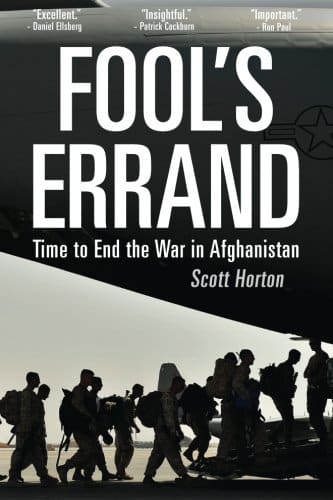
All right, shall welcome and Scott Horton show. I am the director of the libertarian Institute editorial director of antiwar.com dot com, author of the book fool’s errand, time to end the war in Afghanistan. And I recorded more than 5000 interviews going back to 2003, all of which are available at scotthorton.org dot org. You can also sign up to the podcast feed full archive is also available@youtube.com slash Scott Horton show. All right, you guys introducing Matthew whoa, I’m sure you remember that back in 2009. He was a State Department official in Afghanistan, who publicly resigned and went to the media and told Barack Obama not to launch this search because it could not work. And of course he was vindicated after being ignored and We have a lot of important Afghanistan stuff to discuss. So welcome back to the show, Matt. How are you, sir? Good, Scott, how are you? I’m doing real good. appreciate you joining us on the show again here. And you know what, I’m happy to share a press release with you this morning. The Institute for Public accuracy is advertising interviews with you or me about the subject we’re about to discuss here, but I figured I’d better go ahead and interview you about it first and see if I got it right. I meant to mention you’re from the Center for International Policy there. Oh, and I also want to mention that you were in the Marine Corps Captain correct in the Marine Corps in Iraq War, too, before you were in Afghanistan, right? Yeah, that’s correct. Right. Yeah. Okay. Sorry. Anyway, so what it’s all about is it’s about the New York Times and The New York Times has a piece from two days ago, three days ago by Charlie savage Eric Schmidt and Michael Schwartz. Guess from the 26th. It’s called Russia secretly offered Afghan militants bounties to kill troops, US intelligence says and then they actually had a follow up a couple of days ago. Yesterday I guess early yesterday they had a follow up spies and commandos warned months ago of Russian bounties on US troops. And then also I should mention there is the Wall Street Journal version, which includes the byline of a warren p Strobel, sadly, Russian spy unit paid Taliban to attack Americans, US intelligence says and then the Washington Post, Russian operation targeted coalition troops in Afghanistan intelligence binds. And so what a big deal of course the democrats are seizing on this, the Trump’s refusal to do anything about it is proof of his allegiance to Russia again, and all of these kinds of things. And so I would like to know everything that you think about all of this, sir.
Matthew Hoh 3:21
Well, you know, first off if we, if any of those news outlets and it goes beyond them, I mean, it’s basically all major American media seemingly talking about it NPR, you know, CNN, etc. If they in their headlines put, you know, unverified Colin, Russia, paid for bounty on American troops or whatever, then like, we wouldn’t really need to be having this conversation. Because the the issue right off the top of this right is this idea of The media putting forth unsubstantiated evidence free reports from anonymous officials that have not been verified in any way. But the way the media puts it forward, his they put it in. They headline it and then at least the first several paragraphs of their stories use affirmative language, you know, Russian intelligence paid, right. They don’t say it’s been it’s suggested that Russian intelligence paid or it has been spoken about that maybe they paid, you know, so just off the bat, it’s just a journalistic malpractice. And this is clickbait. This is this is nothing new. You know, most of the folks listening will surely understand that this is this goes back past the The modern era This is the whole remember the main in the Spanish American War, the, you know the, the lies that led to the Mexican American War all the lies that existed for centuries that allowed for the genocide of Native Americans. You know, this is this is the way American warfare is prefaced it’s the way it comes about and it’s what sustains American warfare or these lies and of course, everyone is familiar with with lies for Iraq War Two, not so much familiar maybe so with the lies from the first Iraq war, you know, with the lies about babies being ripped out of incinerators or not ripped out of incubators, I’m sorry, by Saddam’s troops in Kuwait, you know, those kinds of lies. But then of course the lies about Libya the lies about Syria, the lies about Yemen, the lies that have allowed the wars to escalate All throughout Africa, you know, and you know, most egregious or absurd about all this is the fact that six months ago The Washington Post, and all these other outlets reported on it as well wrote this story about what’s called the Afghan papers where, you know, 400 or so American officials in writing, basically, you know, summarize it, those 400 officials in what’s called after action reports or lessons learned reports, basically admitted to, you know, a systematic lying by the US government for the last 20 years or so about Afghanistan. So, you know, here we are, with all this historical record of journalistic malpractice, all this evidence about US government lying about war. And then you know, we can get into it as well about how a report like this reaches washington dc about, you know, the Russians are paying for, you know, bounties on American soldiers. But you know, it’s just, it’s upsetting and it’s infuriating that here we are talking about this again, but it certainly is something that’s always can be the case because this is how it’s always been these lies have always been used to start wars, they’ve always been used to keep wars going. They’ve always been used to keep tensions going. They’ve always been used to make sure that, you know, budgets are kept high. Right, you know, so and you know, the next part about this as well. Is that all those who are commenting in, you know, on CNN, or who are NPR talking about it, or who are you know, cited in the Wall Street Journal report, etc. They’re either retired generals who are on the the board Defense companies, you know, some making hundreds of thousands of dollars a year for being on these boards as well as having the interest of those defense companies to promote, or they are Think Tank experts from think tanks that are funded by the US government, whether it be the State Department or the Pentagon or the CIA, or they’re those think tanks are funded by the defense industry. So the whole the whole absurdity of it that this is taken as a factual story is just belied by you know, any basic understanding of past history in Afghanistan, American history when it comes to war or journalist, the journalistic lack of integrity when it comes to speaking about American military involvement overseas by you know, the major American corporate media.
Scott Horton 8:58
Yeah, it is funny how After everything, we’re just supposed to pretend that whatever they say goes without saying you have to believe it. That’s the narrative of the day. And we all agree, and just okay. And it’s not it, you know, there’s varying degrees of dissension on any given day, but it seems like essentially the narrative of the day wins, however they pronounce it. Certainly when it comes to demonizing Russia, my goodness. But you know, I had to point out too, and you mentioned this at the beginning. But these three articles, The New York Times, The Wall Street Journal and The Washington Post, are uniquely weak articles. They’re not just based on anonymous sources. They have no description whatsoever of what the intelligence is, just somebody told us that they won’t name the agency where their anonymous sources work. It’s just intelligence officials and or just people familiar people familiar, which means that’s Yeah, pretty broad. And yeah, they they admit that, you know, they don’t pretend to say we think that these boys killed in these green berets out in Nangarhar province fighting Islamic State guys so called Islamic corizon Province guys then yeah, we think it was that or it was these Marines got sniped down in the helmet or anything like that they don’t even pretend to have a causal anything here. But they all just went with it anyway and then as Caitlyn Johnstone pointed out on her website that they all the the reporters here two of whom I somewhat respect because you know it’s slim pickins and you do what you got to do, but Warren Strobel and Charlie savage both have done really important work in the past. Yeah, these other guys I could do without but
Matthew Hoh 10:59
yeah Man, yeah, get him man. Yeah. But
Scott Horton 11:03
to have these are all citing each other. Yeah, they’re all citing each other on Twitter saying My story is confirmed by the other guy. Now my story is confirmed by him. We’re all confirming each other’s story, but what are they confirming? All they’re confirming is that somebody said something. They’re not confirming that it’s true. They’re confirming that this is what an intelligence report says. They’re not going to cramming anything in the intelligence report at all they’re not pretending to. And they apparently can’t seem to even differentiate between that, you know, geez, I know, me and another reporter both got told by Douglas fight that Saddam Hussein was going to shoot me in my jammies in the middle of the night. It’s confirmed.
Matthew Hoh 11:44
That’s right. Yeah. And it’s just not those three. I mean, I saw NBC News, which was, you know, a capital letters confirmed. You know, we confirm this story, you know, and same thing to there’s confirming that anonymous officials said this. I had a conversation earlier today with john Kiriakou. And if folks aren’t familiar with john Kiriakou, please, you know, when you’re done, listen to Scott and I go through Scott’s archives and listen to some of Scott’s conversations with john. And john, of course, was CIA officer, the only person to have gone to jail for us torture program. Of course, john went to jail because of the torture program because he spoke about it and confirmed it, as opposed to actually taking part in it. But john, you know, john was, you know, saying how much he was struck by once again, the language that is used, you know, words like suggest, you know, in the US intelligence community, there’s very specific language to denote degrees of certainty. So, you know, and there is almost in there is basically a glossary that you follow. When you are writing an intelligence report or that you learn when you’re an intelligence school or whatever, to make sure that you are using the correct terminology, to let your audience know the people who are consuming that intelligence to let them know the degree to which they can trust the intelligence Look, do we have, you know, there are certain words if you’ve got somebody on camera on video, you know, that then there are certain words to say yes, if all you have is like so you heard some someone overheard something in a restaurant, you know, then there are other words describe how, you know, it’s probably not credible. And so john was, you know, we were talking about this, but the language of it, but one of the things I wanted to, you know, speak speak about was just letting people understand how a report like this and give it given the benefit of doubt that they are poor actually exists. And I do believe that there was probably some report made that suggested this note no confirmation of it. Whether not credible or not. But what happens is that all throughout both the military and the intelligence community, there’s what’s called commanders critical information requirements. And it could be from your direct boss all the way up to senior levels in Washington, DC and everyone in between, of what basically their critical information requirements are, right. So this is what your boss or your boss’s boss or your boss’s boss’s boss wants information about deems is the most important and adversaries Russia or Iran, China, etc, particularly when you get to the political sides of this stuff are very heavily weighted in these information requirements. So now getting back to Afghanistan, because supposedly these the time story said that this came about because of interrogation. Well, the Afghan security forces universally torture, and we all know that torture produces either two things it produces your basically produces the intelligence that you want from the torture victim, whether or not that person actually believes what he’s saying that he’ll say whatever he you want him to to stop the torture, that’s the reality of torture. And so what you get is you probably had somebody who was detained some prisoner of war or maybe even a criminal as it’s been suggested in the news stories. And this person mentions Russia, the word Russia goes into the report, and because that is a critical information requirement, and plus the political aspect of it with everything, being you know, Russia, Russia, Russia for the last good, gosh, six or seven years and the American military and intelligence communities You know, this, this Russia, hysteria came into the American military and intelligence Communities well before Trump took office, you know, so that this unsubstantiated unverified report probably brought about by torture makes its way up because Russia is important. And there are people, you know, a good guy to have on to talk about this besides john. Scott would be like Ray McGovern, you know, to talk about how politicized you know, intelligence is how people are looking to please the boss. So they’re going to push forward things, whether or not they’re substantiated or not, because that’s going to please the boss. And so that’s how you can understand how something like this could reach Washington DC. Now, whether or not it also could be totally fabricated, for all I know, you know, but just giving an idea to people of where this all comes from how stuff like this gets, I mean, as well then to the manipulation of your reports or myth manipulation of things sent for I could give you a story, you know, It’s long story, but I’ll give you the very brief brief as bit I can about a report I wrote about this program in Afghanistan, we had to set up these radio towers, right. And they all throughout rural Afghanistan. And then the radio towers were in this was like a, I don’t know, 15,000,020 million dollar program that some company in the United States got to do sweetheart deal, typical corrupt reconstruction project kind of thing. And they’re supposed to go around and put these radio towers all throughout rural Afghanistan. And my report on it after they’re done was that was a colossal failure. I mean, there wasn’t diesel fuel to run the radio antennas. We didn’t have program to put on the radio antennas. Rural Afghans don’t own radios, you like all kinds of stuff. The thing was a failure. And what was the final thing, my report that actually got sent to Washington DC, the only thing that got sent out of it was at the radio tower program. installation was successful. All the other parts about it about how it As a failure, right all the way up and down, we’re left out. But the fact that the radio antenna has actually gotten stalled, that made it to DC. So as far as people in DC know, oh, hey, this. And that’s just one story out of millions of stories that are out there about how reporting works in the American military, in the intelligence community in a diplomatic community about how good news is shared or politicized. News is shared. So it really is, you know, it this is not as surprised as something like this is coming out. You know, I mean, a few years ago, as many people recall, there was these reports about Russia providing weapons to the Taliban. Now, first of all, the only confirmed weapons transfer between Russia and Afghanistan was in 2016, when Russia gave 10,000 weapons to the Afghan military,
Scott Horton 18:58
right, right. And when America got the Indians to buy Russian helicopters for the Kabul government because America has sanctions on Russia and can’t buy him directly.
Matthew Hoh 19:07
Yeah, right. I mean all kinds of stuff about but but you know, CNN and others take this story about Russian, they show a clip of like a Taliban fighter holding an ak 47. Nevermind that about 15 or 20 countries at least manufacturer AK ak 40 sevens in the world, you know, the United States military and CIA, purchase those weapons and give them to insurgent groups and government groups all around the world. Nevermind all that we’re going to show. One Taliban fighter holding a Russian, a Russian style Kalashnikov style rifle. And that’s gonna be proof that the Russians, I mean, like that’s Meanwhile, you know, top us defense officials, intelligence officials, the Secretary General of NATO, the Afghan government itself all said you know, these we don’t have any information to corroborate. We have no evidence about Russia giving us weapons. It’s just rumors, but you know, that’s stuff, even with all that, you go back to this wall street journal story from the other day about and Strobel and I forget who the other person on the the the the byline was. But you know, at the end, they bring up how Russia gave weapons to the Taliban, you know, and it’s not true. They didn’t give weapons but there’s no evidence of that. And we have, you know, you have a list of American NATO and Afghan officials as long as my arm saying we have no evidence of this, but the journal still goes in other places still go and repeat this false story from 2017. You know, I mean, so they’re there, you know, not only do they continue to put forward new rumors, new speculation, new anonymous reports, you know, with no substantiation behind them, they keep recycling older ones. Yeah, you know, and again, and you know, I mean, one of the things I just found Curious today as I was going through some of the stuff I review, you know, daily or weekly in terms of military related stuff was, you know, you look at the investments the US military is making in, you know, hypersonic missiles and all that nonsense all that stuff will never work right. You know if and if people don’t haven’t heard Scott’s interview with Andrew Coburn about hypersonic missiles, go and listen to that one after you listen to the ones about john Kiriakou and everything. But you know, I mean, you know, so it is there is this this he there are multiple constituencies that benefit benefit from increasing tensions with Russia. One, of course, its clickbait for the media, to the media is, you know, any
Scott Horton 21:46
source the Afghan government has quite an interest in figuring out a way to get America to stay.
Matthew Hoh 21:53
That’s exactly right. As well as to you know, the defense industry wants to sell next gen aeration tanks in next generation helicopters and next generation missile systems and next generation, hey, our next generation of aircraft carriers are going to be $15 billion apiece, right? I mean, we know I, right. You know, I think our next generation submarines are $10 billion apiece or something like that. Right. So I mean, you don’t use those, you know, you use those again.
Scott Horton 22:22
What about Russia? What about Russia’s interest? Is there any credible reason at all that you could think of why the Russians would want to hire hotties or whatever descripton description? Jesus Christ, I can’t talk any reason that you could think of why the Russians would want to pay whoever to kill Americans in Afghanistan as we’re seemingly on our way out which by the way, Trump is ordered another withdrawal of 4000 men bringing us down to 4000 which is 4000 lower than when he took office after he escalates Up to 15,000, of course, but that he has signed a deal with the Taliban, to have us out of there one year from now, by the end of May. It’s the end of June now by the end of May next year. And so maybe the Russians are just kicking us in the ass on the way out for fun little bit of revenge, something anything. Nancy Pelosi said, you know, they’re still not over our humiliation of them and Afghanistan back in the 80s.
Matthew Hoh 23:30
You know, it makes you could understand how there might be some old timers within the Russian military intelligence community that will want to get revenge. But there’s no way that type of thinking would percolate up to the level where decision like this will be made. And it’s interesting and one of the news stories it said how Vladimir The decision was made without Vladimir Putin Putin being in involved, I forget which story that was, which I found really, really discredits the whole story. Because there’s I can’t imagine any intelligence or military organization in the world will conduct such an operation as this putting the bounties of on you know, the the the putting the bet putting bounties on your app Azeris heads like this, you know, how could anyone make a decision like that without the top man, you know, saying do this,
Scott Horton 24:26
– it also goes to show that –
Matthew Hoh 24:28
I don’t know how, you know, a clan dishonor Atlanta Stein operation authority works in Russia, but I can’t imagine that Putin would allow things like this to occur without his and so what benefit is it for the Russians? I don’t, I don’t see that benefit one. Why? It just makes no sense to me. They are not the Russians are not as there’s no benefit to the Russians aligning themselves with the You know, extremists a lot, as long as Taliban, right because of Russia’s issues with Islamic extremism and Islamic terrorism and the problems they’ve had, in, you know, whether being former Soviet republics or in Russia itself over the last 2030 years, you know, that there’s just, it just doesn’t, you know, you can say, well, the Taliban are the enemy of my enemy. So therefore, my friend, but still nothing, none of this really makes sense. When you really stop and think about it, and kind of play out all the second and third order effects of it, you know, and then Russia has so many problems itself, its economy has been doing, you know, various issues within Russia. Don’t lead me to believe that the Russian government, Vladimir Putin wants to escalate tensions to a level where these type of action would lead Now certainly you could you could claim the Russians are doing other things they’re flying their jets to close to our jets like etc etc yeah that that that’s you know step but putting bounties on another forces a soldiers brings it if it was exposed would bring it to attention to such a level that you can understand the risks would completely mitigate doing such an operation. Now there’s people out there who will say well hey you know the United States Air Force the United States Navy killed a lot of Russian mercenaries in Syria This is their way of getting getting back you know, I just don’t again, the risks for the Russians to do something like this far outweigh far outweigh any benefits that I believe could come from from it. And then all the other evidence about well, you know, American commandos found money in Afghanistan is so awash with money, most of it coming from Our CIA or our military, but also to from all that, you know, 120 billion dollars we’ve spent on reconstruction work over there, which didn’t build anything, you know, as well as to most of the funding for the Taliban comes from the Saudis and the other Gulf monarchies and force from the Pakistanis. And from he US.
Scott Horton 27:20
Yeah, I mean, we sell them protection money, you know,
Matthew Hoh 27:22
still, this is the whole it’s, it’s just that Russia is Russia is the enemy in the best interests of the American military industrial complex. And it comes simply to that, you know, I mean, and that’s how this should be viewed in terms of understanding the genesis of it, why and why American media hops onto it, you know, and it’s another thing we could we could talk about some other day, but basically understanding that the same banks that own the majority shares and all the American media companies, right, Scott, you know, this and most of your most delicious listenership knows this. right that the same banks and money management firms that own all the all these shares that are majority shareholders in the in the the six corporations that own 90% of American media, they’re also the majority shareholders in the defense industry. Right? I mean, like so it all comes back to who owns these corporations and and it should not be a surprise then that the establishment media is is in favor of the establishment wars. And then we see as you said Nancy Pelosi but also Liz Cheney and Lindsey Graham on the other side, jumping on this and demanding action, we have to take action. Yes, so you can understand who benefits from a report like this and there are more in the United States who benefit from these tensions, then I believe benefit in Russia from these tensions. It just doesn’t make sense to me why the Russians would do something like this because the risk for our world To great for the benefits of what killing a handful of good. We’ve had four guys killed 20 2020 guys killed in 2019 and Afghanistan, and that was the most in six or seven years. Right? I mean, so you know they’re gonna do the Russians are going to do an operation like this to kill 1234 American soldiers. It just makes no sense to me. In what meanwhile though, as we said, the beneficiaries of this in the United States are legion, so to speak.
Scott Horton 29:30
It seems like if it was a fact that they were doing it, then obvious, to me the most obvious or simplest explanation would be they’re trying to give us an excuse to stay it trying to undermine Trump’s because they know Trump is all alone and trying to get us out of there. And the status quo otherwise would reign there. And so if that’s true, then what does that say about our war there that the Russians would like to see it continue one because I had they’ve supported our war therefore the Tajik side all along anyway, because we’re the ones who Switch side in the war, not them. Right. But then also see the the same. You know, William Casey been last night plan to bleed Russia to bankruptcy is the same kind of thing that they must be enjoying. You mentioned how the Americans have been, you know, the the conflicts in Syria where Russians have been killed, where the Americans have stated openly, James Jeffries just said some pointed out to me that just in April, he talked about Yeah, we’re giving the Russians a quagmire in Syria. And they’re that blatant about it. So it just seems to me like, even if it’s true, then it just proves that we should go and what do these people think of the logic of this? say there’s some flying Russian sniper going around killing our guys. That’s why we have to keep sending guys to get sniped by this guy. We already lost the war 10 years ago, this whole thing is crazy. We’re leaving anyway. How do you ask the man to be the last one to die for that?
Matthew Hoh 31:11
That, as john kerry famously said, right, no. Yeah, again, that’s accept
Scott Horton 31:17
ng the hypothetical of the argument, you know.
Yeah. The the narrative behind this a story behid this is that this is meant to make the United States leave. But the reality is, is that if you believe it, I you know, Donald Trump canceled the whole summit with the Taliban and the Afghan government Camp David last September, because an American troops, American soldier was killed by the Taliban that pushed back the signing of the peace deal between the US and the Taliban by six or seven months. So if that is the case, that they did this, the Russians did this to to Get the Americans to leave? Well, you know, the evidence is that Americans are going to stay. But then the other side of it, are they doing it to keep the Americans in, you know, to bleed them? We’re not spending that much money on Afghanistan relative to other things. Right. I mean, in a sense of that, the the trillion dollrs 10s of billions a year still, at least, yo
know, it’s still 10s of billions.
Matthew Hoh 32:24
Exactly. Probably, you know, you know, yeah, exactly. 20 to $30 billion a year, probably maybe $40 billion a year probably. But when you put that debt next to the 1.2 or $1.3 trillion spent overall on the American War Machine every year, that’s relatively chump change. It’s much better to get the Americans to invest in these hypersonic missiles that won’t work. It’s been, you know, the new generation of Star Wars or whatever they want to spend.
Scott Horton 32:55
The next attack will be a false flag. They try to make it look like China was behind So we Well, you know, battleships
Matthew Hoh 33:01
interesting is say that about China because I remember a friend of mine about 10 years ago. So in about 2010 or so, said to me, I just had a conversation in China with a Chinese diplomat or Chinese official. And he said something about, like, what is the what, you know, off the record, you know, what is kind of like, China’s ultimate plan for US foreign policy, you know, and China said, do everything we can to keep the Americans stuck in places like Afghanistan, you know, because they, you know, they saw the folly of it, right. I mean, that do you’re spending at that point in 2010. US Congress is appropriating like 120 billion dollars a year for Afghanistan, we were losing, you know, several hundred young men and women every year, let alone casualties, let alone just the drain on attention and resources and everything else. Yeah, as well as the pure folly of it. You know, you want to see your adversary stuck in quicksand. You know, that that’s something that If you’re the Russia or China or whoever, just look at the US and all these wars,
Scott Horton 34:04
all right, well, that means that if you and I are ever successful at getting people to listen to us about why to get out of the Middle East, then we’ll be helping to free up resources to pivot to Asia. don’t mean to say the Taliban are a worthy sacrifice. But man, if if this war has kept us out of that one all this time, I don’t know.
Matthew Hoh 34:28
Well, I mean, if I was if I was a consultant working for the Pentagon and CIA or the defense industry or whatever, yeah, I think this is a brilliant thing to do. Like, okay, let’s do this, this story about Russia putting bounties on our soldiers head in Afghanistan, because if I’m part of like the big Pentagon, if I’m part of like the the Pentagon that buys tanks and ships and fighter planes, I don’t want anything to do with Afghanistan. There’s very few elements within the US military intelligence apparatus. That really want to be in Afghanistan you’ve got the Special Operations guys. You know you’ve got the CIA paramilitary guys you’ve got some leftover counterinsurgency types but for the most part like they want to be fighting the you know they want to be fighting the Russians and the fulda gap right where they want to be fighting the Chinese in fighter plane tools over the South China Sea. So yeah, let’s put together this story about the Russians paying for bounties on our soldiers heads in Afghanistan that makes the Russian seem worse, which means we need to buy more tanks, you know, next generation tanks we need to buy more aircraft carriers we need to buy more f 30 fives you know we need to buy that next generation bomber plane which is going to cost $2 billion a plane or whatever, you know, I mean, you know, something I read the day that the zone will class destroyer which there are supposed to been like 40 produced, of which were only Gotta make three, you know, but we’re bound to make three, they’re still gonna make three. That thing has like this advanced gun on it right? Each of the shells for that gun cost a half a million dollars for each shell, right? I mean like, so that’s what you want to do you want to sell that stuff. And so let’s get out of Afghanistan. If you’re if you’re logical, you’re reasoned and say this story is true, right? It’s got to say this is true. Say the Russians did put boundaries I get anyone who’s logical OR reasonable just be like, well, hell, this is another reason to get out of Afghanistan. Right? I mean, like, really, like there’s any more. You need another suggestion. Here’s one more another nation is putting bounties on our troops head, let’s get out of that place. It’s not doing anything for any of us, you know, so but then that makes Russia look like a villain which of course gives you all the reason right to spend all this money on all the next generation weapons that are you know, each of those programs are 10s and 10s of billions of dollars each and that’s really the gravy train that you know the defense industry wants and you know they these are the neck new tanks and the new the new planes, new ships that you know, Navy captains and Army and Air Force colonels want, yeah, that kind of stuff. So, but now this whole thing is very insidious. It’s it’s, you know, it makes me sick to my stomach. I’m sure it does you. I’m sure it makes everyone else who’s listening sick to their stomachs as well. But it’s the reality. It’s part of the playbook that we’re up against. And so we have to keep speaking agaist it.
Scott Horton 37:35
Absolutely. All right. Well, thanks for coming on todo so.
Matthew Hoh 37:38
Appreciate that. All right. Thanks, man. And you’d be well and stay healthy and safe and sane. With everyone else there. Please stay healthy and safe ev
Scott Horton 37:45
ryone. Right on. Hey, thanks very much again, Matt. Appreciate it. Okay, you bet. Thanks, you guys. That is the great Matthew. Whoa. He tried to stop the Afghan search. All he had to do was listen to him is everything you needed right there to say, Yeah, no, don’t. The Scott Horton show him Our radio can be heard on kpfk 90.7 FM in LA, APSradio.com antiwar.com. ScottHorton, org and libertarianinstitute.org
Podcast: Play in new window | Download
6/26/20 Hans Kristensen: the Bleak Outlook for Nuclear Arms Control
Scott talks to Hans Kristensen about the state of the world’s nuclear weapons arsenals. Immediately after the Cold War, says Kristensen, the U.S. and Russia drastically reduced their nuclear stockpiles, making the world significantly safer. Since then, however, this trend toward disarmament has begun to slow and even to reverse. At the same time, more countries have developed their own nuclear weapons programs. Scott thinks this has more to do with the financial incentives of the military-industrial complex than it does with the possibility for real global hostilities—but that doesn’t make the situation any less dangerous.
Discussed on the show:
- “SIPRI Yearbook 2020” (SIPRI)
- “Nuclear weapon modernization continues but the outlook for arms control is bleak” (SIPRI)
Hans M. Kristensen is an Associate Senior Fellow with the SIPRI Disarmament, Arms Control and Non-proliferation Programme and Director of the Nuclear Information Project at the Federation of American Scientists. Follow him on Twitter @nukestrat.
This episode of the Scott Horton Show is sponsored by: NoDev NoOps NoIT, by Hussein Badakhchani; The War State, by Mike Swanson; WallStreetWindow.com; Tom Woods’ Liberty Classroom; ExpandDesigns.com/Scott; Listen and Think Audio; TheBumperSticker.com; and LibertyStickers.com.
Donate to the show through Patreon, PayPal, or Bitcoin: 1KGye7S3pk7XXJT6TzrbFephGDbdhYznTa.
The following is an automatically generated transcript.
For Pacifica radio June 28 2020. I’m Scott Horton. This is anti war radio.
All right, y’all welcome it’s Scott Horton Show. I am the director of the Libertarian Institute editorial director of antiwar.com, author of the book Fool’s Errand: Time to End the War in Afghanistan. And I’ve recorded more than 5000 interviews going back to 2003, all of which are available at ScottHorton.org. You can also sign up to the podcast feed. The full archive is also available at youtube.com/ScottHortonShow. All right, you guys introducing Hans Kristensen from the Stockholm International Peace Research Institute. And he is also at the Federation of American Scientists as well and SIPRI that’s sipri.org. have just put out their latest study the sipper yearbook 2020. And part of that, of course, focuses on nuclear weapons, and they have a story here at sipri.org nuclear weapon modernization continues, but the outlook for arms control is bleak. Welcome to show Hans. How are you, sir?
Hans Kristensen 1:25
Thanks for having me.
Scott Horton 1:26
Very happy to have you here. So I’m sorry, I didn’t get a chance to read the whole PDF file and everything here. It’s been a very busy time. But I did read the introductory article here. And there’s so many important points brought up here. But I guess if we could just start with reminding the audience which all countries are armed with nuclear weapons, and approximately how many of them etc, like that, if you could?
Hans Kristensen 1:51
Yeah, so they’re about they’re now nine countries today that have nuclear weapons. And that’s the United States and Russia, France, Britain, China. India, Pakistan, Israel and North Korea. And all together, they possess something in the order of 13,400 nuclear warheads. Most of those are in what you can sort of call military stockpiles that are ready to use on relatively short notice. But there’s also a chunk of them some something in the order of 1800 to 2000 that are on high alert, they’re ready to fire within just minutes.
Scott Horton 2:28
And then, and those are mostly America and Russia’s,
Hans Kristensen 2:32
the alert weapons are American, Russian, French and British. Yes.
Scott Horton 2:38
And then, is there a ratio handy about how many of these are vision bombs versus thermonuclear h bombs.
Hans Kristensen 2:46
Almost all of them are thermal nuclear weapons to stage, thermonuclear weapons. Those are the more advanced weapons that countries like the United States, and Russia and France and Britain and China have have developed over the years, newer countries that have only conducted relatively few nuclear tests don’t yet have that capability India, Pakistan and Israel and also North Korea, although North Korea has demonstrated in their last test that they can produce something thermonuclear something that it that can produce a very high yield, but it’s a little unclear with it that is to stage device or, you know, some other technology.
Scott Horton 3:29
And are most of those still measured in the kilotons are there up into the megaton range?
Hans Kristensen 3:34
No mega ton weapons, so sort of becoming more and more rare. Those were things that people built early on. Now it’s it’s in the hundreds of kilotons or or even 10s of kilotons. So if you look at it depends on the mission of course also, if countries have more hits that are intended for blowing up deeply buried underground facilities, or knocking out hardened ICBMs or commands structures and that type of stuff, then they tend to be higher yield, because they have to, you know, do more damage. But if you’re looking at weapons that are needed for sort of more warfighting scenarios, you know, against shallower targets or troop formations or basis or something like that, then you can do the job with, you know, just, you know, 10 a few 10s of kiloton.
Scott Horton 4:21
And then now, did I hear you right, that you said India does not have h bombs?
Hans Kristensen 4:26
That’s correct, although there have been claims in India that they did that they do. And also one of the devices that was tested back in 1998, apparently, was an attempt to make a thermonuclear design, but it fizzled. And so we do not, we don’t anticipate that they have a two stage thermonuclear device to deploy it in their arsenal.
Scott Horton 4:47
Okay, because I had read and actually talked to an expert to I think, I guess about that one of the real problems with the nuclear standoff between India and Pakistan was that Pakistan really only had these much smaller yield tactical battlefield type nuclear weapons that they would use against the armored column or something like that. But that the Indians had focused on building higher yield strategic nuclear weapons for killing cities with and this kind of thing. And that because their armor was so desperately matched as well, that if the Indians launched a conventional attack, the Pakistanis might have to use low yield nukes to defend themselves. And then the Indians would have no choice but to retaliate with genocidal weapons of destruction, because that’s essentially all they have something like that. But so I wonder about how you conceive of that whole scenario there.
Hans Kristensen 5:41
Well, the scenario bar is a little about different aspects of the reality. It’s too simplistic though. The point is that both countries have developed a medium range ballistic missiles with you know, more hits in several 10s of kilotons that can hit each other of cities. But what’s unique about Pakistan is that in addition to that, they have also developed a weapons that are more tactical, and appear to be intended for use against like you mentioned, Indian conventional forces massing inside Pakistan territory. So that’s a unique feature of the Pakistani arsenal. And that, of course leads to a lot of concern about, you know, how they’re going to do that, or are they going to delegate launch authority to the to the local units, so they could use them early if necessary? How is that gonna play out so there are differences between the Arsenal’s but there also are a lot of similarities.
Scott Horton 6:42
So um, I guess the numbers of Chinese nukes are happily surprisingly low here in the triple digits.
Hans Kristensen 6:52
There compared to the US and Russia, of course, they’re very low. That’s enough
Scott Horton 6:55
to kill us all. I mean, but yeah,
Hans Kristensen 6:57
ya know, the Chinese have had a different approach to their deterrence posture for many decades. They basically didn’t buy into the using of nuclear weapons in sort of warfighting scenarios. They thought if they had, you know, a few, a few hundred 100 200, whatever in, in, you know, in in the posture where they were, when they could retaliate, they could not be knocked out, so they would always be available to retaliate. That should be enough, they thought for nuclear deterrence. What we’re seeing now, of course, is that China is increasing its arsenal. We have bumped up the number this year to 320 warheads that we estimates are in this that we estimate are in their stockpile. And it’s increasing, but it has been increasing for for a long time, just sort of slowly. Now, we’ll have to see if they’re going to, you know, increase faster. But whatever they’re doing, they’re not sprinting to parody. It’s not like whatever you hear about the Chinese nuclear arsenal, it’s not like they’re trying to catch Up to the Russians and the Americans, they still have a fundamentally different perspective on the role of their nuclar weapons.
Scott Horton 8:06
Yeah. Hey, it’s important to note that historically speaking at the height of the Cold War, there were 10s of thousands with 40,000, approximately on the American and Soviet Union side each. And so we’ve made a lot of progress since then, right?
Hans Kristensen 8:22
That’s correct. Yep. At the peak in the mid 1970s, and mid 1980s, I was 70,000 nuclear weapons. And on both the Russian and American side, 10,000 of those were on high alert, ready to go in, you know, within a few minutes, and just totally crazy circumstances. And so of course, when the Cold War ended, they started slicing a lot of the that excess capacity out, and so we saw a huge drop there in the early 1990s. And also a little later on, but what we’re now beginning to see is that the two sides are starting No slowing down significantly and even even to some extent reversing that trend, and looking to maintain significant Arsenal’s for the indefinite future. And so, you know, all sides are sort of increasing the value they say that they attribute to nuclear weapons. They’re increasing the role of the nuclear weapons and the way they talk about what functions they should serve. So this is a very troublesome development.
Scott Horton 9:26
And I’m sorry, what did you say the number was at the height? I thought it was much higher
Hans Kristensen 9:31
70,000
Scott Horton 9:32
Oh, 70. I’m sorry. I thought you said 17. And I thought, well, I was way off. Yeah, no, that’s more like what I thought it was 70,000 nukes.
Hans Kristensen 9:41
Yeah, it was crazy. I mean, you can imagine. You can just imagine spending a couple of hours on on Google Earth and trying to put 70,000 x’s on the map, right? What are we gonna do with all that stuff
Scott Horton 9:54
So there’s an anecdote about dick cheney back in 1989 when he was first Secretary of Defense being shown, I guess on a computer screen is simulation of what it would look like when where they just nuke Moscow hundreds of times over and Dick Cheney finally says that’s enough turn this off and and wanted it redone because it was just completely insane. And of course, he’s notoriously the greatest American
Hans Kristensen 10:24
Hawk alive. Right. Yeah. This is ironic that you can find some of those realizations in what what some characters like cheney did. And he said one of his officials, Frank Miller out to two Strategic Air Command as it was called or stratcom. As of now it’s known and they went through the entire targeting list, there is a very, very important anecdote or reading of that episode in in the memoirs of one of the first of the first stratcom commander. So that was just they discovered not surprisingly that There was an enormous overkill because the nuclear planners had been allowed to essentially do this by themselves with very little oversight. And so things have changed since then is also in the oversight. But even that, even though we were we’ve moved beyond some of that stuff. The nuclear planning today is still, you know, surprisingly similar to what it was during the Cold War.
Scott Horton 11:43
Yeah, Daniel Ellsberg has talked about how, you know, a lot of it is just bureaucratic politics where it’s not fair that the Air Force gets to blow up this city where the Navy wants a crack at it, too. Okay. Okay, Navy, you guys can also hit it with missiles. And so it’s just kind of like an episode of some sitcom some bureaucratic politics.
Hans Kristensen 11:46
You know, there’s an element of sort of institutional competition and turf wars and all this stuff. That’s part of it that dynamic. And mind you early on, the army also had a dream that they wanted exactly, one Hundred Thousand nuclear weapons just the army. I mean, it was those are crazy days.
Scott Horton 12:06
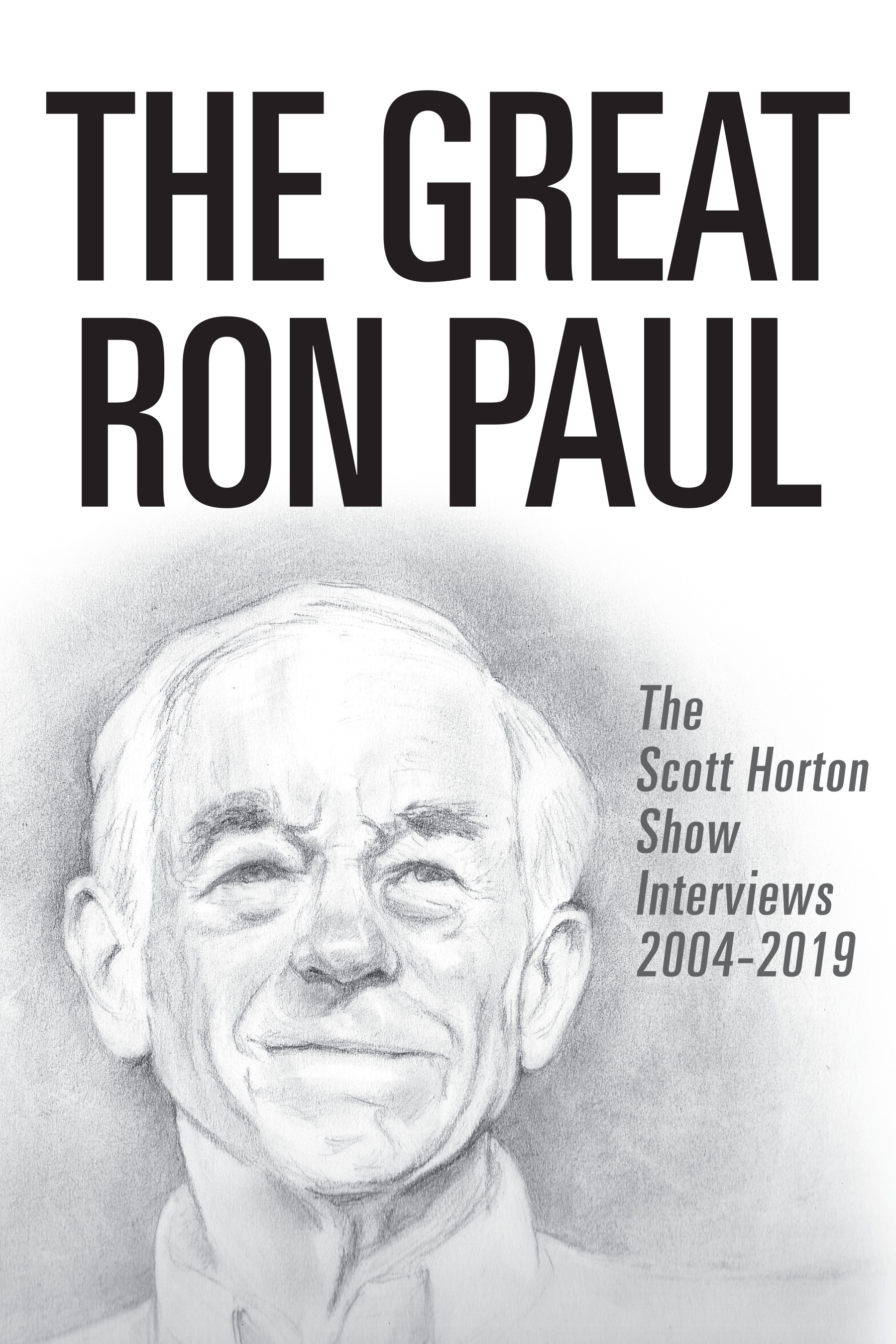
Hey guys just real quick if you listen to the interviews only feed at the institute or at Scott Horton. org I just want to make sure you know that I do a q&a show from time to time at Scott Horton. org slash show the old whole show feed. And so if you like that kind of thing, check that out there. Hey guys, here’s how to support this show. You can donate various amounts at Scott Horton. org slash donate. We’ve got some great kickbacks for you there. Shop amazon.com by way of my link at Scott horton.org. Leave a good review for the show and iTunes and Stitcher. Tell a friend. Oh, yeah, and buy my books, fool’s errand time to end the war in Afghanistan and the great Ron Paul. The Scott Horton show interviews 2004 through 2019 and Thanks. Hey guys, check out listen and think audio books. They’re living And think.com and of course on audible.com and they feature my book fool’s errand time to end the war in Afghanistan as well as brand new out inside Syria by our friend Rhys, Eric, and a lot of other great books, mostly by libertarians there. Reese might be one exception, but essentially they’re all libertarian audio books. And here’s how you can get a lifetime subscription to listen and think audiobooks. just donate $100 to the Scott Horton show at Scott Horton. org slash donate. Alright, so now the Israelis I actually had the opportunity to discuss this briefly with Mordecai Vanunu on Twitter, where he confirmed to me that he stood by his original leak to the Sunday Times of London, that Israelis have 200 nukes. And I don’t think he would clarify if that included h bombs or not, but we know from grant Smith’s foil lawsuits and stuff that that does include h bombs as of 1987 But anyway, so you guys here count what I think 90 something like that. But of course, we all know that Israel doesn’t have nukes, they’re completely deniable and not official and so forth. So I wonder where you come up with that number in that kind of.
Hans Kristensen 14:15
Yeah, so that’s that’s a long history. They think about how you come up with a number for the Israelis, because there’s so little factual information about it. The way it happened back in the 80s, when Vanunu and others came out with the estimates of the Chinese Arsenal was that people looked at how their reactor had operated and calculated for from that how many units if you will, of plutonium they could have produced over the years and then they translated that into the number of potential weapons they might have. That’s how you got to those high numbers. the intelligence community, the US intelligence community, looked at it a little differently. They said that yes, even though that production might have happened, they haven’t turned all of that plutonium into warheads, and so their number has been much lower. Over the years, and so we’ve we’ve gone with that ladder number and said, you know, those are the weapons that we think they have actually assembled, although they keep them partially unassembled on the normal circumstances, and but that they have other, you know, they have more plutonium in stock that they could produce if they needed to. So that’s how these differences emerge about the numbers.
Scott Horton 15:24
And that includes second strike missiles deployed on submarines. And do you know how many?
Hans Kristensen 15:31
That’s that’s a big uncertainty right now, there was a consistent piston rumor that Israel has put some cruise missiles or develop more hits for some cruise missiles on it. So conventional attack submarines. So we we’re cautiously including that in our estimate this year. And I’m just saying this because because there’s so little information about exactly what the Israeli Arsenal includes. There’s also a lot of room for speculation and rumors and And even hype. And so one has to be a little careful not to get sort of swept up in that in that kind of excitement and get to all sorts of capabilities. And and you mentioned people saying that there was thermonuclear capability? Well, some people believe that we tend not to think that the Israelis have developed a functioning to state thermal nuclear capability, we do believe they have a boosted a single stage design. But doing that requires the development of more technology, it’s more complex to do and you have to look at what is what is Israel’s intention with its arsenal? What function does it have to serve? The reason people develop thermonuclear weapons was because their targeting strategies required them to blow up things with great explosive power? At first that had to do with accuracy, you just couldn’t hit precisely enough. So you develop large scale thermonuclear weapons, so you could compensate for that. In accuracy, but Israel is not in that situation. They have relatively accurate missiles. And so their calculation, it seems to me at least would have to be a little different. They probably don’t need these super high yeld boards.
Scott Horton 17:14
I don’t agree with it. I don’t think anybody does. But I understand what you mean. So now let’s talk about North Korea a little bit here. As you said, they tested a nuke that was possibly boosted, but nobody really knows exactly for sure. Right.
Hans Kristensen 17:48
Yeah, the US intelligence community seem to say that the the last test that was about what was it 150 Some say 200 kiloton. There’s uncertainty about the specific range because different agencies that monitored have put out different estimates, but it was big, it was significant it was in a yield that you would have to either have a very large very significantly boosted single stage weapon or some form of thermal nuclear design. We’ve heard that characterization from US officials saying that there was some thermal nuclear event involved in this. But whether that means this is a two stage thermal nuclear warhead of the kind of warheads that that do United States and Russia developed over the years, that’s a little more uncertain. But it was set as a different nuclear yield that was produced by that weapon.
Scott Horton 18:44
Right. So supposedly, their missiles can reach DC now, I guess they reached a high enough orbit that they say could have reached DC, if that’s how it had been targeted. One of those tests, maybe two of those tests, but then they also say that even if they do have h bombs, they haven’t been able to successfully miniaturize them to the point they’d be able to marry them to one of these rockets and deliver one to DC. So we have a little bit of breathing room there. But everybody, all kinds of politicians from both parties say that that’s the red line. We can never allow them to have h bombs or I guess atom bombs and the means to deliver them specially not to our capital city. Hey, the West Coast man, maybe but not DC. But then. So I wonder if you think like on the timeline of their development, we know when they started making nukes right after they withdrew from the treaty in oh three and all of that. And and so on the timeline of their progress. Are you worried that they might be able to miniaturize their nukes and marry them to their missiles sometime within the next few years? Or what do you think about that?
Hans Kristensen 20:40
Yeah, our s our, you know, our sense of the where they are, is that they’ve developed ballistic missiles that can reach the US, but it’s a little mirror a little less clear. Whether they have a war functioning warhead for those missiles that can reach the United States. And this is a distinction that’s normally lost in the public discussion about the threat from North Korea. it’s more likely that they have warheads that they’ve developed. Left initially for their shorter range ballistic missile and the medium range systems that they have. So basis in the region, US allies in the region was most certainly be be be at risk. But like you mentioned, they made a lot of progress very quickly. And they seem to unsent intent on continuing that we’ve just heard some very strong statement from the North Koreans about continuing refining and improving their nuclear arsenal. And, and that’s one thing we’ve learned from the North Korean, you can you can pretty much stretch target what they say on this issue. If they say they’ll do it, that that means something real, so they’re not done and we’re likely to see more things coming in the future.
Scott Horton 21:00
Okay, so now let’s talk about this modernization. And part of this, I think, is just a welfare program for the nuclear arms industry. From it was part of the negotiations in the Senate to get the start. The new start passed under Obama was okay, you Get a trillion dollars, it’s now almost two, it’ll probably be four by the time they’re done. And so I don’t know how much of this is just make work. I know that they came out they’ve already deployed the new lower yield cruise missiles. But you know, what else do we need to know about the so called modernization here other than just the special interest aspect, but what about the actual change in the nuclear forces?
Hans Kristensen 21:27
Yeah, so um, the the, the bulk of the US Modernization Program is a complete replacement of the entire arsenal. So everything that was built in this were developed and built from the 80s and 90s, is now coming up for renewal. And the commitment that has been made is that all elements of what’s known as the triad, the sea based the land base, ballistic missiles, and the long range bombers, all of that will be replaced and also the shorter range fighter jets. will also be upgraded and replaced. And so, in addition to this comes nuclear production facilities, expanded plutonium pit production facilities that are being planned. We see a modernization of the nuclear command and control system that’s supposed to support and manage these nuclear forces. So it’s a very, very broad and comprehensive modernization plan. And like you said, it’s going to cost a lot of money. Now, the question is, does it change anything fundamentally compared to what we had before. And so that’s the way you have to look under the hood and sort of see what kind of capabilities are being built into these new systems. Because of course, when they built a new ICBM, it’s not just a copycat cat of the the old one, they put advanced capabilities on it and would like to improve its effectiveness. Likewise, when they upgrade the nuclear gravity bond, for example, the B 61. That is used both by speakers gt bombers, but also by Tactical Fighter wings get the United States and also in Europe, when they upgrade that they don’t just, you know, repaint and dusted off the one that’s there. No, they improve it. So they add a guy to tailgate so he can hit its target more accurately. So even though the numbers may not go up, and even though you don’t may not have fundamentally new nuclear weapons, you you take the chance to, and the opportunity to improve the capabilities of the weapons they can have inthe future.
Scott Horton 23:32
All right, so what do you make of all the new hypersonics ours and the other guys?
Hans Kristensen 23:38
Well, so that’s the next chapter in the arms race, of course, everybody is on that bandwagon. They were trying to get on it. And so at first here, the focus of that is conventional, but they’re also nuclear elements of it. The Russians have rushed into deployment a few missiles that have a hypersonic glide vehicle with a nuclear war. ahead, we’re seeing them working on other types of hypersonic weapons that have nuclear capability. But they tend to be dual capable, if nuclear is involved at all, we’re seeing the Chinese working on similar systems. They’ve even deployed already a, what appears to be a glide vehicle of some sort, for its rocket force. There’s some uncertainty about whether it’s nuclear, but hey, they’re certainly working on that. And the United States is, you know, obviously pointing to them saying, well, they’re doing it, so we need to do it. So there’s sort of a real crash program on the way to try to develop these capabilities. So we’re probably going to see some kind of hyper glide, or hypersonic capability for long range bombers, as well as for submarines and some surface ships. So this is really happening. Now. How much does that change? Does it make the world more dangerous? It certainly does in I think the regional scenario or where you were the timelines and the reaction time To these weapon systems will be much shorter. And so that will put all sides on their toes and be nervous, more nervous about what’s going on etc, etc. At the strategic level, I think it has less impact compared to the type of forces that are out there already now. So I think it’s more in the region you see this dynamic?
Scott Horton 25:18
Yeah, seems like the reaction time thing is everything right? If we have half an hour to decide if we’re really being nuked to death, then that’s already not very much time. If we have five minutes, then essentially, they’re almost guaranteed to choose believing the threat and reacting to it, to err on the safe side kill us.
Hans Kristensen 26:05
All right, exactly. It’s the worst of scenarios because you know, all sides inevitably get into this corner themselves, they paint themselves into this corner of worst case scenario, always have to assume and plan for the worst etc, etc. So, you know, stability becomes much more brittle. In that scenario, and it bothers me, it’s really, I’m really confused why? Why military powers want to go down that route? And because it decreases their security and that other LS. Yeah.
Scott Horton 26:16
Well, you know, I’m a bit of an extremist on this topic. But I wonder how far you go with me on the idea that Ronald Reagan and George HW Bush, as much as they did to negotiate away our nuclear weapons stocks back then, that bill clinton right then could have picked up where they left off and negotiated an end to the entire global nuclear arms race and complete disarmament at that point, with the threat of the Soviet Union and world communism over that they could have just called the whole thing off. They didn’t have to be this way at all. We could have, I don’t know 10 nukes each, just to make sure nobody fights and then that’s it. But instead, it was just sort of like we’re talking about with this new start deal. that hey, we get to build a whole new Nuclear Weapons factory that’d be expensive. And the whole thing becomes a self licking ice cream cone. Even though we’re not talking about m 16. We’re talking about h bomb, you know?
Hans Kristensen 27:19
Yeah, I mean, you know, this business has a lot of sort of self serving dynamic in it an element of that. Absolutely. There were huge opportunity missed after the Cold War ended. We’re like you say, we could have fundamentally changed the role of nuclear weapons play and reduced Arsenal’s around the world didn’t happen for a variety of reasons and mistakes were made on all sides about this. And here we are. Now we’re seeing an invigoration of the role of nuclear weapons and an increase of them people countries are rattling the nucleus sort of each other again in a very old overt way. So things are definitely going back, but I can’t help them. I can’t help sort of remarkable so that one, one curious fact about the way that nuclear reductions happened. I looked at this closely. And it’s really interesting to see that the periods where most cuts or the biggest cuts happened, all were during the republican presidents. And it’s big. And there’s a dynamic between the White House and the Congress about why that is.
Scott Horton 28:27
So only Nixon can go to China, that kind of thing.
Hans Kristensen 28:30
Right? Right. Right. And democrats can have to be tough and all that kind of stuff and can’t be seen to be weak and so forth. But I just want to mention one other thing. I think on the on the issue here of nuclear weapons, I think it’s important to think about the problem of the issue of nuclear weapons not just as nuclear weapons in isolation because the role they play, and the reasons for why countries have them also have a lot to do with how they perceive the threat from conventional capabilities. So countries We’ll use nuclear weapons to some extent to compensate against what they think are inferior conventional forces. So there is a much more complex dynamic going on in terms of what shapes the direction that nuclear forces take, and what countries think they can do to reduce their role. So one of the things we’re seeing right now, that is in the context of a non proliferation in the context of the nuclear non proliferation treaty, the nuclear powers in that the P fives as they call, that’s the United States, Russia, Britain, France and China. They they’ve sort of found that, you know, a common theme where they’re trying to say to the other non nuclear weapon states, which is the predominant numbers of countries in that treaty, that Wait a minute, guys, it’s not just about us. It’s not just about nuclear, you also have to work to create the security conditions in the world so that it is possible to reduce and eliminate nuclear weapons. So they’re trying to, you know, pass Quite a pass some of the responsibility on to other countries as well.
Scott Horton 30:04
Yeah. All right. I’m sorry, I could do this all day, but I gotta go. But thank you so much for your time, Hans. It’s really been great.
Hans Kristensen 30:10
Great. Thanks for having me.
Scott Horton 30:10
Alright you guys that is Hans M. Christensen. He is Associate Senior Fellow with Zypries nuclear disarmament arms control and non proliferation program and director of the nuclear information project at the Federation of American Scientists, and check out Tsipras new 2020 year book on global arms and especially on nukes. here@slippery.org Alright, y’all, and that has been anti war radio for this morning. Again, I’m your host, Scott Horton from anti war.com and author of the book fool’s errand time to end the war in Afghanistan. Check out my full interview archive more than 5000 of them now going back to 2003 at Scott Horton, org, and youtube.com slash Scott Horton show on here every Sunday morning from 830 to nine kpfk 90.7 FM in that way, see you.
Podcast: Play in new window | Download
6/26/20 Jim Bovard on American Atrocities in Kosovo and Korea
Jim Bovard exposes the false claim that Bill Clinton presided over a peaceful administration, pointing out the horrible atrocities of the “humanitarian” intervention in Kosovo. Clinton launched this intervention, says Bovard, as a distraction from his personal scandals, under the dubious guise of saving the ethnic minority Albanians from genocide at the hands of the Serbians. Of course, as with many of America’s wars, this one turned out to be based on lies; ultimately hundreds, if not thousands, of civilians were killed because of U.S. intervention. Scott and Bovard also discuss the U.S. military’s war crimes during the Korean War.
Discussed on the show:
- “Kosovo Indictment Proves Bill Clinton’s Serbian War Atrocities” (The Libertarian Institute)
- Hillary’s Choice
- “The Korean War Atrocities No One Wants to Talk About” (The American Conservative)
- Pentagon Papers
Jim Bovard is a columnist for USA Today and the author of Public Policy Hooligan: Rollicking and Wrangling from Helltown to Washington. Find all of his books and read his work on his website and follow him on Twitter @JimBovard.
This episode of the Scott Horton Show is sponsored by: NoDev NoOps NoIT, by Hussein Badakhchani; The War State, by Mike Swanson; WallStreetWindow.com; Tom Woods’ Liberty Classroom; ExpandDesigns.com/Scott; Listen and Think Audio; TheBumperSticker.com; and LibertyStickers.com.
Donate to the show through Patreon, PayPal, or Bitcoin: 1KGye7S3pk7XXJT6TzrbFephGDbdhYznTa.
The following is an automatically generated transcript.
All right, Joe. Welcome to the Scott Horton show. I am the director of the libertarian Institute editorial director of anti war.com, author of the book fool’s errand, time to end the war in Afghanistan. And I’ve recorded more than 5000 interviews going back to 2003, all of which are available at scotthorton.org dot org. You can also sign up to the podcast feed full archive is also available@youtube.com. Slash Scott Horton Show. Hey guys on the line, I’ve got Jim Beauvoir. He wrote most of the books that are out including public policy hooligan, which I know you’ll love, and he’s been writing for us at the libertarian Institute. Thank goodness. This one is called Kosovo indictment proves Bill Clinton 10s Serbian war atrocities. That is at libertarian. institute.org Welcome back to the show. How you doing, Jim?
Jim Bovard 1:09
Hey, doing good. Scott, thanks for your kind words. Thanks for your encouragement to write that story. I’m glad
Scott Horton 1:14
you did. But I’m so confused because, geez, I seem to remember the Bill Clinton years being peace time, Jim. No.
Jim Bovard 1:24
Well, that’s true. I mean, that’s the fairy tale. I mean, it’s it’s sort of like the fairy tale that there was not any corruption scandals under the during the Obama administration. And the George W. Bush was more honest than he seemed at the time.
Scott Horton 1:39
Oh, yeah. He kept us safe. That said, you know, that one big thing?
Jim Bovard 1:45
Well, if you’re in the military, or if you’re Iraq or Afghan D or about 25 other nationalities, right? ethnic groups.
Scott Horton 1:56
Right on Okay, so I do remember 1999 Actually, I was just pretending. And so what happened was, is he was impeached but not removed. And then he celebrated by starting the war. Pretty much. Oh, and in fact, I guess we know right from Gail, she’s book that Hillary essentially wouldn’t talk to him unless he would bomb Serbia. And that was how they put their marriage back together after the Lewinsky scandal was based on spilling this blood. And so yeah, fancy that. Who? Who would have guessed that? Hmm. But anyway, well, so but it was all for good cause to say the people are what?
Jim Bovard 2:37
Well, the clinton folks said there was genocide going on the Serbs were guilty of genocide. The Clinton folks compared this Serbian leader to Hitler, and almost all the American media went along like, you know, train dogs and just follow the administration line and they tend to ignore the Carnage when the US and NATO allies blew up hospitals, trains marketplaces. And they didn’t really care when the US scattered cluster bombs all over the landscape, cluster bombs that would be going off for many years afterwards and maiming young children and
Scott Horton 3:19
deplete geranium.
Jim Bovard 3:21
There. Yeah, yeah. I mean, there was so many, so many things that should have outraged Americans at the time. But they, but the most of the American media that bill clinton get away with this storyline of him as a great Savior, and the Serbs as a great demon. I mean, it’s surprising that the, the so many American policymakers had not learned the folly of getting into a quarrel about European borders, which was kind of what this was. But they weren’t deliberate. Well, you know, I hope we find out more details of what Clint knew and At the time, but what we already know is that the Clinton administration had previously condemned the Costco Liberation Army as a bunch of terrorists. That was accurate. But 1999 basically, as part of the PR scam, the KLA was, you know, magically turned into freedom fighters, and they were portrayed as heroes by the clinton ministration. And by much of the bootlicking American media.
Scott Horton 4:27
Yeah. And so, this war, I guess I could have clarified the beginning introducing the subject matter that the war was essentially to break off this province of Serbia, Kosovo to be an independent. somedays. Sort of pseudo state there, right.
Jim Bovard 4:43
Yeah, that was the that was the goal. I mean, it wasn’t I mean, what the clinton folks would usually say, Well, we’ve got to stop the ethnic cleansing and they, they were saying 100,000 people might have been killed or missing hundreds, thousands or hundreds of thousands of their eyes. kind of embarrassing after the war ended, there were not, not the mass graves that the clinton folks had implied would be found. And you had a lot of dead Serbs. You had some dead ethnic Albanians. But you didn’t really have the carnage that the clinton folks used to justify bombing dog raid, which is, you know, it’s a European city. It’s a foreign capital, and it had done No, no harm to us, Bill Clinton felt morally obliged to, you know, blow the hell out of that city and the entire country of Serbia.
Scott Horton 5:33
Yeah. And, you know, it’s such an obvious bunch of crap at the time to 100,000 people have been killed when there’s no real reason to believe that other than, you know, the US and NATO’s claims at the time. And then, but the point being, though, that that was the weapons of mass destruction here, right, if Bill Clinton had not said 100,000, but it said, Well, you know, some fighters are being killed in the fighting, then that would not have been a pretext. For war 100,000 was, you know the magic number, right? Like when your odometer rolls over to 100,000? And you’re like, yeah, it’s a that’s a big round number man to go a bunch of dead civilians. And then it turned out that that wasn’t true at all that it was a few thousand almost all fighting age males whose bodies were found in Aftermath there.
Jim Bovard 6:21
Well, yeah, I mean 100,000 makes a nice headline. But there have been so many times where the US government was, you know, use similar storylines to justify Carnage, Carnage, launch and Carnage abroad. But I was fascinated at the time of the war to see you know, you know, day after day there was a video of the US bombing the Chinese Embassy there is the the intentional bombing of the radio television headquarters of Serbia. There is bombing these bridges, there’s bombing of this, and it’s, you know, having fun having read a lot about World War Two history and the history of some of the subsequent wars is like, Well, you know, we’re killing a lot of innocent people. But it did not seem as if that registered with much of the American media. I, you know, I was I tried to sell some articles criticizing the war at the time as like, you know, Irish need not apply. There was just almost no collards for criticism as far as from the editors who I dealt with.
Scott Horton 7:29
Yeah, another big part of it at the time, two boys were just gonna bomb for the weekend. It’d be easy, and they’ll do what we say after that.
Jim Bovard 7:38
And then it turned out to be 78 days and wrecked much of the country and, you know, it was kind of embarrassing. They also went and blew the hell out of at least one refugee column of ethnic Albanians. And there was systemic lying by the Pentagon about the atrocities which were unleashed by the bombing, communist same thing that happens after Every war but there was there was a level of media gullibility is a phrase that came to mind but it’s not. That’s the you know, we need a much harsher phrase. Because it was as if the the most of the American media turned off their bowls, radars. As soon as a bomb started to drop.
Scott Horton 8:24
Yeah. Hey, as long as it’s not another sex scandal good enough for us. They cried. You know, and Meanwhile, the lady from CNN married the guy from the State Department right in the middle of the thing.
Jim Bovard 8:37
Well, that that probably explains something so you know what? No. But
Scott Horton 8:45
you know what they agreed before they got married. They agreed about the board. Oh, yeah. I think the car came after the horse for sure there. But what a confluence though. Hmm.
Jim Bovard 8:57
Well, I mean, there are so many different levels of You know, in which the US media utterly failed in this war, as did the clinton ministration. And, you know, as usual, when the truth came out long after the bombing, it stopped. I probably got 2% as much coverage as the lies that got that were promulgated during the war. So that’s part of the reason Americans are a lot of Americans are so gullible when the politicians trying to drag us into another war,
Scott Horton 9:28
right. Yeah, we always find out the horrible truth. It’s out there on every single one of them, but we just find out later, that’s the problem.
Jim Bovard 9:36
Well, most people find out later, but I mean, if folks are watching I mean, I, if memory serves, there was much better coverage of the Serbian war and the US bombing campaign of NATO, US bombing campaign of Serbia better coverage in the European press than the American press. But that’s not surprising.
Scott Horton 9:55
Yep. In fact, there’s a story there about antiwar.com where they had sources They’re who were going living through the war. And we’re running original stories at that time. And that was their first, you know, big thing. I remember driving down the road listening to talk radio, and hearing some war propaganda. And then the caller says, That’s not true, man. It’s on anti war.com right now that Oh, that’s great story is this or that? That was I had seen them once before in in 98. Or maybe earlier in 99. I had seen the site and I’d seen that they were libertarians. And then I remember hearing about them on the radio then and thinking all right, man,
Jim Bovard 10:35
I should let him a little Did you? Yeah. A little Did you know that? That the anti war would become your life mission?
Scott Horton 10:43
Yeah, seriously? Hey, it’s a great website. You know, what am I going to do build my own website and just write these guys, coattails. They’re doing a good job.
Jim Bovard 10:52
All right. Yeah. And it was such a good website. 20 years later, they still have it.
Scott Horton 10:58
Yeah. And it’s still good. Just before you interviewed Dave decamp and Jason did from news.antiwar.com because I had all
Jim Bovard 11:06
that good that’s good. Well okay, I will I will I will not make any rude comments about the website
Scott Horton 11:12
yeah you better not okay it’s been since about the start of Iraq war two that we had a redesign if that’s really gonna say for the front page anyway, yeah, no game. It’s still important website on the internet though. No question about it to me.
Jim Bovard 11:28
Um, yeah, I wasn’t aware the website was that new?
Scott Horton 11:33
Yeah, got me. Oh,
hey, I’ll check it out. The libertarian Institute. That’s me and my friends have published three great books this year. First is no quarter, the ravings of William Norman Greg. He was the best one of us. Now he’s gone. But this great collection is a truly fitting legacy for his fight for freedom. I know you’ll love it. And there’s coming to Palestine by the great Sheldon Richmond. It’s a collection of 48 Important essays he’s written over the years about the truth behind the Israel Palestine conflict. You’ll learn so much and highly valued this definitive libertarian take on the dispossession of the Palestinians and the reality of their brutal occupation. And last but not least, is the great Ron Paul, the Scott Horton show, interviews 2004 through 2019 interview transcripts of all of my interviews of the good doctor over the years, on all the wars, money taxes, the police state and more. So how do you like that? Pretty good, right? Find them all at libertarian institute.org slash books. Hey, you guys may know I’m involved in some libertarian party politics this year, but you can’t hear or read about that at the libertarian Institute due to 501 c three rules and such. So make sure to sign up for the interviews feed at Scott horton.org and keep an eye on my blog at Scott Horton. org slash stress. Hey, y’all Scott here, if you want to real education History and economics he should check out Tom Woods is Liberty classroom. Tom and a really great group of professors and experts have put together an entire education of everything they didn’t teach you in school but should have follow through from the link in the margin at Scott Horton. org for Tom Woods is Liberty classroom. Hey, Louis, let’s talk about this indictment. That proves Bill Clinton’s Serbian war atrocities. You started to bring that up and then I changed the subject to something else or something. But you were talking about the KLA these been last night at least tide gangster terrorists that America fought that war for and but what’s this indictment and who’s indicted and what’s it matter and proven What?
Jim Bovard 13:46
Okay, well, this is where I’ll tap your expertise on pronunciation.
Scott Horton 13:54
I’ve only ever read it quietly to myself. So I don’t know.
Jim Bovard 13:58
Well I’ve never pretended to be fluent in Albanian but So anyhow, casado, President hushing that Sachi was charged with 10 counts of war crimes and crimes against humanity by an international tribunal in The Hague. He was charged with murder and forced disappearance of persons persecution torture. He and the other folks charged are accused of being criminally responsible for nearly 100 murders. And prior to this, the the the bosses of the KLA have been linked to body trafficking, where they would kidnap people often serves that this is the allegation and then murder them and then sell their body parts, which is kind of bad even for a you know, terrorist group. So but so it’s not surprising this guy was indicted because the US government the State Department was saying similar things about the cat KLA 22 years ago, prior to them becoming sainted freedom fighters, but it’s it’s interesting to see how this guy’s career is gone. Now, there’s a lot of, you know, a lot of corruption in Costco. It’s one of the more corrupt nations in the world according to Transparency International. The political situation there is not good. But but they have a statue of Bill Clinton right in the in the capital city, and I think there’s a bill clinton Boulevard. I’m not sure if there’s a Monica Monica Lewinsky back alley, but you know, we’ll let that go. But, and Bill Clinton was there last year for the 10th anniversary of the I guess the statue being unveiled. He had Madeleine Albright as Secretary of State were treated like rock stars when they pose with this guy that just got indicted that tea and Clinton declares I love this country and it will be always wanted The greatest honors of my life Dave stood with you against ethnic cleansing and for freedom. And so, so thoughts he gave Clinton and Albright The, the local version of metals of freedom. And it’s like, Well, okay, so they got the same bullet there, which which we got here as far as Presidential Medal of Freedom. But Albright is interesting because she was one of the most fanatic people in favor of bombing Belgrade. Very, you know, in favor of bombing Serbia. She’s, she’s more recently reinvented herself as a visionary warning against the dangers of fascism, but I would think that launching a bombing campaign that kills a lot of innocent civilians. Yeah, maybe it’s not fastest, but it’s also you know, you know, as part of her permanent record, but but the American media, again treats her like she’s a visionary when she should be known as being the butcher of Belgrade.
Scott Horton 16:59
Absolutely. You know that rumble yay accord, which was this was a peace deal. Well, go ahead tell him. No, no, I can tell I triggered you there, Jim.
Jim Bovard 17:09
Ah, yeah, I think you’re a little more fluid on the details. Base. Our call was a crock. And it was, you know, it was a bolster ultimatum to the Serbs, that the I think even Kissinger said it was obvious that they would never accepted. But the whole point was given a pretext for to start bombing. Now. It’s it might be in that sense, similar to the Australian demands to Serbia in 1914, after the assassination of the Archduke.
Scott Horton 17:39
Yeah. And which, by the way, you know, she could have really tried to negotiate there. It was such an obvious fake pretext. I mean, the the one thing that was the deal killer was that they had to agree to allow NATO troops to occupy the entire country of Serbia. Apparently like up to and including the presidential palace or whatever. You know, all of it. Yeah.
Jim Bovard 18:01
And I come on. Yeah, it was a completely bullshit demand. That was that was mostly ignored by the American press. I mean, I think there were some very good European British, maybe john pillager, as well wrote about that at the time, but for the American press as well, the Serbs are unreasonable. We made them an offer. And it’s kind of like, Well, yeah, it’s like having an offer by the local police. Well, okay. We don’t have a search warrant. But we’re going to occupy your house for the next five years. Yep. Yeah, I don’t think so.
Scott Horton 18:33
Yeah. And you make the point here, too, about how this really helped to set up sort of the background of the argument for rack war two that, hey, if the democrats can have a war to save the people in Serbia, of course, the Republicans can have a war to save the people of Iraq. And of course, if we can’t get a UN resolution to authorize it, we’ll just do it anyway.
Jim Bovard 18:53
Yeah, and I mean, it was a Clinton’s war in Serbia. It’s, it’s a Pandora’s box. And there’s evil still coming out of that it’s set a precedent for humanitarian intervention, military humanitarian intervention, to stop ethnic cleansing genocide. That was how it was sold. And the fact there turned out to be complete both was irrelevant because the politicians, the media manage to sell it. So it was a similar arguments that bush used for the US has to bring democracy to Iraq. summer when Obama used to justify bombing Libya, and Trump Trump’s people probably said similar things on Syria, but they’ve talked so much contradictory bs it’s hard to keep track. Yeah.
Scott Horton 19:44
All right. Now listen, man, I want to talk about this thing that you wrote for the American Conservative to about the Korean War. And there you go. They say it’s the Forgotten War. But you know, don’t forget Afghanistan. That’s another Forgotten War. Don’t forget, you know, Somalia. We forget that when every day, but this one boy it’s really important what happened there and there’s so many things about the world right now that trace themselves back to the crisis back then. And you got into the real, you know, nitty gritty of just who’s the good guys and the bad guys when America intervenes over in these countries to save the people, again, the same kind of narrative like we’re talking about in Serbia, Iraq, Libya, that we’re America is Superman and the Christopher Reeve you know, Richard Donner Superman just trying his best to liberate France from the Nazis just like always, and but it doesn’t always and in fact, the French got bombed the hell out of two during that people don’t know about that but talk about the Korean War for the people because most of them don’t know thing about it.
Jim Bovard 20:58
Well, the the point of my opinion was the biggest lesson of the Korean one of the biggest lessons of the Korean War was to never trust the Pentagon on atrocities. There was there were a lot of atrocities by US forces, certainly a lot of atrocities by communists as well. But the thing about a lot of the American atrocities was that they were mandated by the top level, the military command and the State Department. They were ordered to shoot civilian refugees who were coming close to American lines. There was a case in July 1950, in which the US playing submachine guns scraped a bunch of Korean refugees for three days. Hundreds of people, mostly women and children were killed. There was a This was you know, this vanished for 49 years until the Associated Press brought it out and talked about and expose the mask read the bridge of no gun rye which is might or might not be pronouncing right. So the AP story sparked a big investigation a year and a half later at the end of the Clinton administration, Pentagon issues a 300 page report proving that the massacre was it was an unfortunate tragedy, simply caused by Trigger Happy soldiers. And President Clinton commented that, you know, that he did that he didn’t have to offer an apology. Because, you know, the because the people who looked at it in the Pentagon had said it was not a deliberate act. It wasn’t decided the high enough level in the hierarchy to acknowledge that the US government had participated in something terrible
Scott Horton 22:42
it’s just the National Guard on the night shift man some bad apples, you know how it goes.
Jim Bovard 22:46
Yeah, but and so I mean, what intrigued me on this was an okay, so you had a pentagon claim you do a thorough investigation. 300 pages. Four years later, you’ve got a Harvard University doctoral student History. Sar Conway Lance. He found a letter in the archives, showing that the US ambassador to Korea had sent to the Assistant Secretary of State, Dean Rusk on the on the day that massacre started saying that it would be US policy if you see the refugees from the north, you know, fire a warning shot and then shoot them. In those those rules of engagement were sent to the US troops prior to the massacre. Same guy Conway Lance comes back the following year, finds a lot more stuff and shows that the you know, inferences are inefficient artificial army history said it was decided to shoot anyone who moved at night. So it doesn’t say except for women and children. No they were moving. There was a US aircraft carrier justified attacking civilians because the army said that groups of more than eight to 10 people should be considered troops and work To be attacked. Okay, so army does another investigation Two years later, there was no policy author authorizing troops to shoot refugees never never gave such orders. Associated Press goes back finds more dirt. My name is Charles Handley that did some great work on this and finds a lot more evidence that the US government had mandated this. And there were a former Air Force pilots who said that they were told to stray through refugees, time and again, the South Koreans launch their own truth and reconciliation reconciliation commission and find a lot of other horrendous atrocities by the US and allies as well as by communists. But it was obvious from the get go that there had been that the US rules of engagement were horrendous. General Curtis, Curtis LeMay said that we burned down every town in North Korea and summit, South Korea. 2 million civilians could have been killed in that war. And yet what the Pentagon did was bottled up so that the truth was found out by historians and not by the policymakers. The facts about these massacres finally came out 10 presidencies later. And, you know, people something I hear as a journalist all the time. Well, truth will out. I said, Yeah, well, you know, I’m holding my breath on this 110 presidencies later. And it was tragic, because you had rules of engagement that were horrendous for Korea. And because they were covered up, you have the same rules in Afghanistan as a rules in Vietnam, and the same rules in Iraq, and to a lesser degree in Afghanistan. And you had vast numbers of civilian casualties, most of which the government swept under the rug.
Scott Horton 25:53
Yeah. Now, that’s a really important point that hey, if they had been forced Somehow, I don’t know by Congress or something.
Jim Bovard 26:01
Oh, yeah,
Scott Horton 26:02
to tell the truth about this then
Jim Bovard 26:05
I was I was too soon. They’re having some good people on congress who pushed on this, but most of the time they have ducked and run. I mean, I think the experience with Ellsberg, Ellsberg was begging senators to take those Pentagon paid right and public whether everyone was a coward except for Mike gravel,
Scott Horton 26:23
right. Yeah, it’s certainly true. But anyway, just in the pretend of vertical there that it might have made a difference in Vietnam. If before Vietnam, there had really been a big scandal about the atrocities in Korea instead of a bunch of PR nonsense about how heroic and innocent it all was.
Jim Bovard 26:44
Yeah, and there’s a second wrinkle on this and that is that the you know, that the Pentagon, you know, once this controversy flared up in 1999. What they did is take their frontline soldiers the the, the, the, the right For many others, they threw them under the bus because yeah, it was their fault. It wasn’t it was the fault of the military high command. And this is, you know, that’s unsavory.
Scott Horton 27:12
Yeah. Well, and then there was another one where it was just one earthquake and a mudslide or something revealed this giant mass grave a few years ago.
Jim Bovard 27:21
Oh, interesting. And this is in Korea.
Scott Horton 27:23
Yeah, in South Korea. Okay. And I think it was all just falsely accused. Look, they’re all reds kill them. In fact, I want to go back to this thing about the airstrikes since I’m springing that one on you. People can look that up. The bodies were revealed in the mud and it became a big scandal. But now they were citing as you say, in your article here, they were saying, well, geez, we’re afraid that infiltrators might be coming across if they’re North Korean refugees, who would make sense that they would, you know, infiltrate a communist agent in there. So I don’t know how likely that was or what damage they thought those people could do. Or If the South Korean government had just said that they had no ability whatsoever to separate, who was who or what? The actual circumstances, but then they decided that based on that, just kill them all. There’s a giant group of refugees coming across from the north. Which for all, you know, that it’s the North Korean right wing that’s fleeing the communist tear who wants to all be South Koreans now or if I’m just waking it up, right.
Jim Bovard 28:28
yeah, yeah, Scott. And there’s a second rake on this because the military guidelines were for people who were north of the front line and their front lines and Korea shifted all over the place. So it was likely it’s at some times, a lot of those rough refugees would have been South Korean. So because who were fleeing the communist Yeah. So, but it didn’t matter. It didn’t matter because they were, you know, you’d ask about the bombing campaign. It was fascinating how the US military kept expanding its definition of military target. And it eventually became any structure that could shelter enemy troops or supplies. And they would both I mean, it was it was kind of like back in Vietnam, you had body counts that were mostly BS. But during the career war, you had Air Force press releases that bragged about the square footage of enemy held buildings. And me held buildings. Does that include the peasants?
Scott Horton 29:31
Yep. Yeah, no, I mean, there’s a quote from I think, MacArthur I don’t know who but it’s a prominent one of the people who was certainly in a position over there who talked about we didn’t leave one brick stacked on top of another. Well, they had just burnt they napalm the whole damn country to the ground there.
Jim Bovard 29:50
Well, it was a very aggressive lot of innocent people were killed and that’s you know, it’s it’s a it’s an active legacy in North Korea. I mean, they’ve got a horrible government. But I mean, there’s a reason they still hate us. So
Scott Horton 30:07
yeah. Well, you know, I’m glad you brought that up because it seems like you know, I’m not for government doing things or anything, but it seems like they could really make peace with North Korea right now, based on a big apology for Harry Truman. And what happened back then, and that man if it was us, we wouldn’t kill though y’all like that as terrible man, you know, Harry Truman is burning in hell for sure. In a, probably a giant vat of napalm, but still, we can get along now. And since America is the 6 trillion ton gorilla and all of that stuff, that we could just drop all the sanctions and open up trade and just be nice and sign a peace treaty formalizing an end to that old war and just really push the know hard feelings line as hard as we could and have a perfectly normal relationship with North Korea. After all this time, it wouldn’t really cost us anything at all.
Jim Bovard 31:08
I don’t know. Maybe that would help. Maybe it would work. I don’t know. I’m, I don’t know, the North Korean government that well, they seem like they’re batshit crazy pretty often, but it’s unfortunate one of the changes over the last 32 years is that American leaders have become too proud to apologize for American atrocities. And the example that comes to mind is the 1988 when the US a US I guess, aircraft carrier, whatever destroyer shot down an Iranian passenger jet and killed what like 300 civilians, it was a mistaken identity. And I think memory serves President Reagan said, basically, you know, it wasn’t groveling, but I think he did signal you know, some type of apology say was sorry, whereas doing George HW Bush basically said, Well, I’ll never apologize for anything the US government does. That’s not his exact phrase. But that was just so bad. He was running for president.
Scott Horton 32:10
Yeah. You know, he said, I don’t care what the facts are.
Jim Bovard 32:14
There you go. Yeah. Yeah. So whereas Ronald Reagan had the class, if my memory is correct on the US to at least make some statement. So, but no, I mean, that’s, that’s going back. I can’t recall. Similar things like that from the time. I mean, there was a president obama did a tour and made apologies for things that happened long before he was born. But that’s not the same
Scott Horton 32:44
Yeah Well, it seems like they have so much to gain and we have so much to offer that. And, you know, if I was president, I’d be like, let me tell you about Harry Truman. All right, and then spit on the ground and it’d be clear that I hate him as much as they do. And, and we all should and it’s fine. And I think that would be a great first step toward establishing trust, you know? Well, Scott with that attitude towards premium afraid you’ll never be on the PBS NewsHour. You know, I, I’m pretty much betting that that’s not the case. In fact, I’ll go ahead and tell you a funny thing. The young Americans for liberty, we’re trying to get john bolton to debate me on this PR people were really working on it for a long time, but then they only told him kind of later in the process who it was that he was supposed to go up against. And they answered back that yet no, he is not going to be debating Scott Horton from antiwar.com. So Isn’t that great?
Jim Bovard 33:42
Find a way to use that for your fundraising seriously.
Scott Horton 33:46
Yeah, I might Could I don’t know man, because on one hand, I know I could spin it like Haha, he’s afraid of me or something. But the reality is that he’s hot right now and why would he debate me You know, that’s really Really the answer why he wouldn’t do it.
Jim Bovard 34:02
So it doesn’t matter. I’d spin it. So I guess I might I mean, it’s funny. It’s funny
Scott Horton 34:08
Yeah. You know, Bill Kristol agreed to do it, but and they were trying to get him to come to Austin and sort of combine the whale thing with the Jean Epstein debate in New York. But crystal didn’t want to come to Austin. So I think we’re still on to debate someday in New York, but I don’t know when that might be.
Jim Bovard 34:27
Well, I hope you I think you’re fine with him.
Scott Horton 34:31
And he’s the same difference as john bolton mostly so that’d be fine.
Jim Bovard 34:41
I think he’s a little more polished. And john bolton has a record that you can nail on so that’s that’s a huge difference.
Scott Horton 34:43
Yeah, exactly. Yeah. Bill Kristol is he was dan quayle speechwriter, but other than that, it wasn’t exactly his fault. Just a lot.
Jim Bovard 34:55
Dan quills brain.
Scott Horton 34:57
Yeah, man. Wouldn’t that be a great title to carry on? with you.
Jim Bovard 35:01
Legacy
Scott Horton 35:03
Yeah, man, that and a few other things. All right. Well, listen, I’m glad you wrote about this in the American Conservative. I hope people go and read it because it’s, you really do make a lot of great points in here about that war and this specific war crime and the broader context and all this stuff. I do hope people will check that out. It’s at the American Conservative calm. The Korean War atrocities, no one wants to talk about. And then of course also at the libertarian Institute, Kosovo indictment proves Bill Clinton’s Serbian war atrocities. Thank you for that, Jim, and thank you for your time on the show again, my friend.
Jim Bovard 35:42
Hey, thanks so much,
Scott Horton 35:44
Scott. The Scott Horton show anti war radio can be heard on kpfk 90.7 FM in LA, APSradio.com antiwar.com Scotthorton.org and libertarianinstitute.org
Podcast: Play in new window | Download
6/26/20 Dave DeCamp on Russia, Yemen, Israel and Syria
Scott talks to Antiwar.com News Editor Dave DeCamp about several of his latest articles. The two discuss the status of nuclear arms negotiations between the U.S. and Russia, the conflict between southern separatists and the Hadi government in Yemen, the Trump administration’s plans to allow the Israeli government to annex more of the West Bank, and a new round of sanctions on Syria. You can read all of DeCamp’s great work at news.antiwar.com and original.antiwar.com.
Discussed on the show:
- “At Least 54 Killed as South Yemen Ceasefire Collapses in Abyan” (Antiwar.com)
- “Annexation could extinguish Palestinian hope. That’s dangerous.” (The Washington Post)
- Oslo Accords
- “The Imperious Caesar Act Will Crush the Syrian People” (The American Conservative)
- The Room Where It Happened: A White House Memoir
This episode of the Scott Horton Show is sponsored by: NoDev NoOps NoIT, by Hussein Badakhchani; The War State, by Mike Swanson; WallStreetWindow.com; Tom Woods’ Liberty Classroom; ExpandDesigns.com/Scott; Listen and Think Audio; TheBumperSticker.com; and LibertyStickers.com.
Donate to the show through Patreon, PayPal, or Bitcoin: 1KGye7S3pk7XXJT6TzrbFephGDbdhYznTa.
The following is an automatically generated transcript.
All right shall welcome Scott Horton show. I am the director of the libertarian Institute editorial director of anti war.com, author of the book fool’s errand, time to end the war in Afghanistan. And I’ve recorded more than 5000 interviews going back to 2003, all of which are available at scotthorton.org dot org. You can also sign up to the podcast feed full archive is also available@youtube.com. Slash Scott Horton show. Archie guys on the line I’ve got Dave de Kamp again, he is assistant news editor at anti war calm that’s news dot anti war.com. And also at original dynamic Werner comm find his opinion pieces in the right hand margin there. Welcome back. How you doing, Dave?
Dave DeCamp 0:58
I’m good Scott. Thanks for having me back.
Scott Horton 1:00
Very happy to have you here. Important things to talk about starting with the single most important thing in the world. And that’s not opinion. It’s a scientific fact, presuming the importance of the continued existence of humanity at all to you. Seems like a probably commonly accepted premise. America and Russia are in the midst of nuclear arms talks in Vienna, Austria. Tell me every single thing you know and have to say about it, please, sir.
Dave DeCamp 1:30
Well, okay, so the so US and Russia they met for talks this week, Monday and Tuesday, in Vienna, as the New START treaty. The Strategic Arms reduction treaty is set to expire in February 2021. And that’s the last major arms control agreement between the United States and Russia. And that limits the amount of nuclear warheads that they can have deployed and also, importantly, It includes verification regime, which allows up to 18 on site inspections per year meaning the US can go inspect Russia’s nukes and the rock and Russia can go inspect the the US and Russia has offered to extend this treaty because it could it could be extended for five years if both sides agree. And the Trump administration has rejected that saying that they want China to be involved. So they keep inviting China to these talks. And now, you got to look at the nuclear arsenals all these countries so the stockpile for Russia in the United States, it’s around 6000 for each and that’s including old warheads that are set to be like dismantled their stockpiles of active warheads. Right now the US has about 3800 Russia has about I think 4300 somewhere around there. Now China current estimates put their stockpile at 320 which is, you know, significantly smaller so that China has no interest in participating in these Talks, and they’ve said it over and over again. So when the talk started on Monday, Marshall Billingsley, he’s Trump’s envoy for arms control, he posted a photo on Twitter kind of like a cheap stunt of empty chairs, like Chinese flags around saying, oh, China’s a no show and and that, you know, they’re still secretly building nukes. And but, like, China told Billingsley in the United States that there was nothing, everybody knew that they weren’t gonna show up. They have no interest in in participating in these talks. But the US still is keeping the conversation about China and Russia. Is th
Scott Horton 3:42
re anything honest about that? They’re really trying to strong arm the Chinese into joining the talks are they really just this is the most obvious charade as a poison pill sort of an excuse to screw up the talks with the Russians has nothing to do with China at a
Dave DeCamp 3:55
l. That’s what it looks like to me because like I said, I mean, just the difference. In the amount of nukes that they have, and it’s expected that China can double their arsenal within the next 10 years, which would put their stockpile at 600 something. And right now the New START treaty limits the amount of warheads that they could have deployed at, like 1500 and 50. Which even if China doubles their arsenal, it doesn’t even come close to that. I mean, you know, when Russia has said it’s unrealistic, they they’re kind of they kind of seem annoyed by this whole stunt by the US because they their argument is okay, well, let’s get France and fall because France is 300 warheads. Let’s get Britain involved. They the UK is about just over 200 I think. So. Yeah, I really just think it’s just the charade. And I mean, this, it makes sense to get if you want to get talk to China about nuclear arms control, but I mean, the US would have to make a real big statement and really start dismantling their stockpile if they want if they want to. work on it with China where, you know, reducing, reducing their stockpile, but it doesn’t seem like there’s anything honest about it to me. talks are are over for now. They only lasted two days, not many details have come out. US is still saying they want China involved. Russia’s you know, saying it’s unrealistic and they’re supposed to start again at the end of July. And they established what they call like working groups. So it is they want to replace the new start with something else. But I just don’t. I just don’t see it happeni
Scott Horton 5:30
g. Yeah, well, no. Was there any discussion? Do you know about the intermediate nuclear forces treaty or the open skies treaty, both of which have now been abandon
Dave DeCamp 5:41
d? Yeah. Now in these new talks, not that I heard. But yeah, that’s a good thing to bring up the open skies Treaty, which the Trump administration just announced they’re withdrawing from which allows surveillance over this signatories countries which is US and Russia and many other countries, a lot of NATO countries have signed on. It and INF Treaty which prohibited the development of nuclear and ballistic missiles, you know, medium range nuclear and ballistic missiles, which the Trump administration pulled out of, you know, they always cite Russian violation, but it doesn’t look like they ever tried to really negotiate. Because I mean, the Pentagon was developing those missiles that were banned under the INF like, the next week. They’re testing them. And now they’re actually trying to put them around China. So, yeah, it’s becoming much more dangerous word.
Scott Horton 6:34
Yeah. And you know, of course, if it’s true, and apparently it is I guess no best information is maybe there really is something to the idea that the Russians were violating the treaty by creating these medium range missiles, but they were deploying them along their frontier with China, not introduce them into Eastern Europe at all. I mean, obviously, that could change. But it didn’t seem like it was just a loophole. For them to invent medium range missiles to get around their treaty with the US. It was because I mean, they don’t need long range missiles for China. They share frontier there, you know? Yeah. And so but then the Americans, it was quite clear. In fact, Chas Freeman, who’s authoritative on this issue, who was with Nixon when they shook hands with mouse a tongue and opened up China? He was saying that, yeah, no. Yes, it’s right that the Americans wanted out of the INF Treaty, so that they too could confront China with these intermediate range nuclear missiles, which, you know, I’m no nuclear war strategist, but I don’t see what difference that makes compared to America’s pre existing ability to nuke China with submarines or long range missiles or bombers, whatever they want anyway. But so they’re willing to to risk reintroducing intermediate range missiles into Europe and escalating the nuclear arms race with Russia in Europe, because both America and Russia want these nukes for confronting China is completely bananas. Yeah. And a few hundred million people in Europe who might dispute that. That’s worth it, you know? Yeah.
Dave DeCamp 8:29
And then But back to this Marshall Billings, the guy who’s heading these talks, you know, he’s not sending the best signals to Russia. Before the talks he he said that if a new nuclear arms race starts that the US is prepared to spend Russia and China into oblivion was the quote. So he doesn’t seem too interested in actually making a deal here. And another thing that happened Earlier this month, it was revealed last week was the the Senate Armed Services Committee. They put aside $10 million in their version of the NDA, to yearly Pentagon spending bill to resume live nuclear testing. Which is alarming. Because there was a story in the Washington Post in May that that the Trump administration was disgusting, doing live tests. Some people dismissed it because like the preparation to actually go into that is is a lot. But this is a little This was Tom Cotton’s idea, which is no surprise. So this is the senate version of the NDA. It might end in the Senate and the House, you know, they have to negotiate their version. What goes to Trump’s desk. This might have some pushback in the house to the money for the for the live test, but yeah, it’s definitely alarming. It looks like we’re gearing up for a new nuclear arms race here.
Scott Horton 10:00
Yeah, I love that whole thing about spin them into oblivion. Is that a thing? A country can be spent into oblivion Hmm. And we’ve seen that before. Is that right? And yeah, we know that that can’t happen here because wat goes Way? Anyway, yeah, me and my bad grammar. Hey man, you guys are gonna love No dev no ops no ID by Hussein bodek Johnny. It’s a fun and interesting read all about how to run your high tech company. Like a good libertarian should forget all the junk. Read no dev no Ops, no it by Hussein bodek. Johnny, find it in the margin. It’s Scott horton.org. Hey, y’all, here’s the thing. Donate $100 to the Scott Horton show, and you can get a QR code commodity disk. As my gift to you. It’s a one ounce silver disc With a QR code on the back, you take a picture of with your phone, and it gives you the instant spot price. And lets you know what that silver that ounces silver is worth on the market and Federal Reserve Notes in real time. It’s the future of currency in the past to commodity discs.com. Or just go to Scott Horton. org slash donate. Hey guys, Scott Horton here for expand designs calm. Harley Abbott and his crew do an outstanding job designing building and maintaining my sites. And they’ll do great work for you need a new website? Go to expand designs comm slash Scott and say 500 bucks. All right, let’s talk about one of our many wars in the Middle East, this time Yemen and in fact this is the sub War Within the Yemen war. This is the split between the southern separatists the southern Transitional Council as it’s called, and their us He allies who had an alliance previously with the Saudi and American back, Totti government, but then they’ve had some troubles and back again, can you fill us in there?
Dave DeCamp 12:15
Yeah, um, there’s been a lot of fighting between the STC and how these government the biggest battle looks like, was the island of kotra. If I’m saying that, right. They, this DC took it from the hottie government. And you know, they raised their flag of South Yemen, the former country that was disbanded in 1991, North and South turned into the Yemen, the borders that we know today. And then they it seemed like the Saudis brokered a ceasefire, because they don’t want to have to deal with these guys in the south while they’re having so much trouble with the Houthis. But Jason just wrote a story yesterday on Thursday that it looks like that ceasefire did not last long enough. I think at least 54 fighters were killed in the in the southern province of Yon, which is where the STC are. So yeah, so it looks like they still have a big headache in the south there the Saudis and the Saudi government that they’re fighting to reinstate the war is not going well for them.
Scott Horton 13:20
And then I mean, when we say the Hadi government, is there actually land that they control anywhere?
Dave DeCamp 13:28
Yeah, there is. There is land that they control. They technically control Aden, the port city of Aden. I mean, when
Scott Horton 13:37
they have an alliance with STC they
Dave DeCamp 13:39
do that’s true. Yeah. Yeah. No, it’s real. It is complicat
Scott Horton 13:43
d. They occupy the Radisson in Riya
Dave DeCamp 13:46
h. Yeah, yeah. Well, it does. Yeah. Yeah,
Scott Horton 13:54
the rebels have ruled the capital city for five and a half years now but they’re still rebels. The guy hiding in a hotel in another country is the government there.
Dave DeCamp 14:05
Yeah. And you all know that it’s important to know that the area under Houthi control, that’s where 70% of the population is. And there’s been a lot of aid cuts lately. The World Food Program, USA D. and the UN cut a lot of programs. And I know it might seem kind of silly. It’s like the United States is the country that is causing the crisis there and also giving them aid. But when you have a population, I mean, it’s like 80% of them are reliant on this aid. There’s no blockade on the country like they need it, or people are gonna really I mean, people are dying people are starving. But these aid cuts are, are, are no good when you have such a big population relying on it.
Scott Horton 14:50
Yeah. All right. So let’s talk about the annexation of the West Bank, which is imminent now. was the 26th. We’re talking here. And they say on the first of July, they’re going to outright annex how much of the West Bank day.
Dave DeCamp 15:11
Well, so the Trump peace plan out the amount of land allocated to Israel in the Trump peace plan. So he’s paint peace in quotes. There was the parts of the Jordan Valley and the settlements, most of the settlements, the Jewish settlements in the West Bank, which it made about 30% of the West Bank. And now Netanyahu, he wants to do the whole thing, you know, unilateral annexation of those areas. But he’s having trouble with Benny ganz who’s the defense minister and they brokered a power sharing deal after the there’s like three back to back elections and and that putting either one in power, so ganz is set to take Over next year, and for the United US officials have said for Netanyahu to get the green light he needs to work out with ganz and ganz is a little more cautious. Yeah, he’s not. He wants the same areas to be under, you know, Israeli sovereignty. He wants to annex the same areas, but he wants to do more cautiously. He’s worried about the King Abdullah in Jordan and peace treaties with Egypt and kind of inflaming the region because, you know, that’s, I mean, that’s gonna happen if Israel takes all that land, it’s gonna be a lot of violence is gonna erupt. And then there is meetings this week between you know, Kushner and Friedman and all the US officials involved in this Pompei. I think Trump was involved. And it looks like nothing publicly really came out. They’re supposed to make a decision that apparently they did it, but I mean, mondo, I was reading on Mondo Weiss that it looks like Like they did come to a decision yet some sources. Were saying that it looks like they’re going to start with just two settlement blocks for now. So it’s going to be kind of a gradual thing, which was a big, which was under consideration that the whole time. That’s kind of what Kant’s was saying, like a process of annexation.
Scott Horton 17:21
Yeah, establishing facts on the ground, they call it so. But I mean, that would make a bit of difference. If you know, public relations wise, I guess if they slow it down and do it in smaller steps here. I read just a headline. So I won’t characterize the article too bad because I don’t know exactly what it said. But it’s known as the headline, I think, at the Washington Post, you know, opinion page where they were saying that, you know, if this happens, then the Palestinians The danger is that they will be deprived of hope. And then of course, you know, I don’t know how cynical the actual piece was. But the reality of that is, of course, the word false should be in brackets right there before hope. And the point being that the Palestinians might be driven to absolute despair at this point where now they no longer by the propaganda campaign, that some day, if they just hold their horses, they’ll get their Palestinian state. And now that they’ll know that they will never have independence, then they’ll have nothing to lose and things will get worse for Israel. You know, that’s, of course, the way it’s all framed. But yeah, seems like there’s a real danger that right, like, why not have another Intifada at that point?
Dave DeCamp 18:40
Yeah, no, you’re right. I mean, they will have nothing to lose at that point. And and that does seem to be the concern, because some democrats are speaking out about annexation, but it’s all about how it’s gonna affect Israel. It’s not that they really care about the Palestinians.
Scott Horton 18:53
It goes to show how cynical the entire Oslo process has been and the remnants of it and the different so called You know, peace process campaigns under clinton, Bush and Obama and all the way through right now. It’s all hoax.
Dave DeCamp 19:08
Yeah. And it’s there’s so many. There’s so many things that play to like a lot of the settlers, the settler like leaders. They don’t think Trump’s plan is enough, because they don’t want to be in like what they call enclaves. They don’t want to be in Israeli territory surrounded by Palestinian territory. And that, you know, they don’t want a Palestinian state at all. And then Yahoo has said if he goes through the full annexation, no Palestinians are going to become Israeli citizens. And there will be no desert like state and he won’t and one of the concessions Israel’s supposed to make under the plan was a settlement freeze for like four years. And he says there’s gonna be no settlement freeze. So I mean, then then Yahoo just just wants to land and wants to just continue to creep into the rest of the territory in the West Bank. And I mean, he what the Palestinians are desperate, I mean, This plan is just ridiculous. If you ever if you look at the map, the there’s like Israeli only roads going through the West Bank and it’s just it really just like makes apartheid rule official, you know?
Scott Horton 20:15
Right, which is a major, you know, rhetorical change anyway, I mean life, I don’t know how much it’s really going to change for the people in Palestine. But you know, it’s not just the Palestinians who’ve been put off by this narrative of the two state solution. It’s, you know, the governments of Western Europe have at least hid behind it, of course, and American liberal Zionist Jews who support the State of Israel, but who don’t support the subjugation of the Palestinians have been able to have it both ways. For now 30 years since or more What? Yes, 30 years almost since Oslo saying that Well, yeah, no, look, what’s happening is wrong. But we could fix it if only we just didn’t have Sharon or didn’t have Netanyahu or whoever the problem is this or that particular point. But someday, once they have independence, and it’ll be fine, and we can have our Israel or the Israelis can have their Israel and the Palestinians can have their Palestine. But now they can’t really hide behind believing that anymore, because now No, no. Well, as you just said, it’s cranking up the official status of the apartheid system there. What do you do when Israel takes all the land and they take all the people to I mean, they’re essentially kidnapped and what the hell is going on here? And how is anybody supposed to rationalize it now that they can’t hide behind the Oslo process that really broke down back in 1995. And which wasn’t really going to grant them a Palestinian state anyway, if you look closely at it, but still, I mean, so now, the game is up as far as that goes, and so what effect that has liberal Zionists and liberal Zionism in America, I think we’re only going to just be at the start of seeing what happens with that. But it should matter a lot to design this consensus inside the United States, certainly, according to what they’ve been saying all this time. You know, not not the right wing Hawks. But the the liberal, the more liberal Zionist organizations. In fact, even APEC has officially supported a two state solution all along. So I guess it’ll be interesting to see.
Dave DeCamp 22:34
Yeah, yeah, definitely. And then there’s another thing at play here is uh, so that is that there’s a possibility that net Yahoo might call for new elections, because there’s some polls that show if there was a new election is his block in the Knesset would get enough seats for him to form a government without GaNS? There’s some there’s a story Look food sources told like the Jerusalem Post that, you know, they were kindof there that they would take the
Scott Horton 23:06
absolutely nuts to do that again, right? Yeah. Oh my god, they would all know what a circus right and what a better way to get out of that trial again to you know?
Dave DeCamp 23:16
Yeah, yeah. And also like Netanyahu if he doesn’t pull off the annexation he can blame it on the GaNSes blue and white party. If he does pull it, like, pull it off, you’ll probably get a lot more support. So like that’s all at play to hear. Because I know like the Likud party they want. They wanted to spend that coalition government according to, you know, the sources that speaking to Israeli media, like they don’t want anything to do with that coalition government, apparently. I don’t know, man. I mean, he’s already by election. Yeah, it’s true.
Scott Horton 23:50
It’d be crazy for him to do that. And, as you were saying before, ganz has complained enough. It’s not like he’s some kind of hero for power. Standing independence or anything here?
Dave DeCamp 24:02
No, he, he said the other day. Palestinians are taking too long to lke subjugated were’t Yeah, yeah, they weren’t just complaining how they weren’t coming to the negotiating table. And he said something like Palestinians are Indian. And I don’t want any part of it so he’s definitely not a hero for the Palestinias.
Scott Horton 24:23
In his first election ads bragged about reducing Gaza quote to the Stone Age.
Dave DeCamp 24:29
Yeah
Scott Horton 24:30
helpless, defenseless, imprisoned Ga
Dave DeCamp 24:34
Yep. Yeah, that’s the kind of guy he is. He’s just a little smarter.
Scott Horton 24:38
He’s a moderate. See he’s a moderate. He’s a moderate lead
Dave DeCamp 24:43
He’s more diplomatic than that. Yeah, that’s it
Scott Horton 24:46
Don’t make me dig up. Ariel Sharon. Yes, the threat right. Gotta settle. Good for these guys. All right now and speaking of Israel and Israel In the United States, let’s talk about these crushing new sanctions on Syria.
Dave DeCamp 25:06
Oh, yeah.
Scott Horton 25:08
Well, by the way, I think you picked up on the narrative here that Dave has stories on all these stories@news.antiwar.com. Go ahead.
Dave DeCamp 25:20
So these new sanctions under the Caesar act, we’ve ran a lot of stories on at anti war calm, a lot of good people writing about it. So right now, before these new sanctions took effect, our US sanctions, blocked the assets of Syrians in Syria trying to rebuild the country. And these new sanctions can target anybody, regardless of nationality, who’s investing in the country for the what they call the corrupt reconstruction effort. So it’s dangerous and it’s driven a lot of investors out of Syria. It’s really Having to put a squeeze on Lebanon. It’s it’s discouraging the regional neighbors like Lebanon and Jordan and Iraq to help the reconstruction effort after the almost, you know, nine year war that ripped apart that country. And it’s just and it’s like specifically targeting construction and energy sectors. It’s like for the purpose of not letting Assad rebuild the first round of saying of these new sanctions. I’m not I forget exactly who they went against. I know one of them was on Assad’s wife. But yeah, it’s just really brutal. And after all those years of war now, the United States is gonna do anything they can to not let them rebuild the country. And it’s just a shame and and including keeping troops in eastern Syria. They’re stealing their oil
Scott Horton 26:55
and where’s that oil going? By the way the Americans are funneling it off to Turkey. What are they? They’re just sitting on or wh
Dave DeCamp 27:02
t? I don’t know. Actually, I I’m not sure certainly
Scott Horton 27:05
keeping it out of the hands of Damascus.
Dave DeCamp 27:07
Yeah, we’re definitely not making any money on it. But yet we’ve there’s been a lot of good stuff written about it. Daniel garrison at the American Conservative wrote a good story. People want to look for more detail, but it hurts, you know, I mean, there was some story that we ran. There’s Syrian Americans protesting in Allentown Pennsylvania the the sanctions because they can’t send money home they’re not gonna be able to send money home now.
Scott Horton 27:34
Yeah, to their family, which is just, it’s just cruel. You know, theres, I guess I got to find the time to read this stupid thing, man, this john bolton book. I got the PDF of it but I did read one news story about it. Where they talked about this conflict. I like it when they talk about in stark terms because it’s very rare. You can read a piece in the times of the post where they really frank about this where, look, we have a real split between, for example, General Mattis, who is the Secretary of Defense, the Marine Corps General, he wanted to kill Islamic State guys. And he’s an Iran Hawk. Nobody ever confused him for not being one. He got fired for being too much of an Iran Hawk in the Obama years. Alright, but his thing was, let’s kill ISIS guys. And there’s this giant push by Bolton and others and pompeyo and the others in the administration that knows when we’re in Syria, essentially, this is the part they don’t say out loud. We’re on ISIS aside the enemy is Iran. And, you know, they’re friends, in Hezbollah in the Syrian government, and that’s who ought to be the target there. But it’s not just the biggest bait and switch in the world from one thing to another, but it’s from one thing to its opposite, where it’s again, you know, essentially helping to accomplish the goals of the bin Laden Knights by fighting against their worst enemies when not outright perfect. Writing direct aid to them, which is part of the story too, of course, but always, you know, essentially taking their side in that thing. And this is great because you know, TV, usually with TV, I’ll never explain it and the post in the times very rarely explain that. Okay, here are the sides. And, ironically, here’s whose side we’re on or anything like that, you know, but that a bit of that is coming out in the Bolton book.
Dave DeCamp 29:27
Yeah. And it’s tough to know what’s true and what’s not true. But I think there’s a story in the national interest about that stuff.
Scott Horton 29:34
Yeah. Well, like you said schemas are our troops are right now they’re not fighting these llama state at all. They’re they’re keeping the oil out of the hands of the Assad government
Dave DeCamp 29:42
Yeah. And James, Jeffery, the US envoy to Syria, recently said that his goal is to make a quagmire for Russia in Syria.
Scott Horton 29:50
So Oh, he said that again? Who said that? Oh, James, Jeffrey saw Yeah, recently. Do you see that?
Dave DeCamp 29:55
Oh, that was a few months ago.
Scott Horton 29:58
oh, hang on. I gotta write that down. Make sure And find that.
Dave DeCamp 30:01
Yeah, because he’s I mean, you know, the, the stated goal for the US is to prolong the war and not let the country rebuild.
Scott Horton 30:10
You know, they started talking like that as soon as Russia intervene in 2015. They’re like, haha, it’ll be just like Afghanistan for them. And like, it’d be just like what? Yeah, it’d be just like Afghanistan, the place where we’ve been bogged down in the quagmire for 20 years now. It’d be just like that. Well, at that point, 15 years. I, these people, you know, we’re still in Afghanistan. They’re going yeah, we’re gonna bog them down and give them a quagmire like we did in Afghanistan in the 80s like we’re doing to ourselves in Afghanistan right now. Still would not hire these people to run my national government. Dave, you picking up the note here? No, they’re not good at it, not by my lights.
Dave DeCamp 30:55
Now, there was a recent us airstrike in in like Northwest Syria. It lib province against the al Qaeda guy. And it’s like that’s kind of a perfect encapsulation of US foreign policy like we’re backing. We’re working, you know, supporting Turkey to support those rebels in England to fight Russia in Syria, but also drone bombing some of them,
Scott Horton 31:20
like picking off just one guy that we kind of don’t like, he’s not so moderate. Let’s get him but the rest are cool. Joe Lonnie, still okay, nobody seems to be too bothered by, in fact, the entire presence of what’s a mini Islamic State there in the invalid province. You know, when ISIS declare their Caliphate, that was the biggest deal in the world. It lib province or major portions of it are still just al Qaeda, Stan, and that’s been the status quo for what three years or something now?
Dave DeCamp 31:52
Yeah. And that’s even turkeys preventing,
Scott Horton 31:54
you know, Russia and the Syrian government from ending that situation. Of course. Mm
Dave DeCamp 32:03
mm and that’s been like even in the mainstream press now like they call them al Qaeda yeah it’s not even a secret anymore like the Associated Press I read a lot they always call you know al Qaeda linked groups
Scott Horton 32:13
that’s hired to rear all Shazam which is which is Al Jelani, which is al-zawahiri the butcher in New York City. Yeah, you know, I’m not saying that America should carpet bomb or anything like that, but for us to be on their side, yet now that seem to be, you know, counterproductive for Americas.
Dave DeCamp 32:36
Yeah.
Scott Horton 32:38
All right. Listen, I’m sorry, man. I’m late and I gotta go. But thank you so much for coming back on the show. Dave. Great stuff.
Dave DeCamp 32:44
Yes, Scott, thanks for having me. All right, see
Scott Horton 32:47
e. The Scott Horton show anti war radio can be heard on kpfk 90.7 FM in LA. APSradio.com antiwar.com. ScottHorton.org. libertarianinstitute.org
Podcast: Play in new window | Download
6/26/20 Jason Ditz on Turkey, the Kurds and the India-China Border Dispute
Jason Ditz talks about the Turkish attacks on Kurds in northern Iraq, which have taken the form of both land assaults and periodic airstrikes. These incursions began around the time the U.S. invaded Iraq, and have seen little resistance from the Iraqi government. Ditz also discusses the border dispute between India and China, which has long been simmering and recently erupted into hand-to-hand violence that killed several dozen soldiers on both sides. Ditz thinks the killing is over for the time being, but is concerned about the future of the conflict, given both countries’ age-old animosity and their possession of nuclear weapons.
Discussed on the show:
- “Turkey Launches Ground Offensive Against Kurds in Northern Iraq” (Antiwar.com)
- “6/19/20 Eric Margolis on the World’s Most Dangerous Border Dispute” (The Libertarian Institute)
Jason Ditz is the news editor of Antiwar.com. Read all of his work at news.antiwar.com and follow him on Twitter @jasonditz.
This episode of the Scott Horton Show is sponsored by: NoDev NoOps NoIT, by Hussein Badakhchani; The War State, by Mike Swanson; WallStreetWindow.com; Tom Woods’ Liberty Classroom; ExpandDesigns.com/Scott; Listen and Think Audio; TheBumperSticker.com; and LibertyStickers.com.
Donate to the show through Patreon, PayPal, or Bitcoin: 1KGye7S3pk7XXJT6TzrbFephGDbdhYznTa.
The following is an automatically generated transcript.
All right, y’all welcome it’s Scott Horton Show. I am the director of the Libertarian Institute editorial director of antiwar.com, author of the book Fool’s Errand: Time to End the War in Afghanistan. And I’ve recorded more than 5000 interviews going back to 2003, all of which are available at ScottHorton.org. You can also sign up to the podcast feed. The full archive is also available at youtube.com/ScottHortonShow. Okay, guys on the line, I’ve got Jason ditz. He’s the news editor at antiwar.com news.antiwar.com. And he’s got a whole series on this extremely important series of events. Man I said series twice in a row like that. That’s just terrible. A bunch of stuff happened. Turkey attack the PKK than Iraq. And then so did Iran. Huh. Welcome back to the show, Jason, how you doing?
Jason Ditz 1:04
I’m doing good. Scott. How are you?
Scott Horton 1:06
I’m doing great. So June 17. You wrote this thing. Turkey launches ground offensive against Kurds in northern Iraq. And so who’s who and what do they fight about?
Jason Ditz 1:17
Well, this has happened. Honestly, a lot. Turkey’s been at war with the PKK, who are Kurdish separatists since the 80s. They consider them terrorists like they consider most Kurdish groups. And a few years ago, there was a very brief ceasefire that was supposed to lead to peace talks in Turkey. And as part of that ceasefire deal, the PKK sent a lot of their forces into northern Iraq like the the really just barely still Iraq, Northern Part of the country of Iraqi Kurdistan officials really didn’t seem to mind at the time they thought they were helping out a regional ally. But ever since that a ceasefire collapsed, which was seems like a few weeks after it started, a turkey has been attacking the PKK in northern Iraq for fairly regularly at least once a year. And this time, what’s different is they’re doing the same, you know, send some ground troops in an attack. But Iran has actually gotten involved, to some extent firing some rockets and artillery at the PKK as well.
Scott Horton 2:57
As Do you know, is there a recent crackdown on PJAK inside Iran or something like that.
Jason Ditz 3:03
There were there were reports of it a few weeks before this started
Scott Horton 3:08
PJAK. I’m sorry, everybody. That’s sort of the uranium branch of the Turkish PKK. There.
Jason Ditz 3:14
Right? Every, I mean, Kurds live in Turkey, Syria, Iraq and Iran. I mean, obviously, they live elsewhere. But that’s the historic Kurdistan. And they’ve got little separatist groups in each of those countries. And as far as Turkey is concerned, they’re all PKK. They’re all basically run by the PKK. Even though that’s not really the case in some of those countries. I’m not so sure about PJ the the Iranian version. But there were reports of some clashes in Iran with them around denied that that was the case. Instead, everything was fine, but now we see them firing on the PKK in Iraq and it kinda, it raises some questions.
Scott Horton 4:08
Yeah, so now the I’m sorry man, I forgot now. I’m embarrassed. Which one died Do you remember Barzani or Taliban? He those are the two major Warlords of Northern Iraqi Kurdistan. They’re a think it was Taliban. He did dive right.
Jason Ditz 4:28
I think so. Yeah.
Scott Horton 4:30
I’m sorry, man. Anyway, but so this isn’t them. But this is the PKK. They’re quite separate from the PKK and their factions. And yet so I’m curious, is there do you know, any way to tell you know, how much permission that they have given the PKK to hide out in Iraqi Kurdistan? I mean, we’re talking about a very mountainous region. So I don’t know if they’re just sneaking around on their own or if they have permission to be there by the ruling factions. Do you know
Jason Ditz 5:00
Well, at the time when they got there during that brief ceasefire with Turkey, it seemed like the Kurdistan Regional Government in Iraq was more or less fine with it. There was no real objection to them coming in. And that part of that part of Iraq is so sparsely populated. It’s all mountains and tiny little villages. And it was like, they didn’t really seem to care. Even for them. It was like an insignificant region, they felt like wow, that’ll be fine. Which is interesting because that political bloc in Iraq is one of the few major Kurdish political bloc’s in the region that doesn’t generally get along with the PKK. They see the PKK and the YPG as kind of the Contrary to their interests, and sometimes there’s some. I mean, there’s a lot of political fighting. Sometimes it’s it’s escalated into actual violence, but it seemed like they were fine with them coming. I don’t think they imagined the PKK would still be there. This is a few years after the fact. I don’t think they imagined that Turkey would be attacking the northern provinces. So regularly, which the Iraqi central government has been complaining about, every time it happens. I mean, they say, well, no turkey can’t send troops in here. They’re not allowed. That’s a violation of our sovereignty, which it is. But turkey does it anyway. And it just sort of happens. So Far as Iraq is concerned so far, I haven’t really been able to do anything about it.
Scott Horton 7:08
And now, what’s this about the UAE? Who are they bankrolling there and what are they got to do with it all?
Jason Ditz 7:17
The UAE when this first happened, like the first day when the reports came out of attacks, issued a statement backing the Iraqi government at the Arab League saying Iraq is right. Turkey has no business doing this or violating the sovereignty of an Arab state. And they have to stop and Iran to although it was really more aimed at Turkey. Now the UAE is interested in this, I think is mostly just being mad at turkey over what happened in Libya.
Scott Horton 7:59
I know our Sounds like that is what it is right there.
Jason Ditz 8:03
Feel like you know, Turkey came in to Libya backing the opposite side from who the UAE was backing and that civil war and all of a sudden the tides turn just huge and quick were you know, General haftar that the UAE was backing and what’s basically been a coup attempt. He went from controlling you know, basically the whole east of Libya and a good chunk of the area around Tripoli to now he’s lost pretty much everything in the in the West and has been pushed back into just part of the East so I mean, he’s lost big time. Turkey made a deal with the Government of National Accord which is the rival force in Libya. For oil and gas exploration rights in the Mediterranean. Which is a really weird. You look at a map, it’s weird to think about, but the maritime rights of Libya and Turkey actually do kind of intersect, huh?
Scott Horton 9:22
Yeah, I see it. I actually got a big map here for exactly that reason. Yeah bisect the Mediterranean there. I like how it’s just business in the Syria war. The Turks and the UAE, they might have back competing malicious, but they were both working to overthrow Assad here. They’re outright on opposite sides and it’s all about the petroleum.
Jason Ditz 9:45
Right. And Wow, that’s really all Libya has. I mean, realistically, you’ve got oil fields in the interior of the country and Huge oil ports on the coast. That’s and that’s basically Libya. Everything else is kind of non consequential for any foreign powers. You got to control the oil fields enough to get them pumping, and you have to control the ports enough to get boats out of there. And that’s
Scott Horton 10:18
now Oh, as far as the attacks on the PKK there in northern Iraq, I mean, not to play down those debts. But again, because this isn’t the ruling faction, they’re attacking or anything like that, they’re basically guerrillas off in the mountains. So it doesn’t seem like the kind of situation where there’s a lot of collateral damage of neighborhoods being bombed or anything crazy like that, right.
Jason Ditz 10:44
No, although there have been reports of some Iraqi Kurdish civilians getting caught up in it. Yeah, there’s, you know, a if you look at that, Northern most Iraqi province There’s a lot of rural roads up in the mountains and they’ll get hit with air strikes. And it’s a, you know, you’re hitting anytime a car passes by, you’re just kind of hoping that’s your target, because that’s basically the US strategy of air strikes, which is hit anything that moves. turkeys have picked up on that. But yeah, I mean, obviously they have some ideas or the small caves or villages or whatnot, where they’re living and they get them directly there. But other than that, you just looking for targets of opportunity, and sometimes that’s gonna be civilians.
Scott Horton 11:45
[ADS]
Jason Ditz 13:28
Ah, it seems to have quieted down quite a bit. Although I don’t mean to
Scott Horton 13:33
say it’s been coming and going since the Bush years but yeah,
Jason Ditz 13:38
right. I mean, one of the first things that happened when the US invaded Iraq was the turkey invaded. on a smaller scale turkey invaded northern Iraq to go after Kurds and that still happens sometimes. But It’s it’s not really something that is probably going to stop anytime soon. Like you say, they’re not hitting tons of people with these airstrikes or these ground offensives. It’s not like that. A few day ground offensive is done and they’re like, well, all PKK are out of Iraq. Now. There’s doubtless more left and it’s gonna be a pretext for more offensives in the future.
Scott Horton 14:32
Yeah. All right. So move a few thousand miles over to the east here to the Himalayan mountains, where the Chinese and the Indians had their dispute. I talked with Eric Margulies about this a bit last week and can give us a little bit of outline of the status of that conflict right now.
Jason Ditz 14:52
Well, it’s really interesting because again, if you look at this on a map, and sort of get satellite images The Line of Control, because, you know, a lot of these countries in that part of South Asia don’t really have proper borders, they have lines of control. It’s like, Ah, this is China controls this side, India controls this side, Pakistan controls this side. And everybody’s disputing exactly where the border should be in the future. But if you look at it on the map, and in the satellites, he realized, especially the India China, Line of Control is a whole lot of nothing. I mean, to the world’s two largest population countries, and their border is this rocky sort of mountain side, near the side chain glacier. Almost nobody lives there. There’s two patrols go by and by sides and that’s the most activity either side really gets and the border region. So it’s not like they’re fighting over something valuable, it just becomes a matter of national pride that the other side can’t violate their borders.
Scott Horton 16:17
Right. Does that also mean though, that since there’s so little at stake, that it’s easy for them to back down? And so don’t worry,
Jason Ditz 16:26
you would think so. But when they make it about national pride, they tend to insist that they’re not gonna back down. Neither side wants to be seen as the one that backed away from the conflict and might lose some might lose some credibility that way. But at the same time, it is really puzzling. They had one war in this area, decades ago. And both sides kind of private themselves on the fact that nobody’s neither sides troops have fired on the other side’s troops in 40 some years.
Scott Horton 17:09
Yeah, I mean, these guys were killed with baseball bats with barbed wire wrapped around, like, boards with nails through it or something. That’s what I read.
Jason Ditz 17:18
All right, there’s a
Scott Horton 17:20
picture of Moses lack chasing the aliens on the Halloween episode of The Simpsons, you know,
Jason Ditz 17:28
there was a picture of some of India’s I guess, arms in this case. And it’s really kind of gruesome because it looked like just a bunch of rebar and
Scott Horton 17:43
sweet. I mean, hey, it’s better than the mall blowing each other away with a case I guess. It’s a shame that the government’s won’t allow them to carry guns or else they wouldn’t use their AKs’, Right?
Jason Ditz 17:57
It’s it’s really a puzzling situation I mean II think about see upwards of 60 people got killed between the two sides doing this with no guns these are both nuclear powers with major militaries and they’re fighting with sticks and boards with nails and barbed wire and the picture I saw of one India’s sort of sets of rebar and and other assorted equipment wrapped in barbed wire is kind of gruesome because it’s got blood on it and everything from hitting Chinese people at it. But yeah, I mean, yeah,
Scott Horton 18:43
within about that just between the daggers and the valley kids and thrashing sounds brutal.
Jason Ditz 18:52
It’s like, it would be really scary. If these two sides were trying to kill each other with the weapons They actually have available instead of just what they can get away with without losing there and no guns have been fired in this area. But yeah, I mean, it really is quite out of hand. And honestly, a lot more out of hand, then either side of that border is worth. I mean, India’s never going to both sides say the other started it but India is never going to get deep enough into China to take anything valuable. And China’s never going to get deep enough in de Indian Kashmir that take anything valuable. So there’s really, there’s no point to this fight. It’s just they’re mad. And there was enough sticks and bats and whatnot, that they figured out how to kill each other with them.
Scott Horton 19:55
So, but I mean, I had read one headline where it said that Chinese are kind of backing down And then I read, see you tell lazy I’m getting in my old data, really read the article Jason. I saw a headline said Chinese backing down some. And then I saw another headline said Chinese talking about the Indians, again, ratcheting up tensions there. So it doesn’t look like it’s over yet but at least the killings over now. Right?
Jason Ditz 20:20
Yeah, I mean that that particular flare up is over but after that happened what she had, you know 2030 troops on either side, which is about normal for that region, just kind of keeping an eye on each other since that’s happened. Both sides have sent a lot more troops. I don’t know if they’re armed yet. But they sent a lot more troops China’s built a couple of kind of observation posts at the top of hills looking down on the line of control. Most of China’s statements are that the India is fully to blame for everything. happened and that they’re not gonna stand for it. Andy, his statement is like, well, we don’t really want to see this escalate, but we’re not going to back down either. So nothing really got resolved that, but at least they kind of stopped for the time being.
Scott Horton 21:17
Yeah. All right. Well, man, we’re all out of time but you got 100 more important news stories here at news Don antiwar.com urge everybody to go over there and check it out and get caught up on all of well, not just America’s wars, but you know, some of these other conflicts too. Great stuff as always, Jason Thank you. The Scott Horton show, Antiwar Radio can be heard on kpfk 90.7 FM in LA, APSradio.com antiwar.com ScottHorton.org and libertarianinstitute.org
Podcast: Play in new window | Download




