Patrick Cockburn discusses the recent attacks on a Saudi oil facility, an American drone, and two Japanese tankers, all of which have been pinned to various degrees on Iran. It’s unclear to what extent Iran actually was involved—it’s always possible that this is a false narrative being used to gin up tensions and cause a war—but no matter who was responsible, these attacks demonstrate the extent to which countries like Iran and Yemen could wage asymmetrical war on more powerful countries like...
9/27/19 Sheldon Richman on His New Book, ‘Coming to Palestine’
Scott interviews Sheldon Richman about his new book, a collection of essays on the history of Israel and Palestine. He explains that almost everything we’ve heard about the official narrative of the founding of Israel is wrong—far from a country of peaceful Jews constantly under threat of being pushed into the sea by a bunch of hateful Arabs, Richman says the Israelis continues to exist only by occupation, colonization, and removal of Palestinians from land that their families have occupied...
9/23/19 Nasser Arrabyee with the Latest on the War in Yemen
Nasser Arrabyee comes back for an update on the war in Yemen. Saudi forces continue to bomb Yemeni cities, and American neocons continue to insist that the war is being justly prosecuted against the Iran-backed Houthis. Arrabyee says these claims of Iranian support are overblown. As usual, the American media ignores most of the history and nuances of the war altogether. Discussed on the show:- Advertisement - “Saudis Pound Yemen After Houthis’ Truce Offer” (News From Antiwar.com)“Saudi-led...
9/23/19 Hannah Cox: the Death Penalty is Just Another Failed Big Government Program
Scott interviews Hannah Cox, from Conservatives Concerned About the Death Penalty, who explains why anyone who favors smaller government should oppose the death penalty. Among the problems she cites: one in nine death penalty convicts are later outright exonerated, not to mention many more who are released due to potential innocence or procedural issues; the fact that it costs up to $1 million more to execute someone than if they were given life without parole; and that the...
9/23/19 David Stockman on the Demonization of Iran
David Stockman talks about the recent drone strike on a Saudi Arabian oil facility and America’s sanctions war in Iran. For some reason, everything in the Middle East seems to be about Iran, as far as American neocons are concerned. They will do anything to turn a situation into an excuse to push for war with Iran, or to hurt them in a less violent but in some ways more horrific manner, like with economic sanctions. Stockman hopes that Trump will realize how advantageous it would be if we...
9/20/19 Max Blumenthal on Civilian Life in Syria and the US Sanctions on Iran
Max Blumenthal recounts his recent trip to Syria, where he witnessed firsthand the destruction wrought by the proxy war fought there with the support of the U.S. To this day, willingness to negotiate with the Assad regime makes you a pariah in Washington, as we’ve seen from Tulsi Gabbard’s presidential campaign. Blumenthal also talks about America’s economic war on Iran, which, like all sanctions, hurts only a country’s people and rarely does anything to accomplish the supposed political ends....
9/20/19 Shireen Al-Adeimi on Samantha Power’s Revisionist Yemen History
Shireen Al-Adeimi discusses the U.S. role in the Saudi-led war in Yemen, particularly that of Obama administration official Samantha Power. Tens, if not hundreds, of thousands of civilians have died from starvation and deprivation during the war in Yemen, many of them children. Al-Adeimi explains that part of the reason it’s so hard to get democrats to criticize President Trump for what his role in the war is that they would have to reckon with Obama’s part in helping the Saudis start the war...
9/20/19 Christine Ahn on a Chance for Peace With North Korea
Christine Ahn joins the show for an update on the Korean peace process, now that John Bolton is out of the Trump administration. She thinks Bolton was a major obstacle to Korean unification, and that now Trump might go along with the negotiations between the North and South—something that recent American presidents have been unwilling to do. One of the democrats’ favorite attacks against Trump, that he “sides with dictators,” completely misses the point, says Ahn. In defying John Bolton to...
9/20/19 Catherine L. Besteman on America’s Shadow War in Somalia
Catherine Besteman joins the show to share some of her research about America’s covert proxy war in Somalia. American military intervention in Somalia goes back at least as far as the Bush administration’s support for Ethiopia in its invasion of the country in 2006, and Besteman says this type of intervention has done nothing but empower groups like Al-Shabaab, which the U.S. supposedly wants to curtail. As usual, the mainstream media has little interest in covering what’s really going on....
9/20/19 Gareth Porter on Why Iran’s Role in the Oil Attack is Beside the Point
Scott interviews Gareth Porter about his recent article for the American Conservative about why Iran’s possible role in the recent Saudi oil field attacks is beside the point. Porter thinks it’s pretty likely that Iran was behind the attacks, probably as a demonstration of their ability to seriously disrupt the global economy with very little cost or effort. But this should not in any way dissuade the Trump administration from trying to establish peace between the U.S. and Iran, and if...
9/20/19 Grant F. Smith on Virginia’s Taxpayer-Funded Israel Lobby
Grant Smith lays out the astonishing corruption taking place between state governments and big business in cahoots with foreign lobbies across the U.S. He focuses on two large companies in Virginia that are tied to the Israel lobby, whose massive coffers allow them to infiltrate “advisory boards” and sway state power in their favor. By finagling special grants and privileges for themselves, they can easily outcompete the smaller businesses trying to play by the rules of the market. Worst of...
9/20/19 Mike Swanson on the Next Big Bubble
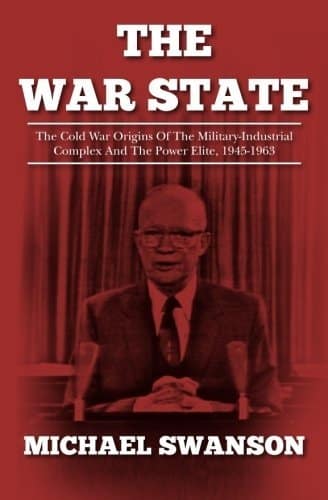
Mike Swanson is back with his forecast for the stock market and the next recession. Swanson thinks that the next crash could begin to set in motion an unravelling of the whole bubble of the dollar system itself, which might lead to the type of stagflation we saw in the 1970s. His advice, as always, is to diversify, including some money in gold and silver. Mike Swanson provides investment advice at wallstreetwindow.com and is the author of The War State: The Cold War Origins Of...
9/19/19 Ted Galen Carpenter on the Destruction of Libya and Ending NATO
Ted Carpenter’s new book explains why NATO is both obsolete and dangerous for world peace. Its obsolescence is clear: NATO was founded as an alliance against the Soviet Union, which hasn’t existed for thirty years. It’s dangerous because continued NATO expansion into eastern Europe, despite promises not to do just that, have increased tensions between Russia and the U.S. and its allies. Instead of an end to the Cold War, NATO has helped give us a second one. Scott and Carpenter also talk about...
9/19/19 Yossi Gurvitz on Netanyahu’s Political Future
Scott interviews Yossi Gurvitz about the Knesset election in Israel, where Prime Minister Benjamin Netanyahu stands to lose his position to Benny Gantz, the leader of Israel’s Blue and White party. Gurvitz explains some of the reasons Netanyahu’s tenure has been so bad for Israel, Palestinians, and the world, but says that the alternatives aren’t necessarily much better. At the moment the election is still too close to call. Discussed on the show: “The crumbled throne” (Mondoweiss)Oslo Accords...
9/14/19 Robert Naiman on How Congress Could Stop the War in Yemen
Robert Naiman explains why the Saudi-led war in Yemen, which Scott calls the worst thing the U.S. is doing right now, is unjust and unconstitutional. President Obama started to support the Saudis in their campaign during his second term, supposedly as a favor in exchange for Saudi Arabia’s support of the Iran nuclear deal. Naiman says that Nancy Pelosi has a unique opportunity to make ending this war a priority through the House-Senate Conference Committee, but it’s unclear whether she really...