
Q & A Shows
5/11/15 Full Show
by Scott | May 11, 2015 | 0 Comments
You are listening to the Scott Horton Show. 5/11/15 Full Show
5/8/15 Full Show
by Scott | May 8, 2015 | 0 Comments
You are listening to the Scott Horton Show. 5/8/15 Full Show
The Stress Blog
Today’s show: James Carden 12-2 eastern
by Scott | Jun 5, 2015 | 0 Comments
Today's show: James Carden 12-2 eastern time http://lrn.fm http://scotthorton.org/chat
Today’s show: Bad news 12-2 eastern
by Scott | Jun 4, 2015 | 0 Comments
Today's show: Bad news 12-2 eastern time http://lrn.fm http://scotthorton.org/chat
Recent Episodes of the Scott Horton Show
9/5/24 James Carden on the Afghanistan Withdrawal and Kamala Harris’ Foreign Policy
Scott interviews James Carden about two articles he wrote recently. The first looks back at the war in Afghanistan. He and Scott talk about how Obama immediately went the wrong direction with the war, how Trump had some good instincts but was ignored by his subordinates and why the disastrous withdrawal really was Biden’s fault. They then talk about all the neoconservatives and neoliberals who make up the foreign policy establishment rallying behind their new candidate — Kamala Harris.
Discussed on the show:
- “The Real Tragedy of Afghanistan” (The American Conservative)
- “Looser rules, more civilian deaths, a Taliban takeover: Inside America’s failed Afghan drone campaign” (Audacy)
- “The Foreign Policy Establishment Licks Its Chops for Harris” (The American Conservative)
- “Video of Joe Biden Warning of Russian Hostility if NATO Expands Resurfaces” (Newsweek)
- Yesterday’s Man: The Case Against Joe Biden by Branko Marcetic
- Bill Hicks on JFK
James Carden is a columnist and senior advisor to the American Committee for US-Russia Accord (ACURA) and a former adviser on Russia policy at the US State Department. His articles and essays have appeared in a wide variety of publications including The Nation, The American Conservative, Responsible Statecraft, The Spectator, UnHerd, The National Interest, Quartz, The Los Angeles Times, and American Affairs.
This episode of the Scott Horton Show is sponsored by: Roberts and Robers Brokerage Incorporated; Tom Woods’ Liberty Classroom; Libertas Bella; ExpandDesigns.com/Scott.
Get Scott’s interviews before anyone else! Subscribe to the Substack.
Shop Libertarian Institute merch or donate to the show through Patreon, PayPal or Bitcoin: 1DZBZNJrxUhQhEzgDh7k8JXHXRjY
4/10/20 Richard Booth on the Truth Behind the OKC Bombing
Scott talks to Richard Booth about his investigative journalism into the real story behind the Oklahoma City bombing and its subsequent investigation. Booth goes over some of the main holes in the official narrative, which was largely constructed in order depict Timothy McVeigh as a lone actor because his likely co-conspirators—members of a well-known neo-Nazi group—are suspected to have had ties as government informants. This is at best embarrassing, and at worst criminal. All of Booth’s great work is now available at The Libertarian Institute.
Discussed on the show:
- “The Ultimate Okalahoma City Bombing Archive” (LibertarianInstitute.org/okc)
- “Timothy McVeigh, Suspects, Visit Strip Club in Weeks Before Bombing” (The Libertarian Institute)
- “The Secret Rulers of the World (TV Mini-Series 2001– )” (IMDb)
- “Terror from Within (TV Movie 2002)” (IMDb)
- Oklahoma City: What the Investigation Missed–and Why It Still Matters
- The Secret Life of Bill Clinton: The Unreported Stories
- “Waco: The Rules of Engagement (1997)” (IMDb)
- “In Search of John Doe No. 2: The Story the Feds Never Told About the Oklahoma City Bombing” (Mother Jones)
This episode of the Scott Horton Show is sponsored by: NoDev NoOps NoIT, by Hussein Badakhchani; The War State, by Mike Swanson; WallStreetWindow.com; Tom Woods’ Liberty Classroom; ExpandDesigns.com/Scott; Listen and Think Audio; TheBumperSticker.com; and LibertyStickers.com.
Donate to the show through Patreon, PayPal, or Bitcoin: 1KGye7S3pk7XXJT6TzrbFephGDbdhYznTa.
The following is an automatically generated transcript.
Scott Horton 0:10
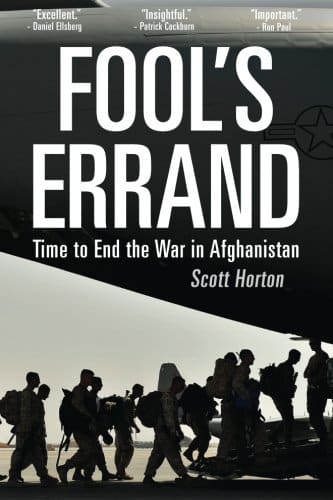
All right, shall welcome it’s Scott Horton show. I am the director of the libertarian Institute editorial director of anti war.com, author of the book fool’s errand, time to end the war in Afghanistan. And I’ve recorded more than 5000 interviews going back to 2003, all of which are available at Scott horton.org. You can also sign up for the podcast feed. Full archive is also available@youtube.com. Slash Scott Horton show.
All right, you guys on the line. I’ve got Richard booth. He is an independent journalist. And he has specialized in the cover up and the real story behind the Oklahoma City bombing of April 19 1995. And we have now at the Libertarian Institute reproduced his entire research archive of documents and very good journalistic reports on this story. And all of that is available at libertarian institute.org/OKC will have every single thing you need. And it’s really mostly a repository of firsthand sources of documents for researchers to base their journalism off of. And there’s some good journalism in there too, but it’s a lot of raw intelligence, as they would put it, and absolutely can serve as the basis of all kinds of new great investigative journalist reports if investigative journalists would feel so inclined to do so. For example, Richards article that we’re running on the libertarian Institute front page right now, Timothy McVeigh suspects, visit strip club in weeks before bombing. Welcome back to the show. How you doing, Richard?
Richard Booth 2:12
Very good. Thank you for having me, Scott.
Scott Horton 2:15
Man, I can’t tell you how much I appreciate all the work that you’ve put into this and then letting us mirror it all at the libertarian Institute. We’ll be keeping this archive for safekeeping from now on at libertarian institute.org/OKC. But let’s start with this article. McVeigh went to the strip club and he was with some people and none of them were Terry Nichols. Is that right?
Richard Booth 2:41
That’s right. It’s right about a week a little over a week before the bombing in Tulsa, Oklahoma. There’s a strip club there called lady good divers. And this was a story that came out more than a year after the bombing, but it’s one that was followed up on by an Oklahoma drill. Analyst named JD cash. A excellent journalist, also followed up on by Canadian film crew for their program, the Fifth Estate, which is kind of like our 60 minutes. And basically, McVeigh went to this club and he had two people with him or not Terry Nichols. And that is obviously very interesting to look to see who he’s he’s hanging out with, you know, that close to the bombing. And what makes this encounter so special is that the the club had an audio and video surveillance system in the dancers prep room, you know, cuts down on crime, it was kind of for safety purposes. And when the owner of the clubs reviewing the tape, he saw and heard an encounter between his server and one of the dancers, it was a bit alarming to him. And the server was talking about an unusual customer that she had that Evening. And she actually repeated to the dancer what this gentleman had told her. And what he told her was he said, I’m a very smart man. And on April 19 1995, you’ll remember me forever. And at the time, of course, it didn’t really make a lot of sense. It sounded rather bizarre. But in retrospect, the owner of the club recognized immediately how serious it was. And he contacted the FBI who did show up and they did take confiscate that tape, but not before JT cash made a copy of the tape and had given a copy to the Fifth Estate, and they ran a program on it. Now for your listeners who are going to access this archive, they’ll be able to look at the transcript of the Fifth Estate program while I have the transcript in there. I’ve got articles by JD cash about the the encounter in the audio tape, and then there’s that short piece that I wrote that just kind of summarizes what happened. And it cites at the end of this article I’ve written it cites various pieces and a person can go and they can look in the archive and they can look at all those primary sources themselves.
Scott Horton 5:15
Right and then in the documentary by Jon Ronson, they feature the video itself in there they have the clip of the garage talking, and people can see themselves and they and they also interview on camera, the owner and his wife, I think, right?
Richard Booth 5:33
That’s right. The owner Floyd Radcliffe and his wife Julie are interviewed on camera in that that documentary from Ronson which it’s about 18 years old now, but it’s worth looking at. And that was also aired on the Canadian Fifth Estate program. They aired the the clip. I’ve isolated it and get a copy of it up on YouTube. It’s a short two or three minute segment from an documentary a really good one that I recommend people look at called terror from within, which came out in about 2002. And it focuses on McVeigh having been a neo nazi rather than this militia guy, which that’s really what he was, was a neo nazi and the people who are with him that night at that strip club, they were picked out of photo lineup by the witnesses. JD cash writes about this and so does the Fifth Estate. These people in their investigations showed a photo lineups of multiple individuals to these people. The bottom line is one of these guys had a German accent. And he was very easily identified as a German national a man named Andrea Strasse Mir and the third person was identified by photos evidently, as stressed as roommates at lm city which is a gentleman by the name of Michael brusha, who is a member of a neo nazi terrorist group at that very time.
Scott Horton 7:05
And well, and people will see, that’s just the beginning of that thread. And there’s plenty of, you know, again, FBI documents, official government documents in the research archive here, where so many of these ties can be, you know, identified and solidified. It’s it’s pretty far beyond speculation to the realm of, I would say beyond the reasonable or even beyond a shadow of a doubt that McVeigh was in conspiracy with these guys from the area and Republican Army to do this attack. Would you agree with that?
Richard Booth 7:46
I would agree with that. My suspicion is that the members of the area and Republican Army, certain members were involved in the bombing and in fact had been accused of having been involved in the bombing. By other people in that group when when the all that group was busted by the FBI, and they most of them went to prison. Several of them identified one or more particular members and said specifically, these guys has something to do with the Oklahoma City bombing. And so that’s something that I think that people can look at and they might be surprised to find out by looking at the news reports, the FBI also believe this and in April of 1995 April 28. newspaper reports ran, which said that the FBI believe the bombing was financed through a series of unsolved Midwestern bank robberies, which as it turns out, were robberies carried out by the so called area and Republican Army. And so early on in the investigation before the story kind of started changing. The FBI spoke to reporters and you can read what they say. He said to reporters, and you can read those earlier reports and see that they very much knew this was the work of four or five people.
Scott Horton 9:06
Hmm. Well, I want to go ahead and add this very important quote from the book, Oklahoma City by Roger Charles and his writing partner here, Andrew Gumbel, who’s a reporter for The Guardian. And they wrote this book, Oklahoma City, what the investigation missed and why it still matters. And on page 328, they have a quote here from Larry Mackey, who was a federal prosecutor who helped to prosecute Nichols. And, you know, this is a little bit unclear because of the double negatives and so forth kind of thing the way he constructs it, but I think people can understand he says, if you had said to us, anybody in the room, 100% confident that McVeigh was alone, raise your hand. We would have all kept our hands in our laps.
Richard Booth 9:56
Mm hmm.
Scott Horton 9:56
Meaning In other words, he and his entire team he believes, never believed that this conspiracy was just Timothy McVeigh and Terry Nichols. And they go on I’m not sure if it’s on the same page or not. But they make it clear that essentially, their excuse is not the author’s but the people that are writing about the feds excuse was that they didn’t want to jeopardize the death penalty case against McVeigh by pointing to the rest of the guilty, because even though they all deserved at least life, they were worried that if they implicated anyone else that would jeopardize the death penalty case against McVeigh. And so they went ahead and made that decision that killing the probably the most important member of the plot. I think we agree about that was more important than locking them all up for life, which sounds like government work to me. Although you know, I’ve long suspected and I think either of us could prove pretty easily that it went beyond that, right? They had a real reason to cover up who all was involved because of other federal government employees relationships with those co conspirators, right?
Richard Booth 11:18
No, that that I’m glad you bring that up because that’s an excellent book on the bombing, I highly urge or recommend that people read that book. And it’s true that the prosecutors were basically working with what they had, which is they have Timothy McVeigh, they can assemble a very good case against him because he absolutely was, was involved in this bombing, and was one of the principals but on the other hand, they knew that the FBI had did not apprehend some of these other people. And to focus on that, to talk about it or to otherwise highlight it would only cause skepticism in the minds of some jurors who might, well could have been argued by the defense team that oh, this guy McVeigh was just a foot soldier. He’s just taking orders. So they really, really had to get away from that issue of other people. But I urge people to go just look at the archives read the read the news reports, and the FBI reports from April in May of 95. And even and then in May of 97. And two years after the bombing, there was a news cycle, whereby about two weeks over a period of two weeks over all news report after news report about a third suspect in the bombing. This is a man that the FBI investigated for five years to try to locate guy who went by the name of Robert Jax was an alias the man was using and this man was trying to purchase property with McVeigh and nickels that had a cave on it. And the FBI in the in that Ronson documentary that you mentioned, they’ve got a thing that was in that one. If not, it was in the terror from within. They’ve got a quote from Bob Rex at the FBI talking about this gentleman. And Rex is saying, Yeah, you know, we believe that that they were looking for a place to hide with this guy. And this gentleman was he, according to the witnesses, he was the boss man. He was the guy who did all the talking asked most of the questions. McVeigh and Nichols were both there with him. And this third gentleman who went by the name Robert Jackson is somebody that the FBI never could locate. He becomes one of the first of the others unknown. In this case of which the FBI believed and I believe there were four to five of these other people.
Scott Horton 13:41
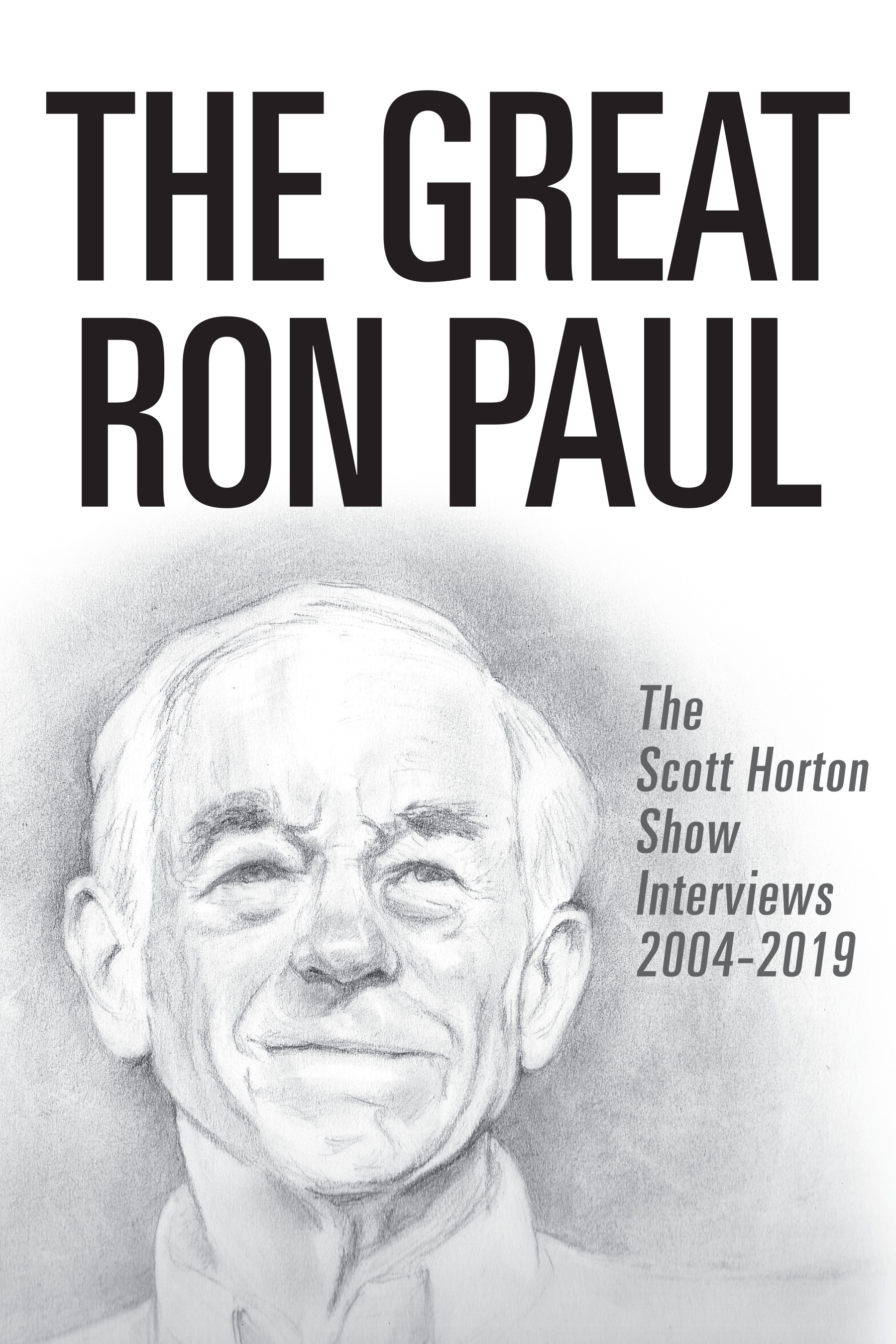
Hey, I’ll check it out. The libertarian Institute that’s me and my friends have published three great books this year. First is no quarter, the ravings of William Norman Greg. He was the best one of us. Now he’s gone. But this great collection is a truly fitting legacy for his fight for freedom. I know you’ll Love it. Then there’s coming to Palestine by the great Sheldon Richmond. It’s a collection of 40 important essays he’s written over the years about the truth behind the Israel Palestine conflict. You’ll learn so much and highly valued this definitive libertarian take on the dispossession of the Palestinians and the reality of their brutal occupation. And last but not least, is the great Ron Paul, the Scott Horton show, interviews 2004 through 2019, interview transcripts of all of my interviews of the good doctor over the years on all the wars, money taxes, the police state and more. So how do you like that? Pretty good, right? Find them all at libertarian institute.org slash books.
Hey, you guys may know I’m involved in some libertarian party politics this year, but you can’t hear or read about that at the libertarian Institute due to 501 c three rules and such. So make sure to sign up for the interviews feed at Scott Horton. org and keep an eye on my blog at Scott Horton. org slash stress.
Hey y’all Scott here, if you want to real education in history and economics, you should check out Tom Woods is Liberty classroom. Tom and a really great group of professors and experts have put together an entire education of everything they didn’t teach you in school, but should have follow through from the link in the margin at Scott Horton. org for Tom Woods is Liberty classroom.
Well now and I wanted to point out here real quick, too, that this cover up that they described as being so necessary to guarantee the conviction and death penalty case against McVeigh. It almost cost them a conviction against Terry Nichols. And the original vote was tempted to to acquit Terry Nichols, who I think we both agree was guilty and was in on this. But what had happened was the government didn’t prove it because they couldn’t prove it without telling too much of the story. And so essentially, they just try to guilt trip the jury into going along with it which eventually they did. But they found him guilty of, I think just manslaughter or even involuntary manslaughter or something, rather than give the government the full murder conviction, you know, the the conspiracy and everything else that they were trying to get. And, in fact, the McVeigh jury had the same problem. And in the archive, people can hear the audio clip that I had taken from 60 minutes, where they interviewed one of McVeigh’s jurors, where she is just purely rationalizing and says, Well, you know, she’s the subtext leading up to it is they never really proved a case at all. And so she says, Well, I was just waiting for the defense to call someone to provide McVeigh an alibi, and say it couldn’t have been him because he was with me that day. And since that never happened, I figured that I guess he really did do it. Right. In other words, Cops are really sure. And they’re guilting me into voting guilty, but they haven’t convinced me they have no evidence. Now the burden of proof is on the defendant to provide an alibi, otherwise, he must have been the guy. And that’s clearly her just filling in the gaps. Like when you’re trying to make sense out of something, George W. Bush said, you just have to put words in there to make it make sense. And that’s what she does here. She just tries to figure out a way to make it make sense. And of course, you know, he was guilty, but the prosecution spent the whole time interviewing. I remember in one specific case, it was a little girl who had lost her mom and I think her Auntie at the same time they’re, and was like nine years old and was wounded herself. And they put her on the stand and they asked her, you know, how do you feel ever since losing your family members, and she cries and says I feel terrible? And they say, Okay, thank you no further questions. And this is how they convicted the guy because they couldn’t prove that his guilty ass was guilty without implicating again, these other Nazis were not unknown to the Federal Police before this whole thing happened and what they call embarrassment that the rest of us would call, you know, criminal culpability comes into play here that this is why we’re not going after Richard Guthrie and Michael Brescia is because they work for us, or they used to and we supposedly we’re keeping tabs on them. This kind of deal.
Richard Booth 18:27
Right no, I’m glad you mentioned that because at the trial, you’re very correct insofar as that they had witness after witness that they brought in who were sent. These are people who are victims, and they just had a parade of victims, which was horrifying to see the real human toll. And the number of people who died or her were maimed in this bombing. But the one thing that stands out to me and to any other students who might look at this case, is they will find no one was called who pointed to Timothy McVeigh in the courtroom and said, that’s the man on saw at the scene of the crime. Not a single person did that. And that was not for lack of witnesses because as the reader will see, there’s the listener will see if they go look in the in the archive, they’re going to find FBI 302 reports which are witness interviews with witness after witness after witness who saw Timothy McVeigh at the scene of the crime. It’s at least 24 different eyewitnesses. Right. That’s on that morning elite. There they had at least 24 FBI had at least 24 that they felt were solid. One of these witnesses. The FBI had pointed him out of a real live lineup downtown at the Oklahoma City command post he said pointed to this guy said that Sam right there pointed McVeigh out. This gentleman had a discussion with McVeigh that morning. And there was another man sitting in the Ryder truck at that time. That was a pretty that was a problem that the prosecution faces if they called any one of these witnesses, and that witness put McVeigh at the scene of the crime. The defense could follow up and say well, who else did you see with Mr. McVeigh? And every one of them would say the same thing. And there was no answer that the the prosecution had for this other person.
Scott Horton 20:09
Yeah. And you know, it’s such an important part of this story is the media rolling over and going along with this. And I remember reading the onion headline was incidents incidence of angel sightings in Oklahoma City goes up by 70% are just mocking these people for being Christians and believing that their loved ones might have gone to heaven or something. Instead of the obvious. Americans go for the lone bomber scenario, and, and mocking and ridiculing the newspaper editor of Let’s count them. Right everybody at set the Rocky Mountain News and the Denver Post who they never really got it together. They ran good articles, but they never really said, Hey, we have a real problem here and tried to make a thing out of it. But meanwhile, The New York Times the Washington Post’s Miami Herald, the Houston Chronicle, the Dallas Morning. A news los angeles times the Seattle post Intelligencer just Dan Rather Peter Jennings and Tom Brokaw and lair and McNeil on the NewsHour, they all went along with pushing this story that this one guy did it. And the fact that they had journalists sitting in that trial, and not saying, well wait a minute, who what else is going on here that you’re not telling us because you’re clearly not telling us everything? And and wanting to fight about that, you know, September 11, made it pale in comparison, in in the public imagination. But what about in the six years in between when this was the biggest deal in the world other than OJ Simpson, which obscure the importance of it for a year there, but still we’re talking about 168 dead government employees and their babies. And they were able to cover this up to such a degree and get away with it with this hoax. That it was this one guy with his Ryder truck and that is closest co-conspirator was 200 miles away in another state at the time that the bomb detonated and hold rights trial circus in the world without calling a single witness to put them at the scene of the crime in which was in downtown Oklahoma City, right at nine o’clock in the morning.
Richard Booth 22:19
Right it you know, while it is an outrage, that’s what the official narrative has become one thing that that really plays into this being the tragedy that it is, and the injustice that it is, is that you know, people have a short memory, things will appear in the news and they’ll come they’ll go and they’ll maybe Forget about him. And if a person goes and looks at this archive, and they look at the news reports, just just read them in Chronicle chronological order for April and May just read those first two months. And what you’re going to find are newspapers that actually did publish interviews with witnesses who they found were credible, and you’re going to be reading about people who saw john doe number two people who saw Timothy McVeigh at the scene of the crime, and every one of them, seeing them with another person, and these people, these were quoted in the paper. These were people who many cases were very credible. A bank executive, you know,
Scott Horton 23:13
with john doe, is the biggest manhunt in world history until he didn’t exist, and was all right.
Richard Booth 23:19
And that is what really caused a burning passion in me for this case, because I’ve followed it in the paper, and I’m thinking, Okay, they’re gonna get john doe number two, one of these days, you know, it’s been almost a month, and then I believe it was in June and 95. And the FBI said, he did he doesn’t exist. I said, Okay, I was born at night, but I wasn’t born to last. You know, last night, something is going on here. And I’ve been just very curious about it ever since. And the the evidence that people can look at here was overwhelming, not just Meteor accounts there. There are FBI documents, Secret Service documents, and just a whole host of things and it’s going to cause people to very quickly realize that there’s more to the story.
Scott Horton 24:04
Now, so I wanted to mention here I see you have all your footnotes in the article that we’re running today. Timothy McVeigh suspects visit strip club in weeks before bombing by Richard booth April 9 2020. At the libertarian Institute, if you paste down to the bottom, it’s all your sources there. And the last one is the link to that YouTube video where people try to see and hear for themselves as the strippers talk about boy there was this weird creepy guy who talked about how famous he’s going to be one day out there, bla bla bla explaining all of that in the context around it too, I think taken from Jon Ronson documentary there. And you know, people really should take a look at that. So that they can see it for themselves.
Richard Booth 24:48
Well, you know what, Scott, if people if they view that video, and you know, that’ll be one shocking thing, but one thing that they can they can consider in and this is what I was thinking of when I wrote that article is if Timothy McVeigh is going to be bragging to some stripper that he just met five minutes ago, about how on April 19, she’s going to remember him forever. And it’s obviously then on his mind that evening. What are the odds he’s going to discuss that same subject matter with the people that he’s there at the club with? And I’d bet on those odds. I bet if he talked about it that, yeah, if he talked about it that night with his dancer, he’s going to be talking about it with the two people who are with him, which was, you know, Andrea Strasse mirror and Mike brusha. And I think that both of them might have some explaining to do. Yeah, of course, dress beard
Scott Horton 25:42
in fact, admitted to Ambrose Evans Pritchard, essentially that he was guilty. You know, he has he admitted it in rhetorical question form, like, Yeah, but how could I come forward if it was all my fault in the first place? Because I was an agent provocateur. I gotta go. I forgot the exact quote, but it’s very much like that.
Richard Booth 26:01
It was incredibly incriminating if you read Ambrose Evans pritchards interview with Andrew Strasse Meir Pritchard did a an amazing job as an investigative journalist, he all bit got this guy to admit that he was in the truck five minutes before the bomb went off. And since then strassman has gotten much better with PR. And he does now deny things he owed. I denied ever knowing McVeigh deny this tonight that but if you go back and look at what he said to Ambrose Evans Pritchard in 1997, he had certainly had a different tune at that time. And anybody who studies this guy and looks into his history, they’re gonna find that a person does not just up and decide one day that they’re a neo nazi and say, I think I’m gonna move into a neo nazi compound. One day, they’re normal The next day, they’re a neo nazi. That doesn’t happen. And so –
Scott Horton 26:52
I have a book here, but all my notes, all my bookmarks have fallen out. So I’m not going to be able to read y’all the quote. Unfortunately, the book is the book is called The Secret Life of Bill Clinton, which is a stupid title. And it’s not even about Bill Clinton at all. It’s, I mean, he’s hardly even in the book. But that’s what the publisher called it to get it read. But it’s Ambrose Evans Pritchard from the Telegraph and it’s solid journalism on Oklahoma City, you know, everyone will really appreciate it. Sorry, I don’t have that. I pulled it off the shelf and I used to have this book was full of little yellow post it note bookmarks, but they’re all gone now. But you know, something else that was in that video, that same documentary is and this is something that was in pritchards book that I always cited pritchards book for this. But it turns out that Jon Ronson has Bob Rick’s on video and people will remember Bob, Bob Rick’s was the spokesman for the FBI during waco so whenever you see on waco the rules of engagement, and the guy is up there going we put massive gas in there and the women and children had to have been suffering. That’s him Bob bricks and he was the head of the Tulsa office of the FBI. And he admits on camera to Jon Ronson, that, yes, the ATF had an investigation into this Nazi compound that you mentioned eloheem City out east to Tulsa there. And that he shut them down. He’s happy to admit that he stopped the ATF. He was afraid they were going to do another stupid waco raid. And after all, they might right but then the implication was we’ll handle it, but then they didn’t handle anything at all. And in fact, it looks like the ATF undercover informant who was informing the ATF about this conspiracy there at the time, Carol Howe was actually informing on a conspiracy that was made up of a bunch of FBI informants, and I don’t know exactly who Strauss Meier was working for, or if you do, but most of those guys were informants or flip state’s witnesses. You know, the important ones involved in the area and Republican Army and all of that kind of thing there. And so maybe that’s the reason why Bob Rick’s never did follow up on the ATF investigation that really was leading somewhere.
Richard Booth 29:15
You raise a very good point and I think I haven’t a little bit of an alternative viewpoint on that and to kind of, yeah, to let people know the circumstances it is just as you said, basically, the FDA or that is the ATF is about to do a raid on lm city. They’ve had an undercover investigation. They have proof the laws are being broken. They know that firearms, they’re being converted automatic, they have their informant, they’re ready to have a raid. And so they have a meeting with the FBI. Bob Rex is at this meeting, like you mentioned. And what happens here is the FBI puts a halt to the raid. And now here’s where I have this alternative opinion. Bob, Rick says The reason for halting that rate is he wanted to prevent another waco. Well, this is how I look at it. What if Bob Rick’s or his people at the FBI had an ongoing intelligence gathering operation at LFM city, and they had an informant in place, that operation would be just completely ripped apart and just just crapped on if another agency comes in and does some kind of raid. And so I and –
Scott Horton 30:32
That makes sense then to that whoever the FBI informant was, or if it was more than one, that they were essentially double agents shine in the FBI on while they were planning this attack, which would also go to explain the two Ryder trucks that it’s abundantly clear that there were two different trucks. And so one of them was the decoy for the idiot Feds to chase around in circles while the other one was actually full of a bomb.
Richard Booth 30:57
Right, right. And you know, interestingly, that’s the story. tactic that was practiced by one member of the air this area and Republican Army bank robbery squad, that one of their members, Richard Lee Guthrie, this guy was really an antisocial personality, but very, very intelligent. And what he would do is he would actually get dropped cars and he would register them in the names of FBI agents, or he would get two drop cars that were the same make and model. And so they’d have two cars that were identical. He did these sort of these sort of smoke and mirrors type tricks, because he’s thinking ahead, he knows an investigation is going to be coming up, and he’s thinking what can I do to confuse that investigation? So when we talk about the potential of there being two writer trucks, which is what the witnesses bear out, I look at that and think now that’s a Richard Guthrie tactic. And there’s just there’s a lot of material people can dig into to see what potential links are between the area and Republican Army and McVeigh but why I’ll, I’ll just say this. The FBI believed that Timothy McVeigh was involved in bank robbery. His sister told the FBI that he, he told her that he was involved in bank robbery and had her launder some proceeds from it. And they believed the bank robberies finance the Oklahoma City bombing. And well, the biggest bank robbery group at that time, who had the exact same ideological beliefs as Timothy McVeigh were the Aryan Republican Army
Scott Horton 32:28
and ties to eloheem City, which is right down the block from the strip club.
Richard Booth 32:33
That’s what it’s Yeah, ties to lm city where there’s a place where they all congregate in the strip club. It’s in Tulsa, Oklahoma. Yeah. But Tulsa is if you’re going to go to a big city. If you’re going to leave the compound lm city, you’re probably going to go to Tulsa. You’re probably going to go to Oklahoma City. Yeah.
Scott Horton 32:50
Okay, well, listen, we’re out of time for this and got a run. But there you have it, everybody. The beginnings. Oh, I want to mention I have to mention here you mentioned Guthrie, and that for people who are familiar who’ve been listening to the show for a while, you’ve heard me interview Jesse Trentadue, whose brother Kenny was murdered by the cops, the Federal cops at a transfer station in the summer of 95. And it’s virtually certain that he was a case of mistaken identity, and that the cops thought he was Guthrie. And that’s how the confrontation with him began and how he ended up dead, which is a long, complicated story. But in the archives, you can find in search of john doe, to by James Ridgeway and Mother Jones, an excellent piece on it. And in my archives, you can find all my interviews that Jesse I don’t know how many there are five or 10, or something going back over the years about that. And so I’ll really encourage people to pick up the trail from that end if you want as well. Great stuff there. And that’s it. I’m sorry, we got to go. But everybody that is Richard booth, and he wrote this piece Timothy McVeigh suspects visit strip club in weeks before bombing that’s it the libertarian Institute libertarian institute.org He has compiled this magnificent archive of original source material on the truth behind the Oklahoma City bombing of 1995. And we have it all for you for free, of course, at libertarian institute.org/OKC. Thank you, Richard. Appreciate it.
Richard Booth 34:21
Thank you, Scott. It’s always a pleasure. And I’m glad to work with you to bring this this archive to the public.
Scott Horton 34:27
And boy, am I glad that you are to man it’s really something else that we have this so thanks again for sure.
The Scott Horton show anti war radio can be heard on kpfk 90.7 FM in LA, APSradio.com antiwar.com. Scott Horton.org and libertarianinstitute.org
Podcast: Play in new window | Download
4/17/20 Jacob Sullum on the Political Response to Coronavirus
Reason Magazine senior editor Jacob Sullum talks to Scott about some of the latest coronavirus news. He comments on President Trump’s headline-making claim that he has the sole authority to decide if and when the economy would reopen, which Sullum asserts really belongs to the governors. Trump has backed away from his claim, but he still appears to support making progress toward reopening businesses sooner rather than later. Doing so would probably be a good thing, says Sullum, since the economic toll of the current measures have already been devastating, and only continue to get worse. Sullum reminds us that political decisions are often made with respect to the obvious consequences, and rarely to the unseen ones. For us, this means that politicians are likely to be overcautious in shutting things down without properly considering the massive toll to both the economy and to human life that is sure to result from such drastic restrictions.
Discussed on the show:
- “Trump Can Encourage States to Lift Their COVID-19 Lockdowns, but He Can’t Decree That Outcome (Reason)
- “The ‘False Debate’ About Reopening the Economy Is the One That Ignores the Enormous Human Cost of Sweeping COVID-19 Control Measures” (Reason)
- “U.N. warns economic downturn could kill hundreds of thousands of children in 2020” (Reuters)
- “L.A. County Sheriff Alex Villanueva Says Gun Dealers Are ‘Nonessential.’ The Department of Homeland Security Disagrees.” (Reason/)
Jacob Sullum is a senior editor at Reason and a nationally syndicated columnist. Follow him on Twitter @jacobsullum.
This episode of the Scott Horton Show is sponsored by: NoDev NoOps NoIT, by Hussein Badakhchani; The War State, by Mike Swanson; WallStreetWindow.com; Tom Woods’ Liberty Classroom; ExpandDesigns.com/Scott; Listen and Think Audio; TheBumperSticker.com; and LibertyStickers.com.
Donate to the show through Patreon, PayPal, or Bitcoin: 1KGye7S3pk7XXJT6TzrbFephGDbdhYznTa.
The following is an automatically generated transcript.
All right, shall Welcome to the Scott Horton show. I am the director of the libertarian Institute editorial director of anti war.com, author of the book fool’s errand, time to end the war in Afghanistan. And I’ve recorded more than 5000 interviews going back to 2003, all of which are available at scotthorton.org dot org. You can also sign up to the podcast feed full archive is also available@youtube.com. Slash Scott Horton show. All right, you guys introducing Jacob solem. He is senior editor over at reason magazine. Welcome back to the show. Jacob How are you doing?
Jacob Sullum 0:48
I’m doing all right. Thanks for having me.
Scott Horton 0:50
It’s almost a stretch to say back to the show because it’s been so long but I really appreciate you joining us here today. And boy, we have a bunch of important stuff. To talk about but I think if it’s all right, I’d like to start with this article that you wrote. And Trump can encourage states to lift their COVID-19 lockdowns, but he can’t decree that outcome. And this is the story of how Donald Trump made 10 thurs out of the liberal media for a day earlier this week by declaring that he has some kind of total power. What is up with that?
Jacob Sullum 1:26
Well, Trump frequently asserts powers he does not actually Have I mentioned a few in that post things he said in the past, where he clearly does not have the power that he’s claiming. This is another example of that. I mean, historically, it’s clear that the primary responsibility for responding to epidemics through quarantines in particular but other measures as well rests with the states that is a power that was reserved to the States under the Constitution. The federal government has inserted some power in that area, but having to do with Interstate and international transmission of diseases. So the federal government, through the Secretary of Health and Human Services has the authority to impose quarantines that are aimed at curtailing the spread between states or between, you know, into the into this country from other countries. But what he’s talking about is the, the lockdowns and the stay at home orders that were ordered either by local governments or by state governments. And they are very much operating within the parameters of their own authority under the Constitution. And he does not, on his own have the authority to tell governors for example, you must now lift that order. He was asserting otherwise. More recently, he has backtracked from that. I think the way He’s still portraying it as that it’s by his own grace that he’s letting the states go their own way. But he does not really have the authority to dictate to them in this area, he can say, gee, I’d like you to reopen the economy. Maybe it’s about time to do that. You can certainly say things like that. He also arguably can use some of his powers in allocating epidemic relief funds or epidemic, you know, fund funds aimed at fighting the epidemic, to encourage states to open up sooner rather than later. Congress could definitely could pass a bill saying, if you want to have more of this particular kind of money from us, we want you to start opening up your economy. I don’t think Congress is going to do that. But I think they could certainly do that. I mean, based on Supreme Court precedents, dealing with the issue of spending power. The classic example was the federal government decided that every state should have a minimum alcohol purchase age of 21. It could not directly order them to do that. But what they did instead is they said, if you want to get highway funding, you need to make this change. And that went to the Supreme Court, the Supreme Court said, That’s okay. Congress could not establish a national drinking age, it does not have the authority to do that. But it can say, we’re not going to give you this money unless you do this. So they could do something similar. Congress could definitely do something similar if they were if Congress was so inclined. And possibly, I mean, they could definitely try to pass a law explicitly and directly addressing lockdowns and claim that under the interstate commerce clause, they have that power. You know, say saying when California shuts down its economy when New York shuts down its economy. That has an impact on interstate commerce. Therefore, under the Constitution, we have some say in that. But of course Congress hasn’t hasn’t done that. So it’s very hard to see how Trump on his own can claim that power when he doesn’t have it under the Constitution. He has not even extensively been given any authority over lockdowns through a new Act of Congress. So basically, he was just sort of, I don’t know, what’s the kind of wave but I guess he’s claiming claiming power he doesn’t have. He wants to look like he’s in control. He has a tendency to assert that because he’s president he can do whatever he wants, but that’s not true. Yeah.
Scott Horton 5:42
I think it’s just amazing that in your article here, you’re citing john you the guy that says that George Bush has the power to torture somebody’s child into forcing him to give up a ticking time bomb or something like this. And he comes out and says, I’m sorry, Trump, you’re way overstepping your bounds here.
Jacob Sullum 5:59
Now, john, you his credit, you know, he has a very expansive view of presidential power, especially when it comes to national security issues and foreign policy. He is famous for pushing those powers to their limit, and some including they would argue beyond. But to his credit, he has criticized both Obama and Trump previously, long before the epidemic for overstepping the proper realm of presidential authority. So he is saying, basically what I just said that that this is traditionally an area where states have primary authority, there is some authority as it pertains to interstate commerce for Congress. But that doesn’t mean the President has that authority. Right. The President has to be able to cite either a congressional act that that ostensibly gives him authority to the intervene in this area, or some independent source of authority under the Constitution and there Not when he was. Trump was asked specifically about that at a briefing the other day. That reporter said, Well, what constitutional provision gives you this authority to tell states when when they can close down businesses when they have to let them open? And he said, they’re plenty. He didn’t actually name any. And he said, I can give you a Legal Brief. And you can imagine all of the lawyers in the Justice Department scrambling to try to come up with some sort of rationale. And then later on, he came back to the subject and said something like, Well, the President has a lot of authority. He’s very powerful, and I get to call the shots. And it’s not true as a general matter, you have to be able to source to cite a specific source of authority. Yeah,
Scott Horton 7:46
well, you know, it’s funny here he is claiming the powers of a dictator and I found myself sort of defending him in a way. When I wrote up my old blog entry about it at the Institute was he’s clearly bluffing and has No idea what he’s talking about and doesn’t even really mean it in terms of, is there any reason to expect that tomorrow or the next day or sometime soon that he’s truly going to claim this authority over the governors and make this decision for them? No, he’s not. And then that’s exactly what happened a couple of days later, I guess it was yesterday, he was on a conference call with the governors and said, You guys are in charge, you do what you’re gonna do. But he’s just up there Bs and because he’s probably never read the Constitution in his life. He has no idea what it says, other than he can be the president. And then that job is defined by his imagination only pretty much.
Jacob Sullum 8:37
Yes. And I, you know, look, politically, it doesn’t make sense for him to own this. Let you know, there was a smart move politically, is to let the governor’s go their own way as well as legally, you know, legally required to do but politically. Imagine he did have that power. He tried to assert that power. And he said, everybody’s got to open up now. And it doesn’t go out. It doesn’t turn out so well. Right. This way, he’s not responsible for possible bad outcomes due to lifting the orders. And he’s also not responsible for the bad outweighs the ongoing bad outcomes from having these orders to begin with, you know, there’s a tremendous amount of economic dislocation and damage that’s being done every day by these orders. He doesn’t have to take responsibility for that either. So if I were him, and I was trying to avoid responsibility, I would not want to be asserting the power, because then well, if he really thinks he has the power, people can say, Well, why didn’t you open up the economy sooner? You said you had that power? And and we’re all out of work, and we’ve we’ve lost our businesses, and we’re struggling to pay our bills. That’s on you now, because you said you had the authority to open the economy. Why didn’t you do that? You
Scott Horton 9:48
know, and, you know, it’s funny in that press briefing, where he’s saying this stuff. And the reporters, the one reporter says, Well, that’s just not true. She just contradicts him and says, Who told you that that You have that power. Where did you hear that from? And he refused to answer that, because of course, the answer was he made it up himself. And then pence gets up there is like, yeah, you know. Yeah, there’s a thing. We’ll we’ll get back to you on some kind of, you know, also bluffing trying to cover for the President. And then one of the other reporters who I can only assume, as a liberal Democrat, start saying, but what about the 10th amendment? The 10th Amendment says that all powers are reserved to the states and that they and I saw on Twitter where everybody was laughing about that, Oh, no, you’re a NEO Confederate. How dare you bring up the 10th amendment in any context or LLC are the devil but all of a sudden when it comes to Trump declaring this authority that Bill of Rights does count after all, huh?
Jacob Sullum 10:45
Yeah, and look, to be fair, both progressives and conservatives are inconsistent when it comes to federalism. Conservatives are more usually identified with that position, but they don’t like federalism when it gets in the way of the federal government achieving their policy goals, right? So when they try to try to do things like ban assisted suicide, or prohibit, you know, certain kinds of abortion, and you might ask, well, where does Congress get the authority to do that? Right? And they end up making these arguments that are very similar to what the arguments that progressives make when they’re pushing their policies. Right. So you do see especially you know, when you have a Republican in the White House, and when you have republican control of Congress, you see progressives making noises about states rights when they win, because they think the states are going to pursue the policies they like, hmm. So I think people’s allegiance to federalism is highly situational. Yeah. And but we’ve seen this before we’ve seen progressives, when they when they have republicans in charge of the national government suddenly discovering the 10th amendment and the virtues of state autonomy.
Scott Horton 11:58
Yeah, well, of course. You know, I admit I tried to quit Twitter, but it keeps pulling me back. And this virus thing has got me trolling Twitter again. And I saw so many conservatives saying, Oh, you liberal hypocrites, and now you favor limits on executive power. But I didn’t see you saying that during Obama, which is True enough. But what are they saying? They’re not attacking Trump for claiming too much power. Now. They’re simply hiding behind the hypocrisy of the liberals, but rather demonstrating their own hypocrisy in the very same way that no, of course we wouldn’t want Trump to claim any more power than we would want Hillary Clinton to be able to claim or any other Democrat in his same position. But no, yes, you say, highly situational for both sides.
Jacob Sullum 12:40
I mean, I think you and I would like to think that we were consistent about this. And I think, you know, I certainly strive to be I certainly criticized both Democrats and Republicans when they were presidents for overstepping their bounds. And Obama, you know, did some really egregious things, especially when it comes to warmaking, where he committed himself To position before he was elected that you need a congressional authorization unless basically unless you’re invaded, or there’s some kind of imminent threat to national security where you don’t have time to get a declaration. Otherwise, you have to get congressional approval, which is right. But once he took office, he was involved in several wars that were undeclared. On his own say so. And Trump, same thing. Trump, before he was elected, made noises about, I don’t know so much congressional permission, but he wanted to get the US less involved militarily around the world. It hasn’t quite panned out that way. So you see that kind of inconsistency, you know, in both parties?
Scott Horton 13:40
Yeah, absolutely. Hey, man, you guys are gonna love No dev no Ops, no ID by Hussein, Barack Johnny. It’s a fun and interesting read all about how to run your high tech company, like a good libertarian should forget all the junk. Read no Dev, no ops. No, it Hussain bodek Chani find it in the margin. It’s Scott horton.org. Hey y’all, here’s the thing, donate $100 to the Scott Horton show, and you can get a QR code commodity disc as my gift to you. It’s a one ounce silver disc with a QR code on the back you take a picture of with your phone, and it gives you the instant spot price. And lets you know what that silver that ounces silver is worth on the market and Federal Reserve Notes in real time. It’s the future of currency in the past to commodity discs.com or just go to Scott Horton. org slash donate. Hey guys, Scott Horton here for expand designs calm. Harley Abbott and his crew do an outstanding job designing building and maintaining my sites and they’ll do great work for you need a new website, go to expand designs comm slash Scott and say 500 bucks. Alright, so now I want to get into this article that you wrote here about the false debate about reopening the economy. And, again, with the left and the right, as Boulevard says swinging and missing, like drunks in a bar here. We’re on the right you have. I’m not I don’t want to say exactly, you know, make this a paraphrase because I forget, I didn’t jot it down. But I’m pretty sure I saw some guys from the Heritage Foundation, where they’re saying, Well, you know, by our calculations, the human life is worth this many hundred thousand dollars. And so you got to exchange this for that and this kind of thing, which is just bananas and then the left side. You know, the liberals are saying that anyone on the right, or anyone who wants to loosen up the clamp down, you’re trying to sacrifice precious, priceless human lives, just for the sake tannic god of the almighty dollar and the Dow Jones Industrial Average. Maybe the stock market will go up a 10th of a point. And how many people are you willing to kill for that and Well, again, only the libertarians in the middle seem to be saying, Well, actually, we’re talking about trading lies for lives here. That’s the question. It’s not a question of lives for dollars, or question of, you know, only millionaire republican business owners want to reopen the economy while everyone else would prefer to be locked down just like, you know, all the liberal blue checks on Twitter who, after all, don’t have real jobs, right? They’re either media people or they’re government employees, university employees and so forth. And they’re not really sacrificing anything, and probably don’t know anybody who’s been thrown out of work, even as 20 million people have been thrown out of work just in the last month. But you’ve got your eye on the ball here, in terms of, you know, what the costs are for humanity not just hearing around or not just here but around the world. I don’t know if you saw the thing. It’s a top headline on anti war calm today is that you is predicting that hundreds of thousands of children are going to die because of the economic consequences of the lockdowns from the virus. And that’s, you know, a lot of people in the last 1020 years have been brought up out of poverty, but they’re still right on the line and can be pushed right back into hunger and starvation here.
Jacob Sullum 17:21
Yes, I mean, I, the important thing to recognize that is that there are human costs on both sides of this equation. And when it comes to sweeping measures, like business closures and stay at home orders, very clearly, there are tremendous economic costs involved immediately. We see it right now. Right with all the people unemployed. Yeah, as you mentioned, even it’s even worse in less developed countries. I mean, in India, you had all these migrant workers and suddenly couldn’t work and had to go back but they weren’t allowed to go back because maybe they’re spreading the buck. I mean, they’re screwed. They don’t they they’re really and that’s a situation where you really start to talk about lies for lives because people don’t have the money to feed themselves. So their cost of both sides. I won’t defend. I’m not going to defend any particular dollar figure. But what I will say is that when governments impose regulations that are aimed at protecting health and safety, they routinely take into account not just how many lives do we think this might save, but how much will it cost? And they shut? You have to because resources are finite. There has been almost no consideration of that among politicians when they decide to impose these orders. Now, there’s tremendous uncertainty on both sides of this, right. There’s there’s uncertainty about the epidemic itself, how lethal The disease is, how many people have it, how many have recovered I mean, there’s just basic facts. We’re You have no idea. And when you talk, just pick one example, about a fatality rate that might be somewhere around the flu, probably somewhat larger, right? on up to 10 times as lethal as the flu. And you don’t know where in that range it is. That’s it’s impossible to make rational policy decisions when you know so little about the threat. And I think there is a tendency to feel like we really need to do something, and we need to do something serious. Because it could be really bad, but we don’t know. But the problem there is that you are not, you’re giving very little weight, if anyway, to the other side of it, which is that you know, you’re going to to cause a tremendous amount of suffering by imposing these policies. So I think it is legitimate, I guess I’m going to defend the heritage foundation to say that, that we need to think about how much this is costing. And if it turns out that The number of deaths is not it’s not it was never going to be in the millions. I mean, these projections were not realistic, the ones where they talked about, you know, 2 million people or so in the US dying was that was based on the assumption that nothing was done literally nothing. In other words, people don’t change their behavior at all. Not just that there aren’t any government policies, but that everything just stays as it is. So that was never going to be the case. There was there was also going to be always going to be social distancing various kinds of precautions, face masks and so on avoiding, you know, large groups of people and all that. The question is, what’s the difference between that those kinds of precautions which are largely voluntary, and closing down huge segments of the economy? What’s the payoff from that? Right? We don’t really know. And we may, we may never know. Because after the fact, they will say, Well, look, the deaths are far fewer than we feared. It shows the policies work. Well, we don’t know that because we never ran the experiment, right? We didn’t we didn’t have an alternate universe where we’d never impose these rules. And then we saw how many deaths there were in that case. So we don’t really know. But you’re trying to choose between a sweeping measure, and a less sweeping measure in an environment where, you know, almost nothing. And so it’s not just that you don’t know about the disease, you also don’t know about the long term economic consequences. So we do know, but the immediate ones immediate ones are, should be obvious by now. people out of work struggling to pay their bills in poorer countries possibly starving.
But the long term consequences, you know, is this going to be just a really, really bad recession? Is it going to be a depression? We don’t know. That depends on a whole series of future events that are that are very difficult to predict. So you have tremendous amount of uncertainty of both sides. But what I will say is that I don’t think there’s been sufficient weight given to the economic cost of these policies, because their politicians have a very strong incentive. To act, to act to do something, to be seen to be doing something. And in the face of the, you know, hospitals possibly being overwhelmed by these cases and the death toll going up and up, it is natural for them to want to do something, even if they don’t have adequate information to make these decisions. So my fear is that the economic costs will turn out to be much greater than people anticipated, then then, you know, the governors were thinking when they impose these orders, and that the benefit in terms of death prevented, there will be some benefit, I’m willing to concede that there’s got to be some benefit, right. But it will be much more modest than what they were imagining. Because if especially if they were driven by these worse, completely implausible worst case scenarios, which does seem to be the case with Trump, by the way, when he sort of turned around on this issue, he was swayed by these projections of, you know, 2 million destiny us right if we do nothing, which was totally unrealistic. So if they were if they were making decisions based on those implausible worst case scenarios, figuring whatever the cost of this, it has to be done, that may turn out to have been a huge mistake. All right, so we’re now we have a situation we’re in now is that the governor’s, local governments as well felt constrained to impose these sweeping restrictions to avoid a hospital crisis. And that the reason that they felt constrained to do that is because like I said, they had almost no information. And one of the main reasons I had no information is that we had virtually no testing early on that was a huge fiasco, engineered by the CDC and the FDA, that we didn’t even know how many cases there were early on. We didn’t know if there was community transmission. In fact, there was right so you had the first case identified January 20. In Washington State. By that time, there are already lots of other people who have this We didn’t know. And not only did the CDC not get a better handle on it, but they actively together with the FDA prevented universities, private companies from trying to get a handle on this. So in that sense, you can blame them for the fact that the economy has been has been wrecked, because the politicians felt like they had no other choice, right? Because they didn’t they didn’t have adequate information. Now, if you had been able to back in January, find out who actually was infected, you had wide testing, and you could do what what a bunch of other countries have done, which is identify who’s sick, who they’ve been in contact with trace those contacts, isolate the patients, quarantine the people who’ve been exposed to now or carriers. You could have had a much more targeted and tempered approach that would not have ruined the economy. But that’s kind of a foregone. You know, we were not able to do that because we did not have Mass test and we still don’t have mass testing. Look at the latest numbers of people tested in the US for the virus, it’s still only about 1%. And it’s not a representative sample. They’re overwhelmingly testing people who have severe symptoms, right? Because they still don’t have enough tests. And that’s how they decide to allocate them. Somebody needs hospitalization, they will get tested, right? But people, even people who clearly have symptoms, they recover at home, they may never be tested. Another complication, my own daughter had symptoms that were my oldest daughter that we’re very much consistent with COVID-19. She got tested came up negative, and she’s like, Oh, I had all these symptoms. I didn’t even get immunity out of it. But it turns out that may not even have been an accurate result. Because the error rate for negative tests, maybe maybe like 30% of the time, they tell you you don’t have it and you actually did have it for various reasons, right? Yeah. So you have that group of people. Then you have the people, so people recovering at home. You have people who with symptoms so mild, they don’t even think they have COVID-19. They think, Oh, I got the flu, I have a cold, then you’ve got an unknown number, but substantial number of people who have no symptoms. So they’re carriers. But they don’t realize it. So we don’t know the size of the epidemic in the sense of how many carriers are we having? When I said, we don’t know, we have no clue. We don’t, we don’t even we don’t know it is. The true number of infections is twice the reported number three times four times five times 10 times 20 times, right. And there’s
Scott Horton 26:42
all kinds of criticism saying that they’re over counting because there have perverse incentives to overestimate. While at the same time, they’re definitely under counting and a lot of ways my sister’s a nurse at a hospital here in Austin, where she says that, you know, they got there’s hundreds of people infected. They know these people have it, they all have the same symptoms at the same time. They’re all COVID patients, but only a small percentage of them are being tested the rest, right? They know that they have it, but and they’ll probably be counted as COVID deaths if they do die, but maybe their corpse will be tested later, maybe not if they ever get them.
Jacob Sullum 27:19
Yeah, look, there’s errors in on both parts of this, right. So there’s some errors in terms of debts. And that can go two ways. You may have people who die at home. And, and they have other underlying conditions, which is very common, and it’s not attributed to COVID-19. But in fact, COVID-19 was the thing they really did them in right so you missed those. But on the other hand, you have people who test positive for COVID-19 and who die but it would have died anyway. And because everybody’s worried about this particular disease is attributed to that disease even though that death would have happened regardless. So you have errors both ways to the death but but but but any errors pertaining to the number of deaths are going to pale in comparison to the errors in terms of the number of total infections, the number of cases, just simply because the typical course of this is either you have mild symptoms or no symptoms at all. So those people are never going to come to anyone’s attention unless you have some kind of wide testing, wide testing for the virus. Why testing for the antibodies? A representative sample take a representative sample of the country how many people have the antibodies, meaning that they were exposed and have since recovered and are presumably immune, although we don’t know exactly how our immune or For how long? We haven’t done any of that yet. Now, the CDC is talking about that. I assume at some point, they will do that. And then we will have a better handle on the situation. But these decisions have already been made. So the economy has already been wrecked exactly how wreck we don’t know. We won’t know for sure, you know, for years possibly. But it’s talking about a loss that’s on the order somewhere between the great risks Another great depression. Right? Right.
Scott Horton 29:02
Well, we know how ugly the great recession was in terms of the number of I don’t know the exact numbers, but the bankruptcies, the divorces, the suicides, the, you know, it was absolute catastrophe for the bottom 95% of the economic ladder here, while the very top got to buy up everything for pennies on the dollar. And yeah, I mean, looking at that charts and david stockman ‘s article and give you a heart attack itself, you know,
Jacob Sullum 29:29
right. So there’s an estimate out there for what it’s worth, that that the Great Recession cost Americans This is just within America $22 trillion. Okay. So if you’re talking about a loss in that neighborhood, probably more right. In order to justify that kind of loss, you really have to be able to show that these policies are going to say, not just some lives but a huge number of lives. And honestly, it’s hard to imagine That is going to have a big enough impact to justify that loss.
Scott Horton 30:04
You know, what’s the difference here too is, you know, all those people who lost their job last time around is one thing, but this time they’re losing their job and their health insurance in the middle of a pandemic. And I wonder, you know, what’s the reason magazine take on 20 million people getting kicked off their health insurance roll in one month? You know, what’s to happen to them?
Jacob Sullum 30:27
Well, look, I mean, everybody is gonna get some kind of a while you may have gotten a check already. I don’t know about your wife. I don’t know what your adjusted gross income is. But you may, you may have, you know, money that suddenly appeared in your bank account. But of course, that’s just money, you know, that we’re borrowing from ultimately our, you know, grandchildren and great grandchildren. You’re gonna have a deficit this year of $4 trillion. If we’re lucky, probably more than that.
Scott Horton 30:57
Just check my balance is the same and it ain’t very high.
Jacob Sullum 31:02
So, so But my point is, is, and I think, you know, I don’t dismiss that, I think the government does have a responsibility to try to make it up in some way to people who were forcibly deprived of their livelihoods. That’s not their fault that that happened. The politicians said this was necessary, we’re gonna have to do this. And so they do some kind of compensation, but the money can’t come out of thin air. So they’ve already spent trillions of dollars on various forms of relief, they’re probably going to spend trillions more. And that’s, you know, that’s not even taking into account the broader economic effects of this, which is many trillions of dollars 10s of trillions of dollars, we assume if it’s something like the Great Recession. So those are enormous costs, and and I feel like they have not been given sufficient weight.
Scott Horton 31:50
Yeah. All right. Now, listen, there’s so many great articles you’ve written here lately. We’re not going to be able to go back over all but I will encourage everybody to go check out your archive there at reason. There’s so much good stuff. But I was wondering if we could talk real quick about the guns in Los Angeles County. And the sheriff’s attempt there to assert that gun stores are not essential businesses, and everybody’s just going to have to wait if they want to buy a gun. Because, first of all, it’s a great example of the way that these guys think in the first place. But secondly, not to ruin the whole Moral of the story here. But it’s a great example of civil disobedience. This order just did not fly at all with the people of LA. And rather than go to war against them, the sheriff ended up having to back down, right.
Jacob Sullum 33:40
Well, what’s interesting about that is that this happened in a bunch of states, not just California. They Governor’s issued orders saying non essential businesses, non life sustaining businesses, they use different terminology in the different states. But essentially, the idea was if you are important enough, you can stay up And in some cases, they anticipated that gun stores would be included in those businesses that were deemed essential. In other places, they didn’t address it. And they weren’t on the list of essential businesses. And the case of of LA County. The governor, Governor of California didn’t address whether they would they didn’t put gun dealers specifically on the list. The sheriff in LA County said, I’m deciding they’re not a central and they must close. And the governor said, Okay. The governor said, I gotta let local sheriff’s decide whether gun dealers are essential. But then the crucial thing that happened was the Department of Homeland Security issued guidelines, saying By the way, we decided gun dealers are part of the critical infrastructure. Now, what that meant in California, for example, was that they had to be deemed essential because under Governor Newsom’s order, he said Workers in it that are part of the critical infrastructure are exempt from this order. So that men that they you have to let gun dealers stay open. And it was all absurd In any case, because if the real concern were transmission of viruses, there are solutions to that, right. And in fact, this is the solution that came up with in New Jersey and Pennsylvania was, you have to make an appointment to buy the gun. You have to observe, you know, social distancing rules. Well, they could have done that from the outset. And the case of Pennsylvania was interesting because there was a lawsuit in front of the state Supreme Court, where they said this is a second amendment violation. And the Supreme Court in general said, Matt, but like we’re not gonna intervene, but there were three I believe, is three justices who wrote a very vigorous dissent saying, look, this is not optional. You know, this is a constitutional right You can’t just say you You can’t exercise this right? for the duration of this emergency, which is going to last indefinitely, you have to accommodate people’s constitutional rights. And the governor, even though this wasn’t the official decision, this was just a, this was a comment by three dissenters. The governor responded to that by creating this, these rules where you can do this by appointment, as long as you stay six feet away, and you sanitize services or whatever. Well, they could have done that from the beginning. Right. So it’s just interesting to see how little value some politicians attach to certain constitutional rights. The ones they don’t really care for that, that you even have to go through that you have to file a lawsuit, you have to, you know, get the department of homeland, Homeland Security, to officially declare that these are essential businesses. Ideally, you wouldn’t have to do any of that because they would recognize the importance of the Second Amendment to begin with.
Scott Horton 35:54
Although in LA, I mean, wasn’t really the DHS order or it was just the fact that the gun store owners were fused clothes and their customers refuse to stay home.
Jacob Sullum 36:46
Well, it’s probably a combination of things but but the sheriff actually cited that new guidance, the new federal guidance in backing down. So maybe that was just cut cover for him. Maybe he recognized there was no way that he was going to enforce his his unilateral ban on gun sales. And he’s like, well, and he cited that memo as cover. It’s possible. But I think that that was influential because that made a difference in other states as well, because all of these governors are essentially following federal guidelines about what’s considered to be critical infrastructure. And that’s incorporated into their order. So they can’t very well ignore. Ignore it when when the federal government clarifies what critical critical infrastructure means.
Scott Horton 36:48
Now, last topic here real quick before I let you go would be the the rulings and the the different actions taken against the churches and I guess there have been plenty of news stories. Have some pastor saying, Oh, don’t worry, you know, Jesus’s magic and the virus can’t get us here. So everybody crammed in your pews. And just don’t worry about it. And then, you know, that’s completely irrational and, and irresponsible to do. But then some of these governors, especially I guess, in Kentucky, decided that they’re going to clamp down, not on completely, you know, irresponsible behavior like that, which I don’t know if they even have that authority at all anyway. But even you can’t go to church and sit in your car in the parking lot and listen to your pastor over a loudspeaker and this kind of thing. And as serving levels of control over you know, religious life that haven’t been seen since. I don’t know when. So where are we at with all of that is that still all kind of up in the air about how far I think they can go with that stuff.
Jacob Sullum 38:31
This church in Louisville, won a temporary restraining order. So their plan, which they ultimately went through with was to have a driving service. separated in the parking lot everybody stays in their cars. You have the pastor who’s the only one standing outside at a distance from the cars, and he leaves the service. And that did happen on Easter. But the church had to file a lawsuit. Because the the governor of Louisville said nobody’s going to church doesn’t matter how you doing it, not just you can’t be in person close together, you know, inside the church, but you can’t do drive drive in services either than a federal judge said, No, we still have, you know, a First Amendment and it still means something even in the face of a pandemic. They are following various precautions, it really should be adequate. This order that you’ve issued, specifically singles out church services. So it’s not a neutral law of general applicability, which is what the Supreme Court talks about when they say, you know, just because your religion you think your religion requires you to do something, it doesn’t necessarily mean you can violate a law because if you have a job Federal law. I mean, the classic example would be well, there’s a law against murder. If your religion requires human sacrifice, you know, you’re out of luck. Yeah. You still have to follow that law, right? Or in this case, if you’ve got a general rule against in person gatherings where people are close together, it’s okay to say under this is under the Constitution, it’s okay to say that applies to churches still. But what happened in Louisville is that it wasn’t a general role. It was a rule that applied specifically to church services. And even though for example, you have drive throughs at liquor stores, you have a people can still go buy groceries, there aren’t any general rules about cars and parking lots and how far away they have to be or how many you can you know, how many you can have a parking lot of time, nothing like that. So it was not a general rule. It was a religion specific rule that did not have a rational basis. It certainly did not have a strong enough basis to pass muster under the Constitution. So that’s they want they basically won that case. I mean, they had their their Easter service, the case will still continue because it was just a tr o. But if you look the language the judges, it’s very clear there’s no way he’s going to uphold that sort of restriction. So you have to you have to balance. I mean, it’s the same thing with the Second Amendment. You can say we can’t have people crammed together, you know, inside a gun shop that because that we think that’s hazardous. But you can’t just say there are no gun sales at all, you have to do some kind of weighing of the constitutional right, against legitimate concerns about virus transmission, and come up with a solution. that’s reasonable.
Scott Horton 40:35
All right, one more thing. Sorry. I can’t help it. But is it a crime to wear a mask or a crime to not wear a mask and American 2020?
Jacob Sullum 41:11
Yeah, well, I noted early on that there are a bunch of states that have anti mask laws, which on their face would seem to make it a crime to wear a mask in public that obscures your face. Now, a lot of these laws Especially the ones in the south were responses to the KKK. They didn’t want to people people to go around with hoods and go around with mass, they would be up to no good. And then penalties vary but but in Virginia, it’s actually a felony. To wear a mask in public with the intent of concealing your identity. In New York, it’s it’s not treated as seriously. But you might recall the occupy wall street protests where a lot of people were a mass, one of the charges that was brought against them as they were mass while congregating together, that’s still illegal in New York State. It’s a form considered to be a form of loitering there. So yes, I don’t think I haven’t seen the actual case where somebody is arrested because they were masked is that they either were afraid of transmitting COVID-19 or afraid of catching it. I doubt Well, I don’t want to say for sure we’re not gonna see that but I doubt we will see it, but it on the face of it, it’s illegal. And generally speaking, there is not a medical exemption and In Virginia, there was a medical exemption, but it required you to have a letter from your doctor saying you have to wear a mask. And here’s why. And here’s how long you can wear a mask for. So if you didn’t have that affidavit from your doctor, you were committing a felony, or the governor could if he when he declares a public health emergency say it’s okay to wear a mask, but he didn’t say that. So people in Virginia, we’re still technically committing felonies, technically committing felonies, if the were mass, and
Scott Horton 42:29
although checks on Twitter were saying, Oh, look, they’re trying to re legalize Klan hoods. That was a guess in Georgia.
Jacob Sullum 42:37
Uh, yeah. I don’t know. Is that a joke? That people on Twitter? I didn’t see that.
Scott Horton 42:40
But yeah, no, I saw a couple like that. And it was because while the law was passed in order to prevent Klansmen from wearing hoods, and so that’s the law they have to repeal and so people just take it at face value as though we’re not talking about pandemic and medical masks here, which is obviously what they were going for with.
Jacob Sullum 42:58
Yeah, you can I mean, look, you can just say that There’s a medical even though the legislature can say there’s a medical exemption, or the governor as part of his public health emergency, declaring a public health emergency can say that you can wear a mask for this purpose. There are ways around that you don’t have to. I mean, if you’re worried about the class, you don’t have to legalize class, you can you could just create an exemption for this situation where you don’t you know, you don’t need an affidavit from your doctor, you don’t have to worry about that. So yes, and you’re right now it’s going to become at least in New York, New York State, it’s mandatory right to where I’m at. So I guess they must have created the exception to their law because if you have several people wearing masks together, they would seem to be congregating which is a kind of loitering and and you can be arrested for that.
Scott Horton 43:45
So I got a message from a friend this morning says master now mandatory in Dallas County.
Jacob Sullum 43:50
Really? Yeah, I’m actually in Collin County, so I’m not sure what they’ve said. But my wife has been creating mass Using HIPAA filters and cloth for for healthcare workers at also, in order to fund the project, she’s been selling them to some people who just want to, you know, want to be able to wear them in public.
Scott Horton 44:15
But yeah, this is amazing how quickly we went from the government saying don’t wear a mask a mask will get you sick. To now you have to wear one or else you’ll get sick.
Jacob Sullum 44:55
Yeah, I mean, I mean, the the CDC is completely full of it on this because initially they were saying they had very restrictive things about if you’re a healthcare worker, it’s okay or if you have somebody who’s you know, severely ill and your houses, okay? If they can’t wear one, you should wear one, whatever. But otherwise, there’s no benefit or why they didn’t have the Surgeon General said there’s no benefit. The CDC says CDC says something like there’s no need, right. And they were confusing two things. On the one hand, they were saying which was true, there’s a shortage of medical grade mass and you should, you know, they should be prioritized when they go to the people who are you know, Doctors and nurses are working on the front lines that made sense. But they confuse that issue with the issue of whether mat master have any value. And they implied the Surgeon General certainly implied that there was no value to members of the general public to wear them. And that was wrong in two counts. First of all, there is some value, if you’re worried about catching it, it’s not you know, a clock mask is not as good as the surgical mask, which in turn is not as good as you know, and then 95 mask, but there is some pride some level of protection, even if it’s only to prevent spittle, you know, from landing on you. But the other thing about it, which they knew long ago, months ago, is that people when they’re when they have no symptoms can still transmit the virus. So you’re not just protecting yourself, you’re protecting other people because you might be carrying it and not realize it. So that and they knew that early on, and they’ve acted as if it didn’t matter. And now all of a sudden they’re like, oh, it turns out that people can be asymptomatic and still transmit the virus. Well, we already knew that, you know, we knew that months ago, but they they’re suddenly acknowledging that and saying it’s you know, it’s Good idea. And in some cases, there’s gonna be mandatory to wear a mask in public.
Scott Horton 46:03
Yeah, yeah. And you know, there was this piece the other day about how in Hong Kong, they’re saying this is the key. And this is exactly how we prevented the thing from breaking out. And in fact, they said that the only places where they continue to have outbreaks in Hong Kong are in places where it’s this one Buddhist shrine where people are taking off their masks for whatever reason it is one Buddhist shrine, and then there’s a certain ceremony or ceremonial dinner that they have where they all eat out of one pot together or something like that. Nowhere else Have there been any outbreaks and they attribute it to the fact that everybody’s wearing a mask.
Jacob Sullum 47:49
Yeah, I mean, it’s it’s risky to, you know, reach firm conclusions based on anecdotal evidence, but there are a number of countries where it was. It was, it was common for people to wear masks long before this epidemic. In China, at least in major cities, it was common, you know, Taiwan, Hong Kong, Japan. And it was, what was good about that is that there was no stigma attached to it. Whereas in the US, at least until recently, if you were a bass people like, Oh, you must be sick, I guess, yes, stay away from you, or either that or you’re a hypochondriac and you know, you’re crazy when whatever. So I think that does, you know, the US it needs to be D stigmatized, so that it’s not like, people don’t look askance at it, and it can’t hurt, you know, for sure it can’t hurt. And, and it may very well, especially if you’re a carrier, helped prevent you from passing it along to somebody else. Even if you stay six feet away, you know, there is is there estimates about how far these the virus can travel in you know, in saliva or glucose or whatever it comes out of you. through the air. And so even if you’re staying six feet, this gives an extra level of protection for other people in case you are a carrier. And then they also protect you. And it’s certainly a good idea if you’re if you’re elderly or if you have, you know, if you’re immunocompromised or have other serious underlying conditions, if you’re going to be going out in public, even with the social distancing roles is a good idea to wear one. And, and even if he have no none of those issues, just to try to protect other people, since you never really know, right? If you’re actually if you’re carrying the virus, it’s a good idea.
Scott Horton 48:36
Yep. All right. Well, listen, I’ve kept you way too long this morning. But thank you so much for coming on the show, Jacob. It’s been really great. And I love reading your stuff over there at reason.
Jacob Sullum 48:44
Oh, thank you. Thanks for having me.
Scott Horton 48:46
All right, you guys. That is Jacob Selim, senior editor over at reason magazine, go read the last 20 things he wrote. The Scott Horton show, Antiwar Radio can be heard on kpfk 90.7 FM in LA, APSradio.com antiwar.com ScottHorton.org and libertarianinstitute.org
Podcast: Play in new window | Download
4/16/20 Ramzy Baroud on Palestine, Coronavirus, and Joe Biden
Scott talks with Ramzy Baroud about the ongoing crisis for Palestinians in the West Bank, and in particular in the Gaza Strip, who face forced confinement and military occupation as parts of their daily lives. Baroud is reminded of the partial quarantine most Americans are facing today because of the coronavirus pandemic, and has been taking the opportunity to tell his story—and the stories of many like him—who spent their childhoods under a kind of quarantine as refugees. While sympathizing deeply with the hardships being faced all over the country, he and Scott hope that some Americans might come to see how inhumane life for the Palestinians at the hands of the Israeli occupiers is, given how strenuous this much smaller taste of quarantine can be.
Discussed on the show:
- “Israeli Forces Demolish Emergency Coronavirus Clinic for Palestinians” (Palestine Chronicle)
- Israel Settlers Spitting on Palestinian Cars Raises Concern Over Attempt to Spread Coronavirus (Middle East Monitor)
- “‘They Spit When I Walked in the Street’: The ‘New Anti-Semitism’ in France” (The New York Times)
- “Edward Said: Permission to Narrate” (Abagond)
- “A Palestinian Guide to Surviving a Quarantine: On Faith, Humor, and ‘Dutch Candy’” (Common Dreams)
- Killing Gaza
- “A Terrifying Scenario: Coronavirus in ‘Quarantined’ Gaza” (Common Dreams)
- “‘Zionist’ Biden in His Own Words: ‘My Name is Joe Biden, and Everybody Knows I Love Israel’” (Counterpunch)
Ramzy Baroud is a US-Arab journalist and is the editor-in-chief of the Palestine Chronicle. He is the author of My Father Was A Freedom Fighter: The Untold Story of Gaza and The Last Earth: A Palestinian Story. His new book is These Chains Will Be Broken: Palestinian Stories of Struggle and Defiance in Israeli Prisons. Follow Ramzy on Twitter @RamzyBaroud and read his work at RamzyBaroud.net.
This episode of the Scott Horton Show is sponsored by: NoDev NoOps NoIT, by Hussein Badakhchani; The War State, by Mike Swanson; WallStreetWindow.com; Tom Woods’ Liberty Classroom; ExpandDesigns.com/Scott; Listen and Think Audio; TheBumperSticker.com; and LibertyStickers.com.
Donate to the show through Patreon, PayPal, or Bitcoin: 1KGye7S3pk7XXJT6TzrbFephGDbdhYznTa.
The following is an automatically generated transcript.
All right, y’all welcome it’s Scott Horton Show. I am the director of the Libertarian Institute editorial director of antiwar.com, author of the book Fool’s Errand: Time to End the War in Afghanistan. And I’ve recorded more than 5000 interviews going back to 2003, all of which are available at ScottHorton.org. You can also sign up to the podcast feed. The full archive is also available at youtube.com/ScottHortonShow. All right, you guys welcome back to the show. On the line, I’ve got the great Ramsey Baroud from PalestineChronicle.net and he also is the author of These Chains will be Broken well, editor I guess. These chains will be broken Palestinian stories struggle and defiance in Israeli prisons. Welcome back to the show. How you doing Ramsey?
Ramzy Baroud 1:05
I’m doing great. Thank you for having me, Scott.
Scott Horton 1:08
Great, man. happy to hear that and very happy to have you back on the show. And I meant to mention, of course that we run almost all your stuff at antiwar.com dot com as well. And we got a few of those to talk about on the show today. But first of all, I wanted to start with this story from the Palestine Chronicle. Israeli forces demolish emergency Coronavirus clinic for Palestinians. It sounds so absurd that it must be true, I guess, in northern Jordan Valley. Can you tell us about that?
Ramzy Baroud 1:47
Well, it is as absurd as it sounds, but it is really the typical type of behavior of the Israeli army in and it’s foolish also to think about And we’ll talk about this in a second. But yes, there is this trend of the Israelis are trying to send political messages to, to the Palestinians. So whenever the Palestinians are trying to, you know, contain the spread of Corona virus in certain areas Israel claims to be part of its, you know, future vision of the Israeli state. For example, yesterday in occupied East Jerusalem, they demolished a makeshift Coronavirus Clinic, they’ve done it in the Jordan Valley and so forth. So trying to send messages to Palestinians that you have no jurisdiction or any claim on these areas whatsoever. And and even if you are sitting and makeshift clinic, you are as if you are trying to tell us that we have some sort of a claim over Jerusalem or the Jordan Valley so they are making it very clear that they don’t want Palestinians to operate within these areas, whatsoever.
Scott Horton 2:59
Yeah. And for the skeptics there it was Israeli journalists who covered the story first right at bat, Selim.
Ramzy Baroud 3:08
Right? And you know, it’s it’s available and I mean, you see it in videos going viral all over, you know, the, I mean, Palestinians are good at anything. They’re really good at documenting these kinds of things. So it’s not just mere eyewitness accounts, we see videos of these things happening. But the other foolish thing that’s been also going on is that Israeli soldiers are also kind of an settlers or are in this sort of spitting rampage. As strange as this may sound, you know, where they are going to Palestinian, you know, shops, ATM machines, in particular have been the target of spitting or this spit on the numbers and the knobs and the whatever they find hoping that Palestinians you know, will contract the Coronavirus and it’s just ridiculous because there’s nothing Have the Coronavirus operates, it doesn’t understand the difference between you know, occupied and occupier and apartheid walls and checkpoints. It operates at a global level but it but it just comes to show you this kind of really mean and and and destructive mentality that that operates within the Israeli mindset whether within the settlers illegal settlers community in the West Bank or among Israeli soldiers in the West Bank as well.
Scott Horton 4:29
Yeah, you know, I’d read a story or two about the settlers spitting on Palestinians cars as they’re driving by spinning down from the hilltops and that kind of thing. And, you know, I guess we don’t know for sure if those settlers actually have the COVID or not right. But the point is, so imagine somebody was doing that to you. You don’t know whether they’ve got it or whether they don’t, but you have to presume that they do. And then what are you supposed to do? Of course, it’s not like the Palestinians have a full supply Lysol wipes for going to the ATM or wherever, they just have to turn around and go away. And they don’t get it in the face. Yeah,
Ramzy Baroud 5:08
exactly. And you know, and of course, there’s the the insult connotation, you know, which this is a whole different story. I mean, this has been going on and I documented these stories in a recent article I wrote about, about Israeli spitting. It’s been going on for many years, especially in Jerusalem, where Christians have been kind of the target of spitting and and much of this has been reported in Israeli media, mostly really Haaretz, Jerusalem, post your daughter, her note, have covered it. We’re Christians and women kind of find themselves as the main target of spitting by Israelis. And now it’s kind of really expanding, you know, with this whole Corona scare to include the entire West Bank as well.
Scott Horton 5:54
Well, and all you got to do is put the shoe on the other foot for just one second if it was the Palestinian question. And Muslims spitting on Jews, Israeli Jews, including even settlers, much less, you know, inside so called Israel proper. That would be terrorism with a capital T and probably sponsored by Iran.
Ramzy Baroud 6:15
Well, I mean, that’s the thing because this actually, that’s an audio you just raised Scott does exist. And in my research, I run into this long feature published in the New York Times about Orthodox Jews in in France in few occasions being the victims of spitting as well by others as an act of anti semitism. And the thing that really and of course, this is a boring and it’s terrible and it can’t, it can’t continue but but on the other hand, the New York Times not at all mentioned the, you know, the, this history of spitting that’s going on, in Palestine in Israel sillim and West Jerusalem. In particular, as if this happened completely in a vacuum, and it was designated as it deserved to be designated as acts of anti semitism, and yet it’s actually the Israeli media that have gave this issue so much coverage. And the our campaigns within Israel within the Jewish community in Israel trying to spit other, you know, stop other fellow Jews from spitting at Palestinians, with their Palestinian Christians, or Muslims, or women, including Jewish women who attempt to pray near the holy shrines in, in Jerusalem. So this isn’t a history, a story that has a lot of history, but to actually kind of think that this type of evil, evolving with the Coronavirus, giving them these new ideas and in new imagination to how do we actually spread the virus amongst Palestinians by spitting at them collectively, in Hebrew in Jerusalem in Bethlehem. and so forth. It’s absolutely ridiculous. But again, it’s just part of this trajectory that goes back many years.
Scott Horton 8:08
Well, but I mean, these Palestinians have invaded today and some area that it belongs to the Israelis from somewhere or something. And so these settlers are just defending themselves against Ramsey.
Ramzy Baroud 8:24
Well, I mean, that’s, that’s the thing. That’s the kind of narrative that the, you know, designers have been promoting for many years, despite the fact that we know where design is actually came from, and, you know, the, mostly from Eastern Europe and all of this and, you know, how kind of this history was animated entirely out of scratch and how Palestinians were completely dropped out of that history. So the history of my family, my parents, we go back thousands of years. I mean, there’s no proof that we were anywhere in the world, but this There, and yet somehow we are completely skimmed over, you know, and you have this kind of strangely selected so called history that negate our very existence and give those who came from Eastern Europe, you know, few decades ago or a few years ago, I mean many of the American Jews who come from Brooklyn and elsewhere and go to Israel and take on an OC or some sort of an automatic rifle and, and then they have immediate historical claim immediate, you know, you get out of the airplane and then suddenly there is historical roots that go back, whatever. And people like me cannot even go home. I haven’t seen my family for over 25 years now. And I don’t see any hope of ever actually seeing them because he can’t go he can’t leave and I cannot go back and this is the story of millions of Palestinians as well.
Scott Horton 9:54
You know, I did an interview last night where they asked me about Israel and it was a an honest Question from a good guy. It wasn’t, you know, bent to prejudicial against the Palestinians necessarily, but just the point being that it came from a position of essentially, you know, the average Americans confusion and ignorance and lack of understanding. And so it was, it was an honest question, but it was so broad. It was like, what is going on over there anyway? Because all they know is that it doesn’t really make sense. You know, they hear, for example, we’ve talked about this in the past that Palestine is the state next door that has invaded Israel and is using terrorism to extort land out of them and all this stuff. Oh, and also, it’s up to the Israelis to decide if one day the Palestinians will ever get their own state. And these two things, you know, sit side by side and obviously completely and totally contradict each other. And yet, no one ever really hashing it out, no one ever really explained. And as I was saying to those guys last night, If you just look at a map of Israel, it looks like somebody invaded from the east and took this giant chunk of Israel away from them, the West Bank, when in fact, that’s what’s left that hasn’t been completely conquered yet. And so, but they’ll never explain that really on TV. You know, it was on msnbc once five years ago where they explain this, but never since then. So the average just TV viewer would think that the whole story is, you know, minus tourists under siege by the forces of Mordor from the east, and there’s nothing there’s no backstory to it. There’s nothing that you need to understand better than that. And then even when it doesn’t make sense, you still don’t get clarity. But meanwhile,
Ramzy Baroud 11:44
and you know, and even if you go ahead, go ahead, clarity, Scott. Sorry, but even if you try to give them clarity, they wouldn’t accept it, for example. I mean, I have many stories. I continue my relationship with mainstream mainstream American media, but a recent One was was with the New York Times. Few months ago, they asked me to write an article explaining the context of the great march of return. You know, we’re 10s of thousands of Palestinians go to the fence separating beseech Gaza from Israel and protesting and demanding their right of return to their ancestral homes. So, I tried to do that. I thought I did a very good job at it.
Scott Horton 12:24
You’re good writer.
Ramzy Baroud 12:26
Oh, thank you, Scott. But also keeping in mind that I’m dealing with the New York Times and their editors and their audience of trying to kind of find some sort of really bad balance but an honest way of conveying the truth. And no, no, no, we don’t want history with you need to tell us about Hamas and Fatah, you know, the Palestinian rival factions. And I said, Okay, this is this is fine. I will discuss this, but it has to be placed within historical context. What happened in 1948? How did these kids became refugees? How did the families become refugees? What are they they would not accepted it carried on I had to rewrite the article over 10 times and it carried on for nearly two months and at the end they said nope Thank you We don’t want it you know, so and yet if you are an Israeli right wing politician or whatever making all sorts of bizarre claims, they get published in the New York Times no questions asked. If you are Ramsay baru trying to convey really basic well known information documented not only by Palestinian historians and world his students but by Israeli historians, the likes of Ilan Pepe the likes of of Avi schliemann. In the likes of maker pellets, so many of them are saying the exact same thing. You are barred You are not allowed. We want you Ramzi to tell us about the conflict amongst your own people forget about Israel. This is not to be touched or criticize in any way on the pages of the New York Times. So this is no wonder why people ask what seems to me basically Or, you know, supposedly stupid questions they are not they’re basing that, based on the knowledge that is available to them through mainstream media. Mainstream media is not telling them anything.
Scott Horton 14:11
That’s exactly it. And you know, it’s funny too, because in this case, who here explained to me the march of return? Well, I mean, God dang, it’s got returned right in name of the march returned to what from where, you know, as you’re saying, the population of the Gaza Strip is something like 80% of the population of the Gaza Strip are refugees. Well, refugees from where you’re not allowed to say where they’re refugees from where they’re trying to return to?
Ramzy Baroud 14:40
God forbid it’s you’re exceeding your mandate. You need to tell us why Palestinians are dysfunctional. Fine, I am I am. I am ready to tell them why we have factional rivalries. I never shy away from you know, I followed the the ideas of Edward side, the Palestinian great Palestinian historian. And, and Professor it Woodside who said, any criticism always has to start with the self to be a genuine criticism, right?
Scott Horton 15:09
Yeah And of course, all the time I’ve known you you have no problem criticizing Fatah or Hamas, you’ve never been loyal to either side either faction in that whatsoever.
Ramzy Baroud 15:18
Exactly. But you can’t just simply come and say, oh my society is dysfunctional, and Israel is the greatest democracy in the world. I mean, you you have to really put things in the proper context and and and yet, we have no space. I mean, you mentioned my book about the prisoners, thank you for that. But do you think that I will ever expect any mainstream newspaper anywhere in the United States or even Europe to actually run a review or a write up about it? We are as Palestinian intellectuals and forget about me I don’t want to use myself as an example. Think of all the great Edwards say but also think of Norma Salha and Guard Academy and and these great historians. novelists, they almost never ever get space in any their books, their writings, their ideas, their theories, we are invisible to mainstream media, they don’t acknowledge our existence on the intellectual map. So how can people ever understand things from our point of view? If you have this this quarantine on our ideas? Yeah. And our intellect.
Scott Horton 16:22
Yeah, exactly. Well, and you know, I mean, here’s the thing, too. And this is, believe me, just descriptive not normative here. But it is understandable. And I mean that in the literal sense, understandable. Not, I can sympathize with the point of view, but just it’s understandable that in 1948, a rabs are just a bunch of towel heads and sand and words and they just don’t matter. They’re just you know, like American Indians or black Africans or what they can be pushed out of the way and and not respected in the way that European Jews, even though they were Jews in the city. social rank of things back then. They’re wider than you guys. And so that counts for something. And it’s the last hurrah of white settler colonialism. We’re outlying invading other people’s countries and transferring your populations into those countries, except for this one last exception here for the survivors of the Holocaust. We’re going to move them down there, and we’re just going to pretend like these Palestinians don’t exist. I mean, I think I told you before about Eric Margolis, talked about how, at the time his mother was a great journalist in the Middle East, and there was a total cover up about the Nakba, it was denied that the Palestinians even existed at all. And when his mother reported that, yeah, there are millions of people who are now refugees on the West Bank and in the Gaza Strip here, who are suffering from this thing that are, you know, hundreds and thousands of them who’ve been removed from their homes, almost 1,000,003 quarters of a million people that, you know, they threatened to kill her and threaten to kill him when he was a young boy at the time that this was amazing. This was a crazy conspiracy theory that these people even existed. But anyway, you can see The rationalization there that the Jews are wider the European Jews, and they just survived the Holocaust, the ones who did survive it. And so okay, but the point I’m trying to get to is, yeah, but now it’s 2020. And we’re at the absolute epitome of anti racist political correctness in the West here, and even to insane degrees beyond reason, the political correctness and a lot of ways and so it’s not understandable. Now, the way that people just pretend that they’re you’re not dealing with a system of Jim Crow, or South African style apartheid at the expense of the natural human rights of millions of innocent people who are essentially suffering in this situation simply because their parents, you know, gave birth to them while having the wrong religion and and for no other crime. And I knew, you know, they’re sitting here talking about Yeah, we’re gonna go ahead and start annexing what’s left to the West Bank, you can’t even have your measly 22% of what’s left, you’ll be lucky if you get 22% of 22%. And somehow, as you’re saying, you can’t get an essay in the New York Times, you can’t get you know, you know, leftists obviously leftist media Yes. But, you know, mainstream progressive and liberal media to pay attention to this. No dice whatsoever. And, and in the university setting, I know you could tell me about that. The the uphill battle that Palestinian voices have to climb to even be heard here at all. It would be like if we just refuse to pay any attention to the American Indians on the reservation or even keep attacking them and refuse to even hear their voices about what’s going on or something that, you know, continuing Jim Crow segregation in the south up to 2020. Even and refusing to go ahead and implement Brown versus Board of Education after all this time. It’s completely bananas. And yet it just can And frankly, it’s hard for me to understand. I mean, as you as you mentioned, in Israel, you have Israeli Jews trying to stop other Israeli Jews from spitting on Palestinians. In America, there are huge numbers of American Jews who absolutely resent Israel and, and detest and support a two state solution and all that kind of thing. And yet still, even their voices don’t really get heard by the mainstream at all. It’s really remarkable in its own way, you know, I’m kind of fascinated by the success of the propaganda and of the propaganda by omission, maybe more than anything else.
Ramzy Baroud 20:39
Exactly. And you know, Scott is excellent as say bye, bye, delete the word site since I mentioned his name twice in our chat, quote, permission to narrate. It was published in 1984. And it it was discussing more specifically how the Israeli war on Lebanon War dealt with in, in American mainstream media and how any voice that that that seemed to object to what Israel was doing and they’ve been on the illegal war, the the massacres and all of this in 1982, how it was completely these voices were muffled or marginalized or completely blockaded from presenting a counter point of view to what is really propaganda machine was spoofing worldwide. And and it’s just how sad it is that that essay could actually be read in, not in 1984, but rather 1948 or 2020 and still applies so that you have a so called conflict this speak of a conflict. Mainstream media doesn’t hesitate to call it a conflict fine. Yet somehow, one of these so called conflicting parties, which is our spare Estonians are not to be allowed to speak You can’t hear our voices we don’t exist and therefore, oh and not just that, but also any Israel Ed or any any Jewish person, anywhere in the world who seemed to side with the Palestinians or say wait a minute, they do have a point they do have rights. That person is immediately smeared as a self hating Jew. And now it’s beyond cultural and societal smearing. It went as far as few years ago, the Israeli Knesset, the parliament began producing laws not targeting Palestinians only, but targeting dissenting Jews within Israel, preventing them from accessing state money and state funds non non for profit organizations being shut down. And Israelis find themselves also prevented from challenging any governmental narrative. So this this goes beyond Jews and Arabs, Jews and Palestinians. This is something that this is this is a fun Between the Zionist narrative that hijacked the Jewish cause entirely and claimed to speak on behalf of all Jews and against anybody else who dares reject this narrative including Israelis and Jews themselves. Right And so, this is this is so important for us to emphasize that this is not this will define this is not a fight with this will define racial, religious and ethnic lines. It is really about the narrative itself. So, if you are pro Israel, christian fundamentalists in Washington DC, you are as Zionist as as, as Israel wants you to be and you could be very much a religious Israeli Jew who is against what Israel is doing and somehow you are not a member of the tribe and you are completely marginalized and neglected. And in fact punished at times.
Scott Horton 24:02
Yeah. And, you know, I mean, the polls I’ve seen say that the majority of the majority of American Jews support independence from the West Bank and the Gaza Strip and a Palestinian state. I think it’s even a third of American Jews don’t identify with Israel in any real way or think about it whatsoever is one of the answers on the multiple choices. is Israel even an issue in your life at all? And they The answer is shrug. No, I’m an American. What do I care about Israel? And then if they do care about Israel at all, most Jews are liberals and, and progressives, and so they think, Well, yeah, there should be civil rights for minorities. That’s one of the things about being a liberal in America, right is supporting civil rights. So it’s a very loud and very determined minority, who, you know, are determined to frame things the way that they do and and have succeeded to such a great degree. It’s Again, it’s really remarkable. It’s as remarkable as it is, you know, tragic for the people of Palestine. And then so speaking of which, that includes you, as you said, You’re from there. You didn’t just you weren’t born of Palestinian parents in the West, you’re from Palestine. And then I was trying to remember actually, as I was reading this great article at anti war calm a Palestinian guide to surviving a quarantine on faith humor and Dutch candy, great piece here. And I was trying to remember if your family were refugees from another part of Palestine or whether they were from Gaza all along or what and how it was that they had ended up in the Gaza Strip and then but if you could just tell us you know, you can stick with the theme of the peace if you want but it just brings up so much about what life was like there in the Gaza Strip for you as a boy.
Ramzy Baroud 25:52
Right, And that was really the idea I wanted to convey. I’ve seen a lot of, you know, people are shocked by all of this. What’s happening and the quarantines and the lock downs and tragic death tools and all of this, and I just didn’t want to pile up. I didn’t want to approach this story from Oh, yeah, well, you know, we have suffered a lot more Look what is happening in Gaza and Yemen and, and Libya and so forth. I didn’t want to approach it from that point of view, I wanted kind of like an honest human touch, but also with a spin of a humor in it, as well because I think people relate more sometimes to this type of narrative. So it was like, Okay, well, you know, I can tell you a few tips from you know, my past on how to survive this type of situation. And you know, it’s relative. You know, a lot of these things may apply to you may not apply, but I will, you know, kind of use my own story growing up as a refugee in in the Gaza Strip. My family come from a village that was destroyed. By the Zionist militias in 1948, it’s called bid das das is a village that when I wrote my book, my father was a freedom fighter, I managed to trace it back to over 1000 years and, and beyond that I really couldn’t find any sources that would kind of confirm its existence. But I there was no reason to believe that it hasn’t been there for over 1000 years. And like nearly a million Palestinian, who were expelled in 1948 by the Zionists, my family ended up coming to the Gaza Strip, where we pitch the tent. And we started to live there as Palestinian refugees and identity that remains part of our identity until today. And the strange thing is that even though I’m a US citizen now, I still see myself as a Palestinian refugee because we don’t we don’t see the refugee experience in terms of You know, on the need for humanitarian aid, it becomes more like a political identity for us. As long as I’m a refugee as long as I’m still fighting for the rights of my people to go back home, that sort of thing. During the first Intifada, that’s the Palestinian popular uprising of 1987. Israel use all sorts of harsh collective punishment measures against Palestinians in the Gaza Strip, East Jerusalem, and the West Bank. I was living in the Gaza Strip with my family. I was a teenage boy. And we lived in a refugee camp. The treaty was one of the hardest hit areas, in terms of we were quite rebellious. We, we protested all the time. We demanded our rights all the time. We even threw rocks at the Israeli army that constantly invaded our camp. And as a result, I would say within the seven years of Intifada, I would say maybe I was home consulting. For anywhere between three to four years, not leaving the house period, and the other three, four years, I would say that we were not allowed to venture beyond our neighborhood. So it’s kind of like seven years of almost complete lockdown. So you know, you would think that you kind of learn few things from that experience that when the lockdown started here in Seattle, where I’m speaking to you right now, for me, it was like, Okay, I need to revert to an experience that helped us survive during these difficult times. And of course, the first thing that comes to mind was the Intifada, and how we managed to survive the seven years of complete quarantine, if you will. That’s the idea behind the article.
Scott Horton 29:46
Yeah, well, and sure sounds like pretty terrible childhood there. And you know, the way it starts here with the announcement in poor Arabic that Stay inside anybody who comes outside after dark will be shot. And he had the IDF. They mean it when they make a threat like that that’s a promise. And I guess you probably seen the results of them. following through on that promise, probably pretty often, huh?
Ramzy Baroud 30:20
Absolutely. I mean, I’ve lost dear friends of mine during that time. You know, just students, you know, pupils at school, my classmate, Allah was one of the one who was shot. He was my football buddy. We always played what we call soccer you call football here in the us together, it was this tiny little kid, he was so very smart and very well, very well behaved and polite and, and we were just coming home from school, you know, schools would open for a couple of days and they would shut them down for two months and so forth. And we were excited to Go back to school at least you know for that time and on the way back the Israeli army cornered us near the neighborhood and, and open fire killing Allah on the spot. So yeah, of course you have numerous such stories and I am being facetious when I compare, you know, that experience with the corona virus quarantine, of course, I mean, people here are not being shot dead in the streets and, and so forth. But it was just kind of an attempt at maybe even a desperate attempt at kind of getting people to relate to what we went through and what Bill was and Palestine are still going though until this moment.
Scott Horton 31:43
Yeah, no, and, and it was, I think he did a good job on it. I it should work. I mean, I’m already with you here, pal. But uh, you know, I think you know, people are feeling extremely constricted right now, especially people who have lost their jobs and the new numbers come In this week, say 20 million Americans have been thrown out of work in the last month. And all of us locked up in our houses like this and a lot of people are really going stir crazy. And so yeah, it should be a great opportunity for them. I mean, frankly, you know what upper middle class life live in Texas and could even begin to imagine what it’s like to be a Gazan, right? I mean, it’s just as we were talking about before, it’s never in the media. They don’t ever say here’s 60 minutes, here’s 20 minutes of it is what it’s like to be a godsend for you here. It’s just completely outside of Americans experience in any way. And so here’s a small taste of that, you know, locked in your pretty nice house with your loving family and and still the groceries are delivered and everything is you know, not falling completely apart yet. And yet, think of how bad it already is. How afraid people are of this disease of losing Their ability to continue to provide for their families and everything else. And then there’s just no question. This is just the smallest little taste of what it would be like to be a Palestinian under Israeli siege. And for years for decades on end, where, you know, as you said, You can’t even travel to go see your family and they can’t travel to see you. They’re locked in there, like a concentration camp. And, and for not committing a crime, other than wanting their property back.
Ramzy Baroud 33:28
And I think it’s it. That’s another missing part of our narrative. And I encourage other Palestinian writers and intellectuals and ordinary people to understand that, you know, we could sit and debate you know, the issue from a political point of view from a historical, you know, comparative historical point of view and so forth. But, you know, until people actually appreciate what, what you go through at a personal level, they will never truly understand and I think this is how The Israelis managed to really kind of coerce people into accepting their narrative. Hollywood played a huge role in kind of manufacturing, that history that that that allowed ordinary Americans to sympathize with Israel without really fully or in any way understanding what is well is actually is all about and what it’s doing to Palestinians. I really do think that if ordinary Americans truly understand in a in a tangible way, what is actually underway in Palestine, I think the vast majority of them will not allow their names and they will not allow their numbers and stats to be viewed as pro Israel in any way. So this is why it’s so important for us to connect with ordinary Americans in in a different way at a human level. And I think the story really starts there. When my book came out, my father was a freedom fighter, which did very well I could not Even it took me by surprise of how many just ordinary people who’s like Ramsey, I saw this title. You know, my father died in Australia last year. And I saw this book and I bought it. And I know nothing about Palestine, Israel until I read this book. It was just relating to, you know, to his father, or someone is relating to the love stories in the book or the the comedian at the refugee camp on how ordinary people survive and, and thrive under the most difficult of circumstances. And I think it’s so important that we could not at this level because politics can be polarizing, and it’s very, very difficult sometimes to change. Someone’s built in ideas, if you don’t truly tap into that aspect in their brain or their hearts that connect them to you as a human beings.
Scott Horton 35:53
Yeah, absolutely. Hold on just one second. Be right back. So you’re constantly buying things from amazon.com Well, that makes sense. They bring him right to your house. So what you do though, is click through from the link in the right hand margin at Scott Horton. org and I’ll get a little bit of a kickback from Amazon’s into the sale won’t cost you a thing. Nice little way to help support the show. Again, that’s right there in the margin at Scott Horton. org. Hey, I’ll check it out. The libertarian Institute. That’s me and my friends have published three great books this year. First is no quarter, the ravings of William Norman Greg. He was the best one of us. Now he’s gone. But this great collection is a truly fitting legacy for his fight for freedom. I know you’ll love it. Then there’s coming to Palestine by the great Sheldon Richmond. It’s a collection of 40 important essays. He’s written over the years about the truth behind the Israel Palestine conflict. You’ll learn so much and highly valued this definitive libertarian take on the dispossession of the Palestinians and the reality of their brutal occupation. And last but not least, is the great Ron Paul. The Scott Horton show interview 2004 through 2019 interview transcripts of all of my interviews of the good doctor over the years on all the wars, money taxes, the police state and more. So how do you like that? Pretty good, right? Find them all at libertarian institute.org slash books. You need stickers for your band your business will Rick and the guys over at the bumper sticker comm have got you covered great work, great prices, sticky things with things printed on them. Whatever you need the bumper sticker comm we’ll get it done right for you. The bumper sticker.com. You know, it’s been a little while since I’ve mentioned this, but there’s this documentary by Max Blumenthal and Dan Cohen, where two nice Jewish boys who went to the Gaza Strip after the assault of our guests during the middle of the assault in 2014, and then stayed for the aftermath. And the whole movie is essentially just Dan Cohen, sticking his camera in the face of local Gazans and saying so what’s on your mind And they talk about how they think and how they feel and what happened to them. And nobody says a thing about Allah said I should hate Jews and some garbage like Americans would assume every bit of it. They sound like a bunch of Texans, right? This is my land, and you can’t have it, you see this dirt off fight you to the death for it and this kind of thing. That’s exactly what a citizen of any state in this land would say, to a foreign occupier who comes to invade and confiscate their property, take it from them, slaughter them in a giant canned hunt like they do in the various, you know, repeated assaults on the Gaza Strip since the siege was declared. And all of this, and just seriously, they sound like any man in the world in the same situation saying the exact same thing. You know, it’s the essential humanity of it is just completely plain to see that, you know, what are you so upset about? Well, they dropped a bomb on my apartment building. And they killed 15 people. And so yeah, I met pretty simple stuff. Yeah. So let me ask at the end here, about COVID. Now, I mean, this has been a huge fear, I’m sure of yours and everybody else’s who cares about this is what’s going to happen when there’s a real outbreak in the Gaza Strip. I mean, the West Bank too, but in Gaza, obviously, the situation is far more desperate for it, you know, many more people. So How bad is it so far? And what if anything is being done?
Ramzy Baroud 39:34
Well, of course, because it’s far more desperate because Gaza itself was struggling and we’ve been writing about it and anti war has been kindly publishing our work on the subject that Gaza has been really in a desperate situation in terms of the the medical facilities that are lacking everything, even a clean water is not accessible to most of these hospitals and and so forth. And now add to this the COVID-19. And I wrote an article about, I would say, 10 days before the breakout started in Gaza, saying, you know, you might you may think that Gaza because of this political quarantine the Israeli decision blockade, you may think it’s safer than the rest of Palestine and the rest of the world perhaps. But once COVID-19 arrives there, it’s going to be an absolute disaster because I know that they have absolutely no preparedness, no facilities to deal with it. They couldn’t even deal with with basic diseases, but they really can’t deal with it. Imagine with the Coronavirus, strikes Gaza, the thing that worries me even most is not the number of cases that have been declared is that they really have no way of knowing why people are dying or why people are getting sick who has COVID-19 and who doesn’t. Israel allegedly gave Palestinians to hundreds of persons As in Gaza, 200 testing kits, that’s it. This is a population of 2 million people. And they were given only 200 test kits. And, of course, they ran out like in immediately. And not only now they have no way of knowing or testing or let alone treating, you have hundreds of people who have been quarantined that they can’t release them without testing them negative for the virus. So you have people who are trapped until who finds a way to convince Israel perhaps or to work with the Egyptians or buy some sort of a miracle to actually allow more testing kits in Gaza and even a few testing kits make it to Gaza again, to hold Gaza over for another 24 hours. You’re dealing with a protracted problem. And and and in my articles, I argued that if we can’t liberate Palestine, at least the medical the health care system in Palestine has to be placed under the authority of someone else of the united nations of the world health organization of any other entity that does not see helping Palestinians in terms of treatment and health care. Part of a political bargain. Israel is using this to bargain with the Palestinians. The Israeli Justice Minister actually just said that about a week ago, we reported on that in the Pakistan Chronicle, saying to the effect of Listen, you have the bodies of two of our soldiers. For us, that’s a humanitarian issue to you want us to talk about COVID-19 for you, let’s talk about our issues as well. So it’s a complete tit for tat, complete swap, release the bodies of our soldiers, we release, testing kits and so forth. So this is I think, when the world recovers from COVID-19. I think guys that will just be just really going on its own trajectory. And we need to pay attention to it because we know that this disease if you don’t care about Palestinians, per se, or you don’t have sympathy for the people in Gaza, you have to think that this is a disease that travels. And it doesn’t just it will travel through United Nations workers through journalists through, you know, so many other people who could possibly, you know, acquire and transmit the disease later on. So this is a very, very pressing issue, and, sadly, is not getting the kind of coverage that it needs, if any coverage at all.
Scott Horton 43:36
Yeah, well, you know, I guess it could be an important turning point. You know, I don’t know I’m sure you saw where the Secretary General of the United Nations has proposed and then apparently, the actual veto holding members of the UN Security Council are close to agreement on a rescue Aleutian declaring a global ceasefire in the name of this crisis, which I don’t know if they’re really going to do that or not. I mean, the story I read said Trump is signaled he’d support it. They were just going to try to talk to Putin next, they already had China on board for it. And who knows what that would really mean, in practice, whether the Americans would, you know, I can’t see him pulling out of Iraq and Syria, all of a sudden, based on it or anything like that. But at least it goes to show that, you know, the idea is apparent to everyone here that, you know, this crisis is a great kind of a clarifier about what it is we’re doing what counts as a national security threat, and what are we doing about those different threats and this and that, it’s kind of time for a reassessment, where all this money’s being spent, where our priorities lie. And so maybe it’s an opportunity for people to, you know, expose himself to the reality of the occupation. of the Palestinians and to try to come up with a way to pressure the Israeli government to finally lift the siege, especially of the Gaza Strip here, and figure out a way to either, you know, force them from public opinion around the world to either grant the Palestinians independence on the west bank of the Gaza Strip, or once and for all, admit that it’s too late for that, and go ahead and give them citizenship and figure out a new way forward in a single state solution type of a situation. Because, I mean, jeez, it’s been, what, 14 years, 13 years since they 14 since they put the siege on over the election of Hamas back in 2006. where, you know, they’re, you know, probably what a huge percentage of the population of Gaza was born after that, right, like a third of them or something, or too young. And, of course, you know, half of them were minors then and didn’t have the right right to vote then. So assuming you’re collectively punishing them for electing Hamas and oh six, now you’re talking about their parents and grandparents who did that, who, you know, the the, such a huge percentage of the people couldn’t possibly under any theory, bear responsibility for that. And in in such a bad time of this disease and the threat of it. And as you said this the threat that if it’s that bad in Gaza, it’s going to continue to spread outside of there as well. That, you know, maybe there’s opportunity for real rethink here along with everything else.
Ramzy Baroud 46:37
Absolutely. I mean, this is this is what we are hoping for, at least you have these useless conflicts and in frankly in in Libya and Yemen that are not going anywhere and you use the magic word opportunity. I mean, sometimes, you know, you’re fighting a losing war, knowing it’s a losing war, knowing that you have no strategic objectives anymore, but you are working That if you pull out of this war, it might tarnish your reputation and your your regional input and so forth and so on. Maybe this is their opportunity saying this is not about strategic goals anymore. It’s about protecting the world, we need to pull out a VM, and we need to stop this nonsense in Libya, and so forth. I hope that some some countries do take advantage of this golden opportunity to save face and to stop these nonsensical wars that are killing 10s of thousands of people for really no objective anymore.
Scott Horton 47:31
All right, now listen, I’m sorry, I’ve already kept you so long. But can you just give us a real brief rundown here about this great piece that you wrote Zionist Biden in his own words?
Ramzy Baroud 47:42
Right. So So Joe Biden is kind of, I remember when I think Jimmy Fallon, in one of his comedy episodes many years ago refer to him as the drunken uncle. And then, you know, when he was the vice president of President Obama and and People laughed. And there was this thing that is quite amiable about Joe Biden is that he is non threatening, you know, he’s, he’s not the kind of people you would kind of associate with vile Zionist racist ideas and so forth and so on. So I began researching the piece when, when Bernie Sanders was still in the race, and I, you know, everybody is discussing Sanders views of Palestine, Israel and Trump’s views of Palestine, Israel, but Biden is kind of like, as if he is not relevant to that discussion at all. And I could have really tapped into something I didn’t realize what it was tapping into. One of the first pieces that I was I worked on was, by them giving a speech saying, you know, you don’t have to be a Jew to be a Zionist. I am a Zionist, and another one where he would give a speech in Jerusalem when he said, my name is Joe Biden, and I love Israel and I was like, okay, maybe this is just an opportunistic politician. Just trying to go on Vote money support and so forth. But then I kind of keep tracing his story all the way back to the early 1980s, where he has this very consistent pro Israel line, anti Palestinian line, all the way from them until today, over the course of 40 years, that has been a truly dedicated pro Israel and by his own admission, Zionist and I kind of really wanted the reader to know this is okay, you hate Trump, or you want to bring change to your own country, but you have to understand that you’re dealing with, you know, war mongering, you know, terrible politicians who cannot possibly be the answer to whatever problems you are dealing with at the moment. So it ended up I wrote two versions of this piece of this a long version where I borrowed heavily from his speeches, and there was a more recent version that was published in golf news that followed the Bernie Sanders exit from the Democratic primaries and and and the article is doing very, very well which I’m hoping that it kind of opened the eyes and minds of people to who actually Joe Biden is.
Scott Horton 50:15
Yeah, you know, I wonder this is probably a good question for Philip Weiss who really specializes in this angle. But I wonder how much of the media consensus against Sanders and for Biden was based on Biden Zionism and Sanders. You know, he’s been a Zionist, you know, in his life, of course, lived over there for a while. But under the influence of Matt Dulles and others, it seems like he’s gotten quite a bit better about this in the last few years. And I certainly know at least some anecdotes of American Jewish Zionist talks. Absolutely cursing Sanders name I don’t know how representative that is of the organized lobby, but it seems like quiet Media consensus. And on those Sanders fan everybody listening knows I’m a libertarian here, but I’m just saying it was pretty obvious that the orders just like in 2016 had come down from on high that the media narrative will be that you may not choose this Kook no matter what. And and it sure worked. But I wonder how much of that do you think is because of Israel lobby?
Ramzy Baroud 51:25
Well, there are two quick points I want to make. Number one is this is kind of really goes back to exactly what we were talking about earlier. The the Zionist view of friend and foe is not really based on who’s being who’s Jewish and who’s not. Because Netanyahu is absolutely enamored. He is absolutely in love with Joe Biden and he just hates Bernie Sanders despite the fact that Bernie Sanders is Jewish. And then Joe Biden is not you see? So so this is really comes to show you that what we’re talking about is true. The Jewish element here is an element of political expediency and convenience and about historical narratives. But not the everyday reality if you deviate as Sanders has numerous times and eloquently, so from any, you know, adherence to the Zionist narrative, then he is considered this crazy guy who cannot be trusted. But then there’s the other issue of electability, you know, we have been, you know, this, I hate this term, so very much, you know, the fact that, you know, is such and such electable, meaning does he conform to a mainstream media agenda of who is an electable and who’s not. And Israel is one of the main issues that makes or breaks your chances of being electable or not. And I think from the very beginning, Bernie Sanders electability was put in question because of the issue of Israel, that he is deviating so much from American foreign policy regarding Israel. To the point that in one of his speeches, Joe Biden, or rather one of his answers to a question, during a democratic debate, when Bernie Sanders took the side of the Palestinians and said, Israel is a racist state, this is a racist government referring to Netanyahu government. Joe Biden tried to correct him, he said, I really hope that he didn’t mean that I really hope that it was just a slip of the tongue. It means that you know, is this crazy old man who just saying all these ridiculous things, to the point that Biden didn’t even want to engage with him? So no, this is This is madness. It’s not even worth engaging with. So you can imagine who is the electable from a mainstream American media’s point of view?
Scott Horton 53:43
Yeah. All right. Well, we’ll leave it there. Thank you for staying on extra time with me here. I got endless questions, but we’ve got to call it quits at some point. But I really do appreciate you joining me again on the show Ramsey a lot.
Ramzy Baroud 53:55
I thank you very much, Scott. And keep up the good work, man.
Scott Horton 53:58
All right. Stay safe out there. Thank you, aren’t you guys, Ramsay Baroud. He is journalist, author and editor of the Palestine Chronicle. He’s author of five books, including my father was a freedom fighter and the latest. These chains will be broken Palestinian stories of struggle and defiance in Israeli prisons. And you can find what he writes at anti war calm. The Scott Horton show anti war radio can be heard on kpfk 90.7 FM in LA, APSradio.com, antiwar.com Scotthorton.com and libertarianinstitute.org
Podcast: Play in new window | Download
4/15/20 Nasser Arrabyee on the World’s Worst Humanitarian Crisis
Nasser Arrabyee brings us the latest on the war in Yemen, where he says that a supposed recent Saudi ceasefire has actually meant very little on the ground. Arrabyee thinks the announcement was nothing more than a public relations stunt. Despite the looming threat of coronavirus, as well as another outbreak of cholera with the rainy season around the corner, both of which threaten to make what is already the world’s worst humanitarian crisis even more of a disaster, the western media seem to be completely uninterested in covering what’s going on there. President Trump, too, is unwilling to do what’s right by ending America’s support for Saudi Arabia.
Nasser Arrabyee is a Yemeni journalist based in Sana’a, Yemen. He is the owner and director of yemen-now.com. You can follow him on Twitter @narrabyee.
This episode of the Scott Horton Show is sponsored by: NoDev NoOps NoIT, by Hussein Badakhchani; The War State, by Mike Swanson; WallStreetWindow.com; Tom Woods’ Liberty Classroom; ExpandDesigns.com/Scott; Listen and Think Audio; TheBumperSticker.com; and LibertyStickers.com.
Donate to the show through Patreon, PayPal, or Bitcoin: 1KGye7S3pk7XXJT6TzrbFephGDbdhYznTa.
Podcast: Play in new window | Download
4/10/20 Colleen Moore: America’s Nuclear Arms Nightmare
Scott talks to Colleen Moore about America’s withdrawal from global nuclear arms agreements under the Trump administration. Part of the reason for Trump’s keenness on pulling out of these agreements is his reputation as a tough negotiator who prioritizes America’s interest and won’t tolerate “bad deals,” but he’s also received nonstop allegations from the left for four years that he’s a Russian puppet, which makes it very difficult to try to make peace with them. Luckily, nuclear arms reduction is an issue that 80% of Americans support, so Scott and Moore see a huge opportunity for politicians to make this a leading issue in the future.
Discussed on the show:
- “Nuclear Arms Nightmare: Don’t Let New START Die” (The National Interest)
- Command and Control: Nuclear Weapons, the Damascus Accident, and the Illusion of Safety
- “Command and Control (2016)” (IMDb)
Colleen Moore is the Digital Engagement Manager at Beyond the Bomb and Global Zero. Find her on Twitter @cmoo11_.
This episode of the Scott Horton Show is sponsored by: NoDev NoOps NoIT, by Hussein Badakhchani; The War State, by Mike Swanson; WallStreetWindow.com; Tom Woods’ Liberty Classroom; ExpandDesigns.com/Scott; Listen and Think Audio; TheBumperSticker.com; and LibertyStickers.com.
Donate to the show through Patreon, PayPal, or Bitcoin: 1KGye7S3pk7XXJT6TzrbFephGDbdhYznTa.
Podcast: Play in new window | Download
4/10/20 Gareth Porter on Woodrow Wilson’s 1918 American Flu Pandemic
Gareth Porter discusses the parallels between the 2020 coronavirus pandemic and the 1918 Spanish Flu. Though it’s commonly called “Spanish Flu” Porter reminds us that it really originated in Kansas, where it was first spread to American troops at a training base, and then to Europe via the U.S. Army, before finally coming back to the United States in a much deadlier form. If the U.S. hadn’t entered the war and sent thousands of men overseas in cramped ships and trenches, the flu never would have become what it did. In fact, more American soldiers died from the flu in World War I than from bombs and bullets. Woodrow Wilson’s reckless enabling of the spread of this virus is just one example on his long list of egregious crimes, including lying the U.S. into the war, which tilted what had been a stalemate toward a decisive allied victory, which in turn led to the overly harsh terms of German surrender, ultimately enabling Hitler’s rise to power in the 1930s. Without Hitler, of course, we never would have World War II, which is also what allowed Stalin to consolidate the Soviet Union, and probably allowed Mao and the other communist leaders of 20th century Asia to enact their brutal and genocidal regimes.
Discussed on the show:
- “How Generals Fueled 1918 Flu Pandemic To Win Their World War” (The American Conservative)
- The Zimmermann Telegram
- Wilson’s War: How Woodrow Wilson’s Great Blunder Led to Hitler, Lenin, Stalin, and World War II
- Beer Hall Putsch
Gareth Porter is an investigative historian and journalist on the national security state, and author of Manufactured Crisis: The Untold Story of the Iran Nuclear Scare. Follow him on Twitter @GarethPorter and listen to Gareth’s previous appearances on the Scott Horton Show.
This episode of the Scott Horton Show is sponsored by: NoDev NoOps NoIT, by Hussein Badakhchani; The War State, by Mike Swanson; WallStreetWindow.com; Tom Woods’ Liberty Classroom; ExpandDesigns.com/Scott; Listen and Think Audio; TheBumperSticker.com; and LibertyStickers.com.
Donate to the show through Patreon, PayPal, or Bitcoin: 1KGye7S3pk7XXJT6TzrbFephGDbdhYznTa.
The following is an automatically generated transcript.
Scott Horton 0:10
All right, y’all welcome it’s Scott Horton shelf. I am the director of the libertarian Institute editorial director of antiwar.com, author of the book fool’s errand, time to end the war in Afghanistan. And I’ve recorded more than 5000 interviews going back to 2003, all of which are available at Scott horton.org. You can also sign up to the podcast feed. Full archive is also available at youtube.com/ScottHortonShow.
my very favorite reporter in the whole wide world, the great Gareth Porter, welcome back to the show, sir. How are you?
Gareth Porter 0:48
I’m fine. Thanks, God. Be back again. And thanks for having me. Very happy to have you here.
Scott Horton 0:53
Now everybody knows that Woodrow Wilson is the single worst person who ever existed. He’s the father of Adolf Hitler, Joseph Stalin and Mao Zedong. And for that matter, Pol Pot and Harry Truman and George W. Bush, and all of the worst butchers of human history. But one thing that he oftentimes gets away with is the Woodrow Wilson flew. They tried to call it the Spanish flu, even though it originated in Missouri. But the only reason it became a global pandemic at all is because of what you write about here in this great article at the American Conservative magazine, how generals, how Woodrow Wilson and his generals fueled the 1918 flu pandemic, to win, quote unquote, should be ironic quotes win their world war. So tell us just what happened here with this. Massive last, the last real global pandemic that broke out hundred and two years ago.
Gareth Porter 2:02
Right? I mean, this is the really the forerunner of the present pandemic, it was far worse in the sense that, you know, many more people died worldwide and presumably in the United States because of the 1918. influenza pandemic, then, is it expected to suffer illness and death in this one?
At least 50 million people worldwide and possibly as many as 130 million may have died from the 1918 pandemic. And it was called the Spanish flu. for reasons that are a little bit obscure, but clearly, blaming it on the ons on the Spanish was totally unfair because it didn’t start in Spain. I think
Scott Horton 2:53
it was just because everybody else had wartime censorship, but Spain wasn’t in the war, and so they weren’t censoring their journalism and so All the people sick in Spain, we’re getting covered in the news. And so people thought that
Gareth Porter 3:04
was they they paid the price of honesty and right but not being a participant in the war. They got blamed for it and that that’s convenient for Americans because, as best we can tell, it really did start in the United States.
Scott Horton 3:19
And yet we still call it the Spanish Flu this whole time.
Gareth Porter 3:22
That’s right. It still comes down to today people are, are largely almost completely unaware of the fact that it that it didn’t start in Spain and start the United States.
Scott Horton 3:33
But even then it wouldn’t be fair to call it the Missouri flu because if it was the Missouri flu, it would have just stayed in Missouri. But what happened was the national government took control of this flu and spread it throughout the world.
Gareth Porter 3:45
Well, actually, it wasn’t Missouri, it was Kansas. Were born by my birth state. And it started Of course on a government, a US Army Training Bay. The largest in the country actually at Fort Riley, Kansas. And, you know, it was, before that there was an outbreak in this county of Kansas, where some farmers got a very, extremely lethal form of influenza, influenza, excuse me, and some 30 died. And some of those people apparently then went to this army camp at Fort Riley, where there are some 50,000 soldiers or draftees being trained to go to war, World War One. And that was the beginning of it’s spread across the United States, then to Europe and then back to the United States in a much more lethal form. That’s the very short one sentence history of that, of that. So so called Spanish flu.
Scott Horton 4:56
Well go ahead and elaborate and tell us because I think it’s such an interesting story. And clearly you know all about this stuff from I don’t know what previous research that you’ve done, I think,
Gareth Porter 5:05
well, it was a matter of basically looking at some of the research that has been done in relatively recent years. And there’s a historian named Carol Byerly, who has, as far as I can see done the most interesting and most complete research on the role that the US military played in spreading this virus. And so I relied fairly heavily on her work as well as some other things that have been published over the last several years. But But what the story that emerges here is one of the US military really being completely uninterested in the well being of its troops. And really not taking any steps to try to bring this under control while it was spreading in the, in their camps in the United States, Now, of course, you had actors who were doing their best to try to deal with the virus, you know, in treating the the draftees that were were coming, becoming sick, and in many cases dying. But they were unable to really stop the spread of it because the military was insisting on going ahead with their training, and then sending troops off to Europe, on troop ships where there were, you know, they were in close quarters, obviously, and it was a perfect sort of petri dish for the virus to spread among the troops, many of whom had already picked it up, of course, in the in the tank camps and then passed it on to other troops who had not caught it yet. And so at first, the interesting thing here is that the The influenza that had been picked up in the United States in the initial period of 1918, this would have been in the spring of 1918. And into the summer was not nearly as lethal as the one that would come later on. Relatively few troops actually died because of it. And most of them did recover. And were able to go to Europe and and pay interest to participate in the fighting in the trenches in France, but in the process, you know, many of them did get sick, they would be taken out, replaced by new recruits from the United States, newly sent over on the troop ships. And that process then allowed the virus to mutate and to become much more lethal in the process. And so what then happened was that you had troops Reading the much more lethal virus in Europe. And the troops ships coming back to the states landing on American shores. And initially, as I understand it in Boston, then in Philadelphia, and those, those cities were among the first to have the the virus spread extremely rapidly in the urban populations and hundreds of thousands were affected. And of course, then it spread across the rest of the country. But the real story here is just how the virus spread initially from the States, then to Europe, and then back again, to two key cities. And the story of Philadelphia is one particularly interesting I didn’t talk about it in my article, but we know that Philadelphia was a place that had begun to experience a serious outbreak in September of 1918 and despite that fact, the city fathers were felt that they were under pressure to show their patriotism. And to do so they had to hold this parade to sell Liberty loans, the bonds that people bought to support the war. And, and in order to do that they had to have all these floats passed by the main streets of Philadelphia and 200,000 people gathered aside the the main street to watch the parade basically, right next to one another. And that again, was a an opportunity for the virus to spread with maximum rapidity. So Philadelphia was hit extremely hard in the two weeks that followed that, as I understand it, 10s of thousands of people got sick and many people died. So this was a case Where a patriot system was, was employed to, to bring out the maximum number of people despite the fact that it was already understood that the virus was spreading very rapidly. So though,
Scott Horton 10:14
well, and you know, if they really want it to be patriotic, they could have just lynched another innocent German, you know, but now they killed many more 10,000 people died. And, you know, all to raise money for a war that America had no business in whatsoever in the first place. And and then, you know, I guess it’s told also that while Philadelphia went ahead with their parade, it was, I guess in St. Louis, they canceled it. And that’s right. That’s right. People show that as the flattening of the curve that it really does work if you do it that way.
Gareth Porter 10:50
Exactly. It was a perfect illustration of the big difference between a city that essentially caved in to to the requirement to show their patriotism on one hand, and and a city that was wise enough to say no, no, this doesn’t make any sense, we’ll protect our citizens.
Scott Horton 11:09
And it’s not a direct comparison between the strain of influenza 100 years ago and the COVID virus that we’re dealing with now, this thing was far more dangerous. But also, if I understand the story, right, they didn’t really know what a virus was at that point. They didn’t know if it was a bacteria. I think they didn’t know what bacteria were, but they didn’t know what viruses were as separate and distinct. They just knew there’s some kind of germ going around here. That meant that they, you know, were stalking people all right next to each other and doing all kinds of things that we would now look at as barbaric and counterproductive that spread the disease further, besides just putting them all in a rat infested trenches together.
Gareth Porter 11:49
Yeah, they didn’t understand what a virus was, but it was clear to medical people, that the way in which it was spreading had to do with people in close proximity to one another, and that that’s the way that it had to be dealt with in order to really have that curve flatten out and try to get it under control. And that’s where the military was really deaf and dumb with regard to the need to act very quickly, and and another part of the story that I write about in the piece, and perhaps the really the climactic part of this entire tale, is how, in September of 1918, General john Pershing, who was the commander of US troops in France, was was demanding yet another contingent, major contingent of replacements as well as new divisions that he could add on top of his existing forces in order to put maximum pressure on the Germans. And so he was asking for 179,000 troops as I recall, to be sent In November of 1918, and the the army chief of staff who was in charge of the logistics of meeting Pershing’s demands for new, new contingents of replacements and more divisions for the war, knew that there was a very serious problem here of trying to meet that that request because of the virus because of the influenza. At that point, and on September 3, that’s when the initial person a request was made. But but in October, the Army Chief of Staff sent a message back to Pershing saying you will get your troops the troops that you asked for. If we can do so, Unless the the influenza prevents us from doing so. And he mentioned that they had already had 200,000 people in the military suffer from being sickened by influenza. So that’s just a clear measure of just how serious it would become on the homefront. And just how terrible the cost was in terms of sending more recruits off to to Europe, on troop ships, and in fact, a key part of the story here is that the the Army’s acting Surgeon General, who was the hero of this hotel, was insisting that they take steps to try to bring the the influenza under control before proceeding with this. Another major contingent of replacements being set off. And he wanted them to do a number of things to try to, to control the influenza in the camps, in particular by giving them first of all, hesitating to send more troops off to the camps until the the influenza was under control in the camps and in the surrounding area. And that initially there was agreement to do that. But then after the army, the Army’s majors, Surgeon General asked for additional additional measures to prevent the military from going ahead full scale with sending troops off in troops ships without first taking measures to to pause the, the training, you know, this was this met with immediate resistance from the army chief of staff who said he wasn’t willing to go as far as the army Surgeon General wanted him to go. And he then insisted that he go to the president and ask for permission to go ahead with his own plan. And so there was a meeting in the White House betweening between the Army Chief of Staff and Woodrow Wilson, in which the Chief of Staff presented his his meant the measures that he wanted to take and said that he was getting resistance from the Surgeon General of the Army. And Wilson said, Well, why why aren’t you willing to pause here as the Surgeon General is requesting? And the Army Chief of Staff said, Well, I’m afraid that if we do that The Germans will be encouraged by the fact that there’s been a pause in the in the schedule for sending the replacements off to Europe. And so Wilson then sort of gave him the permission to go ahead, refusing to intervene with the with the Army’s plan. And so that’s why the nearly 200,000 troops were on were going to be sent to Europe despite the fact that it was known that there would be a heavy toll on them on the way over and and in Europe. Now, of course, was never fully completed because the war ended on November 11 1918. And that’s because the German High Command had already told the the German leader that there was no way to continue this war, they could not continue it, and they insisted that he Except Wilson’s 14 points as the basis for ending the war and essentially surrender to the United States. So all the United States government had to do at that point was to say, we’re ready to talk peace with Germany, and the war would have ended and there would not have been any need to send more troops over there.
Scott Horton 18:18
[ADS]
well, and of course the whole thing was a hoax. I mean, if you think the weapons of mass destruction in Iraq or the fake Gulf of Tonkin attack, which I know you’ve done such a great job writing about in the past as well. If you think those are bogus excuses for a war. How about that. Zimmermann telegram. Haha.
Gareth Porter 20:02
Whereas this was the classic case, wasn’t it?
Scott Horton 20:04
You know, I mean, the deal was they were saying to the Mexicans, the Germans said to the Mexicans the offer was that if you guys will join the war on our side, when we’re done defeating the allies, then we will help you invade and reconquer the American Southwest. The Germans who couldn’t even get a boat out of Port who were under total blockade by the British, we’re gonna somehow help Mexico take back New Mexico, Arizona, California, Utah, Nevada. Uh huh. Yeah, this is just as much as I’m going to help Mexico take back the Southwest the day after tomorrow, I guess. slightly, slightly preposterous.
Gareth Porter 20:46
This is along the same lines as as the famous intelligence that Iran was planning to attack all US troops.
You know, this is this is the same thing over and over again. In different guises at different times in town place.
Scott Horton 21:02
And you know, I’ll really encourage people to read the great book, Wilson’s war, how Woodrow Wilson’s great blunder cause the rise of Hitler, Stalin and World War Two by Jim Powell, where he goes to show that the war was absolutely a stalemate. You know, Wilson slogan was peace without victory. But that’s where exactly where they were at the time that he intervened was the the Germans were on French soil, but they were completely exhausted, and in various stages of freezing to death and mutiny and so forth, and they just could not go any longer at all. And the British and the French were in the very same position, everyone completely exhausted. The war essentially over. They could have just had a mutual retreat back to their countries leave the lines right where they were, and instead, Wilson came in and he tilted the balance of the war. so far. Towards the British in the French, that they were able to strip Germany of all of their, you know, outlying territories and so forth. And so humiliate them and put all the war reparations on them and everything that they did leading to the hyperinflation. And the, you know, Hitler’s first attempted put in the 20s, the Beer Hall Putsch, which failed in Bavaria, but then was the real birth of the Nazi Party. And I think all historians, including Woodrow Wilson, I mean, pardon me, including Winston Churchill, who did so much to try to get America into that war, agreed later, that if America had only stayed out, there never would have been the Nazi Party. There never would have been, you
Gareth Porter 22:42
know, my my comment on on Woodrow Wilson and World War One is that if one wanted to read about a war that is bound to make you into a pacifist, then read about World War One and the entry of the United States into the war because that is so No way that you can find out about the facts without being convinced that you never want to see another war. You know, again, because you know, you cannot trust the people who are asking you to go to war,
Scott Horton 23:12
right. And then it’s important to that. The other consequence was, after the revolution in Russia had taken place that Wilson bribed Korean ski the leader of the interim government to stay in the war. And that was one helped lead to the second revolution in October, when Lenin and Trotsky were able to seize power and create the Soviet Union, but also meant that the Russian army was nowhere nearby to protect the interim government from the coup. And so, of course,
Gareth Porter 23:46
which of course reminds me as well that that, you know, part of the reason that the German High Command was, was ready to throw in the towel was because the face they knew that they faced insurrection from their own troops. In fact, that’s exactly what happened before the war ended,
Scott Horton 24:03
and no no Lenin no Stalin and no Stalin, no mouse, a tongue and mouse tongue was the world’s worst butcher. He made Tamerlane and Ganga, his con combined look like I don’t know Jimmy Carter’s kill 40 million of his own people and help spread communism throughout Asia, which, of course, became the excuse for the rise of the American Empire to replace the British one in the name of containing the communism that Woodrow Wilson had created.
Gareth Porter 24:31
Well, I wouldn’t go along with the the idea that that most of them spread communism all over East Asia. But anyway, yeah, I mean, there was always your
Scott Horton 24:40
support at Hoshi men and support support.
Gareth Porter 24:42
How can he man
Scott Horton 24:45
he’s been in Korea too.
Gareth Porter 24:48
Yeah, but but, you know, he men did you know, 90% of the work himself. And you know, it was, it was relatively you know, the role of the Chinese played at has been exaggerated for obvious effect by people who wanted to exercise, you know that, you know, communism is, you know, is taking over East Asia and we’ve got to do something about
Scott Horton 25:12
it again, no, no Soviet Union, no Communist China pretty hard to imagine you would have had communism in Vietnam. You know, without both of those things in the background there, you know, somehow, but regardless, if there had been, you know, communism in Russia or China, but there had been some in Vietnam, no one would have cared, right, the whole idea was the domino theory that they had to pre, you know, stop and all of that anyway. And, and, you know, importantly, that this was the excuse for the American Empire, because even the Hawks, they didn’t want to occupy Europe forever. They didn’t want to occupy Asia, they wanted to come home and save that money. But then the threat was this terrible leftist communist enemy taking over the world. And so the isolationist right became the National Review, William F. Buckley Hawk, Cold War, right? And a and they almost got us all killed. They built a stockpile of 40,000 nukes these guys in the name of containing communism, it’s a miracle we’re even having this conversation right now.
Gareth Porter 26:17
Well, I agree with that. I mean, I don’t know how we managed to survive, managed to avoid some kind of nuclear accident at least over the last 7080 years. It’s quite astonishing. But but just for a moment to come back. Sure. Well, World War One and Wilson and the, the 1980s influenza. The point that I additional points that I haven’t made thus far that I think needs to be added to this story is that it’s important to understand that more American troops died during war war during world war one from the influenza that the United States helped to incubate. Then were killed. by German attack, there were 63,000 American troops who died from the influenza and 50 53,000, roughly, who died from German shells or gas or whatever. So this was the main the main way that we managed to get American troops killed during the war.
Scott Horton 27:23
Yeah, absolutely incredible. And it just goes to show the mindset of a president of a general that this is acceptable collateral damage, as the now fired in the age of the internet. The Secretary of the Navy, was explaining to the crew of the USS Theodore Roosevelt last week, that Yeah, I know you’re scared. You’d be scared on the fire from the Chinese too, but I expect you to do your job. Even if you’re sick. Even if you’re afraid of getting sick, that that’s your roll. You signed up, you gotta die for this thing. That’s the way it is. And then You know, luckily, he personally insulted the former commander. And so that got him fired, rather than telling these guys that, yeah, essentially, you might have to be sacrificed just so we can float around in circles in the Pacific. Not even that we’re at war, but well, geez, we might as well be because this virus came from China and this ridiculous argument that he had.
Gareth Porter 28:22
Yeah, absolutely. I want to emphasize, as I do in the article, the the parallel the important parallel between the insensitivity the lack of concern of the US military, about the well being of their troops in the context of this useless war, in 1918, and the insensitivity of the Pentagon and the Navy brass to the well being of their sailors on board, the Theodore Roosevelt out there in the Pacific. You In 2020, you know, the fact is that there was a big outbreak on board the ship. And we still don’t know the whole story. But it’s clear that the captain of the Theodore Roosevelt was alarmed and was trying to get the chain of command, quote, unquote, to do something urgent about it. And he had met some resistance in trying to do that. And that’s why he resorted to getting the word out through the press, sending a message that he copied to 20 people and obviously, knowing that would probably get out to the press and thus causing embarrassment to the chain of command but getting something done about it. Yeah. And so that’s that’s the real underlying story here. And I think it is very important to recognize that this is a fundamental problem the disconnect between the civilian and military elite In the Pentagon, on one hand, and the sailors and soldiers who are serving them in the field on the other.
Scott Horton 30:09
And one more thing along those lines, I’m sorry, we’re almost out of time here, but I’ve got to get your comment on this. I’ve done 10 interviews today, and I still haven’t gotten around to bring this up. But it’s along the same lines about who cares about who here, that is the American government. The military sent a million something masks to the Israeli military, for use in the occupation of the Palestinians, while American civilians are going without. And in fact, the Los Angeles Times reported the other day that the feds are coming in and confiscating their pp. As far as we know, it’s a pretty plausible educated guess here. That’s the material that they sent off to Israel as LA Times put it, they take it without a word, without explaining where it’s even going. And then the next thing we know there In the PBE that our people need here to the Israeli occupiers.
Gareth Porter 31:04
Well, you know what, my comment on that is that people in Congress should right now, take this issue up and insist that people who are responsible for this be cashiered fired and punished very severely for that. I think that it deserves the highest degree of punishment. Yeah. And, you know, I hope somebody does, in fact, do something about it.
Scott Horton 31:30
Yeah. Well, all eyes on Jared Kushner, I mean, he’s supposedly the one calling the shots up there. And he’s the guy that Benjamin Netanyahu used to sleep in his bedroom when he came to visit. So you know, if anybody in any civilians in the White House are responsible for this decision being made, you probably start with him.
Gareth Porter 31:51
Well, this is more of the same of, of a political elite in charge in the White House and in the Pentagon. On basically prioritizing Israeli interests and the interests of their elite in the in the Pentagon, over the interests of the American people and of the soldiers and sailors who are bearing the brunt of these policies.
Scott Horton 32:20
Yep. Well, Colonel hackworth couldn’t have said it better himself. And you know, he was a colonel. He was the most decorated officer from the Vietnam War. And then he spent the rest of his life until he died of agent blue poisoning bladder cancer from the agent blue they sprayed him with but he spent the rest of his life fighting for the enlisted man, a class war on behalf of the enlisted to protect them from the officers who don’t care about them at all.
Gareth Porter 32:46
And if there’s going to be an impetus for change in the nature of of the Pentagon’s power in the present, period, I think it probably will come from the families of servicemen. going public and getting support from American people. I hope that that that will happen. Yep.
Scott Horton 33:08
Well, and you know, we’ve seen because the the virus is spreading on the Ronald Reagan and the Nimitz as well right now and throughout the Navy, and we’ve seen the heat maps of the virus spreading around military bases all around this country. And so all these people who put his real first now that it’s your boys on those bases, who can’t get a mask, and you wonder why their masks are going to Israel, you know, maybe now you know how the Palestinians feel.
Gareth Porter 33:38
Good point.
Scott Horton 33:39
All right, you guys. Sorry for editorializing all over your interviews, Gareth. But you know how I am.
Gareth Porter 33:45
You’re into. It’s your man, your show, man.
Scott Horton 33:48
All right. Well, thanks very much again for doing it, Gareth. I sure appreciate it.
Thanks, God. All right, you guys. That is Gareth Porter the great He is the author of manufactured crisis, the untold story of the Iranian Nuclear scare the book on Iran’s nuclear program everything you need to know. And then most recently, the CIA Insider’s Guide to Iran and the Iran crisis and that’s co authored with john Kiriakou. He’s the CIA insider there. And you can find this article how generals fueled the 1918 flu pandemic to win their world war at the American Conservative calm. The Scott Horton show anti war radio can be heard on kpfk 90.7 FM in LA, APSradio.com, antiwar.com, Scotthorton.org and libertarianinstitute.org
The following is an automatically generated transcript.
Podcast: Play in new window | Download
4/10/20 Tom Woods on the Government’s Coronavirus Incompetence
Tom Woods gives his thoughts on the government response to the coronavirus and the economic fallout that is likely to come afterward. Scott and Woods discuss the bizarre division along political lines of opinions about the severity of the virus, the proper response, and even the effectiveness of possible treatments. Both agree that Americans need to know the metrics by which they will be allowed to leave their homes and go back to work. Making a new, vague announcement about the shutdown every two weeks simply won’t cut it.
Tom Woods is the host of the Tom Woods Show and the author of numerous books including Real Dissent. Follow him on Twitter @ThomasEWoods.
This episode of the Scott Horton Show is sponsored by: NoDev NoOps NoIT, by Hussein Badakhchani; The War State, by Mike Swanson; WallStreetWindow.com; Tom Woods’ Liberty Classroom; ExpandDesigns.com/Scott; Listen and Think Audio; TheBumperSticker.com; and LibertyStickers.com.
Donate to the show through Patreon, PayPal, or Bitcoin: 1KGye7S3pk7XXJT6TzrbFephGDbdhYznTa.
Podcast: Play in new window | Download
4/11/20 Ray McGovern on the World’s Most Heroic Journalist
Scott talks to Ray McGovern about the heroic Julian Assange, who is still languishing in solitary confinement during his extradition trial to the U.S. on charges that he coordinated with Chelsea Manning to steal classified documents from the U.S. government. McGovern reminds us of how many important truths have been exposed to the American people thanks to WikiLeaks, and wonders what calamities could have been avoided had WikiLeaks been around sooner, such as 9/11 and the invasion of Iraq. In both cases—much like in the current coronavirus crisis—there were officials who tried to warn presidential administrations of the coming danger, but were ultimately ignored. WikiLeaks may have been a last resort, as it was for Chelsea Manning.
Discussed on the show:
- “What if Ignored Covid-19 Warnings Had Been Leaked to WikiLeaks?” (Antiwar.com)
- “Collateral Murder” (WikiLeaks)
- “Iraq War Logs” (WikiLeaks)
- “Afghan War Diary” (WikiLeaks)
- “State Department Cables” (WikiLeaks)
- “The Guantanamo Files” (WikiLeaks)
Ray McGovern is the co-creator of Veteran Intelligence Professionals for Sanity and the former chief of the CIA’s Soviet analysts division. Read all of his work at his website: raymcgovern.com.
This episode of the Scott Horton Show is sponsored by: NoDev NoOps NoIT, by Hussein Badakhchani; The War State, by Mike Swanson; WallStreetWindow.com; Tom Woods’ Liberty Classroom; ExpandDesigns.com/Scott; Listen and Think Audio; TheBumperSticker.com; and LibertyStickers.com.
Donate to the show through Patreon, PayPal, or Bitcoin: 1KGye7S3pk7XXJT6TzrbFephGDbdhYznTa.
Podcast: Play in new window | Download




