
Q & A Shows
No Results Found
The page you requested could not be found. Try refining your search, or use the navigation above to locate the post.
The Stress Blog
The Scott Horton Show: 7/26/12
Today on The Scott Horton Show - http://lrn.fm/- Humble Libertarian founder, Wesley Messamore, will be on discuss the 100 ways Romney and Obama are alike; journalist Brendon O'Neill will be on talk about Amnesty International's Burden; and professor Stephen Zunes will...
The Gaza Bombshell
This is the article I'm always talking about but always forget the name of by David Rose about how the U.S., Israel, and Egypt accidentally armed up Hamas in Gaza by trying to overthrow them.
Recent Episodes of the Scott Horton Show
1/13/23 Hunter DeRensis on Defend The Guard in 2023
Hunter DeRensis joins the show to talk about the year ahead in the effort to pass Defend the Guard legislation. DeRensis reviews what the legislation is and where it stands in state legislatures around the country. The two also discuss some recent establishment attacks on the legislation and clear up the myths being used to discredit the bill.
Discussed on the show:
Hunter DeRensis is an editor at the Libertarian Institute, a former senior reporter at The National Interest, and a regular contributor to The American Conservative. His work has also appeared at the Ludwig von Mises Institute and Antiwar.com. He is a resident of St. Augustine, Florida, and a graduate of George Mason University. Find him on his website or on Twitter @HunterDeRensis.
This episode of the Scott Horton Show is sponsored by: Tom Woods’ Liberty Classroom; ExpandDesigns.com/Scott.
Get Scott’s interviews before anyone else! Subscribe to the Substack.
Shop Libertarian Institute merch or donate to the show through Patreon, PayPal or Bitcoin: 1DZBZNJrxUhQhEzgDh7k8JXHXRjY
Recommended reading

02/06/13 – David Enders – The Scott Horton Show
David Enders, a journalist with McClatchy Newspapers, discusses Syrian opposition leader Sheik Mouaz al Khatib’s half-serious offer to negotiate with the government; the large gap between Khatib’s moderate-sounding talk and the frightening extremism of some opposition fighters; the tens of thousands of estimated casualties; the myriad regional militias joining in the fight; and why voting has been substantially delayed in Iraq’s Kurdistan region.

Podcast: Play in new window | Download
02/06/13 – Rob Warden – The Scott Horton Show
Rob Warden, executive director of the Center on Wrongful Convictions at Northwestern University School of Law, discusses the catalog of exonerated Americans who (cumulatively) served more than 10,000 years in prison; how DNA testing has helped overturn wrongful convictions and reveal flaws in the US justice system; ignorant jurists who have no idea what “reasonable doubt” or “presumption of innocence” mean; the big problems with eyewitness testimony, police investigation practices, jailhouse snitches and elected judges; and why the War on Drugs is making everything worse.
Podcast: Play in new window | Download
02/06/13 – Marcy Wheeler – The Scott Horton Show
Blogger Marcy Wheeler discusses why the DOJ white paper doesn’t adequately explain the OLC memos or the Obama administration’s legal justification for targeted killings; how the AUMF is used as a fallback when the government is painted into a legal corner; why John Brennan is probably the “senior official” signing off on kill lists; the media’s silence on the drone strike that killed Anwar al-Awlaki’s son; why the drones operating in Yemen are based in Saudi Arabia; why the white paper leak won’t help the ACLU and CCR in their many lawsuits against government secrecy; and why Dianne Feinstein may be the source of the leak – in an effort to deflect attention from the underlying scandal.
————-
Transcript:
SCOTT HORTON: All right, y’all. Welcome back to the show. I’m Scott Horton. Full archives are at scotthorton.org, and you can find me on Facebook, Twitter and YouTube at /scotthortonshow. You can’t be my friend because I’m overfull, but you can subscribe, which I think is the same thing. Anyway. Next up is the great Marcy Wheeler, Emptywheel as she’s known on the web, emptywheel.net. Welcome back to the show, Marcy. How are you?
MARCY WHEELER: Hey, thanks to be back. Good to be back. Thanks for having me. All of that. Good to talk to you.
SCOTT HORTON: (laughs) Great. Yes. You too. Exactly.
MARCY WHEELER: (laughs)
SCOTT HORTON: What happened was, somebody leaked this white paper that the Department of Justice had written up to give to the Congress and you noticed everything important in the white paper and all the events surrounding it and who leaked it and why and everything, so I was just wondering if you could explain it all in order of importance to you, please.
MARCY WHEELER: Well, so the white paper is what the administration gave the Senate Judiciary – or actually both the House and Senate Judiciary and Intelligence Committees, so the committees that should have oversight on whether the administration is breaking the law, rather than giving multiple Office of Legal Counsel memos authorizing an administration to kill an American citizen. So, what happened, going back to early 2011, is senators and members of Congress started asking for these memos and ultimately have now requested the memos over 12 times, and the administration has always refused it. In June of last year they gave them this white paper, and we don’t actually know whether the white paper summarizes the one memo that we know about, or whether it tries to glom together the many methods and multiple memos that they’ve used – we don’t know. And even after receiving the memo, at least 12 senators have said, “I’ve got the memo but I still don’t know what the administration’s legal reasoning is when it says it can kill an American citizen.” So the memo – we should be very, very skeptical about the usefulness of the memo because the senators who know the most about the program –
SCOTT HORTON: Wait, you’re saying that the senators are saying, “We’re not buying that this is the actual legal justification that you’re using in your internal documents. We think this is a smokescreen,” in a way.
MARCY WHEELER: Yeah, I mean, for example the memo emphasizes the Authorization to Use Military Force, suggesting that Congress has authorized these steps killing Awlaki, but in Senator Wyden’s multiple requests to get the memo he keeps asking, “I don’t even know whether you’re using AUMF or Article II as your justification for killing an American citizen. Can you at least tell me that?” It’s not clear he’s gotten an answer, and if he – you know, if it’s not AUMF, then clearly the white paper has told Congress, “Oh, yeah, you guys approved this killing,” when that’s not actually how they did it. They did it based on the president’s – I mean, I’m not saying this is what happened, but I suspect this is what these senators suspect, which is that the president killed an American citizen based solely on his authority, and frankly did it – I mean, one of the things that’s really egregious about this is, if they did it as a covert op, so if they did it not as part of the AUMF but as a covert op, they are obliged by law to brief at least the intelligence committees on it. And they haven’t done that. You know, so either – there’s no way it makes sense, and, you know, one thing that really just hasn’t gotten enough play in the last couple of days is, what are they hiding? I mean, if they’re going to such lengths to hide this even from the intelligence committees, that’s telling.
SCOTT HORTON: Mmhmm. Well, now, and correct me if I’m wrong, which I very well could be, but you’ll be able to correct me – didn’t Brennan say back, I think before they killed Awlaki but after they had announced that they were going to kill Awlaki, despite the fact that he was an American citizen, that didn’t – wasn’t it John Brennan, who was the head of counterterrorism in the White House and is now nominated to be the new head of the CIA – didn’t he say that there are – or was it the Director of National Intelligence? – one of them – didn’t they say that there are a dozen Americans on the same list of people considered Al Qaeda enemies as Awlaki. Now I don’t believe they were saying that are to be killed on first sight kind of thing, they weren’t necessarily saying that, but they were saying, “These dozen Americans are considered enemies in the same way that we consider Awlaki an enemy and therefore, you know, maybe could be turned into an assassination target.” Is that right?
MARCY WHEELER: Yeah, I’m not sure which the reference is, but they – I don’t think they’ve said there’s a dozen. I think they’ve said there’s a handful. There’s two kill lists. There’s the DOD and the CIA kill lists. And one would assume that you use different criteria to put people on those kill lists, for just the reason I said, that you hypothetically shouldn’t be on the DOD kill list unless you fall under the AUMF, where presumably the CIA kill list – you know, maybe they’re going after Iranian “terrorists” or Hezbollah or something like that.
SCOTT HORTON: Yeah, well, I mean they use the AUMF to mean just about anything anyway, don’t they? And by the way, for people who aren’t familiar, right, the AUMF is the authorization passed right after September 11th to go after the guys that did it. Didn’t even say the Taliban and the people of Afghanistan, or “Go ahead and invade Afghanistan” wasn’t even in there. It just said, “Get the guys who did the attack.” Only now they use that to kill people in Somalia and wherever they want.
MARCY WHEELER: That’s one of the lessons we should take from the white paper and just about everything else we get from either the Bush or Obama administrations. When they get in legally dicey areas, they immediately say AUMF, but I’m not sure we should believe them. And so, you know, they may be saying, “Oh, yeah, Somalia, Mali, they’re all covered, blah blah blah,” when actually what they’re operating on and the reason they’re so gung ho and the reason they keep not caring whether or not – because another thing that’s come out, Scott, is that in addition to asking for these OLC memos, Ron Wyden, senator from Oregon, has also said, “You know, I’ve been” – he said to Brennan – “I’ve been asking for a year for a list of other countries in which we use these counterterrorism lethal force – in which we have used, or in which I think” – I’d have to look at the language again – or “in which we are authorized – you are operating with these counterterrorist lethal force.” And he hasn’t gotten that either. So Ron Wyden, a member of the Intelligence Committee, doesn’t even know which countries we’re at war with. That says, you know – and again, it’s this problem, like if Congress doesn’t know which countries we’re at war with, then it’s very hard to say that Congress has approved that war, and if Congress hasn’t approved it, then it would be a covert op, in which case the Intelligence Committee should have been briefed, but we know Ron Wyden hasn’t been briefed, so either way they’re in legal problem.
SCOTT HORTON: Well, but isn’t – I mean, I could be off, but isn’t JSOC the big loophole there? That if it’s a CIA covert op based on a finding, they have to notify Congress, but if it’s a Joint Special Operations Command thing, well those guys don’t exist and they’re not answerable to anybody. They’re outside the chain of command.
MARCY WHEELER: Yeah. And there’s the sense that – I mean that’s actually one of the questions that Carl Levin asked Chuck Hagel is, “How do you feel about this Title 10, Title 50” – meaning that, you know, they’re kind of nesting JSOC in CIA so as to escape the law, and Hagel gave kind of a whatever answer. I mean, this gets to the core of the problem, I think, that irrespective of whether and how the president can have the authority to kill American citizens, this whole area is turning into a big mess, and rather than trying to sort out the mess, the administration is just kind of cocooning. They’re just, you know, hiding and not telling Congress and not dealing with the issue. And it may be that they’re – you know – if what they’re doing is legitimate, there ought to be a way to solve it. You know. And maybe it is legitimate. I just really – Congress and frankly the American people need to know, because this, you know, huddling inside a bunker and just claiming “la la la la la, it’s legitimate” doesn’t work. It’s not how democracies work.
SCOTT HORTON: Right. Well, and now, you know, the other Scott Horton was on the show yesterday, and I won’t try to make his case for him, but he certainly wasn’t buying it, whatever was in that white paper, that that amounted to good enough or that, you know, what they consider imminent is imminent, or what they consider – or even that it’s plausible at all that it can just be up to the government to say, you know, for the president to appoint someone and say that they’re in charge of designating someone to be guilty – you know, like was it Holder’s speech that said, “Well, the due process takes place in the president’s mind. He’s got the two hemispheres of his brain, and if they agree, then that’s due process of law, and then he can kill you, and that’s all the Constitution ever meant anyway,” right? I mean –
MARCY WHEELER: Well, and that’s one of the funny things about – well, “funny” meaning it’s not humorous but it’s odd – is that for years now, and certainly since last May when there was a big PR campaign, the story has been that Obama has been the one making the decision – you know, however troubling it is that the president would choose to kill an American citizen, that’s not what the white paper says. The white paper says that a senior official – “an informed senior official” – we know that’s John Brennan. John Brennan was not elected. He’s not been confirmed by the Senate. He couldn’t be confirmed in 2009 and probably shouldn’t be confirmed this week but he probably will be. And so we’ve got this guy who couldn’t be confirmed in 2009 because he was so closely tied to crime, making a decision on whether or not Americans should be killed.
SCOTT HORTON: There you go. And, you know what’s funny about this, in an odd not humorous way, I was watching on the TV and they were talking about, yeah, you know, they did kill this guy Awlaki who, he doesn’t have a very long beard but he kind of looks like Osama bin Laden with his funny hat and everything, and then here’s this guy Samir Khan, who at least he’s dark-skinned enough that he looks like he might be from somewhere else and is very scary, even though they’re both American citizens, but no mention whatsoever of the boy, the 16-year-old boy who like some Disney movie or something went to go and find his dad and bring him home, and they drone striked him to death too. Sometimes they’ll mention that in print but call it an accident.
MARCY WHEELER: Yeah, maybe if we made a movie about him then people would finally start talking – yeah, right. Maybe if we made a movie about him, people would finally start talking about him, and make it, use that Disney angle?
SCOTT HORTON: Yeah, I mean, it’s perfect, isn’t it, you know? Father is a dedicated preacher and then he goes off the deep end and then his boy tries to go and rescue him and then Barack Obama shoots him with a Hellfire missile.
MARCY WHEELER: We can call it “Telemachus Clay,” sorry, “Telemachus Drone” after Odysseus’s son, right?
SCOTT HORTON: There you go. See. Marcy Wheeler, that’s –
MARCY WHEELER: Yeah, and they don’t want to talk about that, and they don’t want to talk about that because that’s when things get really dicey. And, you know, it’s really easy – I think there are problems with the case they’ve made about Awlaki, and I think a lot of people, I bet Scott did yesterday, the other Scott Horton, I bet, you know, one of the things a lot of lawyers have problems with is the imminence language, and I think one of the reasons the imminence language is so ridiculous – I think for two reasons. One is, I think the original memo they signed, or one of the memos they signed in June 2010, they actually had reasonably fresh intelligence that purportedly tied Awlaki to the underwear bomb. There were problems with that, but at least they had that. Whereas, you know, it was a full 20 months between that and the time they killed Awlaki, and his ties to the subsequent crimes are much, much more tangential, and so their case in September of 2011 that he was an imminent threat was far weaker than their case in June of 2010 that he was an imminent threat.
SCOTT HORTON: Right. Well. And you know what’s amazing about this too is – of course you do know, but I would just remind people that they had announced that they were going to kill Awlaki, well, like almost a year and a half in advance, something like that, and so –
MARCY WHEELER: Twenty months, yeah. Yeah.
SCOTT HORTON: And so, so, I mean, I talked with the Center for Constitutional Rights and the ACLU where, you know, they had lawsuits trying to get a federal court to put an injunction on the president to not kill this American citizen, and the court ruled that the father didn’t have standing to sue. (laughs) Awlaki has to show up himself in the court in order to sue for an injunction to not be assassinated.
MARCY WHEELER: And, you know, regardless of whatever else you think, I mean that actually was an opportunity for the administration where they could have presented their argument and gotten sanction on it, and they chose not to do so because – and again, that’s clear from the white paper, the language about force in the white paper is pretty chilling, because they say judges have no role overseeing the executive’s actions in this area. They’re basically saying judges should not be able to tell the president that he can’t kill an American citizen. I mean, they ought to, every time they want to execute a criminal, they should just say, “Well, I’m going to drone strike him,” and then they don’t have to worry about courts at all, because that’s the argument they’re making.
SCOTT HORTON: Right. Well, and of course, they’ll always just claim the special exception, somebody like Awlaki who, I don’t know if they had any intelligence really that he did anything, maybe he really did, it seemed like they really hated him because he was a propagandist for the other side and he spoke English and he had a YouTube account and you can’t close down his YouTube accounts or Vimeo or whatever, so (laughs) you just kill him and then that’ll shut him up. That was basically what it was about, it seemed like to me. I remember, and you can elaborate on what all you know about this if you like, but I remember a Washington Post story that said, you know, this anonymous official would go so far as to say, “We believe that Awlaki may have ties to Al Qaeda and that’s why we’re going to drone strike him.” And after – you know, when they had announced that they were going to kill him, that was as far as the anonymous source was willing to tell the Post: “We believe he may have ties,” rather than “operational commander” or whatever – what’s the language in the memo?
MARCY WHEELER: “Senior operational leader.”
SCOTT HORTON: Yeah, I mean – is there any evidence, Marcy, that they even believe that about this guy? Or that’s just what they call it?
MARCY WHEELER: Well, I mean there’s a lot of evidence they’re overselling that. And one thing to remember, which I keep harping on because it’s fundamentally important for this discussion, is that they first tried to kill Anwar Awlaki on December 24, 2009, and we know from WikiLeaks cables, from a conversation that Ali Abdullah Saleh, the then-president of Yemen, had with David Petraeus, that Awlaki was a named target. Right? So we didn’t just try and take out the guy he was sitting next to, we were trying to take out Awlaki. The Webster report, which was a study of the conversations, the e-mails between Nidal Hasan, who attacked Fort Hood, and Anwar Awlaki – that came out last year, and that was very crystal clear that on December – I mean they don’t talk about the drone strike against Awlaki, but they say, “Until the underwear bombing on December 25th, 2009, we did not believe him to be operational.” And what that says is, you know, no matter what kind of intelligence they had in May 2011 and in September 2011, which are the two other times that they tried and then ultimately succeeded in killing him with a drone, they did not believe he was – I mean, the intelligence community has said, an unclassified document, official document, they did not believe he was operational the first time they tried to kill him with a drone. And what’s interesting, if you go back to Dennis Blair, who was then Director of National Intelligence, got a little mouthy at a House Intelligence Committee hearing, and then the logic he gave for being able to kill Awlaki – what’s really interesting, he said, “Well, if his actions led to actions which threatened Americans, it was okay to kill him. That’s probably a pretty good example of how his radical preaching influenced Nidal Hasan, who then killed Americans.” But that’s a much harder legal case to make. But it is what the administration first announced as its logic for killing Awlaki.
SCOTT HORTON: Huh. Well, I guess – it doesn’t sound like any of these different people, when they comment on it, actually use the very same language, and certainly not the language of the white paper, right?
MARCY WHEELER: Yeah, and again I think that’s partly a reflection of the fact that there are multiple memos behind this, and probably – I mean, I’m hoping to do a post tracing out what I think the justifications were and might have been at three different times when they were targeting Awlaki. Everyone’s focusing on what the justification was in June 2010, but I think there was at least one and probably two different justifications based on what kind of intelligence we actually had. And again I think that’s one of the reasons the white paper is so awful, because it reflects different viewpoints about Awlaki at different points in time, but ultimately what it boiled down to is we wanted him dead and we kept coming up with new arguments to make sure that he could be dead.
SCOTT HORTON: I don’t know if you know too much about the history of this, Marcy, but – well, do you know of another time that a president sought power like this since the Civil War?
MARCY WHEELER: You know, I – one of my questions about this – and it’s just complete speculation – but I wonder whether there’s an OLC memo authorizing the assassination of Fred Hampton, the Black Panther.
SCOTT HORTON: Huh.
MARCY WHEELER: Remember – you know, remember he was killed by the FBI – just crazy, a bajillion bullets to kill this guy in his sleep – and I wonder if they had, if they went to the trouble of giving them some kind of – but it’s similar, and I frankly, you know, I wouldn’t be – the way they thought of Awlaki was not different from the way – and this is why it should be so chilling to people – it’s not all that different from the claims that were made about the Black Panthers, right? You know, “They’re terrorists, there’s a war, the entity that this particular person is fighting with isn’t exactly the entity we’re at war against but because we’re at war we have the authority to use extreme measures,” and therefore all of a sudden he’s dead.
SCOTT HORTON: Hmm. Well, you know, Nixon put out a hit on Ellsberg, but I guess – I understood the implication to be that that was more of a favor than an op, you know what I mean? Nothing on paper, but there were some Cubans that were supposed to kill him at a public function, I forgot on the steps of which monument, but there were just too many people around, they didn’t have a shot, and so they left. But that was as close as they got to – but it was the president’s wishes if not his orders, you know what I mean?
MARCY WHEELER: Well, and since you brought up the Cubans, the Washington Post just reported yesterday – well, everyone reported after having sat on for 10 months – more than that, I mean, for two years almost – what we all sort of knew, which is that our drone base that we’re using to attack Yemen is in Saudi Arabia, and I really think one thing that needs to happen out of this discussion is we really need to ask what is going on in our relationship with Saudi Arabia more closely, and I was half joking 10 minutes ago, but I said, “You know, I wonder if there’s an OLC memo that says it’s okay to kill an American citizen so long as a Saudi presses the drone button.” But, you know, the drone we used to kill Awlaki was launched out of Saudi Arabia, and so I wouldn’t be surprised to see that kind of – in the same kind of shell game we talked about earlier where they hide JSOC inside CIA, I wouldn’t be surprised if we saw shell games where they’re hiding covert operations inside this, you know, we’re claiming the Saudis are doing it and therefore not having to comply with the law either.
SCOTT HORTON: Mmhmm. Uh, very interesting. Well, and of course there’s also the larger question of the blowback from having bases in Saudi Arabia at all, and Bush, the one good thing he ever did was move most of them out of – well, he didn’t really move them off the Arabian Peninsula, obviously, but at least further away from Mecca and Medina. You know? Got a little blowback problem with that one –
MARCY WHEELER: Yeah, one of the things, I mean I’m getting off topic, but one of the things that’s really interesting is the Saudi Minister of Interior was in town in mid January and he renewed this, what’s called the Technical Cooperation Agreement with the United States, where it’s another military cooperation for purportedly military training, and as part of that we’re helping the Ministry of Interior build a 35,000-person force to protect ostensibly the oil fields, and, you know, it’s defined as protecting the critical infrastructure and the border, and it’s not hard to get from protecting the border in Saudi Arabia to protecting, you know, launching strikes into Yemen. So I sort of wonder whether there’s that kind of shell game going on and that that is leading to this increased military presence in Saudi Arabia as well.
SCOTT HORTON: Now, is the qualitative difference between the apparent legal theories here, and I know you’re saying that the real memos behind this white paper are probably much worse and different, but either way, is this very different from all the Bush legal theories about torture, etcetera, only they didn’t go quite this far – is that really the only distinction? Or how’s that work? I mean, what does David Addington have to say about this, you know, do you bet?
MARCY WHEELER: Oh, he’s probably been laughing for the last two days. You know, I think also that probably something very similar happened, which is that they were doing it. You know, we, we – on September 17, 2001, so the day before the Authorization to Use Military Force was signed, President Bush signed a memorandum notification which authorizes covert operations, and it covered targeted killing, rendition and detention, aka torture, partnering with people like the Syrians and the Libyans on intelligence, interrogations, also the Egyptians, but that was kind of old hand by then. So it covered all of these – it covered both of them. It covered torture and it covered targeted killing. Same justification. And I suspect that – I don’t know at all, but I suspect that we didn’t have a memo on targeted killings for a long time, probably until after the first Awlaki strike. And that’s what happened with torture as well. We were already torturing Abu Zubaydah and had sent Ibn Sheikh al Libi to be tortured and to lie about ties between Al Qaeda and Iraq well before the OLC started looking at the legal concerns, and then the OLC kind of had to invent something after the fact, and I think that’s what happened here. I think that we had already, you know, put Awlaki on the strike list and then we needed to come up with the legal justification to do it, and that’s another reason why the memos look so bad, because they had to come up with some rationale for probably illegal actions that had already taken place.
SCOTT HORTON: Mmhmm. Hey, do you think that the release of the white paper will help groups like the CCR, the ACLU, wage war in court over this and get the real memos or make other kinds of progress along these lines?
MARCY WHEELER: I doubt it, because the court is going to say the same thing that they said when the ACLU pointed to all the speeches that the administration made, which is, there’s no way to prove that the speeches reflect the same thing as the memo. And we know, I mean in fact there’s abundant evidence that this white paper doesn’t actually reflect the actual contents of the memo. Because the senators keep saying it doesn’t.
SCOTT HORTON: I see. Well, and by the way, have you talked with the senator yourself and asked him to clarify?
MARCY WHEELER: With Senator Wyden?
SCOTT HORTON: Yeah.
MARCY WHEELER: I have not.
SCOTT HORTON: It seems like you’d be the one to do it since you got all your ducks in a row better than anybody like always.
MARCY WHEELER: Yeah. Yeah. And I think, I mean, to Senator Wyden’s credit, he has been very good at raising questions without releasing any classified information, unlike Dianne Feinstein, who’s probably the one who leaked this white paper. He’s been very circumspect, and I think he’s trying to do that so as to avoid the administration from getting an excuse to kick him off the committee.
SCOTT HORTON: I see. Yeah, you call it at your blog, again it’s emptywheel.net, you call it “Dianne Feinstein’s Limited Hang-Out.” Does she have an ulterior motive, a bad motive for doing it? For leaking what she did leak?
MARCY WHEELER: It’s hard to say. I mean, look, Dianne Feinstein is one of probably just four people who’s actually been briefed on all of this, so if the decision behind these operations was bad, she has herself to protect as much as the administration. So her motivations can’t be entirely in the right place because she’s complicit with what’s already happened.
SCOTT HORTON: Right. Yeah. Typical. And by the way, so what about that 6,000-page torture report? You think they’re going to ever release that, or that’s already over and it’s not happening?
MARCY WHEELER: I think Feinstein actually wants that released, and I think that will be what she uses for leverage on the Brennan confirmation for, and she’ll leave all the other big issues about counterterrorism swinging in the wind – and so basically protecting Obama’s program and exposing Bush’s. And so I think there’s also some partisan –
SCOTT HORTON: Yeah. I was trying to think, why would she do anything good at all? That’s suspicious, but –
MARCY WHEELER: She actually – I mean, she’s been good on torture. Give her her due, she has been pretty good on trying to clean up our torture.
SCOTT HORTON: Well, back when it was happening, or after?
MARCY WHEELER: She wasn’t in the same position to do it back when it was happening.
SCOTT HORTON: Yeah.
MARCY WHEELER: I mean, but even, I’ll say this, Jane Harman was trying to do something to clean up our torture as well. The problem is these committees are not built to empower the members of Congress to actually do these things. I mean, I’m no more a Jane Harman fan than I am a Dianne Feinstein fan, but I think both of them really legitimately tried to fix the torture problem.
SCOTT HORTON: Yeah, fair enough, that’s cool. Give credit where it’s due. And with that I got to let you go, you got to go too, I know, so thanks very much for your time and it’s great talking to you as always.
MARCY WHEELER: Always great to talk to you, Scott. Thanks.
SCOTT HORTON: All right, everybody, that’s Marcy Wheeler, Emptywheel.
Podcast: Play in new window | Download
02/05/13 – The Other Scott Horton – The Scott Horton Show
The Other Scott Horton, Columbia law professor and Harper’s Magazine journalist, discusses the DOJ’s abbreviated explanation to Congress why the Obama administration has the right to assassinate US citizens; Constitutional protections against secret government interpretation of the law; the Open Society Foundations report on international cooperation with the CIA’s extraordinary rendition program; and how the government is redefining terms to fit their dubious legal arguments.
——————————
Transcript:
SCOTT HORTON: All right, y’all. Welcome back to the show. I’m Scott Horton. And our first guest on the show today is the other Scott Horton, heroic international anti-torture human rights lawyer and professor at Columbia and contributing editor to Harper’s Magazine. Welcome back to the show, Scott. How are you doing?
THE OTHER SCOTT HORTON: Great to be with you.
SCOTT HORTON: Good! Well, very happy to have you here. I took a bunch of notes, only I wrote so small I don’t know if I can read them anymore, but I read this whole thing that came out yesterday, NBC News with a white paper – I guess this is not a memo to the president saying this is why you can kill people, but it’s a white paper to the Congress explaining why the president can kill people. Do I understand that part right, first of all?
THE OTHER SCOTT HORTON: You got it exactly right. So it starts with this question of secrecy. That is, you know, there’s a 50+ page legal memorandum that was done by two senior lawyers at the Justice Department for Obama. They decided that was all super super secret, couldn’t be revealed, but they decided they could prepare a 14-page white paper for Congress that would explain to Congress, and potentially also later the American public, the essence of this memorandum. And it’s now that white paper that has gotten out. And of course this is happening just on the eve of the confirmation hearing of John O’Brennan to be the head of the CIA, and I think, you know, clearly leaked in order to help fuel questions – a very helpful leak.
SCOTT HORTON: Yeah. All right, well, now, so you’re the former chair of the New York City or New York state bar association’s committee on international law. So, I think I better ask you what you thought of this thing in your very professional legal opinion.
THE OTHER SCOTT HORTON: Very muddled. I’d say, first of all, that, you know, I know the authors of the legal opinion here, both Marty Lederman and David Barron. I have a lot of respect for them, they’re very smart guys, and they’re a hell of a lot smarter than this white paper (laughs), because this white paper makes a complete muddle of the law.
I’d say there are, you know, there are two major ways that you could – someone who’s a lawyer for the government – go about justifying this. One is to use notions of self-defense, say that the U.S., or U.S. citizens, U.S. interests, are imminently about to be attacked and you’ve got to strike to protect yourself. So that’s one possibility. And the other possibility is just under the laws of war, as a justification, and this paper just sort of makes a muddle of the whole thing. It’s not really clear whether they’re trying to justify on one prong or the other prong, and their analysis of the law of war aspect is really a complete mess.
SCOTT HORTON: All right, well, so let’s go through this here a little bit. When it says “a high-level official,” I guess that means as designated by the president, or presumably, right, but – necessarily? I mean, does this mean that any high-level official can order anybody assassinated?
THE OTHER SCOTT HORTON: Well, literally that’s what it says. But, I mean, of course it imposes a whole series of further limitations on it. And I think one thing we’ve got to say at the outset is, look, this memorandum is dealing with a very narrow category, and that is people who are senior operatives of Al Qaeda and associated or aligned groups.
SCOTT HORTON: As designated by a high-level official.
THE OTHER SCOTT HORTON: Right. As found to be. So, and are U.S. citizens.
SCOTT HORTON: Right.
THE OTHER SCOTT HORTON: Now, if they are, you know, senior figures of Al Qaeda or an aligned group and aren’t U.S. citizens, it’s pretty clear that there are not nearly such stringent requirements, and I wouldn’t call these requirements actually terribly stringent. There seems to be much broader authority. So this is dealing with a fairly narrow category of cases, and, you know, the most prominent one we know of already is Anwar al-Awlaki, the New Mexico-born cleric who was killed by a drone attack in Yemen.
SCOTT HORTON: All right, now, so, one of the things that jumped out at me, and then I read a few other things where they were making the same kind of point here, that they define the term “imminent” to mean, eh, just about whatever they want, and in fact they kind of I think they even say if they determine at some point that they claim someone is an Al Qaeda guy, if they don’t see evidence that he has officially renounced them, then he’s considered an imminent threat from now on until they track them down, and then he’s fair game.
THE OTHER SCOTT HORTON: This I think is one of the things that almost every commentator who’s looked at the white paper is troubled by so far, and that is – and I think you’ve summarized it correctly – I think that is that there is a requirement of imminent threat but “imminent” doesn’t mean what you think it is. And that basically they’re telling us the U.S. government, the national security apparatus, Department of Justice, we have our own secret private understanding of what imminent means and it just means that this person has been a threat in the past and we think there’s a risk he might be in the future. In particular, we don’t have to have specific knowledge that he’s planning to attack us right now, the fact that he’s been associated with some attack in the past and he’s at liberty and could stage an attack, that’s plenty good. So in other words, “imminent” doesn’t mean imminent. It’s like Alice in Wonderland, that famous passage where, you know, words mean exactly what I choose them to mean and nothing else.
SCOTT HORTON: Right. Right. Well, and I guess it really could be where not a single word in the entire memo means what you or I would think it means, but it doesn’t matter because it can only be reviewed by the kooks who wrote it in the first place. There’s not even a judge to say that it’s okay or not.
THE OTHER SCOTT HORTON: Well, that’s right. I mean, you know, I’d say we have all the problems about this basically assassinations bureau that this document authorizes, because it does clearly authorize the president in some circumstances to seek out, target and assassinate U.S. citizens. But before we get to that question, there’s the first question, which is secrecy surrounding all of this.
And, you know, I think it’s well understood that the intelligence community is entitled to a lot of secrecy with respect to tactical operations. I mean, they’re going to strike individual A on such and such a time at such and such a place. Well, the people who are involved in carrying that out certainly want that to be secret. They need to keep it secret to be able to effective in carrying it out, so there’s a good reason to have that secret. But that’s not what we’re talking about here.
What we’re talking about here is the law, the law and their understanding of the law and the power it confers upon them, and it’s fundamentally contrary to our Constitution and legal system for the government to claim that their understanding and interpretation of the law is a secret. That cannot be.
And one of the problems that we see around the world, when we have authoritarian and totalitarian societies, when there is secret law and secret understandings of the law, that secrecy is used as a cover to create warped, perverted, ridiculous understandings of the law that are always warped and perverted in the same way. That is, always to give more power to the authority and to the government and to diminish the rights of the citizenry. So, the requirement of having publicity, of having all this be public, understood and subject to discussion, is to prevent these sorts of warped internal discussions of the law.
And I think with this white paper, you know, you can have a field day. And they say, by the way, right up front, that when the president or another senior official authorizes a killing, this is not an assassination. This is another word game because this is precisely an assassination. This is the historical, traditional use of the word assassination. It’s an authorized extrajudicial killing, authorized by the government.
SCOTT HORTON: Isn’t it funny? Remember how – and I guess it didn’t get really widespread attention, but the attention it did get, it was very controversial when Seymour Hersh said, “Well, you know” – it was at some university he was speaking contemporaneously kind of thing. He said, “Oh, well, you know, they wouldn’t let me write it in the New Yorker but the truth is is that Dick Cheney’s got wetworks operations that run roughshod all over Africa, the Middle East, South America shooting people in the back of the head, doing whatever they want.” And everybody was like “Holy crap! Really? Are you kidding? Here we thought we knew everything about how far those guys had gone, but we didn’t know that!” That was what – late ’07 or in ’08 on their way out? And that was a big deal, right?
THE OTHER SCOTT HORTON: That’s right. In fact, at one point he called it an executive assassinations ring and he described it as something that was being operated by JSOC, you know, the special military group, together with the CIA, and it caused quite a storm. And he was denounced and it was suggested that this was completely ridiculous. But I think actually we’ve seen an immense amount of evidence come out about this. I mean, there’s no doubt that such a system was in place and it involved hits around the world.
And the drone program is one aspect of that program. The drone program has gotten a lot of attention. And of course this is a function of drones. I mean, drones don’t involve dropping people on the ground and exposing American agents or soldiers to great risk because it’s raining out of the sky, but it’s to the same effect.
SCOTT HORTON: All right, now, back to the imminence thing for a minute here. Anwar al-Awlaki, they never could indict him, or they quit trying – I think they did try for a while and failed and then they quit trying to indict him. They say that he talked to Hasan – I don’t know if they ever produced those e-mails and whether they say, “Yes, go and shoot up the guys at Fort Hood,” or something like that in them, but I guess – you can clarify those facts as you know them if you want, but also I would just ask you to address hypothetically, like let’s say they really did have a wiretap of Awlaki giving Abdulmutallab the, you know, specific instructions of who to kill. I guess they do claim that, that he’s the one who told Abdulmutallab to wait until he’s over a city to set off his bomb, although Marcy Wheeler says that they never proved that. But anyway, I just wonder, if we took what they say for granted, that, oh, yeah, this guy was just guilty guilty and we knew it and maybe was involved in a plot that was going to come to fruition sometime pretty soon or something, do they have a case at all here? I mean, if it was your job to write this memo, only well, would you actually have a case to make? Or just “forget about it, you can’t do that”?
THE OTHER SCOTT HORTON: Well, I think, you know, we strip away all the Al Qaeda and all the excitement about the war on terror and we just deal with, you know, sort of plain cases, we can see that, yeah, there are certain circumstances where the government definitely has the right to use lethal force to protect the country and to protect its citizens.
So, I mean, just think about this incident down in Alabama that just came to tragic conclusion earlier this morning where this guy shoots up a schoolbus driver, takes a kid hostage, holds him, is threatening to kill him, and the FBI ultimately – we still don’t know all the details here. We know he’s dead and we know the kid was freed, but I’d say it’s pretty clear that the government used lethal force, and they used lethal force because they made a decision that they had to to protect that kid and get the kid’s liberty.
I mean, scenarios like that happen frequently, they happen around the country, they happen overseas. It’s pretty well understood that governments do have the authority to use lethal force in circumstances like this of a hostage being taken, of threats to the life of citizens. That’s one scenario that can be used to justify a killing.
Another is the laws of war, where you basically say, “Well, we’re, you know, on a battlefield, we’re dealing with an enemy, he’s coming at me with a rifle and I shoot him, and it doesn’t matter if the enemy is an American citizen and has an American passport, I’m still entitled to shoot him.”
And both of these paradigms, they’re absolutely clear and they do provide such authority. But the cases we’re dealing with here are really quite different from either of those two examples. And the major difference is the lack of urgency, the lack of immediate threat, the absence of a clear battlefield situation, and it really boils down to one key consideration, and that is, you know, why couldn’t you simply arrest or seize this person? Why do you have to kill him? Why is it kill and not capture or arrest?
And indeed what this memo tells us is if it’s not feasible to arrest or capture the person, you can kill him. And this is another case, is like with imminence, we look at this word “feasible,” what does it mean? And it seems to mean, as they’re interpreting it, it’s just not convenient, it’s so much more convenient to just kill him, why would we bother trying to arrest him? You know, if we arrest we’d have to send in agents, they might be shot at, it’s too dangerous.
SCOTT HORTON: Amazing.
THE OTHER SCOTT HORTON: Now that may be a perfectly legitimate justification in certain circumstances, but I’d say this legal memorandum and the reasoning and the terms that you use are really frightening because they could be used to justify killings in many, many cases where I think your average citizen looking at it wouldn’t be happy with that decision.
SCOTT HORTON: Mmhmm. Well, you know, Ron Paul got in all kinds of trouble for saying about the raid that killed bin Laden that they could have just worked with the Pakistani police. They arrested Khalid Sheikh Mohammed and Ramzi bin al Shibh with the help of the Pakistani police. It didn’t necessarily have to be a big Hollywood production Navy SEAL raid to get the job done. I mean, even if the ISI had been hiding them there, which I don’t think is proven, if we call them out for it and said, “You better go arrest him and bring him to us,” they would have anyway, right?
And so, but really, what is the difference between Pakistan and, say, England or France? I mean, remember old hook hand – I can’t remember his name, the guy with the hook hand in England who was calling for suicide bombs and jihad every day. It took them years to finally deport that guy, but the CIA never did a drone strike in London, at least as far as I know.
THE OTHER SCOTT HORTON: Well that’s exactly right. And I think this is the principle of distinction that has a lot of America’s allies really upset at the Obama administration and their drone warfare rules. They think that the Obama administration isn’t serious enough about pursuing, you know, the regular police force alternative of seeking arrest or seeking custody over people who are the targets. And I think there’s no question but that, you know, England, UK, you know, France, Germany, Italy, Spain, they have good, effective police forces who will cooperate with the United States.
Now I would say Ron Paul may be (laughs) a little bit off about Pakistan – I know Pakistan pretty well, I’ve dealt with Pakistani police and security forces, I wouldn’t trust them for a second. I mean they’re filled with people who are sympathizers of these radical organizations. So I think you’d have to be really, really cautious about that.
But that said, I think there’s still a completely legitimate question about whether a reasonable effort was made to capture Osama as opposed to kill him. And remember, John Brennan went out the day after the incident and gave this talk before the press in which he described, you know, imminent physical threat to the SEALs and described people being involved defending Osama, and it turned out later that his descriptions were completely untrue. You know, didn’t at all correspond to what had actually happened. You know, Brennan was trying to present a scenario that justified the killing based on facts that weren’t facts.
But I think this is, you know, one of the huge questions that rests over the entire drone program right now, which is, you know, is all of this killing as opposed to potentially capture necessary? And you know the leading critics we hear on this score are, you know, not your peaceniks and hippies. The leading critics are people like John Yoo, you know, and Michael Hayden, is people from the Bush administration who say too much use of lethal force and not enough efforts to capture people.
SCOTT HORTON: Yeah! Because we want to torture them! (laughs)
THE OTHER SCOTT HORTON: Oh, that’s exactly right. That’s the next point. Well, of course their big argument would be, if you capture them you can get useful intelligence out of them – and you probably do that by torturing them, yeah, I know.
SCOTT HORTON: Yeah, yeah, you just hang them upside down and then bury them alive for a little while, that kind of thing.
THE OTHER SCOTT HORTON: But on the kill or capture point, I mean, I think they raise fair issues on that, there’s no doubt about it, and you have to deal with each case on its own merits. But, you know, we do see a trend emerging here that’s pretty disturbing.
SCOTT HORTON: Right. Well, you know, I started wondering while I was reading this thing about, well what about Bradley Manning or anyone who uploaded something that they don’t like to WikiLeaks? I mean, here they’re trying to charge him with aiding the enemy, so maybe, you know, somebody might as well be Ayman al Zawahiri’s number one right-hand man if what he’s doing is uploading an American government document to WikiLeaks. Or what about some stooge that the FBI entraps into, you know, trying to set off a dummy car bomb or something like they do twice a week around here? I mean, would they count as someone who – what if they fled and made it to Mexico? Now you can kill him?
THE OTHER SCOTT HORTON: Yeah, I think – well, of course that’s one important point is there do seem to be really clear limits imposed on the use of this power on American territory, so we’ve got to be thankful for small things, at least that’s there. But, yeah, I think you’re right. You’re pointing to some of the real vagueness of this opinion, so threat to the security and safety of the United States.
I mean if we look at a lot of the leak scandals, we see Justice Department officials, you know, standing up in front of public audiences denouncing whistleblowers and saying that they have endangered the safety of all Americans by exposing, you know, corruption inside of the FBI or inside of the NSA or the fact that some officials were engaged in criminal conduct. So, you know, I mean so these justifications appear to dovetail here with the circumstances in which the use of lethal force is warranted.
And I think, you know, this comes back to this question of immediacy. I mean, there should be a requirement, clearly, before this power is invoked, of some immediate mortal threat, serious threat – not the sort of threat that arises from the sharing of information which probably should be public information to begin with.
SCOTT HORTON: Yeah. All right, and now, they bring up in the memo the murder statute that says that if an American inside the United States arranges or by whatever means kills an American in another country, that’s a felony under their federal law they’ve already got, and then they go to pains to explain why that doesn’t apply to us though because we’re the government. But I just thought that since, as you’ve explained, the rest of their reasoning falls apart so quickly, does this reasoning fall apart and is it really like if you hold this memo up in the mirror what it says is we’re guilty of murder?
THE OTHER SCOTT HORTON: Well, this is a constant problem, of course. You know, the sovereign, when the sovereign uses violence and kills somebody, doesn’t murder, by definition. That’s the way the Department of Justice would view it, and that’s a pretty iron rule they ado—and, you know, we’ve seen this with Ruby Ridge and other things, on and on and on. I mean, in their view the exercise of law enforcement powers, police powers, military powers can never constitute murder.
So they protect themselves pretty aggressively in their interpretations of the law not to be – and it’s not surprising. I would just say that, you know, the public interest here requires all these rationalizations to be a matter of public record. It’s not just the white paper we need. The white paper points to our needing even more urgently than before the Marty Lederman-David Barron memorandum, this 50-page memorandum. We need to see exactly how they have reasoned their way through giving the president authority to kill American citizens overseas, exactly what the rules are. There is no legitimate reason for this being a secret.
SCOTT HORTON: Okay. And then, I’m sorry now, this is the one more thing, one last thing here, is you said there’s breaking news about the black sites. Can you fill us in on that?
THE OTHER SCOTT HORTON: Globalizing torture. We have a huge new report issued by the Open Society Foundations, by Amrit Singh, one of their senior lawyers, this morning that is now the most authoritative, most detailed report on the black sites and the extraordinary renditions program, and she’s gone through and she’s identified every single person who was in the program by name with a little history, and she’s charted globally all the countries that cooperated and exactly what they did, and what we discover this morning is that there are 54 countries around the world cooperating with the CIA and the operation of this program.
So I’d say, you know, we have a real mass of new information that’s been released about this which, you know, I think points to just how broad and how extensive this entire program was and how many collaborators there were in the program, so I think we’ve got a lot of governments around the world that have a lot to questions to answer at this point.
SCOTT HORTON: Yeah, this is huge, this list – I’m looking at Spencer Ackerman’s piece here at wired.com, the list of the 54 countries. Some of them we already knew, of course, but some surprises too. I wonder, it’s not like we’re going to be able to rely on CNN to tell us about the reaction in the capitals of all these countries or anything.
THE OTHER SCOTT HORTON: That’s right. I mean, we really knew about the European countries that were involved. That was pretty documented. What we see now is that it’s really all over the Middle East, Africa and Asia, a great number of countries coming up here now that we did not previously know were involved.
SCOTT HORTON: Amazing. All right, well we’ll keep our eyes on No Comment, that’s the blog of the other Scott Horton at Harpers.org. Thank you very much for your time as always, Scott.
THE OTHER SCOTT HORTON: Hey, great to be with you. Have a good day.
SCOTT HORTON: You too.
Good old Other Scott Horton, heroic anti-torture human rights lawyer, Harpers.org.
Podcast: Play in new window | Download
02/05/13 – Rob Prince – The Scott Horton Show
Rob Prince, lecturer in International Studies at the University of Denver, discusses the background of the Mali-Algeria crisis; France’s economic interests in north Africa; the long history of warm US-Algeria relations – despite outward appearances; how the In-Amenas gas facility hostage fiasco badly hurt Algeria’s terrorism-fighting credentials; and the US’s militarization of Africa as part of the “Asia pivot” change in foreign policy.
Podcast: Play in new window | Download
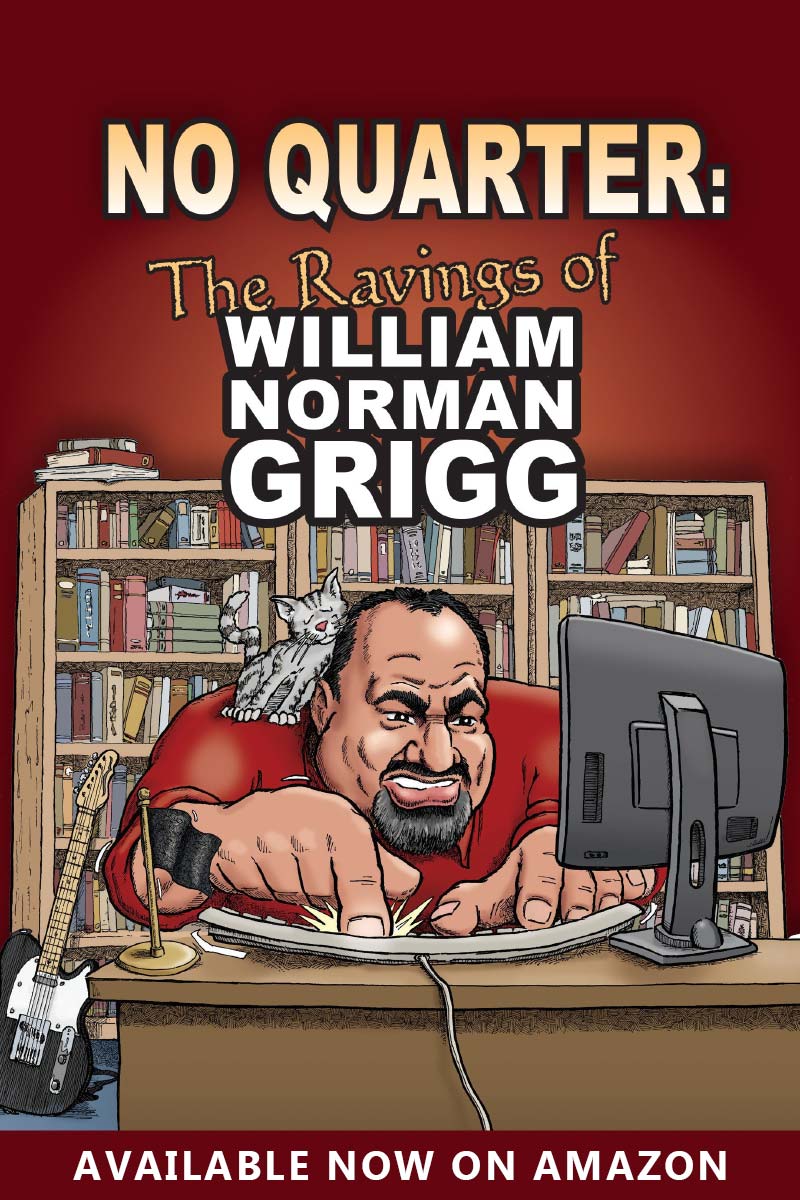
02/05/13 – Will Grigg – The Scott Horton Show
Will Grigg, blogger and author of Liberty in Eclipse, discusses the life and death of ex-Navy SEAL sniper Chris Kyle; doubts about the bravery and heroism of soldiers in a war of occupation; Ron Paul’s controversial tweet (he who lives by the sword dies by the sword) on Kyle’s death; why many conservative Christians revere authoritarian government violence instead of the teachings of Christ; how WWII ushered in a new era of state-worship for Americans; and how guilt contributes to PTSD.
Podcast: Play in new window | Download
02/04/13 – Will Grigg – The Scott Horton Show
Will Grigg, author of Liberty in Eclipse, discusses why we shouldn’t be too excited about country sheriffs opposing the federal assault weapons ban; how Waco became the template for law enforcement operations; the state’s openly-declared monopoly on the use of force; why local TV news is always on the cops’ side; and why even Idaho sheriffs think constitutionalists are little more than domestic terrorists.
Podcast: Play in new window | Download
02/04/13 – Lew Rockwell – The Scott Horton Show
Libertarian icon Lew Rockwell discusses why the Right is all aflutter about the Red Chinese menace; China’s remarkable rise from death camp to civilization; why the US is pushing a Japan-China confrontation; the virtues of made-in-China products and free market trading; and why any country aspiring toward economic or military improvement is automatically a “threat” to the US.
Podcast: Play in new window | Download