
Q & A Shows
5/15/15 Full Show
by Scott | May 15, 2015 | 0 Comments
You are listening to the Scott Horton Show. 5/15/15 Full Show
5/14/15 Full Show
by Scott | May 14, 2015 | 0 Comments
You are listening to the Scott Horton Show. 5/14/15 Full Show
The Stress Blog
Today’s show: Gareth Porter 12-2 eastern
by Scott | Jun 11, 2015 | 0 Comments
Today's show: Gareth Porter 12-2 eastern time http://lrn.fm http://scotthorton.org/chat
Today’s show: Phil Giraldi, Kevin Zeese, Sandy Tolan 12-2 eastern
by Scott | Jun 10, 2015 | 0 Comments
Today's show: Phil Giraldi, Kevin Zeese, Sandy Tolan 12-2 eastern time http://lrn.fm http://scotthorton.org/chat
Recent Episodes of the Scott Horton Show
9/5/24 Daniel Davis on Ukraine’s Reckless Incursion into Russia
Scott brings Daniel Davis on for a short discussion about the Ukrainian incursion in the Kursk region of Russia. They use Davis’s recent interview with Colonel Douglas Macgregor to jump into the strategic and tactical ineptitude that Ukraine’s military leaders have demonstrated with this operation.
Discussed on the show:
Daniel Davis did multiple tours in Iraq and Afghanistan during his time in the army. He is a Senior Fellow at Defense Priorities and is the author of the reports “Dereliction of Duty II: Senior Military Leaders’ Loss of Integrity Wounds Afghan War Effort” and “Go Big or Go Deep: An Analysis of Strategy Options on Afghanistan.” Find him on Twitter @DanielLDavis1and subscribe to his YouTube Channel.
This episode of the Scott Horton Show is sponsored by: Roberts and Robers Brokerage Incorporated; Tom Woods’ Liberty Classroom; Libertas Bella; ExpandDesigns.com/Scott.
Get Scott’s interviews before anyone else! Subscribe to the Substack.
Shop Libertarian Institute merch or donate to the show through Patreon, PayPal or Bitcoin: 1DZBZNJrxUhQhEzgDh7k8JXHXRjY
5/8/20 Jeff Deist on America’s Bubble Economy
Scott talks to Jeff Deist about the economic ramifications of the coronavirus, including both the virus itself and the government’s fiscal and monetary response. Deist certainly expects that we could be in for a severe recession, but is mainly of the view that this recession was coming soon anyway. It just took the right event to pop the bubble. Much of the ground that the country appeared to make up since the last crash, he says, has really been a reinflation by the Federal Reserve of the same old asset bubbles—and some new ones. The American economy has been overly financialized for decades, with ultra-low interest rates incentivizing companies to borrow money to fund ill-advised ventures rather than accumulating real savings and capital. A healthy economy that did save, he explains, would be able to endure a month or two of inactivity without the precipitate collapse we’re starting to see today.
Discussed on the show:
Jeff Deist is president of the Mises Institute, where he serves as a writer, public speaker, and advocate for property, markets, and civil society. He previously worked as a longtime advisor and chief of staff to Congressman Ron Paul, for whom he wrote hundreds of articles and speeches. Follow him on Twitter @jeffdeist.
This episode of the Scott Horton Show is sponsored by: NoDev NoOps NoIT, by Hussein Badakhchani; The War State, by Mike Swanson; WallStreetWindow.com; Tom Woods’ Liberty Classroom; ExpandDesigns.com/Scott; Listen and Think Audio; TheBumperSticker.com; and LibertyStickers.com.
Donate to the show through Patreon, PayPal, or Bitcoin: 1KGye7S3pk7XXJT6TzrbFephGDbdhYznTa.
The following is an automatically generated transcript.
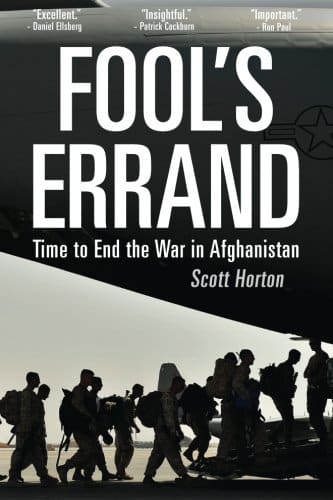
All right, y’all welcome it’s Scott Horton Show. I am the director of the Libertarian Institute editorial director of antiwar.com, author of the book Fool’s Errand: Time to End the War in Afghanistan. And I’ve recorded more than 5000 interviews going back to 2003, all of which are available at ScottHorton.org. You can also sign up to the podcast feed. The full archive is also available at youtube.com/ScottHortonShow. All right, you guys introducing Jeff diced. He’s the president of the Ludwig von Mises Institute. That’s misis.org, the Austrian economists over there. And they just published this new book, anatomy of the crash the financial crisis of 2020 Real quick on the gun. They’re edited by Joe Bishop, introduction by Jeff Deist. Welcome back to the show. Jeff, how you doing?
Jeff Deist 1:09
I’m doing great, Scott. Thanks for having me.
Scott Horton 1:12
Amazing. You put out a book about the current financial crisis, just what six weeks into it here?
Jeff Deist 1:19
Yeah, I hate the term current financial crisis because I think it’s it’s just a flare up of an ongoing financial crisis. And I think a lot of this was baked into the cake already. And that’s why I’m particularly leery of people who are trying very hard to get away with blaming all this on the virus and the shutdowns I mean, I personally think the shutdowns are an extreme overreaction. But that’s not really the thrust of this book here. The thrust of this book is to say, hey, look, here’s some of the conditions that were already set, really going back, at least to the crisis, and in many ways farther back than that. So I think the Coronavirus was a precipitating factor, but I don’t think it was the cause of this crash.
Scott Horton 2:06
Well, even Trump himself called it the Obama bubble, the stock market bubble and all this back before he inherited it, and then took full political ownership of the economy. And it was pretty clear. I mean, I have access to you and Mark Dornan and Bob Murphy and people like this. So the question has been for the last, at least, you know, year and a half or two. Will the bubble last until after the election, or will it pop before the election? That was the entire question, and the virus in the lockdown came and answered that question for us, but that was really his campaign theme was vote Trump. The bubble hasn’t popped yet. So yeah, he
Jeff Deist 2:46
now has really, yeah, he really got lucky if this whole thing could have just been kept alive another 12 months or whatever. He might have gotten into a very ugly second term. But this goes back to this idea that why would anyone want to be president I mean, really, no matter what you do, there’s so many forces and factors already at play. And some of these go back almost a century. Now you can look at something like Social Security. And say you’re grappling with an entitlement crisis that was set in motion in the 30s. So I don’t know why the hell anyone wants to be president. And it also I think, what the lesson people like you and I can take from it, is that we ought to be a little more circumspect in blaming or praising the current president, because, you know, at any point in time, it’s really just someone who’s trying to manage beast, and that’s pretty hard to do.
Scott Horton 3:40
Yeah. I mean, if he was smart, what he would have done is go ahead and hired a Volker to cause the recession and get it over with, and we could be on our way back up now, although the virus would have put an end to that anyway. But
Jeff Deist 3:53
well, and this is What’s so difficult about democracy is what the country needs is a couple of years. Rough years, where we have a lot of bankruptcy and insolvency and restructuring of all the capital assets in this country. And that would cause some pain that would cause a lot of pain that would cause some unemployment that would cause some rich people to fall out of being rich. And, you know, this is the kind of thing that’s just so politically unpalatable. In a mass democracy, no candidate could ever campaign. Certainly no national candidate can ever say, Look, I’m the guy who’s going to rip the band aid off the wound, and try to set the stage for real recovery rather than a fake one, like we had from let’s say, oh, wait two Oh, 11 versus 2011. And because that’s so politically impossible to do. We have this Bizarro system of ours where every politician has the incentive to just keep it going. And that just makes it bigger and worse.
Scott Horton 4:49
That’s funny, because, you know, it sounds exactly like the argument for why we have a central bank that I learned in government school, that the politicians will insist On a short term policy that’s good for them. Always inflate, inflate, inflate. And that’s why we have to have this separate central bank with appointees to 14 year terms and all these things in order to be separate from those political influences so they can take away the Punchbowl at the party and all of that stuff.
Jeff Deist 5:22
Well, it you know, that’s an absolute farce, the Fed has never been independent. I mean, let’s remember, first and foremost, Congress created it, legislatively, and Congress can regulate it up to an including revoking its charter all together. So the idea that it is somehow operates outside of the boundaries of or odd to operate outside of the boundaries of this politicized Congress, is just absolute nonsense. And of course we’ve seen in the cares Act, which was the big bailout bill, passed about a month ago now by Congress in the dark. The blurring of fiscal and monetary policy is getting worse. And worse. So fed independence at this point is sort of like the I mean, it’s almost an Orwellian form of doublespeak. It never really existed. And it certainly doesn’t now.
Scott Horton 6:10
Yeah. All right. So take us back to the crash of Oh, eight and oh nine because that was the end of the world, I think and, boy, trillions of dollars worth of bad debts were wiped out. But then according to you, they immediately were so in the seeds of the crisis that we’re living through now. So how’s that?
Jeff Deist 6:33
Well, the problem is, is that they weren’t all wiped out. Basically, what happened is there was a stock market crash, and that stock market crash, if you believe david stockman anyway would have been fairly contained to Wall Street and would not have bled over into main street if the Treasury and the Fed had not gone into hyperdrive as it did at the time. So obviously, that’s a factual question and maybe a debatable question, but nonetheless, What happened was that Federal Reserve officials decided that we are going to do whatever it takes any kind of Hail Mary to keep the stock market propped back up on it, at least at a nominal price level. So they started buying assets from banks and giving them reserve funds money. In exchange for that a lot of those assets were Treasury debt, US Treasury debt, which banks held, but a lot of it was also packaged mortgage backed securities. And when the Fed bought this, these mortgages, in effect, these tranches of mortgages, they just paid face value, they didn’t mark them to market. So a whole lot of mortgage backed debt, which was worth a lot less than it said, at then face value was nonetheless purchased for face value. So banks were recapitalized, basically. And that sounds good because the Fed was doing it and taxpayers say well, at least we weren’t using federal dollars. We weren’t using tax dollars. Problem is, is that the Fed creates money, uses that money to buy debts or mortgages, and then eventually oftentimes buys back the new debt that it’s created in the form of Treasury. So it’s a very circuitous process, it’s a little opaque. But at the end of the day, you and I all pay for it in, obviously, the shrinking purchasing power of our dollars are saving. So it was, it was really an ugly time in America. And it was an extension by Bernacchi of what Alan Greenspan had put into motion. So we look back now and we say, Oh, my gosh, the Fed created. All these new bank reserves and its balance sheet shot up from under a trillion to over 4 trillion. And so this was some sort of horrific calamity in the United States. Well, those numbers are all looking pretty quite right about now, Scott, because we’re up over $6 trillion now, and the Fed’s balance sheet probably headed to 10 wouldn’t surprise me in the slightest and the whole purpose This is just to keep equity markets propped up. I mean, you look at the and what the Fed has done. If you look at what Congress has done, the amount of money that’s actually trickled down to ordinary people, is a tiny fraction of the new so called liquidity created by the Fed. And the new stimulus created by Congress. When I say created, I mean conjured up, it’s not like they have the money to spend that, like they have sitting on a pile of money. So none of this is much helping ordinary people and you think oh, my God, 1200 dollars. I mean, how long is that going to last for for people? So it’s, it’s a very unholy thing. And part of the purpose of this book we put out was to help rested apart a little bit, give people some of the details some of the facts to understand what led up to it.
Scott Horton 9:49
Yeah, I think you say in your introduction, that you kind of paint a little bit of a counterfactual, if we had had a stronger economy. We’d be able to survive something like the virus and the clamp down or something in a way, you know, that would be much easier. We’re Instead, we’re kind of constantly even though this is the biggest, wealthiest society in history and all this stuff. Our economy is constantly this precarious House of Cards, it’s ready to fall over at a moment’s notice.
Jeff Deist 10:23
Yeah, and Trump absolutely hung himself on this because he was constantly touting the greatest economy in 50 years. Basically, the lowest unemployment that the United States had ever seen was about march of 2019. So it was official unemployment was about 3.5% of the time. And so because Trump wants to open his big mouth and praise himself for all of this, now he has gonna, he’s gonna have a hard time running away from the crash and saying that he’s not responsible for that. And again, think about a family or a business with healthy finances. You would hope that you could get by a month or two without income, you know, without being thrown out into the streets or needing food stamps or something like that. And that’s the difference effectively between a country like the United States and India, India is quite, you know, is one of the biggest overall GDP in the world, but on a per capita basis. It’s quite poor compared to Western countries. And so that’s why India is having a very, very serious hunger crisis amongst its poorest people right now, because they just didn’t have all the capital and savings build up that we’d like to think we have built up the United States. So you know, I disagree with the shutdown, but I do think that a healthy society would have been able to weather a couple of months of this and with these, these corporations, which are already declaring bankruptcy, I mean, 2008 isn’t 40 years ago, I mean, you don’t have to be a baby boomer to recall the crash of 2008 and and apply the lessons learned there to your own. business practices. So when we look at the airlines, for example, and you say, okay, oil has been cheap, the economy’s been humming. So you guys have had really great years, at least relatively, because it’s a volatile industry. So you should have been banking some cash and building your balance sheets out, you know, expanding your working capital for the day you knew was going to come when either oil prices spiked, or there was some kind of economic recession. But they didn’t do that. Instead, they in some cases, use cash, in some cases, even borrowed and use cheap credit to buy back their own stock from shareholders. So, as a result, we have a two month downturn, very few people are flying. And the airlines have to go to Uncle Sam for a bailout when I mean, they couldn’t look back at the periods let’s say after 911 when a lot of people weren’t flying, let’s say the period around 2008 2009 when a lot of people weren’t flying, they can’t look back at this and say, well, we got to build up some cash. padding. You know, that doesn’t strike me as a healthy economy, it strikes me as a highly financialized economy.
Scott Horton 13:09
Well, it’s because they know they’re gonna get the bailout, if a rainy day really does come, so why save up for?
Jeff Deist 13:16
Well, they do know that and industries know that. Certainly the banking sector knows that wall street knows it. And yet at the same time, there are millions of Americans who are caught right in the middle because let’s say you are a hairdresser, or a barber. Well, a lot of hairdressers rent their space from a salon. They they’re not an employee of the salon. And since they’re not an employee of the salon, they can’t file for an appointment. But yet, they don’t really have their own business. So they’re having a hard time going and applying for the SBA loan program that was created by this cares act a month or so ago. And they’re not particularly financially savvy when it comes to the process going to their local bank. And getting that in and they may not even qualify for it. And yet, they can’t get any of the money that’s going to airlines, they can’t get any of the money that’s going to go to insurance companies, they can’t get any of the money that’s going to flow into ETFs. They can’t get any of the money that is sloshing around in Congress. I mean, look at the numbers that people like Nancy Pelosi are are throwing about. So if it continues like this, and the economy is still somewhat locked down and average ordinary folks just don’t have the income they need. I think there’s going to be a huge amount of public support for some sort of UBI type $2,000 a month payment. And I think if Nancy Pelosi and her party are smart, they will immediately they will pass a bill to that effect. And force either McConnell in the Senate or Trump it with this veto pen. To say no to that because I think between now and November that could turn into a really popular measure. I mean, let’s not kid our ourselves about it that that sounds like a political winner is it as much as it might concern us as as economic malfeasance?
Scott Horton 15:07
Hey guys, Scott Horton here from my Swanson scrape book, The War state. It’s about the rise of the military industrial complex and the power elite after World War Two, during the administration’s of Harry Truman, Dwight Eisenhower and jack kennedy. It’s a very lightning take on this definitive era on America’s road to world Empire. The war state by Mike Swanson, find it in the right hand margin at Scott horton.org. Hey, yo, Mike Swanson is a successful Wall Street trader with an Austrian School understanding of the markets and therefore he has great advice to share with you. Check out Mike’s work and sign up for his list at Wall Street window.com. And that’s what you’ll get a window into all of Mike’s trades. He’ll explain what he’s buying and selling and expecting and why. I know you’ll learn and earn a lot while Street windows.com that’s Wall Street window.com Well, you know, I’ve been reading some david stockman columns and he has a habit of reproducing all these charts, which show these massive crashes in, you know, this and that different sector, I guess he showed one that said, here’s the retail clothing sector. And here’s how 40 years worth of growth has been wiped out in the last six weeks, this kind of thing. And he’s showing, you know, cars and real estate and different kinds of businesses and then of course, the unemployment rate 30 million something people thrown out of work in the last few weeks and that kind of thing. And so, I was just wonder if you could comment on that the severity of the crash and what you think the aftermath is going to look like. I mean, say, I pathetically if we if the virus would just go away and we could restart right now and everything would be okay again, as far as the the Disease goes, how bad of a depression are we looking at? And then of course, that’s not the reality, the virus is still going to be here. And there’s going to be different levels of clamp down, I guess going forward here. So
Jeff Deist 17:13
yeah, I think it’s gonna vary depending on what part of the economy you’re looking at, I absolutely do not think that there is going to be a so called V shaped recovery and employment itself. Because in just the last two months, we’ve shed more jobs or about as many jobs as had been created, so called since the 2008. crash. So we don’t just get back 12 years worth of new jobs in a month or two, let’s say between now and the end of 2020. I mean, that’s, I don’t think that’s going to happen. I think certain segments of the economy will you know, if the virus did end today, let’s say would roll back pretty well just because there really is such a thing as pent up demand. And there are certain things that people just really need or want to do. But I think there are a lot of things businesses which were just built on debt, and a lot of cheap consumerism really are in trouble. I mean, how many, you know, how many t shirts from the gap do you need? At some point you say that these businesses were were financialized, in effect that they were operating on margins or levels of debt that were unsustainable. So this isn’t a situation where there’s really strong companies who know what the hell they’re doing. And then there’s these weak stupid companies who didn’t know what what they were doing. And as Warren Buffett says, when the tide goes out, we’ll see who’s wearing shorts and who isn’t. I don’t think this is that I think this is more just atlas shrugged. We’ve had an over leveraged, overburdened, oh, you know, debt ridden economy for so long now, because interest rates have been cheap. In other words, borrowing money has been cheap for so long. That when we look at something like the gap, which is I guess, a, you know, a, kind of a low end retailer, whatever, and then you look at a fancy retailer like Neiman Marcus? Well, they’re both in trouble. They’re both filing for bankruptcy. Well, Neiman Marcus has I think that gap will. So, you know, this is this is awfully hard to understand unless you’re looking at the economy by silos. I mean, oil is dirt cheap, cheapest it’s been not only nominally in decades, but also in real terms. So normally we think, well, that’s good for the economy, except unless you’re in the oil business. cheap energy is is a wonderful thing. But people aren’t flying people aren’t traveling people aren’t even driving their cars to work. So you don’t have the demand side making up for the drop on the supply side. So it’s it’s very, very complex. And when we say the economy, we have to think what are we talking about what what segment but I think like fast food would would bounce back pretty quickly. I think, you know, things, things that are busy now, you know, Amazon delivery, Certain kinds of, you know, I think lawn and garden is doing really well right now because people are staying home and thinking more about living at home and working from home and what that means. Obviously, people are buying all kinds of things that relate to being home more. So is I don’t know, you know, if I knew, if I knew what the recovery would look like, or when it would even start, I’d be out there getting rich in the stock market because I could time it or whatever. But it, Scott, we’re talking about millions or even billions of people coming together. And I can’t, all I can say is this, we didn’t shoot ourselves in the foot with this lockdown. This is a gut shot. And we’re bleeding out, and how long that’s going to last. And when we’re going to stem the bleeding and how we’re going to heal up is just that’s above my paygrade buddy. And, and the thing is, is it’s very hard to apply theoretical economics to just crazy random political acts and what I would consider the bed at this point, a crazed random political actor. It’s just some sort of weird ad hoc Talk credit facility. It’s not operating under any Principles of Economics. It’s not applying what you and I would think of as a monetary policy. There’s no policy. There’s no there there. This is just groping around in the dark, hoping to stave off a real serious crisis in America where grocery stores and gas stations became empty, that sort of thing. So, you know, when you were taught, I don’t really believe in public choice theory, I don’t think we can apply the same sort of economic theorems and rational isms to political xi, because politics is about force. And economics is about voluntary exchange. So to me, they’re two very different animals. So but, but at this point, both the Fed and Congress are wounded animals, and they’re dangerous, they could do anything and they will do anything, I think to just keep this thing going. So very hard to say. About the recovery, you should ask someone who knows more than be what the recovery is gonna look good. That’s my advice, Scott.
Scott Horton 22:07
Well, so I mean, he said something about $6 trillion that they’ve conjured up so far, I think only. Well, I don’t know how much of that is what Congress passed. But the rest of that is just the Fed, which to regular people means completely behind the scenes. But what are they doing with all that money?
Jeff Deist 22:28
Well, they’re doing all kinds of things. Once again, they’re buying Treasury debt. They’re buying mortgage backed securities, but now, unlike 2008, they’re buying other kinds of debt debt that is backed by student loans, that that’s backed by credit cards. They’re also buying corporate debt, which is a huge, huge sea change. And when you say it’s happening behind the scenes with the Fed, that’s really the right way to put it. It is behind the scenes, the average American is just not going to have the time or inclination to follow the bouncing ball, day to day, whatever you’re reading about the Fed. Today could be completely obsolete in a week they’ll announce some new program some new facility. So economists can barely keep up with it new. I don’t think we’re supposed to keep up with it. I think that’s part of the program, but it’s very difficult when they start buying corporate debt. I mean, that is a market that our central bank has never dipped its toe into it. Think of all the jacked up corporate debt that has been created since the crash of 2008. Remember, there’s more debt in the world, sovereign government debt, corporate debt, household debt, individual debt, student loan debt, cars, mortgages, you name it. There is more debt today far more than there was when we cleaned house supposedly in 2008. So that very, very dangerous to have the Fed, acting as a moral hazard backstop for corporations who got overextended. So that’s, that’s just such a huge market and such a moral hazard. I can’t even predict where that might go. Also, the Fed is now buying municipal bond debt all the way down to smaller municipalities. So, imagine you are Austin, Texas, Austin, Texas can’t print money. Unlike the federal government, Austin, Texas needs to raise taxes or sell municipal debt to get money. Those those are basically it’s two ways to get money or sell assets, which city governments rarely do. But in the meantime, Austin, Texas actually has to pay at city employees, it’s cops, it’s firefighters, it actually has to send crews out to, you know, mow the grass by the side of the freeway or whatever. And if they don’t, you’re gonna you’re gonna notice it. I mean, a lot of things that city government does, you know, so if cops just stopped getting paid and disappeared, you know, imagine that might be the best thing that could happen. But that’s an aside. But you got my vote, Mr. President. Yeah, yeah, but the point is that municipalities are up against it. And so they, they, you know, if you look at it at a city like Chicago, which has a huge pension crisis, all kinds of debt, you know, every year it operates deeply in the red. And if you look at that as an investor, let’s say and you say well, you know, municipal debts kind of cool because a lot of it a lot of Muni bonds are tax exempt and I’d love to have some tax exempt income in my portfolio, but man oh man look at it the city of Chicago I’m going to need like 20% junk bond interest rates to loan them money because I’m worried I’m worried I’m never gonna get paid back. So well you know, good luck you know, cities don’t want to issued corporate debt debt or excuse me municipal debt a junk bond rates. So, hey, here’s the Fed come along and it’ll buy our debt potentially. That’s that’s a nice little backstop. Is that a moral hazard for all the pension overages and all that? You know, bribery and backroom dealings. larceny and corruption that’s taken place in municipalities all across this country. Yeah, that’s a hell of a moral hazard. So that’s a new venture for the Fed. You know, a lot of this money is going into corporate bailouts. A lot of its going into airlines. Some of it’s just going into plain old fashioned pork. I mean, people need to understand that when Congress comes together, they weren’t even physically together because of the shutdown when they pass the so called cares act. You know, lobbyists around Washington staffers, staffers around the committees in Congress are very, very important. They inserted all kinds of stuff into this bill, and we don’t even we’re just starting to find out about it money for you name it, I mean, for the Kennedy Center. So it’s that you know, that there’s a lot of money out there sloshing around a lot of it’s brand new, and it’s going to benefit the people who get it early. But it’s not gonna benefit you and me.
Scott Horton 26:56
Yeah, now, here’s the thing. You know, you mentioned the direct pay payments to people as an increase in socialism going forward, which you know, is probably unavoidable there. But it seems like it’s happened, the last two crashes at least and guess every time is the free market gets the blame. The, you know, laissez faire especially gets the blame, even though George Bush and Barack Obama and Donald Trump have been president. It’s, as they say, on Twitter, late stage capitalism always needs a bailout always needs the state to help it along. Otherwise, we’d all be rich socialists by now, I guess, Jeff.
Jeff Deist 27:43
Yeah. And we’ve, we’ve failed to convince the left about the Fed that because half of every equation in other words, the money side, that’s purchasing any good or service, half of that equation is centrally planned by basically A glorified Politburo that sits around and decides it’s no different than if they were sitting around deciding how many Ford Taurus is should be created in a year, how many workers should be assigned to the Ford factory where they should be produced, what they should be sold for what the workers should be paid? I mean, there’s really that’s basically what happens on the money side of the equation. So the left suspects, and I think they correctly suspect that there is a class of unjustly rich people in America, people who are cozy with Wall Street, and that’s absolutely 100% true. So, how do we tell our story? How do we create the narrative that what’s needed then, is not just a different fed or a better fed or reformed fed but actual free market in money that, you know, prevents a lot of financialization that prevents you know, a lot of people from getting richer than the otherwise would if they had to deal and out of money. I mean, that’s our failure that we haven’t gotten that message through that this isn’t capitalism. And so, you know, we could understand these critics of late stage capitalism because this is what capitalism appears to be to most people, which is a cronyism, melding of state and corporate power along with a central bank that juices the whole thing in again, opaque and roundabout ways that most people just don’t care to, to follow all day long. And when, you know, that really has created a bunch of income inequality, it really has created a bunch of fat cats who kind of move money around all day, but don’t actually produce any good or service. Now, capital markets are a service if they operate freely and fairly, I mean, it’s moving capital to where it’s, it’s better, best used in a way from where it’s ill used is actually a market function and a noble one. But that’s not how capital markets operate in America today. So you know, I don’t I don’t blame anybody who looks at this and says, Man I got 1200 bucks, you know, give me a break at that they were spending 2,000,000,000,002.4 trillion in the cares act, you know, where’s you do the math, and we’d be far better off just just, you know giving all that money directly American people and see what they do with it then we would be with these, this sort of top down, having everything slosh through the financial sector.
Scott Horton 30:25
All right, I’m sorry. We’re all out of time. But there’s so much more to talk about in this great book anatomy of the crash the financial crisis of 2020, edited by Joe Bishop, introduction by Jeff diced at the Mises Institute that’s maecenas.org. The whole thing’s free. They’re in PDF format, as well. And thanks very much for your time again, Jeff.
Jeff Deist 30:49
Hey, it’s great talking to you, Scott
Scott Horton 30:52
The Scott Horton show, Antiwar Radio can be heard on kpfk 90.7 FM in LA, APSradio.com antiwar.com ScottHorton.org and libertarianinstitute.org
Podcast: Play in new window | Download
5/8/20 Daniel McAdams on the Latest Failed Venezuelan Coup
Daniel McAdams discusses the latest incident in the strange story of the U.S.-backed coup attempts in Venezuela, which seek to replace President Maduro with someone more friendly to “American interests,” like Juan Guaidó. Most recently, a small operation by a few American special forces troops was thwarted almost as soon as it began, leaving Guaidó and his followers looking even more impotent, and ironically boosting Maduro’s popularity. McAdams stresses the need for the United States to mind its own business, leading by example rather than trying to meddle in the affairs of other countries. The global coronavirus crisis has made it especially clear that America simply does not have the resources to interfere all over the world, since it cannot even manage things particularly well at home.
Daniel McAdams is the executive director of the Ron Paul Institute for Peace and Prosperity and the co-host of the Ron Paul Liberty Report. Follow him on Twitter @DanielLMcAdams and read all of his work over at Antiwar.com.
This episode of the Scott Horton Show is sponsored by: NoDev NoOps NoIT, by Hussein Badakhchani; The War State, by Mike Swanson; WallStreetWindow.com; Tom Woods’ Liberty Classroom; ExpandDesigns.com/Scott; Listen and Think Audio; TheBumperSticker.com; and LibertyStickers.com.
Donate to the show through Patreon, PayPal, or Bitcoin: 1KGye7S3pk7XXJT6TzrbFephGDbdhYznTa.
The following is an automatically generated transcript.
All right, y’all welcome it’s Scott Horton Show. I am the director of the Libertarian Institute editorial director of antiwar.com, author of the book Fool’s Errand: Time to End the War in Afghanistan. And I’ve recorded more than 5000 interviews going back to 2003, all of which are available at ScottHorton.org. You can also sign up to the podcast feed. The full archive is also available at youtube.com/ScottHortonShow. Aren’t you guys introducing the great Dan McAdams from the ron paul Institute for peace and prosperity and of course, co host of the Liberty report with Dr. Paul as well. Ron Paul institute.org is the web address. How are you Dan, welcome back to the show.
Dan McAdams 0:59
I’m great. Scott, thanks for having me back. How you doing?
Scott Horton 1:02
I’m doing great man. Very happy to have you here and to talk about the Bay of Kooks. That’s what I’m calling good stuff. They had the Bay of Pigs and the Bay of goats and this one is the Bay of losers, I guess. Some former Green Berets, a couple former Green Berets failed miserably at launching some kind of coup in Venezuela. Can you get us up to speed Dan?
Dan McAdams 1:29
Yeah, it’s pretty amazing and it’s hard to really get a handle on it. But you know, the, the more I sniff Scott, the more I smell, the horrible smell of Mike Pompeo and Elliott Abrams. But, but, you know, apparently, you know, this has been in the works for a while. Certainly AlJazeera has done some good reporting in the Washington Post has also published the documents each question that you know, there was a contract between this green beret, this Goudreau, and one guy dough himself to do this overthrow meal sounds kind of half baked. You know, I don’t know that they had, we do know there were a bunch of troops that were over the border in Colombia, they’ve been cooling their hills for a while. If you remember, Scott, maybe I’m not remembering exactly when they went over there. But as I remember, they were actually being badly fed, and they were in pretty bad condition. And apparently, they were supposed to be part of this plot. Of course, none of that came off and ended up being a couple of guys in a fishing boat that were pretty easily caught by the Venezuelan security forces here a few days ago. So it’s a very strange, very strange situation.
Scott Horton 2:36
It really does kind of sound like the Bay of Pigs right where the plan keeps changing, but they go ahead anyway. And by the time they implement the plan, they’ve got just one handful of guys and no capability whatsoever.
Dan McAdams 2:48
Yeah, and it also sounds like Elliott Abrams handiwork, you know, remember him in the 80s. He’s the guy behind the salvadorian death squads. He’s the guy behind all these right wing death squads and murder of of Archbishop Romero and all this. So this is the kind of stuff that he does. It always fails, of course, but it just kind of has that. And also when you when you add in the idea that there’s a there’s an increasing sense of desperation among those who are dying for regime change in Venezuela, those in Washington, I mean, it, you know, you start putting two and two together. And people say, Well, this looks too stupid to be, you know, something that the US government’s involved in. Well, guess what? No, it wouldn’t be the first time.
Scott Horton 3:33
Yeah, no, certainly, stupidity is no way to conclude that the US was not involved. I mean, if anything, maybe the size of the mission itself would raise questions about how involved the US was, if they got a green light. You’d like to think that somebody would have thought that they actually had some sort of workable plan here, rather than one boat full of Kooks who walked right into a trap but
Dan McAdams 4:01
Yeah, but you know how the neo cons always oversell things. Remember, it’s a cakewalk. Don’t worry, let’s go into Iraq. It’ll be easy. And they were saying the same things about Venezuela last year in the April attempted coup, this is going to be easy. It’ll be over in a couple of days. And they always oversell this and say how easy it is. And then, of course, when it goes badly, they say, well, we didn’t see that coming. Right. Now that suggested as well, I think.
Scott Horton 4:26
Yeah, I mean, that certainly, I mean, they said that all they had to do was for Guido to declare himself president and the army would defect and the people of Venezuela would rally around him and all of these things and who knows that they really believe that or that was just what they told the boss and so ended up becoming the party line. They couldn’t escape from or what but, of course, that was nowhere near true, but they went ahead anyway. And so, yeah, and that was two different failed crews with wydo. Last year, right?
Dan McAdams 4:57
Yeah, yeah, absolutely. The one with the delivery of aid. Which is total setup? And, you know, and and then the one where they sprung Lopez from from, from the slammer. And, you know, before he could even get out he had to hide in another embassy. I forget what it was. But, you know, the thing is, if this was the case, and they really did believe this would be successful, you have to question, you know, our intelligence analysts, our intelligence resources, we do spend a couple of bucks a year on the CIA and all these intelligence agencies. Are there some good analysts there somewhere who, who knew all along this was a total nightmare? Or is this kind of circular thinking par for the course? In which case, we’re not getting very much for our money?
Scott Horton 5:44
Yeah. Well, yeah, certainly. All right. Well, in any case, we aren’t but yeah, you’re right about the stupidity there. And you know, the unreality that these people cling to me if you go back to the failed coup of a year ago, where Guess the first one, where they had the clip of the armored personnel carrier running over a guy think he didn’t even die. And they just played that one clip a million times on every channel. Like who would have thought at ABC, CBS, NBC, CNN and Fox, there’s one pool camera for the entire country of Venezuela, the entire city of Caracas, and all they can show us is this 110 second clip of and and the guys in the armored personnel carrier, they’re cops, not soldiers, and the protesters are throwing Molotov cocktails at them. So it’s sort of a fair fight in a way. Um, but anyway, then you had to go to Twitter to see the drone footage of the hundreds of thousands of people who turned out the revolution turned out to surround the presidential palace facing out to defend this, you know, horrible socialist president who you You know, with the oil glut just resorted to the printing press and has completely destroyed the economy of the country. Hey, at least he’s not a foreign American sock puppet, like why doe? And so the revolution showed up to side with the president to protect Venezuelan independence, which makes perfect sense. You know, right wingers would rally to protect Barack Obama if it was against a foreign backed coup. Right. Liberals would support Donald Trump if it was Hillary teaming up with the Chinese against them or something, wouldn’t they? Probably, I hope,
Dan McAdams 7:37
human nature. I mean, we don’t have to be brilliant intelligence analysts to understand how people behave when they feel that their country is under threat. And that’s I mean, it’s, it’s it’s so obvious you almost wonder if that, you know, by design, I mean, my first thought when I read about this bungle coup, this this time, was, I mean, that sounds like something Maduro would cook up, except I don’t think he’s smart enough, but it’s The only person who benefits from this is Maduro. Right looks like a guy who’s he’s, he’s supposed to be destabilized now he’s supposed to be hiding in a bunker right now. And here he is. He’s got this crack team of people who are protecting the Venezuelans from the evil Yankees. He looks, he looks great. So my first thought was, maybe he launched it there.
Scott Horton 8:20
Hey, that’s a great point, you know, when there was that drone attack against him. That was the CIA and the Washington Post line then was he probably arranged this himself just to look like a victim? Because they at least understand that Yeah, the more he looks like a victim of foreign power, the more support that he has inside the country. The Americans even have a term for it. The rally around the flag effect. Yeah, I don’t know if there’s a study where they coined that term or where that comes from. Exactly, but that’s what they refer to it as.
Dan McAdams 8:50
And if not unprecedented, you know, toward the later years of Shevardnadze and Georgia, when he’d become more and more tyrannical. It was pretty common that he would say assassination attempt every few months and and get away with it. And so he could basically go ahead and take his political and, you know, as they say in Casablanca, round up the usual suspects, you know, so it’s not it’s not unprecedented to do something like this
Scott Horton 9:14
yet. And of course, you know, whoever’s behind this plot, although, yeah, I think it’s probably looks more like a pompeyo than Maduro in this case. Or the same thing for the drone. It works either way, you know, and it’s just like Randolph Bourne said wars, the health of the state, unless you lose, in which case, yeah, no, but But otherwise, you know, of course, people are gonna side with their later it was just talking with a expert on Yemen, about how people who are not at all Zaidi Shia support the Houthis. Why? Because they’re the government of the country while it’s being bombed by foreign powers. And so, yeah, they rally around the flag as well. They should or as at least, as well, they should be expected to do.
Dan McAdams 9:56
Yeah, absolutely. You know, that you know, the work. It’s dangerous. And I my old go to is anti war calm. Of course they’ve got a great piece from Jason today, about pompeyo, vowing he’ll use every tool to rescue Americans from the failed Venezuela attack. That’s where it gets dangerous because the neo cons are going to use their own failures, if they’re indeed behind this, which I suspect they are, they’re going to use their massive failure. These two guys that are out there, they’re basically you know, they’re basically a trap. You know, they’re they’re a tripwire or what have you. And so now pompeyo is going to do his own rally around the flag. We got to save our guys, these are brave, Special Forces, guys, we’re gonna do something so in a way, they’re trying to make lemonade out of lemons that they’ve given us
Scott Horton 10:41
yeah. When it’s so obvious that they could just negotiate the to get them back, you know, with not too much trouble. It’s not like Maduro is gonna get all brave and start torturing these guys and disappear them off into some dungeon or whatever. He’s not that stupid. And that’s not how the dynamics of this situation are. Set up at all for him to fool in that way.
Dan McAdams 11:03
I mean, I’m the master diplomat, but I could put out the deal very easily. Look, we’ll give you these two guys back. Don’t do anything when we arrest Guido and the people that he plotted with because his name, he signed the thing, his names on the check. Let us take care of this guy that he was not super thrilled with Guido anyway, that guy’s a total loser. And so basically, it’s a win win for everyone. They could probably get that done in an afternoon. You know? So pay. Oh, don’t thank me, but just do it. Right.
Scott Horton 11:30
Yeah, exactly. And you know what you should think Dan McAdams. He deserves credit for coming up with that great plan. Anyway. And of course, as you said, the guy is a total loser. And I’d like to give you a chance to discuss that a little bit further. Because, you know, there are people who, and it’s understandable. It’s not completely reasonable, but it’s understandable that people just look at the left wing economics of this government and how low Venezuela’s been brought and you know, people in the libertarian movement Especially in the Libertarian Party and a lot of right wingers who, you know really are more paleo types and certainly should know better. Boy, when it comes to a coup against Maduro, all of a sudden, it’s the left that’s the enemy, not the American state, but the left in the world. And so if it’s a right wing coup, maybe it’s something we should support.
Dan McAdams 12:21
And yeah, and meanwhile, socialism, the US has gone through the roof. You know, we’ve got a president. We’ve got a president and we’ve got a house of representatives who make who make Maduro look like living on knees, this. He’s Maduro is not printing up, you know, $6 trillion to hand out to the cronies, like like Trump and Pelosi are doing. So you know, it’s always easier to see. You know, the splinter in someone else’s eye, I guess is the biblical reference. And that’s the case here, but it is it’s like a dog whistle to a lot of libertarians. Does that mean that Scott Horton Daniel McAdams loves socialism? No, not at all. But you know, really true lasting, sustained change is always evolutionary, very seldom the revolutions, there are a few exceptions, but very seldom, the revolutions end in a situation where the people are better off than the status quo co ante. That’s just, that’s just a fact.
Scott Horton 13:16
You know, especially when we’re giving them the excuse, just like in Iran, to say that all opposition is backed by the CIA and therefore completely discredited and irrelevant, which is a great propaganda line if you’re the ayatollah, or you’re Maduro, to say that everybody loves me, except the CIA sock puppets. Everyone knows that, you know?
Dan McAdams 13:38
Yeah. And that was the case. You know, I was in Cuba A while ago, and I was working for Dr. Pol. And that’s what everyone said, Everyone in the government officials, hey, don’t blame us. If it wasn’t for this embargo. We’d be a paradise now. So they never take any of the blame for it. And the best the best strategy with Maduro and Venezuela would be the opposite of what we’re doing, which is to completely and totally open up. So then the benefits Oh, yeah, but there might be some corruption. Oh, well, I think all we don’t have any of that are here in the US. Right? Right, completely open up and show them by example. Yeah, it may not be a libertarian paradise, but neither is the US. They would be better off if we if we reached out in friendship rather than with with a fist, you know? Yep.
Scott Horton 14:19
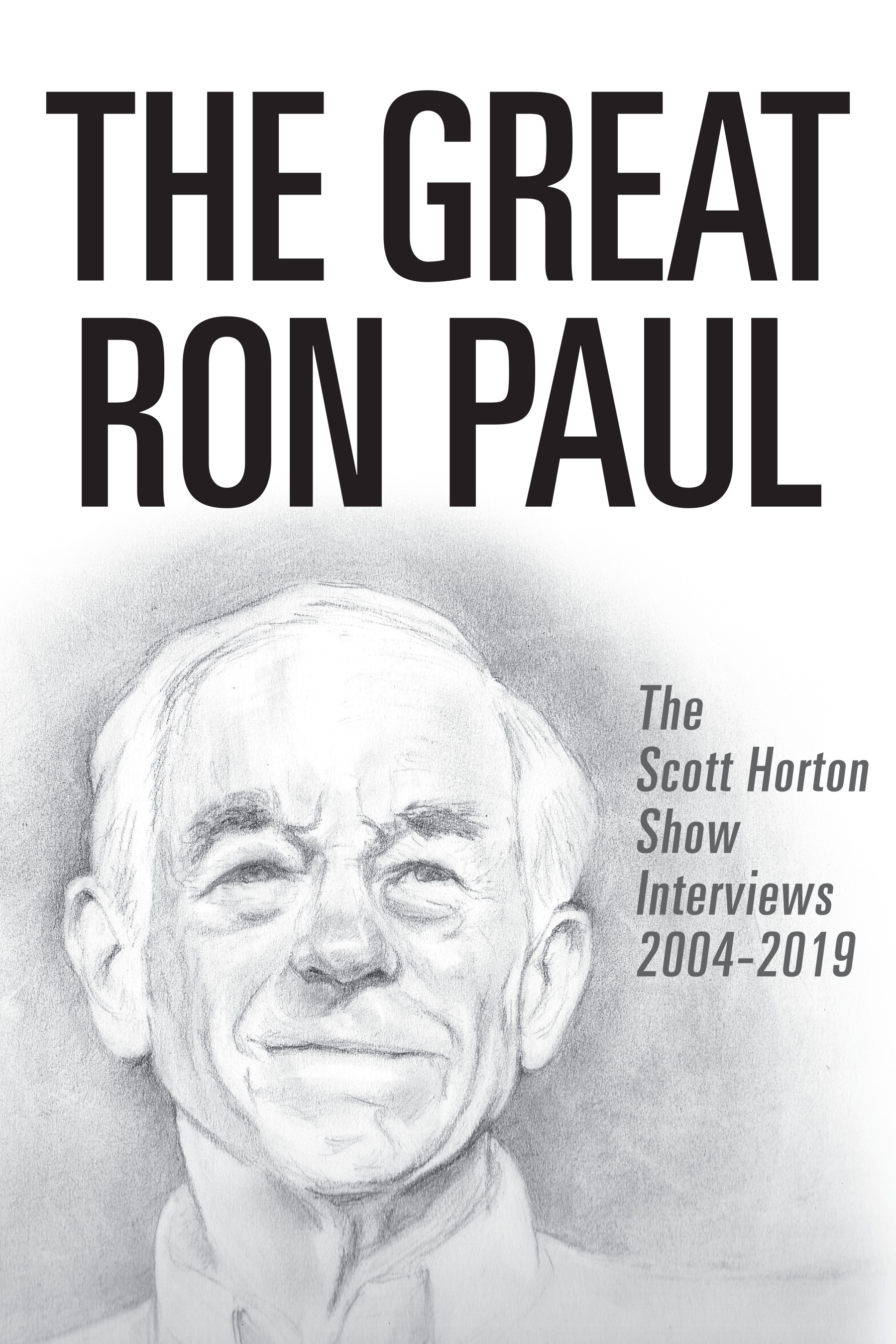
Hey, guys, just real quick. If you listen to the interviews only feed at the institute or at Scott Horton. org. I just want to make sure you know that I do a q&a show from time to time at Scott Horton. org slash show the old whole show feed. And so if you like that kind of thing, check that out there. Hey, guys, here’s how to support this show. You can donate various amounts at Scott Horton. org slash donate. We’ve got some great kickbacks for you there. Shop amazon.com by way of my link at Scott Horton. org, leave a good review for the show and iTunes and Stitcher. Tell a friend Oh, yeah, and by my books, fool’s errand time to end the world. Afghanistan and the great Ron Paul, the Scott Horton show interviews 2004 through 2019 and thanks Hey guys check out listen and think audiobooks, they’re listening, think calm, and of course on audible.com and they feature my book fool’s errand time to end the war in Afghanistan as well as brand new out inside Syria by our friend Rhys, Eric, and a lot of other great books, mostly by libertarians there. Reese might be one exception, but essentially, they’re all libertarian audio books. And here’s how you can get a lifetime subscription to listen and think audiobooks. just donate $100 to the Scott Horton show at Scott Horton org slash donate Alright, so But tell us about Guido this guy this loser as you call them this what they call an acting president, even though he’s not acting like one.
Dan McAdams 15:55
I mean, he’s picked out of he’s picked out of a lineup by Mike Pence. You know, no doubt with neo cons. whispering in his ear, you know, Mike called him up one day and said, Hey, if you declare yourself president, we’re going to recognize you. And of course he did but talk about how many millions of dollars have gone through him and his political parties and his cronies, nothing to show for it. There were several stories about how a lot of this money was wasted. I think he had some delegation was in Colombia maybe that they spent a couple hundred thousand bucks on prostitutes and drugs over a weekend. So there’s a lot of this corruption going on. Even the even the coup that he tried to to start with Lopez never went anywhere. And even the US if you remember a couple of weeks ago, they they’re trying to launch something where they’ll bring in some opposition that’s not Guido and try to try to have a roundtable thing there. So even the US neo cons, I think, have to agree given up on Guido it’s just a non starter that guys, you know, he just doesn’t have it in him and he’s just not Popular. You know, you can’t have a coup when you’re just not popular. So where it goes, I mean, and that actually would bring up another thing if you’re conspiratorial. Maybe the US did do this. It did have guado sign on, because they got to get rid of this loser. And now there’s every excuse in the world for Maduro to arrest him. I mean, it’s out there in the open. So maybe that’s what it’s really all about.
Scott Horton 17:22
Yeah, what what sure is sacrificing him the hard way, but I guess it doesn’t cost them anything. So
Dan McAdams 17:28
well, ask Noriega about what happens when you’re on the CIA payroll, and they get ticked off at you, right.
Scott Horton 17:34
Boy, there we go, CIA guys. And, you know, here’s the thing about Guido too. And, you know, I can’t imagine that this is any different in Venezuela than it would be in the United States. But he has quite literally and specifically and explicitly called for American military intervention in Venezuela to put him in power which is the most treasonous treason the You could possibly come up with. Yeah, what must be the opinion of the average Venezuelan? about a guy like that?
Dan McAdams 18:08
Yeah, I can, like you said earlier you suggested earlier, I can imagine even the most vehement anti trumper getting any kind of traction by saying something like that, hey, Chinese, please come in and take out this guy. It’s just it’s so anathema to normal people that I just can’t imagine how that could be popular.
Scott Horton 18:27
Yeah. And occasionally, you do see a liberal pundit type, say it’s time for a military coup d’etat here and they get shouted down even by center left liberal democrat types, you know, won’t put up with that. But add on top of that, a foreign military ought to go ahead and get rid of Trump for us. Yeah, right. You can find one person in 100 million in this country who would support that in under any circumstances.
Dan McAdams 18:54
So I think that’s par for the course anywhere else. Absolutely. Yep.
Scott Horton 18:57
And and how could he be so stupid as to publicly say that, that that’s what he wants to see. See, Think the Venezuelans don’t speak English at all that those, those quotations are not going to make it back home again, in the age of the internet, you know, it’s nuts
Dan McAdams 19:14
Yeah. It may be his CIA paymasters, or, you know, putting the words into his mouth, and once he’s on the gravy train, you know, who wants to go back to obscurity when all this money is running through you? So who knows what kind of constraints he’s on at the CIA? They’re not a bunch of school boys, you know, they, they demand something for their money, as well.
Scott Horton 19:33
Yeah. Well, and so again, to if this wasn’t all, you know, the vested interests of the Americans and their cronies in Venezuela, but they wanted what they claimed to want, which is the best for the people there, then, you know, refusing to intervene and instead just lecturing them, you know, no sanctions, but just telling them, see how it doesn’t work when you do it your way, would be so much more effective. Especially with the absolute collapse of the price of oil right now, they’re going to have to figure out something to diversify their economy, they’re not going to be able to carry on like Hugo Chavez did at the height of the fuel bubble of the George W. Bush era back then those days are over, they’re going to have to figure out something else. And if it was just the Americans dispensing advice, and not being the world’s worst hypocrites about it, then they’d probably be a lot closer to abandoning their inflation policies. And, you know, figuring out some different way to approach it, you know, wouldn’t have to be complete laissez faire, but they couldn’t possibly carry on the way they are now. And yet, again, all our intervention against them only solidifies the problem, which is a very serious problem, right? I mean, the government has essentially destroyed the currency there and millions of people have fled. I don’t know exactly how much At least a million people have left the country over the last few years over it.
Dan McAdams 21:05
Yeah, but you know, here’s what here’s what shows that you know why the neo cons are among I think most evil people on earth is they view this as a good thing, just like they view when the Iranians were suffering from the COVID-19. In far disproportion numbers than a lot of other countries. You know, the pump pail out note said, This is great. They’re gonna they’re being brought to their knees. They view the suffering of average people, no matter what you think about Venezuela, some average guy just trying to make a living. He’s not to blame for for any of this, but anyone who looks at that and rubs their hands with glee is just kind of a special kind of evil, I think.
Scott Horton 21:45
Yeah. Well, and they’re not ignorant of it either. I mean, Mike Pompeo in specific had cited the beaching of boat in Japan, North Vietnamese I’m in pardon me in North Korean fishing boat with a dead man on board and said, haha, see the sanctions are working?
Dan McAdams 22:09
Yeah, I remember that
Scott Horton 22:11
sighting, specifically some poor dead peasant. And saying this is a measure of the success of our policy here. So it’s not like they’re ignoring that and pretending that only the ruling elite are the ones suffering or some kind. Well, they’re very targeted sanctions. Yeah, they’re targeted against the very poorest most desperate people in Korea, in Venezuela in Iran, and you name it.
Dan McAdams 22:35
People who were starving and from the looks of Mike he’s not doing a lot of starving lately. So it is certainly not it assists it’s very evil, very evil stuff. And, you know, I, I, you know, I we’ve been disappointed for a long time. Trump’s rhetoric has not matched his actions, but, you know, I still have to hold out some hope otherwise I’d become suicidal. But I do hope that maybe this will be the breaking straw where you know, the world last straw where Trump finally gets rid of pompeyo and brings in someone who’s decent may not exactly be our kind of guy, but who’s a little bit better than these guys. And I guess I just have to cross my fingers.
Scott Horton 23:12
I mean, after all pompeyo can’t blame this one on Bolton.
Dan McAdams 23:15
Yeah, yeah, that’s right. That’s right. But there are some realists that you and I both know who are prominent enough. And as I say, they wouldn’t be perfect non interventionist, but at least at least they would be bringing us toward the right direction.
Scott Horton 23:29
Yeah, you know, someone should, I guess they wouldn’t allow this. So we should do some skywriting. Like, hey, Trump go to national interest.org they’re not that radical there but you can find Paul pillar and, uh, you know, Doug bondo, and a few other great, you know, writers. They’re good enough guys for him to read.
Dan McAdams 23:49
And absolutely, absolutely.
Scott Horton 23:51
By the way, I brought it up so I have to bring it up that Doug is writing for us at anti war calm again.
Dan McAdams 23:57
Oh, that’s great. News. Yeah,
Scott Horton 23:58
we are recording Really happy about that. And his his most recent one is about Afghanistan and is really something else too. So great.
Dan McAdams 24:05
Yeah, I’ve liked Doug and Ted Carpenter for the longest time. I have a lot of respect for those two guys. Yeah,
Scott Horton 24:10
they are definitely the best we got. And yet, you know, it really is as simple as you know, Trump probably doesn’t even know that there’s one good handful of guys that he could hire, obviously ran for Secretary of State would be the, you know, the big step to make. But then there are plenty of guys over there at the national interest and at the American Conservative and a couple other places. Who, at Cato, who have the credentials, who could be his national security staff and his, you know, secretaries and his foreign policy departments and do just fine. Yeah, Paul pillar for National Intelligence director and, you know, Doug McGregor for national security adviser and just a couple others like that we’d be sent.
Dan McAdams 24:59
Yeah, we do. certainly be going in the better direction in a more apt to use his term America first direction. Yeah.
Scott Horton 25:06
So what would Sheldon Adelson say? Yeah,
Dan McAdams 25:09
yeah, we can’t hold our breath because it’s I don’t know, I mean we get a lot of criticism for being too soft on Trump. But the thing is if you give up all hope Then why don’t we just hold up the tent and go home? You know? I mean, we have to keep trying and keep pushing.
Scott Horton 25:24
Well, and you know, I mean, he seems to want to get the troops out of Afghanistan and there’s even quotes and I’m not putting too much stock in this but there’s some quotes of him saying really, he wants it done by the election, nevermind by next May, like in the deal he wants out by the election. And, you know, that’s a huge opportunity for the American people to chime in and say, yeah, you know what, that’s what we want to have. You don’t want to be reelected. Don’t be afraid of the Hawks saying that they’re gonna blame you for losing. Know that the American people We’ll cheer that you’re finally, you know, stopping, wasting all these lives and all this money on this no win war and and then with the positive reinforcement and all that he might figure out, he could conceivably figure out that, wow, he’s got a lot of wars to end to start ending wars every couple of months and be Donald Trump did great in the space of a year, you know?
Dan McAdams 26:29
Absolutely. Absolutely. And, you know, that’s how he won the first time. I mean, he was I couldn’t believe some of the stuff he said it was. It was really good. You know about Yeah,
Scott Horton 26:37
I couldn’t believe it either. But it was nice.
Dan McAdams 26:40
Yeah, it was nice. Well, we can hope.
Scott Horton 26:44
Yeah. Well, and and he really is smart enough to take both sides of every issue and that includes foreign policy, but he’ll say on one day that yes, we’re gonna have to make some social security reforms because we just can’t afford this and then the next day come out and be like, I will protect social Security forever No matter what, and you know, when I eat like that on every issue. So as a foreign policy, he knows that we’re also divided between hawks and doves that he can say, just enough to please everybody. And, you know, where it really counts is Israeli policy, and that includes America’s position toward Iran. But you know, and I guess the military is itself and and the arms industries have a lot of interest in picking a fight with Russia and China, but it seems like by and large, that’s not where the votes are, you know, in terms of Israel yet is because all of that money, you know, for the party for the congressional elections and all that kind of stuff. But on the rest of it, especially after the virus and all of this, I don’t know, man, it’s and you know, what, partially just because it’s an election year and it’s a round number year 2020 fold Solid decades into the new century and all these things that I think it really does, at least there’s a possibility here for the creation and the pushing of a real spirit that the era of the bush and obama wars must come to an end. Now, we can’t afford it. We don’t want it. All we want to hear from this President is that he agrees and is really going to follow through and then this stuff, and it’s probably the best chance we’ve had in a long time.
Dan McAdams 28:29
Yeah, refocused on defending this country. He won’t, you won’t have to sound weak, you can sound next even stronger. You’re going to redouble our efforts to defend our country, but we just can’t afford to defend other countries. Simple. You know, I
Scott Horton 28:42
had this whole idea for what to say in my big debate with Bill Kristol that’s now been postponed till July or some other time I don’t really know. But it’s a whole new and different argument. Now. I was gonna say all this really smart stuff, you know, but now it seems more like who could argue After this Corona virus crisis Hear that? Yeah, what we should have been doing the last 20 years was screwing around in these stupid wars in the Middle East, you know, for Bill Kristol vanity or whatever it was.
Dan McAdams 29:14
Yeah, exactly who can argue that that’s true? Perfect. Yeah.
Scott Horton 29:18
Right. It’s just the burden of proof is on him to such a degree now, like, what argument do I even need to make? You know?
Dan McAdams 29:26
Absolutely. Absolutely. I hope you get the chance to do that, because we’re all gonna be watching with popcorn.
Scott Horton 29:33
Yeah, I know. I hope I do, too. I’m betting that it’s going to happen within the next two or three months.
Dan McAdams 29:40
That’d be great.
Scott Horton 29:41
So see, all right, man. Well, so any other wars we need to make sure and mentioned today before I let you go, Dan?
Dan McAdams 29:49
Well, this is another whole topic, but I’m very concerned about the rhetoric on China. You know, it worries me a lot. We’re looking for a scapegoat and You know, the Chinese aren’t they’re not gonna sit back and listen to themselves being blamed for this virus, you know? And so that’s that’s what worries me the most is this potential war with China.
Scott Horton 30:10
Yeah. And and you know it’s funny because it’s one of those things where we don’t really have anything to fight about we kind of gotta make something I mean the status quo in in Hong Kong changing a little bit that’s no cost this belly doesn’t look like they’re about to attack Taiwan, which we don’t really have a war guaranteed to Taiwan, just sort of a half a one as it exists right now. So we’d have to kind of be sure to pick a fight with them to get one and yet you know, I it kind of makes it more difficult right when the excuse for war is so thin. It sort of, in a perverse way makes the the government that much more married to their narrative about how necessary it is. And you know that less Capable of backing down sort of like, you know, so damn insane Saddam Hussein. He’s just too crazy and too hitlerian to ever talk to again. And so yeah, I would say lay down that marker. Now we can never talk to him again. He’s Hitler. Hmm. You know, that kind of deal. So, yeah, I don’t know, man, I think and there are plenty of vested interests, especially in the Navy and in the Marine Corps, who seemed to be, you know, quite interested in figuring out a way to fight them somewhere somehow.
Dan McAdams 31:34
That’s the case and there are a lot of people who won’t be doing the fighting that are behind desks in Washington think tanks that are, you know, looking to pad and feather their nest calling for war? No, you know, it’s again,
Scott Horton 31:48
it makes sense to me that these guys, you know, some of them in the Air Force or whichever would have their interest in picking a fight with Iran, because then they get to demonstrate their capabilities and this and that The other thing, and after all, full scale air war against Iran, the USA eventually would decimate them right, even without nukes. But you can’t fight China Dan, they got h bombs. And that’s the end of the argument. And yet that doesn’t seem to be the end of the argument. mutually assured destruction is canceled, based on what like we just squeeze our eyes close real tight and pretend that we don’t know that the Chinese have h bombs that they can reach out and touch us with.
Dan McAdams 32:29
And the fact of the matter is that Chinese are extraordinarily cautious people, you know, and I, I did China policy for a long time with Dr. Paul and the idea that they’re gonna wake up one morning and say, hey, let’s let’s mess up the US and give them a virus. It just it just doesn’t it just doesn’t go with the way they think. So this is all manufactured, unfortunately.
Scott Horton 32:48
Yeah. And of course, look at the hit that they’ve taken with this stupid virus breaking out there. It’s the worst thing that’s happened to them since Mao.
Dan McAdams 32:58
Yeah, absolutely. So what’s in it for them?
Scott Horton 33:00
Yeah, definitely nothing. And in terms of public relations, I mean, this is going to cost them trillions into the, you know, decades into the future the repercussions from this thing. So yeah, the idea that they had done this to anyone deliberately is completely nuts. But you’re right, though that for the Hawks. Hey, it’s just an excuse to pick a fight. They don’t have to believe it, you know?
Dan McAdams 33:23
Yeah, they don’t have to. So it’s disturbing to see people who otherwise doing great work like Tucker Carlson and falling for this, you know, he’s got a lot of power in his position, and it just just doesn’t make any sense.
Scott Horton 33:37
Yeah. And, you know, it’s really, it’s the same thing with the whole, you know, pretension of the War on Terrorism, too. And this clash of civilizations with Islam. I mean, you’re talking about a sixth of the population of the planet. Same thing with China. Like, you know, what, one way or the other the earth has to be big enough for the both of us for all of us, and we got To figure this out, America and you know, our civilization and Chinese civilization have to live as neighbors from now on forever. We can never fight them ever, without losing, you know, our entire civilization, not just our lives but everything that we’ve worked for for centuries to build would be gone in an instant if we fought a real war with China. So that’s it. We’re just gonna have to figure it out some other way. Figure it out.
Dan McAdams 34:26
Yeah. And the silver lining of this Coronavirus business maybe and I was on a panel discussion with George sunwell a couple of days ago, is you know, maybe the US will start rethinking its national religion, which is American exceptionalism. If we don’t lead the world will fall apart, because we have not LED on this crisis. And you know, people are countries are going along in their own pace. So if it destroys this national religion of ours, then it’ll be a good thing.
Scott Horton 34:52
Yeah, absolutely. Right. And it’s only so obvious, right? The counterfactuals are just right there for me. anyone’s imagination to pick up on if you just drop the fear for a minute. And just think about America, you know, trying to live the Americans in their sight trying to live as a limited constitutional republic instead of this world Empire like, you know, under the excuse for protecting the world from the Soviet Union that ceased to exist 30 years ago. And all of this stuff, how much better things could be, you know, if all that money that we’ve spent on the War on Terrorism over the last 20 years, if that had just been invested in goods and services in the United States? Yeah. Yeah, you know, throughout the rest of the world, just how much better things would be right now than they are? I mean, it’s essentially inescapable. And then, and when you read the Hawks and all their excuses to fight, man, they’re getting thin,
Dan McAdams 35:51
you know? Yeah. Yeah, absolutely. Absolutely. But we’ve got a big job ahead of us trying to convince Americans to not be afraid yet.
Scott Horton 36:00
Yeah, well, and especially now, but, but then again, you know, their their vision has, if anything has become that much more narrow in terms or their sight, you know, in terms of what’s really important, and that cuts both ways. You know, it makes it easier to ignore what’s going on overseas. But at the same time, it really does kind of bring home that wow, we have how many troops in how many bases and how many countries around the world. When everything here is falling apart, and all that money is being wasted now that we want troops to hold things together here, but just all that money being wasted all that manpower being wasted, and, and the position of our country and our reputation around the world, our relationship with the rest of mankind being put into such, you know, perverse straits, where it doesn’t need to be this way at all should be so obvious. But yeah,
Dan McAdams 36:58
and hopefully people will start thinking that way. because that’ll be the beginning of a real revolution.
Scott Horton 37:02
Yeah. And you know, so hey, call out to all ron paul Institute and libertarian Institute and anti war.com. Fans, everybody, right? Everybody do a podcast? Everybody, you know, I don’t know call a congressman staffer and have a good long talk with him. Everybody do a little something to to help to push this narrative that even if it’s not cnn choice of important topic for this new cycle, the American people want to see the wars ended now. I think we can have that.
Dan McAdams 37:38
Absolutely. That’s a great, that’s a great parting message.
Scott Horton 37:41
Yeah, man.
All right, you guys. That is Dan McAdams, Patna with the great ron paul down there at the ron paul Institute for peace and prosperity. And they host the Liberty report every day. Well, four days a week, Chris was senior on Fridays and you can find that Ron Paul Liberty report.com and of course the ron paul Institute is at Ron Paul institute.org. Thanks so much again, Dan.
Dan McAdams 38:08
Thank you, Scott.
Scott Horton 38:10
The Scott Horton show, Antiwar Radio can be heard on kpfk 90.7 FM in LA, APSradio.com antiwar.com ScottHorton.org and libertarianinstitute.org
Podcast: Play in new window | Download
5/8/20 Bas Spliet on Yemen’s Ongoing Humanitarian Disaster
Scott interviews journalist Bas Spliet about the ongoing war in Yemen. Spliet reminds us that even though the Houthis are still referred to in most of the Western media as “rebels,” they have actually been ruling 80% of the country since 2014, and it’s really Saudi Arabia’s puppet ruler Mansour Hadi who is on the outside looking in. The people of Yemen continue to suffer terribly thanks to America’s support for Saudi Arabia and the UAE as they conduct a war of deliberate starvation and genocide there. President Trump could end this suffering with a single phone call.
Discussed on the show:
- “After Another ‘Coup’ in Aden, Which Government in Yemen Is ‘Legitimate’?” (Antiwar.com Original)
- “US maintains intelligence relationship with Houthis” (Al-Monitor)
This episode of the Scott Horton Show is sponsored by: NoDev NoOps NoIT, by Hussein Badakhchani; The War State, by Mike Swanson; WallStreetWindow.com; Tom Woods’ Liberty Classroom; ExpandDesigns.com/Scott; Listen and Think Audio; TheBumperSticker.com; and LibertyStickers.com.
Donate to the show through Patreon, PayPal, or Bitcoin: 1KGye7S3pk7XXJT6TzrbFephGDbdhYznTa.
The following is an automatically generated transcript.
All right, shall welcome it’s Scott Horton shelf. I am the director of the libertarian Institute editorial director of antiwar.com dot com, author of the book fool’s errand, time to end the war in Afghanistan. And I’ve recorded more than 5000 interviews going back to 2003, all of which are available at scotthorton.org dot org. You can also sign up to the podcast feed full archive is also available@youtube.com. Slash Scott Horton show. All right, you guys introducing boss split. He is a master’s student in history and Arabic Studies at the University of Ghent, Belgium, where he researches the anti nuclear weapons movement in Europe of the early 1980s. That’s interesting. He is proficient in Arabic, traveled to Syria in 2018. And lived in Cairo, Egypt in 2019. And aspires to become an investigative journalist after graduation. Well, we sure as hell writes a great piece about Yemen, I can tell you that we’re running this one on anti war calm today. After another coup in Aden, which government in Yemen is legitimate. Welcome to the show, boss. How are you doing?
Bas Spliet 1:22
I’m doing very fine, Scott. Thanks for having me. I’m a fan of the show. So it’s an honor to be on.
Scott Horton 1:28
Oh, cool. Well, happy to hear that. And it was great to read this piece. I can tell. You’re really on the story here. So you know, I guess the the context is, obviously the conflict over who controls the port city of Aden down there in the south of Yemen. But you also give great context to the whole war. So I guess first of all, we’ll go ahead and take us back as you do to the fall of the Solid regime and the rise of the Houthis and the Hadi government, because you kind of have to set us up to understand the divisions in the south between the Hadi government, and the southern Transitional Council and so forth. So, go ahead and rewind and start wherever you think people need to hear.
Bas Spliet 2:24
Yes, we touch up on important points. And that is a complex conflict, but it’s not that difficult to unwind. So let’s try to do that. Basically, I will just from the start, say that I have listened to your conversations with NASA IV. And so you know, where I got maybe where I got the original idea of writing this article from, but I think what happens very recently, the coup in Aden really provides a window into that larger picture which we can spell out. And that is what basically what happened very recently was I think right now it’s a little over a week ago, the southern Transitional Council, which are separatists that are funded and supported by the United Arab Emirates, they did a coup in the port city of Aden as you as you mentioned, but it should be noted that this is not an isolated instance ever. for about the last two years. They have put to the test the unity of the Saudi led coalition as it is called, by sometimes taking over government institutions. And this is culminated especially last summer, there was heavy fighting between UAE support its forces and solid forces. There was an agreement to reality agreement and but now, this has somewhat been terminated because of the latest Who and there was some? Well, they have they have several things for now. But basically, there were there was nothing much reporting about it. It looks like the southern prejudiced no council still supports Aiden. And this is very ironic, because a them although it is not the capital center is it is an important city, which is supposed to serve as a temporary capital of the governments of Abu Abu Mansour, howdy. Who and now we’re about to wind Beck, who had been vice president of Yemen for 18 years ever since 1994, if I’m not mistaken, but when his presidents Adi under the sun was deposed in the Arab Spring, basically, the Gulf countries they came together and they broke its transition deal that puts the former vice president of documents with heavy in power and made him the new presidents. And it’s true like a couple of months later in the beginning of 2012. There was an election. I’m not sure if you can call it that because it was there was only one candidate on the on on the ballot box. And if you look go back at reports you and you see the picture, the ballot, the ballot is basically a picture of hair D and a circle very supposed to mark mark a finger. Yes notes. Only by explicitly writing no Derek, could you vote no. So it’s not really a democratic election. But and this is very important. America Secretary of State’s back then Hillary Clinton sets that, quote, it was an important step in Yemen’s brighter democratic future. And Victoria Nuland, another State Department official elaborated Under said there will be free and fair elections very soon. But basically that Sham election gave haddie a temporary, sorry international mandates for in two years time engaged in a transition towards democracy and after two years he should there should be free elections that obviously did not happen. And he became the new dictator. And as a result of that, because he was he was not there was there was no evidence that he was moving towards democracy. This is the reason why the hoodies in 2015 January 2015, they stormed the Capitol somehow, they kicked out. They kicked out howdy howdy fled to the south to Aden. And a couple of months later in March, he fled to Saudi Arabia. And once in Saudi Arabia, have been someone who was then the defense minister, later became the Crown Prince, as we all know. He set up a coalition of 10 Sunni Arab countries that would vow to re install Hattie in his rightful place because after all, he was the the legitimates ruler of the country as in their discourse At any rate, and ever since then, there has been a relentless, relentless, despicable war, as we all know, waged by that solid that coalition on the people of Yemen against the Hootie forces. But even though they have like installed blockades, they have reached a relentless bombing campaign and all sorts of other stuff. The Houthis this After five years of war, they still control the Capitol, five years. And they didn’t even come close to, to losing that control of the Capitol. At the same time that that President had he, he resides most of the time in Saudi Arabia. He isn’t even in Yemen most of the time. And, and even then, like, he has basically no control of the situation on the ground in Yemen, because you have the southern Transitional Council, the UAE, a back separatists, you have forces in his pay, but you also have all kind of ISIS running around to all sorts of people in the south that fight for power. At the same time in the north, there has been a relatively stable situation. Of course, there’s been much fighting but the Houthis have retains control for the capital and, more importantly, a control over 70 to 80% of the population for five Yours Yes, contrary to any reason Saudi Arabia and the Houthis are still called rebels, and and this is where like, I think they’re like in this now I will make my points and if you like in university, we can of course debate about that whether we agree or not, but the basic definition of what is estates according to Max Weber and this is like term socialists and socialists, history, sociologists of the 19th century, like who is revered today, like the basic definition of a function state, if you can, if you can control a monopoly of violence, I think it’s clear that the WHO DOES have done that for the last 555 years at least, under like over a vast amount of the population, the majority of the population were haddie the supposedly internationally recognized and legitimate ruler of Yemen has not. So I think we should change that this could be if we if we recognize that and starts calling the who these governments and recognize that haddie is not in control of the situation on the grounds, we can start to move towards an end of this Congress.
Scott Horton 10:27
Yeah, you know, it seems kind of ridiculous. Um, I even know a reporter who’s really good on this stuff, who I argued with back and forth about this, who said, Yeah, but the Houthis were never elected to anything. So yeah, but neither was Crown Prince Mohammed bin Salman. Neither was Abdulla Sala who America back for 30 years there. And truly neither was hottie. I mean, you call that an election? Of course not. And we’re agreed about that. For some reason. You know, and and honestly, in, in all of my research about this, I don’t know of anything good to say about the Houthis. It’s not a matter of like sticking up for their side of the fight or anything like that. It’s just that, in fact, they seize the capital city five years ago, five and a half almost. And no one’s been able to take it from them since then. They took over all the government departments and are trying to administer it. They’re ruling over the super majority of the population of the country, as you said, and what it really is, is a test of the public relations capabilities of the Western governments, right that can we make people continue to call this government, the rebels and call the people who have been nowhere near actual power for five and a half years, the legitimate government of the country, even after it’s been clear, really This whole time that hottie will never be the president of Yemen again, there’s zero chance that he will be reinstalled in power there no matter what happens. And yet still, he’s legitimate because he’s recognized his government is recognized by Saudi and America especially.
Bas Spliet 12:19
So yeah, and we don’t have to look at alternative media to make that claim that like howdy will never become the real presence anymore. I think even before this cool like the center Center for Strategic Studies, I think they’re called which is more or less than infinity tank as far as I can tell. They’re not basically pro Western pro Sadia, nor are they pro Hootie? Totally. They have come they have constructed five scholars with an expert knowledge of the conflicts and Yemen in general and they all said like, this guy’s not really in power. They Even a successor if he if it would be the same posture will definitely not with the will not have the same will it will be the same, like there needs to be some real change before Yemenis will generally recognize another ruler, just basically they don’t want Saudi Western imperialism anymore.
Scott Horton 13:24
yeah. And you know, the Houthis might be from the north, but they’re humanity’s. It’s not like they’re foreign invaders. And as Nasir Irby put it to me on the show years ago, years ago now was how long this thing has been going on. That, you know, essentially, well, so they’re in charge of the government now, it’s no different than really then a Texan being elected to the White House and then replaced by a Californian or whatever, in our country, that, you know, we’re all Houthis. Now, as long as they’re in power, and they’re being bombed by a foreign In country so the the population doesn’t have to convert to Zaidi Shiism to feel like they are being represented by this faction that is in charge of their government now.
Bas Spliet 14:20
I think that is a very good point and in touch upon a very large issue that is prevalent in basically all conflicts in the Middle East, right. I don’t know the percentage but like the majority of the country is Sunni Yes indeed, the Shias it’s not the Shia that they empower like it happens to be now she’s in that is provides the answer to foreign meddling so it’s it’s it’s enhances the popularity of the hoodies because they have like even the Brookings Institute or something will recognize that the Houthis have like, defied like one of their main political points is fighting corruption and fighting foreign meddling, and this makes them popular Right. And if you look at other conflicts like, based upon like philosophy of the political philosophy of of Bernard Lewis assemble hunting town and the clash of civilizations, like neoconservatives, neoconservatives pundits, but also liberal commentators basically, they will always say that they will always try to extrapolate, like the sectarian foundations of conflicts in Iraq, Syria, Yemen, wherever else. But if you look at the conflict, like not totally, but like, for the most parts, she has attorneys and Jews and Israelis and Sunnis and Kurdish and they have, they definitely have their problems and there is our conflict and there is conflict. Nobody’s denying that. But like the culminating of that conflict into major wars never happen. never happens. Ever. Since foreign intervention, and I think this shows that that is not religion, but politics that underlies most of these conflicts, and an interesting comparison could be my country because I live in Belgium I guess not a lot of people in your audience know, details about Belgian politics Neither do I basically because I’m not interested in it’s too complex. But more or less half of people in Flanders, which is the upper part that speech speaks Dutch like me. And they want independence, for flowers for for the health of the country, the people that speak Dutch from the whole country, which is imports, Dutch import French speaking. And this has been an issue for so many years for decades and like gradually, but surely there is more and more independence for the North. But there is no armed conflict here and seeing the difference between Belgium and Yemen Is that foreign meddling, we are in Belgium, for instance, would have been in the in the position and the economic and, and and geopolitical position that Yemen is if it would be in a third world place, and there would be interests of powerful interests that want sports, flounders, and powerful interest that would sports vilonia and, and Belgium, it might erupt into a civil war. But if people are left to themselves, and think that is also true for Yemen, like if there wouldn’t be colonialism, if there won’t be post colonial there wouldn’t be imperialism. It would have been all of this is basically since the 1960s. There has been some sort of proxy wars, dividing the Yemeni people, there still will be different religious difference there certainly political difference, but it wouldn’t necessarily descend into the chaos that we see today. I think that is a large points that is true for the whole Middle East.
Scott Horton 18:00
Then you guys are gonna love No dev no ops no ID by Hussein badhak Johnny it’s a fun and interesting read all about how to run your high tech company. Like a good libertarian should forget all the junk. Read no dev no ops no it by Hussein Barack Johnny find it in the margin at Scott horton.org Hey y’all, here’s the thing, donate $100 to the Scott Horton show, and you can get a QR code commodity disc as my gift to you. It’s a one ounce silver disc with a QR code on the back you take a picture of with your phone, and it gives you the instant spot price. And lets you know what that silver that ounces silver is worth on the market and Federal Reserve Notes in real time. It’s the future of currency in the past to commodity discs.com or just go to Scott Horton. org slash donate. Hey guys, Scott Horton here for expand designs. dot com. Harley Abbott and his crew do an outstanding job designing, building and maintaining my sites. And they’ll do great work for you need a new website, go to expand designs comm slash Scott and say 500 bucks back to the southern Transitional Council here. You know, I never could find this again. But there was this footage of a guy on horseback with his ak 47 going Viva Hugo Chavez. I just thought it was funny because, you know, so much of the of the discussion of this war is about the fight between the Houthis and the Saudis. And the Saudis, I guess backing the Al Islam Muslim Brotherhood faction that they tend to hate everywhere else nowadays, while the UAE is focused on backing out Qaeda and the Islamic State, but they don’t like the Muslim Brotherhood, for whatever reason, okay, it is fine, but the Muslim Brotherhood no way and so on. And then they have their different proxies and militias and and conscripts and mercenaries and whoever on the ground there that they’re fighting against the Houthis with in the capital and in the north, but then in the south, you have this Southern Transitional Council, which I don’t know everything about them, but one of their animating principles is socialism. And I guess another is secession. They don’t want a deal with the capital city, whoever rules it, they would rather go ahead and split the country back into North and South Yemen. Is that right?
Bas Spliet 21:21
Yeah, and I also have to admit that I don’t know all the details, neither Academy because they’re just very limited information. But true. Like it should be noted that though, like the the movement has resurfaced and has become prominence since 2018. But in fact, it was founded in 2007 before the Civil War and harks back indeed to the desire of some people in the south to stablish, an independent country in the south, which is which should be independent from, from the north. And I guess also, what should be another ultimate irony is that, that when that that that’s independent country existed between 1967 and 1990, when Yemen was united again, it was a calm. It was basically a Marxist regime and it was supported by the Soviet Union and the people who should have been like our erstwhile enemies a couple of decades ago. I guess some of their descendants, I guess there’s no the perfect line. There are other ideologies and people change and, and they’re like it’s another generation, but it is like their sons and daughters, maybe I’m not sure because I don’t have all information. Meanwhile, Before 1967, there were there was a couple of years that there existed a pan Arab, Arab Nationalist government in the north. No, no, no, in the in the whole country actually for a couple of years, which was, which was backed by Gamal after the master, dictator of of Egypt. back then. And, again, the ultimate irony is that both the Saudis and Israel and I’m not I’m not taking this from alternative media, it is acknowledged by the Brookings Institute again, they support it’s the the fathers and grandfathers of the hoodie, the royalists of the of the design effect as a defeat. Isn’t that ironic?
Scott Horton 22:49
Yeah, shocking, but not surprising.
Bas Spliet 22:54
Yeah. Again, it’s it basically goes to show that we don’t like people. Again, this like this neoconservative ideologues will try to whitewash conflicts in the Middle East as going back to religious roots, but they just aren’t. It’s, it’s another issue.
Scott Horton 23:15
You know, I’m almost certain it was Michael Horton, no relation to me, the Yemen expert, who am actually I’m not sure about my footnote there. Anyway. I’m sure I could find it if I tried hard. The quote was about the Houthi slogan that you cite in here to have debt to America and all of this stuff, and how I think you have them explained, we don’t really mean that there’s just a complaint against foreign intervention, which is understandable enough, but the thing I had read had said that they came up with that slogan back during the Obama years when the US was backing or was really you know, waging this CIA drone more there and backing the solid government. And then solid was using the money and weapons America was giving them as bribe to let us fight out Qaeda in order to attack the Houthis. And they made up a slogan then, just to embarrass Sala because everybody knew that he was working so closely with the Americans. So they were, you know, essentially carving out this position of being very nationalist as opposed to their leader at the time. That was really just politics. But meanwhile, the Houthis have certainly never attacked or threatened the United States in any way whatsoever. It goes without saying when we talk about this, yes, America is complicit in this genocide in Yemen for the last five years here, but Oh, yeah, by the way, they never did anything to us. Or the only ones who ever did were al Qaeda in the Arabian Peninsula, and we’re fighting on their side in this one, so that doesn’t count.
Bas Spliet 25:41
Yeah, that’s it’s true. Um, And it should be noted that like, this war is emboldened in Qaeda and an ISIS, which are the ones we’re supposed to fight, right? Yep. Yeah. Yeah. You have also like side of this and I guess numerous times, but it’s true. You can go back to 2015. January 2015. To monitor like, they pressed like it’s a it’s a it’s an publication pretty mainstream that is that is focused on on the Middle East and hence the Oh in a monitor. And they they sites State Department. No, it’s a Defense Department official. I think name’s Michael Vickers saying that right, admitting that they have an ongoing intelligence relationship with the Houthis to find out Okay, then. And even more interesting if you read the whole article. He expressed about who his hoodies are is like back then nobody really knew him. Right? And he’s is he points to a speech by saying, I’m the mother cootie is the leader then I think, to point out that the hoodies are fighting corruption and fighting foreign meddling, I don’t remember the exact quote. So basically saying like, these are it is understandable that they have some support. This is January 2015. And then the Saudi Saudi led coalition was suddenly found, and we we start to dance to the tunes of the of the Saudis, and we start to backtrack on that position, unfortunately, and as a result, we, the West has supported through its arms sales and and limited support as has basically legitimize genocide, the war and the people.
Scott Horton 26:58
Yeah, I mean, this is the thing I mentioned this in every Yemen interview, and I can’t get over it and nobody should, that there it is. And I’ll monitor, as you say, the Barbara Slaven article, where she citing General Michael Vickers, the Deputy Secretary of Defense for intelligence at the time. And then there’s the piece in The Wall Street Journal, both of them from January of 2015, saying that central command is working closely with the Houthis passing them intelligence to us against al Qaeda in the Arabian Peninsula. It’s just two months later, in March of 2015, that Barack Obama stabs them in the back and takes al Qaeda side against them.
Bas Spliet 27:35
Yeah, like and people might scorn at it. They’re like, Whoa, are we in bed with al Qaeda, but I don’t know. Have you? If you have seen like a recent article on benchpress news couple of days ago by another Yemeni journalist based in a center I think names, AbdulKarim or something. And he went with the Houthi fighters to region in the desert that was taken over by booties in the last couple of days. And they found they found, okay, the flags and ISIS documents and all sorts of stuff that implicates that there was deep involvement of al Qaeda. But if you go go look at a map, these are like there were like very small villages. But but they sites he cites the region in which is this if you go look at the map, these are hundreds of miles. I don’t know the exact distance hundreds of miles away from supposedly the al Qaeda and ISIS pockets. These are supposed to be under the control of the heavy government. So I guess there is indeed like mounting evidence that there is a very significant overlap between that whole Saudi let’s UAE backed coalition and what’s are supposed to be our enemies?
Scott Horton 28:57
Yeah. Well, it’s really just incredible. I mean, When you look at the danger that was coming out of al Qaeda in the Arabian Peninsula before, when, you know they had done the Charlie Hebdo attack and tried to blow up a plane over Detroit on Christmas Day 2009 there was the failed printer cartridge bomb plot to vote to blow up a plane I’m not sure over the US or over Europe, there and of course, you know, pretty sure it’s honey Honda one of the September 11 hijackers from the San Diego sell the flight 77 hijackers. His father in law ran the switchboard house there where they help to coordinate the September 11 attack. And so these are real SL Qaeda guys who have a history of attacking and attempting to attack the United States. And America’s intervention on their side here and our allies intervention on their side here has increased their power by whatever hundreds or thousands of percentage points. And when this part of the war winds down, we’re going to be left with that You know, the all new and improved al Qaeda in the Arabian Peninsula with years of Battlefield experience, and all the weapons they could steal from the various military bases, they’ve sacked, and God knows what this whole time that they’ve, you know, been able to improve their capabilities with America’s help.
Bas Spliet 30:19
We don’t have to as, as the shows, we don’t have to support the war on terror. Well, not to the segment that is abroad, like in the wars in the Middle East to to see that. Because it is exactly this war on terror, supposedly, that’s morphs into some sort of war off there. We’re in like instability that the West is complicit in creating makes them makes aka emboldens a guy that and this is true in Syria, in Iraq, in Yemen, in Libya, and all sorts of other places. I guess the larger point is just like, I guess The philosophy that we share is just non interventionism if we do not engage militarily or supports other governments in aggressive foreign policies and wars in the Middle East, then as I don’t, it’s difficult to pronounce his name. It’s the guy who is now at the Quincy Institute did a party or something as roads recently in, in foreign policy, they’re in the middle of the Middle East is safer is the if the United States just stays away, and also the threat of of terrorism will decrease.
Scott Horton 31:38
Yeah, well, no doubt about it. And we sure to keep switching sides back and forth there, depending on the battlefield. Certainly the American people thought that the writ was if they’re going to support the war on terrorism at all, it would be the war against bin Laden I groups, not the war against secular allies of Iran. Like for the war in Syria, for example, or these religious friends of Iran, probably not even really allies of Iran, like we have here in Yemen, and in both cases, directly on the side of the Ballade Knights against them. It’s not like just supporting Saddam Hussein’s secular tyranny against Iran. And there she had friends, but it’s supporting bin Laden Knights against them, which is treason, which is, you know, Iran might be our government’s adversary in the region, but they’ve been loud Knights are the actual enemies of American civilians, whose blood they’ve shed, you know, by the thousands. So it’s just an absolutely unforgivable policy. The only reason they get away with it is because they don’t ever have to explain it because nobody’s ever asking. And so it all just kind of flies under the radar. If they talk about at all, it’s the Saudi led code. Listen, what does that have to do with us at all anyway? But so let me ask you this to wrap up then If I had my way and somehow I could make the Saudis come to terms with the Houthi regime and just back off and the UAE in the US too, and go ahead and withdraw their forces and stop the bombing and come to some kind of peace. Do you think that? I mean, obviously, the Houthi regime in in the capital is going to last? But do you think that they would be able to form some kind of coalition government with the southern Transitional Council down there in Aden? I mean, obviously Hadi is virtually him and his faction are going to be almost non issue without the foreigners there to back them. But I wonder if you think that this will be the end of Yemen and it’s going to split back apart like it was in the 90s
Bas Spliet 34:54
going to go ahead and admit that I’m not sure about that, because I’m not that much of an expert. But we don’t have a glass bowl and we we don’t have to dislike, it could splits, there could be a settlement in which there is a power sharing agreement or it could split. But basically, to put it very frank, who who cares, like let them see for themselves, sell themselves and see how it’s going to evolve, like just how it should be done. It’s not through violence. And I think if the foreign intervention goes away, it would be preposterous to say that all the violence will go away, but they will definitely diminish. And we can let the Yemenis for see for themselves. And I think, like I’m just as like, I guess I’ll throw this into the real real quick, like when I came back from Syria, and I had my criticism of The moderate rebels and all of that there were some people including Syrian refugees, that’s, that’s that’s criticize me for saying like, Yeah, but you you, you are not the one that should say how who Syrians should support and who not. I think that was a very valid criticism. And it is true we it is not up to us to see how the situation who should be in control of Yemen, and we just should go Go ahead. And let’s Yemenis see for themselves only. The only thing that is important is that it should be recognized and people in the restroom, realize that our supports to the sorry, that coalition is the reason that there is war, as long as we show that there’s international opposition, which has been happening the last two years saw this and the moralities are going to start to retreat. The more we do that to stopping arm sales, recognizing starting diplomatic relations. keeps the government’s just showing disgust like the bills that have been passed in Americans, Congress and Senate. The more the faster basically this, this war will be over. So even the New York Times has acknowledged.
Scott Horton 36:19
Yep. And just goes to show too, that Donald Trump just like Barack Obama before he could turn this thing off with just a spoken word. He doesn’t even need to lift a pin. Just say out loud to the Chief of Staff. Let the defense secretary know to let the Saudis know that we’re done. That’s all good.
Bas Spliet 36:39
A study vetoed the bill passed, I think by both Congress and Senate, I think last year. Unfortunately, it’s not. It’s not an anti imperialist present as someone having pretty as Yemen Iran shows.
Scott Horton 36:57
Yep. All right. Well, listen, I really appreciate this article. Cool, I hope everyone will go and read this thing. It’s really great. It’s an it’s a good one to pass around and show to people who aren’t familiar with this war. It’s got a great history of how we got to where we are now and the rest of it. It’s an anti war calm right now, after another coup in Aden. Which government in Yemen is legitimate by boss split. Thank you very much for your time, sir. Appreciate it. The Scott Horton show, Antiwar Radio can be heard on kpfk 90.7 FM in LA, APSradio.com antiwar.com ScottHorton.org and libertarianinstitute.org
Podcast: Play in new window | Download
5/8/20 Arielle Zionts on the Death of Andrea Circle Bear
Scott interviews reporter Arielle Zionts about her recent story about a pregnant South Dakota woman who died of COVID-19 in federal prison. Andrea Circle Bear, a member of the Cheyenne River Sioux Tribe, was charged under an obscure law in connection with a drug sale in which she herself was likely not a primary participant. She was sentenced to two years in a federal prison hundreds of miles from her home. She later contracted COVID-19, and died in April, though not before delivering her baby via C-section. Zionts continues to search for answers about where Circle Bear contracted the illness, and more importantly why a pregnant woman was treated this way in the first place.
Discussed on the show:
- “Grandmother says Eagle Butte woman should have never been transferred to prison while pregnant” (Rapid City Journal)
Arielle Zionts is a criminal justice reporter at the Rapid City Journal. Follow her on Twitter @Ajzionts.
This episode of the Scott Horton Show is sponsored by: NoDev NoOps NoIT, by Hussein Badakhchani; The War State, by Mike Swanson; WallStreetWindow.com; Tom Woods’ Liberty Classroom; ExpandDesigns.com/Scott; Listen and Think Audio; TheBumperSticker.com; and LibertyStickers.com.
Donate to the show through Patreon, PayPal, or Bitcoin: 1KGye7S3pk7XXJT6TzrbFephGDbdhYznTa.
The following is an automatically generated transcript.
All right, y’all welcome it’s Scott Horton Show. I am the director of the Libertarian Institute editorial director of antiwar.com, author of the book Fool’s Errand: Time to End the War in Afghanistan. And I’ve recorded more than 5000 interviews going back to 2003, all of which are available at ScottHorton.org. You can also sign up to the podcast feed. The full archive is also available at youtube.com/ScottHortonShow. All right, you guys introducing Arielle Zionts from the Rapid City journal. They’re in South Dakota author of this important news story. Grandmother says Eagle Butte woman should have never been transferred to prison while pregnant. Welcome to the show. How are you doing?
Arielle Zionts 0:59
I’m good. How are you doing?
Scott Horton 1:00
I’m doing great. I really appreciate you joining us here on the show today. So this is the story of is it Andrea or Andrea?
Arielle Zionts 1:11
Andrea but her family she goes by Andy. Andy
Scott Horton 1:14
circle bear. Okay.
Arielle Zionts 1:16
Also her maiden name is Hibear. And that’s actually how her how her obituary was written. I see.
Scott Horton 1:23
Okay, and yeah, and then the reason that she’s dead is because she got COVID in prison, and what was she doing in prison?
Arielle Zionts 1:33
Sure. And then first to clarify, we actually we do not know where she contracted it. But she began showing symptoms while in prison, and then ended up dying in the hospital but of course, under federal custody, and in terms of use it asked what she was doing in prison. Hmm, okay, sure. She um, she was convicted of, it’s a crime that most people probably haven’t heard of. which is called like maintaining a Like maintaining a home for drug distribution, but it’s it wasn’t even her home. If you look at the details what it seems like what was happening is she was maybe just helping someone, basically, maybe sell drugs, but that she probably wasn’t the main person because again, she was not charged with dis distributing, and she, it again, it wasn’t her home. And then she was sentenced to she lived there. No. So she her grandmother told us that she’d never lived there. She was living with her grandma. And I believe the factual basis says that she didn’t live there either.
Scott Horton 2:42
Because it sounds like and I guess I’m speculating a little bit here. But it sounds like that law is written for people who own a house, but then someone who lives there sells the drugs out of it, and they try to pretend that they’re deniable, but this law is to make that not good enough, but here she’s just a guest. At a house where drugs are being sold,
Arielle Zionts 3:04
right, or maybe they’re interpreting it as she helped maintain the house like she.
Scott Horton 3:09
And can you say why these led to federal charges rather than just local charges?
Arielle Zionts 3:16
Sure, because it was on the Cheyenne River sutra, sorry, the Cheyenne River Sioux Reservation. So most bigger crimes like it’s called, like the Major Crimes Act will automatically go to federal prosecution. I also believe that drug cases if they’re big drug cases can go to federal to the federal level.
Scott Horton 3:37
Were they selling crack and meth to schoolchildren or what exactly was the
Arielle Zionts 3:42
it was it said mess it did not mention? I mean, the person who she sold it to wasn’t a informed informant. So an unclear if that means it was a undercover agent or a you know, civilian acting on behalf Half of the government,
Scott Horton 4:02
but it was somebody else who was charged with actually selling the drugs. She was just charged with being there. Is that right?
Arielle Zionts 4:07
Well, that’s actually unclear. If anyone else was charged in conjunction with her case, that’s something I can look into.
Scott Horton 4:15
I see. But so the record of it at the time, whatever journalism was done at the time, it didn’t say whether there were there was more than one person charge.
Arielle Zionts 4:26
I mean, this was such a low. This is this is not something that you would even typically report on when it happened. It’s not because again, it’s not a major drug distribution ring that’s
Scott Horton 4:38
based on the charges. That sounds like she was nearby when someone else sold meth to someone else. And she got two years in the federal pen for that.
Arielle Zionts 4:47
Yeah, it did say that she did actually do the South sales, but she may have just been working on behalf of someone and not have been the main distributor but yeah, she got sentenced to 26 months which is just over two years. But what’s also important to know is she would have actually served several months less than that, because she got you get credit for time served when it’s federal pieces. And she had been, you know, when she was initially arrested. She had a few days or weeks of credit for that. I’m not sure how long before she was released pre trial. But then once she pleaded guilty, which was back in October 2019. She had been jailed mostly since that and she had a few times she was furloughed.
Scott Horton 5:31
I see and jail. Do you mean in the local jail awaiting transfer to the federal lockup?
Arielle Zionts 5:36
Yes. And she was actually held in we know of two jails, the one in Pier, which is close to the court where she would have been where she would have had her case and then in winner, which is south of that.
Scott Horton 5:52
And then can you tell us why it was that she was transferred to Fort Worth, Texas?
Arielle Zionts 5:58
Yes, again, because it’s a federal case. So when you are sentenced to federal prison, you go anywhere in the country and the only prison in South Dakota only federal prison in South Dakota is a men’s low security facility. So she’s a woman so she couldn’t go there. And then what’s interesting is that the prison she was sentenced to, is the only it’s a medical specialty prison for women, and it’s the only one for women. So they’re they’re basically acknowledging that she, you know, because of her pregnancy and her her pregnancy, the pregnancy itself wasn’t necessarily high risk, but the birth was, and this is according to my sister who’s a midwife, because she’s had multiple previous c sections. And anytime you give birth after multiple c sections, the birth itself has high risk,
Scott Horton 6:54
high C. And so now they think that she was Sick and somewhere either in the jail or during the transfer because she arrived sick in Fort Worth.
Arielle Zionts 7:09
I don’t believe she arrived sick her grandma. She called her grandma right when she arrived. So there’s a new rule with Coronavirus once you arrive. Everyone is quarantine for 14 days. So she called her grandma to say, hey, heads up, I’m going to quarantine it, we’ll be able to call you. She did not mention being sick to her grandma then. But maybe she was rushed for time and didn’t mention it. But again, we still don’t know where she got it because you can contract it earlier and then not show symptoms. So it could have been at the Winter jail. It could have been from the US Marshals or someone on the plane. Or it could have been when she was in the prison winner that the county it’s in it has zero cases. But I mean there are asymptomatic people. But I mean theoretically it could be we do it. We don’t know where it is. And that’s something no one yet has answered me. You know, who will be doing that investigation doing that contact tracing? That’s something I’m working on figuring out.
Scott Horton 8:06
And then so what’s this about a whistleblower complaining that they knew that she was a suspected symptomatic case that day, which day? Is that? That they’re referring to you?
Arielle Zionts 8:18
Sure. That’s the 28th. Let me pull up this timeline. I’m sorry. Oh, yes, Mark. Yes, March 28. Okay. And this credit to that whistleblower complaint was discovered by Vice News. So in their press release, the Bureau of Prisons, said yes, she went to the hospital on March 28. But they just said it was for pregnancy concerns. Whereas the whistleblower complaint should know the prison was treating her as a suspected case by that date. her grandma also said that when she talked to her on the 31st, she mentioned being sick for several days and then A Texas TV news outlet. This is really interesting. You know, when she gave birth, they which was let’s see, April 1, they reported on the birth through hospital sources. And again, those hospital sources say that during that first visit on March 28, she also had symptoms. So there’s at least three sources, hospital sources, the whistleblower complaint, and the grandma who all say that she was sick, at least by the 28th.
Scott Horton 9:37
And then, she says that she was sick in the prison for a few days before they ever sent her to the hospital.
Arielle Zionts 9:45
Well, they did send her to the hospital on March 28. But again, the Bureau of Prisons said that was only related to pregnancy concerns.
Scott Horton 9:52
So it was the hospital that was ignoring her sickness.
Arielle Zionts 9:56
That’s that’s an I guess it would have been the prison. You Yes, I’m sorry. Yes, I guess it would have been the hospital that would have decided to discharge her. Of course, the prison could have brought her back between the 28th and the 31st. And in terms of the prison discharging her, I mean, this is something we’re seeing with Coronavirus all over, it’s pretty hard to get admitted to the hospital, even if you’re, you know, even if you have symptoms, even if you test positive, there’s certain requirements for you to become an inpatient. And that that does seem to be based on you know, medical reasons. We just don’t know why they made that specific decision in this case to send her back to prison.
Scott Horton 10:39
Mm hmm. Um, and then, so I’m sorry, I’m getting my dates confused when they send her back. That was that was how many days after she’d given birth?
Arielle Zionts 10:49
No, no, that that was for sure. So March 28, was her first visit to the hospital. That’s the one where she was unsent back and this is the one where the Bureau of Prisons It says it was related to pregnancy concerns. But the three other sources say no, she also had COVID symptoms I see. Then she went back on March 31. That’s when she was permanently admitted. And she never left. That’s where she died.
Scott Horton 11:13
And then the baby was born the next day. And then when did she die? April the what? Do you remember she
Arielle Zionts 11:18
died April 28. And what’s also interesting is that when she was admitted on March 31, she was well enough to speak to her grandmother on the phone.
Scott Horton 11:28
So she was on a ventilator for the whole month of April then.
Arielle Zionts 11:32
Yes, I sent elated, because they mentioned that she gave birth to a C section wall ventilated. So sometime after she spoke to her grandma on the 31st in between giving birth the next day, she was ventilated already.
Scott Horton 11:46
I see. And then she didn’t die until just a few days ago.
Arielle Zionts 11:50
April 28.
Scott Horton 11:52
Hold on just one second Be right back. So you’re constantly buying things from amazon.com. Well, that makes sense. They bring them right to your house. So what you do though, is Click through from the link in the right hand margin at Scott Horton. org. And I’ll get a little bit of a kickback from Amazon’s into the sale won’t cost you a thing. Nice little way to help support the show. Again, that’s right there in the margin at Scott Horton. org. Hey, I’ll check it out the libertarian Institute. That’s me and my friends have published three great books this year. First is no quarter, the ravings of William Norman Greg. He was the best one of us. Now he’s gone. But this great collection is a truly fitting legacy for his fight for freedom. I know you’ll love it. Then there’s coming to Palestine by the great Sheldon Richmond. It’s a collection of 40 important essays. He’s written over the years about the truth behind the Israel Palestine conflict. You’ll learn so much and highly valued this definitive libertarian take on the dispossession of the Palestinians and the reality of their brutal occupation. And last but not least, is the great Ron Paul. The Scott Horton show interviews 2004 through 2019 edition. transcripts of all of my interviews of the good doctor over the years on all the wars, money taxes, the police state and more. So how do you like that? Pretty good, right? Find them all at libertarian Institute. org slash books. You need stickers for your band your business will Rick and the guys over the bumper sticker.com have got you covered great work great prices, sticky things with things printed on them. Whatever you need the bumper sticker calm we’ll get it done right for you. The bumper sticker calm. There’s a few quotes in here from the different people all denied that it was their responsibility right the prison says it was the hospital and the hospital says it was the prison and then they all agree that nobody knows and it’s nobody’s fault
Arielle Zionts 13:44
that I haven’t spoken with anyone with the hospital but basically had the chain of people are kind of deferring it to other agencies. So the Bureau of Prisons is saying, look, we are limiting internal transfers. You know from one person to another, but we have our hands are tied, we have no choice but to accept inmates that the marshals bring to us and then the marshal say we have no choice but to bring them to the prison when the prison requests it. And then the jail says are, what the marshals came to take to get her. And then the marshals and this is something not in the story. This will be in a follow up story because they responded after I published it. The Marshal said that they received clearance from her healthcare provider for her to fly. They will not say who that healthcare provider is a neither with a jail, but it’s I mean, I imagine it would be a jail staffer or a jail did tell me that they have their own medical staff and they also have contractors so someone cleared the flying for the marshals. And I’ve emailed the Department of Justice. They have not responded basically, I’m asking them you know, will you investigate first how she, how she got where she got sick was she properly cared for, but also, the Department of Justice has acknowledged the danger of Coronavirus to inmates. They’ve told prosecutors keep the pandemic in mind when you request pretrial detention, they’ve told and then they’ve told the prisons to evaluate who they can send release on home release, like home detention. I mean, I don’t know how good of a job they’re doing, releasing people but the point is they’ve at least acknowledged it. Whereas it seems like they’ve taken zero steps for protecting people going to prison for the first time like Andrea. So that’s the one of the questions I’ve asked them is in the given her death will you consider creating precautions or delaying transfers for help? high risk patients. They have not answered.
Scott Horton 16:04
Yeah. Well, you know, you brought up there about the hospitals turning people away. And there have been reports, there’s one just the other day of a guy that they turned away two or three times. In fact, there is a lady in my county, here in Central Texas, who they turned away two or three times before they finally let her in. And then it was too late happened to a guy I was reading about just the other day. So it sounds like that’s the most likely explanation here’s they should let her in on the 28th. Maybe she would have died anyway. Sounds like she was on a ventilator the whole time. But if they had or at least enhanced birth, then I’m sorry.
Arielle Zionts 16:41
Or they also they didn’t test her on her after she arrived. So maybe maybe she wasn’t maybe she didn’t have symptoms sick enough to be, you know, admitted but maybe giving her a test. But again, we’re they’re not going to talk about their individual decisions about an individual patient.
Scott Horton 17:01
Right? But it does make sense that if even if she didn’t check all the boxes, if she’s almost do and has COVID that might be enough to to get in there and then, you know, if they’d begun treatment a few days earlier then it seems like there’s, you know, in the margin, that means that she probably would have had a better chance, but she certainly would have had a better chance if she hadn’t been in custody at all. Right. But, you know, just a little bit more collateral damage and the war on drugs I’m pretty sure that South Dakota’s methamphetamine problem is solved now though, right? She’s not
Arielle Zionts 17:40
No, there’s still a it’s still a crisis here.
Scott Horton 17:50
Yeah, and arresting and killing all the Indians isn’t solving it somehow. All right. Well, I kind of ran out of I have questions to ask you here, but I’m sure I must be missing some kind of important detail or another. Is there something else I should, we should focus on here.
Arielle Zionts 18:09
I’m sure we’ll just make if you want to know a little bit more about Andrea, I can tell you about her sure you know who she was as a person. So she was 30. And she already had five kids and you know, she was pregnant with her six. The baby survived after the C section. So now she has six children without a mother. She’s a member of the Cheyenne River Sioux Tribe. Um, her grandmother describes her as as being really close to her family. And then really spending most of her time as a full time stay at home mother since she had so many children and she really loved them and there’s just some sad and, you know, quotes but it also shows how much she cared for her family. So like I said her, she called when she was admitted on the 31st And she, the grandmother said that Andrea mentioned that she said this quote, she told me that she loved me and told me to tell her kids that she loved them. So basically that was, even though she was being admitted to prison, I’m sorry. Even though she wasn’t being admitted to the hospital. She was asking her grandmother to make sure that her children are cared for and to make sure they know that she loves them. So I just think that shows something about her personality. And then another sad thing is that the grandma drove all the way down to Texas to pick up the her great grandson, Andrea’s child, and wasn’t even though they were in the same hospital, obviously, different units wasn’t allowed to see Andrea even through a window. I mean, obviously, there’s COVID-19 prevention method methods and you’re not allowed to be in the same room with them. But they wouldn’t even let her see her through a window. grandmother said that doctors told her that was on the order of the prison, but that’s not 100% clear. But I just either way that’s just a very sad thought to think that she was so physically close to seeing her granddaughter and wasn’t able to.
Scott Horton 20:16
Yeah. Well, and obviously, you know, sounds pretty clear here too, that she wasn’t allowed and he wasn’t allowed to spend any time with her newborn baby either.
Arielle Zionts 20:27
No, she would have been, yeah, like, heavily sedated. And I and the baby was premature. So the baby would have been, you know, immediately put in the you know, in an incubator or under, you know, neonatal care for
Scott Horton 20:43
so and then. I mean, I guess so then she died so she was in an induced coma and died while unconscious on the machine. Do you know?
Arielle Zionts 20:53
I don’t the grandma didn’t know if she was, you know, in a coma and I’m not sure about the exact medical state But the grandma said she would have been heavily a my understanding is if you’re on a ventilator you are heavily seduced by drugs are just not aware of yourself. Right naturally. But
Scott Horton 21:11
yeah, yeah, it really is sad, sad for the surviving kids and the grandma and for her to to die alone like that over a little bit of speed, which is nothing. Yes.
Arielle Zionts 21:27
Let’s see what else and she was her body was returned and she was buried yesterday. So Thursday, and it was, you know, a small family funeral since the Cheyenne River Sioux Tribe like and then their funeral home like all others are taking precautions and not allowing mass gatherings.
Scott Horton 21:45
Yeah. I guess the reason this has gotten a lot of national attention have seen the headline going around and that kind of thing is because of the COVID tie. But this kind of thing happens all the time to pour in and minority Especially but not only get caught up on selling drugs to a willing customer as as you were talking about a lot of times, an undercover cop pretending to be a willing customer, and then you know, all of them adults, and then they go off to prison and for one reason or another never make a home again.
Arielle Zionts 22:22
And the judge, if you look at his sentencing recommendations, like he admitted that she needed treatment because he so judges can recommend a prison for people and recommend they be part of specific programs, but it’s ultimately up to the Bureau of Prisons, but he recommended that she he called her an excellent candidate for their drug treatment program. So he admitted that yes, she needs help herself.
Scott Horton 22:48
Yeah, well, too late for that now. Yes. And then but so I hope in your follow up, that you’ll be hunting down the story to where it was that she got Have there been any of these marshals have come down six since then? Or was it in the holding facility or where it was that she put that up?
Yeah, that’s something I’m trying to track down. I’ve contacted the I need to contact the county to Texas. I said, because it’s such a big country that their state health department isn’t the one who does the contact tracing. It’s the individual County, so I’ll contact that county. They would be the ones who would I believe, do the investigation, maybe in conjunction with the Bureau of Prisons? Yeah.
I know, you mentioned that the baby was born premature, but it turns out Okay, so far.
Unknown Speaker 23:38
Yes, the baby’s healthy, twice, like twice tested negative for the virus and is being raised by multiple, you know, grandparents and great grandparents.
Scott Horton 23:51
Yeah. Yeah. All right. Well, that’s a hell of a story, but I sure appreciate your hard work on it. And it’s really important, you know, people As the saying goes, you know, one death is a tragedy and a millions of statistics. So we got 10s of thousands of deaths of COVID here. And so it starts becoming just numbers instead of individual stories. But right something like this is worth really focusing on. I think so. I really appreciate your time on the show.
Arielle Zionts 24:23
Thank you.
Scott Horton 24:24
All right, you guys. That is Arielle Zionts and she is writing for the Rapid City journal there in South Dakota. Grandmother says Eagle Butte woman should have never been transferred to prison while pregnant. The Scott Horton show, Antiwar Radio can be heard on kpfk 90.7 FM in LA, APSradio.com antiwar.com ScottHorton.org and libertarianinstitute.org
Podcast: Play in new window | Download
5/1/20 Gareth Porter: Israeli Fabrication Almost Led to War with Iran
Gareth Porter discusses an investigation by The Grayzone into Israeli Prime Minister Benjamin Netanyahu’s presentation of documents purporting to prove to the Trump government that Iran was developing a nuclear weapons program. The new investigation, however, suggests that this was nothing more than an attempt to trigger U.S. military conflict with Iran using documents that had been entirely fabricated, rather than obtained by Mossad, as claimed. As usual, it is only months or years later that we discover the truth behind plots like this, even while we narrowly avoid large-scale armed conflict in the moment.
Discussed on the show:
- “With Apparently Fabricated Nuclear Documents, Netanyahu Pushed the US Towards War With Iran” (Antiwar.com Original)
- “To Pressure Iran, Pompeo Turns to the Deal Trump Renounced” (The New York Times)
Gareth Porter is an investigative historian and journalist on the national security state, and author of Manufactured Crisis: The Untold Story of the Iran Nuclear Scare. Follow him on Twitter @GarethPorter and listen to Gareth’s previous appearances on the Scott Horton Show.
This episode of the Scott Horton Show is sponsored by: NoDev NoOps NoIT, by Hussein Badakhchani; The War State, by Mike Swanson; WallStreetWindow.com; Tom Woods’ Liberty Classroom; ExpandDesigns.com/Scott; Listen and Think Audio; TheBumperSticker.com; and LibertyStickers.com.
Donate to the show through Patreon, PayPal, or Bitcoin: 1KGye7S3pk7XXJT6TzrbFephGDbdhYznTa.
The following is an automatically generated transcript.
For Pacifica radio, may 3 2020. I’m Scott Horton. This is anti war radio.
All right, y’all welcome it’s Scott Horton Show. I am the director of the Libertarian Institute editorial director of antiwar.com, author of the book Fool’s Errand: Time to End the War in Afghanistan. And I’ve recorded more than 5000 interviews going back to 2003, all of which are available at ScottHorton.org. You can also sign up to the podcast feed. The full archive is also available at youtube.com/ScottHortonShow. Right now introducing my very favorite reporter, the great Gareth Porter, this time, writing for the grey zone at the grey zone calm and also reprinted at anti war.com. With apparently fabricated nuclear documents, Netanyahu pushed the us toward war. with Iran Oh say it ain’t so. Gareth Porter. Welcome back to the show, sir.
Gareth Porter 1:05
I’m glad to be back. Thanks again, Scott.
Scott Horton 1:08
Netanyahu telling lies to increase tensions between the US and Iran. Who could have imagined. But you reminded me, I guess I had forgotten this, that when Donald Trump took America out of the Iran nuclear deal in May of 2018, that was just a couple of weeks after Benjamin Netanyahu, his big press conference, or well, publicity stunt anyway, I don’t know if he took any questions, his big publicity stunt where he revealed all of Iran’s nuclear documents, he claimed, and that’s what you’re talking about here. These apparently fabricated nuclear documents. So those documents certainly played a role then in changing the narrative in the time leading right up to When Trump repudiated the deal, so we can talk about the consequences of that. But first of all, tell us why you’re so sure, then, that these documents were not in fact liberated by the Mossad from a top secret facility in Iran.
Gareth Porter 2:15
Right. You know, this is this is a story that I love, in part because I’m able to show that there are multiple levels on which the Netanyahu tale of the Mossad going in, in dark of night, and stealing half a time supposedly of the most highest classified top secret nuclear documents from out from under the noses of the Iranians is totally false. And, and, of course, the first one, the first level, which I think is really crucial here, because if you accept the idea that he was really fabricating this story about the Mossad going on. going in and, and stealing these documents, then obviously, the entire the fabric of this entire story is highly questionable itself. I mean all the documents themselves become highly questionable, but we can talk about more about that. The point that I make in starting out the story is that there is really no good reason to believe the Netanyahu tale of Mossad’s stealing the documents, mainly because they make such an extravagant claim, has to essentially make it impossible to believe the claim being that they were able to find these documents, because they had such a sensitive source within the Iranian government, who was among only a handful of people, according to both Netanyahu himself and a Mossad official who briefed Ronan Berg Men who was writing at that point for an Israeli newspaper, but who then joined with New York Times staff to write a much longer account later on. The explanation was that they had this source who was so sensitive that he was among only a handful of people who knew the building in which the the warehouse in which these documents supposedly resided. And not only that, but could steer them precisely to the two or three safes that were in that warehouse that held the most important documents from the point of view of Israelis, that the ones that the Israelis would find most politically important, most lucrative, shall we say, to get an exploit once they were able to, to translate them and everything. So I mean, this is the story that one has to believe in order to credit the entire family brick of the yarn about the the documents that Netanyahu talks about in his in his briefing is on camera briefing. And I am able to quote two former senior CIA officials. Both of them were the top CIA analyst on the Middle East at different times over the past few decades. Paul pillar was the top middle east analyst. He was the national intelligence officer on the Middle East, in the period around 2003 to 2000 to 2002 to 2005, something like that. 2001 to 2005 excuse me, and Graham fuller was had the same position National Intelligence Officer for the Middle East, much earlier back in the 1980s in the mid 1980s. So so they are very far apart in terms of timing. But both of them agreed in emails to me in response to my queries, that, that there was something really not quite right and wasn’t believable about the story specifically about the notion that the Israelis had this very sensitive source, who then they blew, they burned as, as the intelligence people call it, they burned their source publicly by bragging about it to the press and to the public. And that simply wasn’t credible to either one of them. Because if they did, indeed, if they had had such a source, they would never have burned the source because he was so valuable. I mean, he would be able to give them presumably, the most highly classified documents having to do with Iran’s nuclear program, or perhaps other aspects of Iran’s defense, defense policies. as well. And of course they chose according to the story, they chose to burn the source in order to prove, you know just how important these documents were and how sensitive they were and everything. And both Graham fuller and Paul Piller agreed that it simply was incredible. I quote, Paul pillar is saying that this is seems somewhat fishy. And Graham fuller says that this seems somewhat fabricated. The story seems somewhat fabricated. So I think that’s a quite extraordinary set of parallel responses by people who are in a very good position to judge this kind of this kind of problem, which, which really discredits the story quite definitively.
Scott Horton 7:53
Yeah, and now what did they say about the location of this warehouse on the outskirts of town there? That’s either A perfect hiding place or a completely ridiculous one?
Gareth Porter 8:03
Well, I mean, you know, I don’t talk about that in my story. But the fact is that there were plenty of places where documents could have been stored that would be highly secure, obviously. And unlike this warehouse, which was out in the middle of nowhere, and supposedly, again, according to Netanyahu was a story. They didn’t even have any security at night. There were no guards at nighttime. You know that that just doesn’t hold water. It’s not believable in the least. And to my mind, it’s just totally incredible that that nobody in the news media in the United States who covered this story, all the major news media stopped to think you know, how credible is this story, but it was simply given a pass obviously, that’s the way they operate, to cover these kinds of stories routinely, so nobody even gave it a second thought. But But definitely, it does add to the, in credibility of the story that they were supposedly stored in this, in this warehouse in the middle of nowhere in a part of town that was was not used by the government very much at all, and basically lacked the security for the kind of sensitive documents that they supposedly represented. And they could have had them in in the A Li, the Atomic Energy organization of Iran, which would have been the logical place for anything that had to do with a nuclear program. Or, or they could have had them in the defense ministry. If indeed they had nuclear weapons work that they wanted to hide, they could have hit it in the in the defense ministry, that would have been the logical thing to do. But no, it had to be somewhere that they could sort of unfurl This yarn about sending a Mossad team in and, you know, breaking the lock on the door and then you know, sort of using presumably using blue torches to open up these specific safes and finding precisely the folders that they want to take back home to make public.
Scott Horton 10:17
Yeah, man. All right now. So it’s Gareth Porter. Talking about the Israelis lies about Iran’s nuclear program, as per usual. In this case, we’re talking about Netanyahu his big reveal back two years ago, supposedly about all these documents they claimed that they got out of Iran. And then so what did those documents supposedly say that was so damning about the Iranians that it helped lead to Trump withdrawing from the Obama 2015 nuclear deal, Gareth?
Gareth Porter 10:50
Well, there were two big two big fines supposedly, that were given a lot of publicity and recovered in the in the US Global Media one was the story that somewhere around the late 1990s into 2000, there was a report that was written up that called or a plans without a plan that called for Iran to have five nuclear weapons, fabricated, designed, fabricated, tested by the year 2003. And that was obviously a spectacular claim that would show that in fact, they had these designs on having nuclear weapons way back when, before they ever even began to spin the centrifuges Not a single centrifuge it started spinning. And and indeed, I mean, that that’s such an totally incredible tale because Iran was nowhere near having the capability to think about that far ahead, to have nuclear weapon, I mean, they they would have had to be much farther along in terms of their plans for actually enriching uranium. You know, unless they were, of course, they had access to enriched uranium, which they didn’t and nobody has claimed did did X to ever have have such an access to high enriched uranium. But, you know, at that point, it simply, it would have been completely out of nowhere and makes no sense whatsoever. The other document that was even given more publicity was one that that claimed that there was a decision by the defense minister in spring of 2003, which said late spring 2003, which said, Okay, now we’re going to hide that part of our nuclear weapons program that would cause us some problems, potentially with the West and we’re going to keep them covert. We’ll only have an overt program that has to do with the, with the part of it that is legal and aboveboard. And, and under IE a supervision. And, of course, that makes no sense either because, in fact, you know, they were already, you know, they had nothing already that was known about by the West, there was nothing to hide. There was no, there was no part of the program here that had been revealed by anybody. It was it, it simply was, was making no sense whatsoever under those circumstances. So both of these documents highly lacking and credibility. Were the ones that they were pushing with the media and again, successfully, they got quite a bit of coverage of those things.
Scott Horton 13:54
Hey, guys, Scott Horton here from my Swanson scrape book, The War state. It’s about the rise of the middle Terry industrial complex and the power elite after World War Two, during the administration’s of Harry Truman, Dwight Eisenhower and jack kennedy, it’s a very enlightening take on this definitive era on America’s road to world Empire. The war state by Mike Swanson, finding the right hand margin at Scott horton.org. Hey, yo, Mike Swanson is a successful Wall Street trader with an Austrian School understanding of the markets, and therefore he has great advice to share with you check out Mike’s work and sign up for his list at Wall Street. window.com. And that’s what you’ll get a window into all of Mike’s trades. He’ll explain what he’s buying and selling and expecting and why. I know you’ll learn and earn a lot. wallstreetwindow.com that’s wallstreetwindow.com. And then, but you and your CIA experts all say that you don’t even believe in the documents anyway. Just the paperwork itself.
Gareth Porter 15:02
Yeah, I mean, I think that I have to take primary, if not exclusive responsibility for actually calling the documents fabrications, because as nobody else thus far has been able to speak up and express this. And I can tell you that there are a couple of people who have talked to who in the past have expressed a lot of reservations about the documents in terms of their authenticity. But But at this point, nobody’s willing to go public and say that, man, I think, you know, there’s a lot of ways in which the system, the US and its allies have ways of reaching people around the world to make it more difficult for them to essentially impose costs, personal costs on them, so it’s not too surprising to me that that’s the case. But what What I have done is essentially shown that up to two things I think are really important one is that there is no evidence of authenticity that has been provided. Normally, a document is shown to be authentic by having people have access to the original, because only with really forensic analysis, which would look at the paper, the ink, the typewriter used and so forth. The absence or presence of evidence of government, official government sponsorship of the document, and whether that is provided and how credible it is. All those things would make up a forensic analysis of the authenticity. And in this case, we know from Netanyahu himself as well as from visitors to Tel Aviv and Jerusalem. That nobody has actually been given access to the originals. Nobody’s even been allowed to go through them, you know, to give them a binder and say here, you can sit here and look at these and examine. Now, you know, none of the people who visited Tel Aviv you know, the people from the Harvard Belfer Center, or David all brights, ISIS, what he calls the good ISIS, the International I can’t even
Scott Horton 17:30
it’s the Institute for Science and International Security, Gareth.
Gareth Porter 17:35
That’s it. That’s right. That’s the one. Those people who have
Scott Horton 17:38
not muck better than the other ISIS. Not really, but go ahead.
Gareth Porter 17:41
not real. But anyway, none of them have the ability to really do any forensic analysis, nor do they have the desire to do it. Nevertheless, none of those people were given access to the originals and we know that the night State Government and the IAEA have been provided copies. But again, no one from IAEA nor from the US government has been given access to the originals. So again, there there is reason for suspicion on that level of the Israeli government simply not being willing to have anybody have access in a way that would allow them to do that sort of analysis. And the other thing is that I have been able to analyze one of the key documents which shows up in the Netanyahu videos video the show Intel slideshow, one of the slides shows this cutaway this technical drawing of a Shahab three missile supposedly with a it shows and this picture is in the document that in the in the article and it shows the actual drawing that that is in the document themselves. It shows a Shahab three with the dunce cap design of the re entry vehicle, which is shaped like a dunce cap just straight sort of coming to a point at the end. And we know from the studies that have been done on the Iranian missile program, and from other evidence that the Iranians had already discarded that design of the Shahab three in redesigning the missile from 2000 to 2004. The first thing that you redesigned is the re entry vehicle. And that means that the reentry vehicle that was shown in this drawing which is dated By the way, 2003, according to the IAEA, in an unpublished paper that David Albright published on his site, supposedly 2003 is when this was done and by that time, it’s called clear that the Iranians have moved on. And they had a new reentry vehicle design, which had a baby bottle shape, which bore no resemblance whatsoever to the shape that’s shown in this drawing that is now public. So I mean, this is really strong evidence that it wasn’t the Iranian secret team of missile designers and nuclear weapons designers who came out with this drawing in 2003. It was a foreign intelligence agency that didn’t know the truth about what the Iranians were doing. And part of the storyline is that that I tell in this article is that the Iranians deceived the outside world, the Americans and the Israelis in particular by making it look like I mean, they announced that they were producing the Shahab three in 2003 and 2004, sorry, 2002 in 2003, and instead they had no intention. have really making that their, their main weapon. They had, as I’ve already said they had abandoned it in favor of a new design, which they finally tested for the first time in 2004. And no one had ever laid eyes on the new design. So they didn’t know that it had a completely different re entry vehicle shape. And and so this is the this is the evidence that I put forward here. No one has ever refuted it. I’ve published this story before and no one has ever refuted it. Although, you know, people have certainly did their done their best to ignore it.
Scott Horton 21:37
Yeah, well, and I’m kind of sad that the Israelis would go ahead and use the same lie again, after you’ve completely debunked this in your book manufactured crisis. And in previous reporting that you’ve done. Once we know
Gareth Porter 21:51
I’m shocked, shocked that that they would do so.
Scott Horton 21:54
Yeah. You know, I I’d like to give them a little bit more credit that they’d at least for Some new documents come up with a new lie that hasn’t already been debunked. But you’ve already shown where the IAEA admitted that they got the documents from the Mujahideen II calc. And that means from Israeli Mossad CASE CLOSED already right there. So that’s another strong indication that this whole thing this two years ago, this publicity stunt that Netanyahu did, that none of this was legitimate at all. These papers weren’t stolen from Iran fact, I remember there were people out front on Twitter and whatever on YouTube, the next day at the place where this supposedly all went down. laughing and mocking the idea that this was a top secret government facility of any kind, are full of any kind of documents or anything like that, this whole warehouse, this whole building that they were in. But then, so we got to talk about the import of all of that because they got us out of the nuclear deal. And they instituted a policy of maximum pressure in order to To bring the ayatollah to his knees and force him to sign a whole new deal, that would include limits on their missiles, no sunset provisions, a suspension of all support for Hezbollah. And so how’s that working out?
Gareth Porter 23:14
Well, yeah, this is a key point. I’m glad you’ve come back to really the larger picture because it is very important for your lunch, and just how really the Israelis and their friends in the United States, were using this supposedly revelation of the secret Iranian nuclear planning and so forth. Nuclear Weapons are planning to advance a strategy to maneuver the Trump administration into military confrontation with Iran. That’s what really, that’s what they were after. Of course, we know. I wrote about this in my book, at some length that Netanyahu tried every which way to maneuver the Obama administration into a kind of confrontation with militarily with Iran failed to do that. But that had been the intention of the Netanyahu government for many, many years. And they found in the Trump administration, a much better opportunity to do it. And in fact, in 2018, when Netanyahu was carrying out this plan in the spring, they were also getting no one else. But Mike Pompeo as Secretary of State, that’s when he was stepping in and, and going to work. And so pail was helping the Israelis, from then on to advance a strategy of trying to maneuver Trump into a military confrontation to use force against Iran if at all possible. And we know of course, that that he was successful in doing that on a couple of occasions, in conjunction with Netanyahu in one case and without even the other case, to persuade Trump to respond to us. situation with with Iran by threatening or actually using force. In one case, Trump changed his mind and decided not to do it. And the other case he did with regard to the soleimani assassination. And so, you know, this this little plan that they had cooked up with regard to the Iran nuclear documents was was part of a much larger design, which was put into effect at various levels, and in various ways over the next year and a half. And it’s very important to understand the full impact of that, and it’s not over yet. I mean, Pompeo.
Scott Horton 25:39
well, it was in early March, or was it late February, early March, where there were some strikes against American forces. Some rockets launched toward American forces in Iraq, which were blamed on Iranian backed militias, and some reports had it that pompeyo and Esper the Secretary of Defense, we’re both pushing for strikes, and that Trump refused just because he said it would look Too bad from a public relations point of view to hit Iran when they’re in the midst of such a bad Coronavirus crisis not to lift the sanctions or anything like that. But then he turned down their push for war at that point.
Gareth Porter 26:12
And that was the second time around for this kind of ploy by by pompeyo. Because, you know, he had done the same thing back in 2019 in the fall in sorry, in December of 2019, and had succeeded in maneuvering Trump into a position where he was then able to push the idea of the assassination option. And, you know, we know that the Iranians responded to the assassination with their own very clever, I call it clever, but I mean, it’s it was nuanced, on one hand, showing the capability to kill Americans clearly, and at the same time, making it clear that they were not intending to do so in their response in tackling this Iraq. Bass where the present. So so basically this is this is part of a much broader fabric of, of Israeli strategy in which Pompeo plays a key role. But they’re not the only one who pompeyo is not the only one. They also had somebody who had been at FTD, the foundation for the defense of democracies, who was moved into the White House at around the same time, and who was the one who was designing the all out pressure campaign. That was clearly a part of the Israeli strategy to put the maximum pressure on the Iranian economy in the hope that that this would bring about would be much more likely to bring about a military confrontation between the United States and Iran. And of course, that’s exactly what we have. We have seen we saw it in the spring of 2019.
Scott Horton 27:52
Alright guys, so one more thing here real quick, and we’re almost out of time, but there’s this piece by the hated David Sanger in the New York Times from a few days ago about Pompeo’s new scheme to get America back into the Iran deal in order to accuse Iran of breaking it now, is that going to work?
Gareth Porter 28:09
That’s the craziest idea that I’ve heard so far. I must say, I can’t believe that anybody, even in the New York Times would find that even minimally credible. How do you stay in the agreement and outside the agreement at the same time? You can’t be? I mean, it’s just it’s a such a stretch that I don’t see that anybody would take it seriously. Certainly the Iranians wouldn’t take it seriously. I don’t think the Europeans would take it seriously for a moment. I just think it’s dead in the water from the very beginning.
Scott Horton 28:38
Well, complete nonsense. No wonder David Sanger believes in it makes perfect sense.
Gareth Porter 28:43
I suppose you’re right. Yeah.
Scott Horton 28:44
That’s extremely reasonable. Okay, well, thank you very much. We’re all at a time but everybody that is the great Gareth Porter. He wrote manufactured crisis the truth behind the Iran nuclear scare. And with john Kiriakou, this CIA Insiders Guide to the Iran crisis. Here he is at the gray zone and anti war.com. With apparently fabricated nuclear documents. Netanyahu pushed the us toward war with Iran. Thanks again, Gareth.
Gareth Porter 29:15
Thanks, Scott as always my pleasure.
Scott Horton 29:17
All right, you guys, and that is anti war radio for this morning. I’m your host, Scott Horton on the editorial director of antiwar.com and the author of the book Fool’s Errand Time to End the War in Afghanistan. You can find my full interview archive more than 5000 of them now going back to 2003 at ScottHorton.org and at youtube.com./ScottHortonShow. I’m here every Sunday morning from 830 to 9 on kpfk 90.7 FM in LA. See you next week.
Podcast: Play in new window | Download
5/1/20 Aaron Maté on the Latest OPCW Scandal
Scott interviews Aaron Maté on a new report by a group of OPCW whistleblowers alleging more misconduct from the organization. Just like in the famous case at Douma, where scant findings were used to justify retributive action against the Assad government while exculpatory evidence was deliberately excluded, these employees say that a similarly misleading incident took place in the case of an alleged attack in the Syrian town of Ltamenah in 2017. In fact they claim that an entire special team, supposedly set up to conduct thorough and unbiased investigations of incidents during the Syrian civil war actually had directives to find a way to blame everything that it could on Assad in order to justify military action against him. The new report exposes some of this subterfuge by analyzing both the technical details and the political motivations of the actors involved. Scott and Maté also discuss the ridiculous “Russiagate” hoax, which continues to rear its ugly head in the mainstream media.
Discussed on the show:
- “Exclusive: OPCW insiders slam ‘compromised’ new Syria chemical weapons probe” (The Grayzone)
Aaron Maté is a former host and producer at The Real News and writes regularly at The Nation. Follow him on Twitter @AaronJMate.
This episode of the Scott Horton Show is sponsored by: NoDev NoOps NoIT, by Hussein Badakhchani; The War State, by Mike Swanson; WallStreetWindow.com; Tom Woods’ Liberty Classroom; ExpandDesigns.com/Scott; Listen and Think Audio; TheBumperSticker.com; and LibertyStickers.com.
Donate to the show through Patreon, PayPal, or Bitcoin: 1KGye7S3pk7XXJT6TzrbFephGDbdhYznTa.
Podcast: Play in new window | Download
5/1/20 Daniel Davis on Getting American Troops out of Afghanistan
Retired Lieutenant Colonel Daniel Davis joins the show to talk about Trump’s apparent interest in getting U.S. troops out of Afghanistan. Trump has signaled that the coronavirus crisis might be an excuse to get out—after all if America is having trouble taking care of things at home, why should it wastefully expend resources abroad? For this fairly logical position, the media is doing everything it can to portray Trump as deranged and reckless. Davis and Scott support leaving Afghanistan by whatever means necessary, since the war has been a fool’s errand from the very beginning.
Discussed on the show:
- The Center Holds: Obama and His Enemies
- “U.S. officials misled the public about the war in Afghanistan, confidential documents reveal” (Washington Post)
- Obama’s Wars
- “Secret Annexes Can Khalilzad Deliver Afghan Peace for Trump?” (Time)
- “Trump tells advisers U.S. should pull troops as Afghanistan COVID-19 outbreak looms” (NBC)
Daniel Davis did multiple tours in Iraq and Afghanistan during his time in the army. He writes a weekly column for National Interest and is the author of the reports “Dereliction of Duty II: Senior Military Leaders’ Loss of Integrity Wounds Afghan War Effort” and “Go Big or Go Deep: An Analysis of Strategy Options on Afghanistan.” Find him on Twitter @DanielLDavis1.
This episode of the Scott Horton Show is sponsored by: NoDev NoOps NoIT, by Hussein Badakhchani; The War State, by Mike Swanson; WallStreetWindow.com; Tom Woods’ Liberty Classroom; ExpandDesigns.com/Scott; Listen and Think Audio; TheBumperSticker.com; and LibertyStickers.com.
Donate to the show through Patreon, PayPal, or Bitcoin: 1KGye7S3pk7XXJT6TzrbFephGDbdhYznTa.
The following is an automatically generated transcript.
All right shall welcome it’s Scott Horton shelf. I am the director of the libertarian Institute editorial director of anti war.com, author of the book fool’s errand, time to end the war in Afghanistan. And I’ve recorded more than 5000 interviews going back to 2003, all of which are available at scotthorton.org dot org. We can also sign up to the podcast feed full archive is also available@youtube.com. Slash Scott Horton show. Aren’t you guys online I’ve got retired Army Lieutenant Colonel Daniel L. Davis, an American hero, not for his military service, but for his great whistleblowing at the end of the Afghan surge in 2012. He broke ranks and went public Blick and announced David Petraeus for lying to the American people into the US Congress, about the state of that war, and what needed to happen. And he’s been fighting for an end to it, and a rational foreign policy ever since then to welcome back to the show. How you doing, Danny?
Thanks, God, I love to be on your show. Thanks for having me.
Scott Horton 1:19
Very happy to have you here. So and I could have mentioned you were in Iraq War One iraq war to Afghanistan. And you know what, actually, let’s talk about this a little bit your tour in Afghanistan, you had a especially kind of unique view of the war rather than being stationed just here. There. You are all over the country. On that last tour there, right.
Daniel L. Davis 1:42
Yeah, I was working for an organization called the rapid equipping force, which was basically a created offshoot under the Army’s g three the operations department in the Pentagon, for the purpose of trying to shorten the amount of time from the the point where an organization You know, brigade says, Hey, we need this kind of equipment, we need this thing we didn’t know we needed until we got on the ground, you know, the normal acquisition process would have taken longer than a than a tour last. And that would be pointless to do to you know, to get them what they needed after they left. So they created this. They said, hey, let’s let’s give them what they need as rapidly as possible. So they had my organization had an on the ground presence and I was the Afghan team chief. And I was required to literally go to every combat brigade in Afghanistan all over the country, army brigades to find out how they were doing, what their operations were looking lack and where were the holes in their equipment so that we could get them what they needed quickly. So that gave me the opportunity. Literally to see everything on the ground drawn the you know, the position of the absolute lowest level in the in the tactical zone on all across the country from the east to the to the I guess kind of the Middle East. And then all the way to RC South all the way across there. So I really may have had the best view of on the ground reality Afghanistan has anybody.
Scott Horton 3:08
Yeah. And then so what was it that was so off that had you breaking ranks? And you wrote a big piece in with the Armed Forces journal? right.
Daniel L. Davis 3:18
Right. Yeah, it was, it was painfully obvious from you know, from the get go, that all the things that you know, like David Petraeus, Michele Flournoy, were saying in front of Congress or you know, on every news channel that would listen to them, newspapers, etc, was nothing close to be in the truth, everything that they said about we’re on the right Asmath and things are strings are starting to improve, we broken their momentum, all those catchphrases. They used it everybody loved to repeat, simply were not true. They were just statements that were made to make people think things were going better. But on the ground, it was blatantly obvious that they weren’t. And anyone who had an opportunity to see on the ground, you know, virtually everybody I talked to, at the tactical level understood exactly what I did, because they lived it. The only people who didn’t wear those, you know, at the highest ranks and a lot of the, you know, the civilian leaders who just wanted to cling to the fiction, they wanted the reality to be what they preferred it to be, not what it really was. And frankly, and the reason that drove me to go in public is that they didn’t seem concerned at all about the human cost to it. The fact that there were so many Americans who were getting killed, getting their limbs blown off getting traumatic brain injuries, suffering from PTSD, that didn’t seem to be a big problem for them to continue to maintain the fiction. And, you know, now we see the results of that, you know, eight years later and continue on with no closer to an end than we were before. We still have all of the details and the evidence, physical evidence on the ground screaming that it’s not working. And, you know, hopefully, maybe now that we’re gonna finally do something to get out. We’ll see if Trump makes good on his Look, what’s been reported is something that he wants to do. Let’s see how that works out, but maybe there’s a chance.
Scott Horton 5:06
Alright, so I wrote this book fool’s errand and that title about Afghanistan. And that title comes from an interview of you where I had asked you, okay, but what if instead of betray us, we had had a competent, General and honest one? And what if he had had 300,000 or 400,000 troops instead of just the hundred and 40,000 that he had? And that was what the Hawks were saying was, look, Obama, he gave him an escalation surge, but not as much of one as he really wanted. And things could have gone that much better. And then you said, Nope, it was a fool’s errand all along, no matter what. But so. Explain why that’s true. Then even if I gave you a magic wish, 500,000 men you still couldn’t win this war of their Colonel. What’s the deal?
Daniel L. Davis 5:57
Yeah, that’s correct. Yeah. And that was that was Such a just be blunt. That was crap from the beginning. Because, first of all, the guy who asked for those troops Stan McChrystal, General McChrystal, he had originally asked for 40,000, Obama ended up giving him 30,000 plus 7000. NATO. So he almost got everything that he asked for number one. Number two is that that came after Obama already added almost 20,000. Before that. So he actually in the span of a single calendar year, added 50,000 troops to the ground. So this claim that oh, well, we didn’t win because we didn’t have enough troops is crap because they had tons of troops on there more than anyone even thought they could get in a single year. But to your second point, absolutely correct. If it was 500,000, we still wouldn’t win because of the nature of the fight itself. The only way that you win with 500,000 is if you’re going against an army, like when I went to Desert Storm, and not 90 and fought in 1991. We had 500,000 troops that were deployed there. And we were facing a physical army on the battlefield. And we were able to defeat that military folk. And we were able to win and then redeploy five months later, right? I mean, that’s a classic military victory. There is no enemy army in Afghanistan. Because, as I saw, I’ll just give you one example because it was so graphic to me, I went down into I want to say it was God’s new province, I think it was Gosney in in the middle of the summer of 2011. And the the unit that I had went to visit there had just had a big battle the day before, to secure the forward most position in their zone of a building complex that the Taliban had been using as a forward operating post and they, they drove them out of there. And so the unit was going back in the next day, to begin establishing it as an American strong point, which is there, you know, like I said, forward most and so I went with the whole and That? Well, while they’re literally digging sandbags, or you know, putting sandbags around, They’re digging in machine gun pits, they’re, you know, they’re siding in their weapons and you know, to have converging fields of fire and all that kind of thing, that normal stuff that you would do in a, in a setting up a strong point, I can see off in the distance in what looks like a wheat field, I think it was, you could see a bunch of black turbans in there and maybe a mile and a half away. But with binoculars, you can see them pretty clearly. And, you know, the The question is, are those Taliban? Are those people that we drove out? Or are they just the farmers who own that land, and they’re just curious as to what the Americans are doing? They’re coming to see there’s no way for us to know at the time. Now, some people might say, well, you should have just killed him, just kill them all. And then that way you make sure you get the bad guys will of course that would make us an immoral organization because that mean we would be willingly killing we people that we knew some percentage of would be innocent. And that’s not the American way. That’s not the way anyone should operate. Because you don’t know you have to wait until they attack in order to shoot the back, because by day they’re there. Some of them are farmers. But not some of those people are Taliban. But some of those same farmers aren’t Taliban. Some of the other farmers aren’t Taliban there. They literally are just farmers. They don’t like the Taliban, they don’t want to go, no one can distinguish one from the other. So it’s impossible, whether you had 50 100,000 500,000 don’t make any difference because you can’t distinguish the enemy on the battlefield, all you can do is create more targets. And this is precisely the dynamic we saw from the beginning of the Obama surge. All we did by putting more troops on the ground would provide more targets for the Taliban to attack and that’s precisely what they did. That’s why they casually count went way up, but we still didn’t secure anything because as soon as we predictably left, they came right back in as though we were never there, and they’re still there. To this day. In higher numbers. Now point is one last thing out right here. At the time I went over there, there was estimated 20,000 Taliban. Do you realize it today after eight years, and you know those wanted to have many surgeries and now then this is even smaller search that Trump has done since he’s become president. It’s now estimated at 60 to 80,000. So everything that we’ve done all the casualties we suffered all the Taliban that we’ve killed, which is estimated at 40,000 higher all it’s done is increase the number of Taliban and done nothing to diminish it. You can see militarily it is on winnable.
Scott Horton 10:38
Hey, I’ll check it out. The libertarian Institute. That’s me and my friends have published three great books this year. First is no quarter, the ravings of William Norman Greg. He was the best one of us. Now he’s gone. But this great collection is a truly fitting legacy for his fight for freedom. I know you’ll love it. Then there’s coming to Palestine by the great Sheldon Richmond It’s a collection of 40 important essays he’s written over the years about the truth behind the Israel Palestine conflict. You’ll learn so much and highly valued this definitive libertarian take on the dispossession of the Palestinians and the reality of their brutal occupation. And last but not least, is the great Ron Paul, the Scott Horton show, interviews 2004 through 2019, interview transcripts of all of my interviews of the good doctor over the years, on all the wars, money taxes, the police state and more. So how do you like that? Pretty good, right? Find them all at libertarian Institute. org slash books. Hey, you guys may know I’m involved in some libertarian party politics this year, but you can’t hear or read about that at the libertarian Institute due to 501 c three rules and such. So make sure to sign up for the interviews feed at Scott horton.org and keep an eye on my blog at Scott Horton. org slash stress. Hey, y’all, Scott here. If you want to real education in history and economics, you should check out Tom Woods is Liberty classroom. Tom and a really great group of professors and experts have put together an entire education of everything they didn’t teach you in school but should have follow through from the link in the margin at Scott horton.org. For Tom Woods is Liberty classroom. You know, when you talk about how the two are indistinguishable from each other, a farmer and then Taliban foot soldier that he becomes at night. The whole thing or or doesn’t know, thing is, the guys who aren’t, are the ones you’re supposed to be protecting from the Taliban, supposedly, and to such a degree that they would prefer you to the Taliban to be their local security force. And yet, as you’re saying, it’s that hard to distinguish between them meeting innocent farmers get shot and get drone bombed constantly and so how are you supposed to win over hearts and minds when you’re killing experts Have innocent people allday?
Daniel L. Davis 13:02
Well, I mean, I’ll give you another way that that certainly is true and a big problem by itself, but there’s an even greater dynamic along those lines. And I’ll give you another example. We went on a long foot patrol through an area where we went to into a certain village and, you know, we hit our guys out in front of the patrol, it was a joint American Taliban, our Afghan Afghan patrol, you know, they were clear in the past with the bomb detection equipment to make sure we didn’t step on any mines etc. When we came into this village, and we the we met with the senior I guess the village elder who was kind of in charge of a really old guy, actually, he was blind, didn’t his his eyes had both been put out by something we never figured that out. But we were questioned them and said, Hey, you know, we’re here. We’re for you. We want to protect you. You know, are there any talent in this area? He’s like, No, absolutely not. They’re not in this part. I don’t know where they are. But y’all there’s no point in waiting on here. And so they continue to have some Conversations through the interpreter. And while we’re doing that, we had some of our other troops had been doing a perimeter sweep around the village, and they actually captured a Taliban who was who was potentially planning on. Yeah, probably he was just doing some reconnaissance, but he got caught. And he had bomb making materials on him. So he was right there next to it. So you know, we’re like, okay, so there’s no talent here. But here’s one right here, who was probably had been in the village before we got there had just gone outside, but but we had been captured. And upon further examination, they said, Look, man, we don’t like the Taliban. We’re victims of them. But if I do anything for you, as soon as you take your little patrol and walk out of town, guess what happens? They come right back in and nothing, they’ll punish anyone who did anything for you. He goes, You know, I know that you guys are here. And when you’re in the village, no one can do anything. But the minute that you leave, then we become vulnerable again, the Afghan government itself can’t protect us. Because all they do is all these strategic points they have, they basically stay in those little points. So outside of that in the in the countryside, no one’s there to protect them. So they don’t lack the Taliban. They don’t want to be part of it, because they didn’t last, you know, in the 90s when they were running the place. But they know that we’re only going to be there temporarily, however, temporary turns out to be defined. And so they’re not going to turn against the Taliban because then they know they’re powerless to stop once we walk out the door. So that exam or exposes the real conundrum that the population has that they can’t rely on their own security forces to protect them. They definitely can’t rely on us. They don’t like the Taliban. But what are they going to do? They’re not going to turn against the Taliban because, you know, the Taliban is always there. It’s going to be there because for the most part, it’s fellow Afghan citizens, so they are from there. And so that again, just strongly reinforces how this cannot be one military.
Scott Horton 16:00
Well, you know, this is one of the big criticisms from the Hawks about Obama’s policy of the surge was that well, it would have worked fine, except that they announced the big deadline in advance that we’re only doing this for 11 months. And then come July 2011, we’re going to start drawing down and miracle a miracle. So Obama actually stuck with that thing. He gave him a couple of months delay or something, but otherwise stuck to the timetable. And they said, Well, you know, that’s the problem is they should have done the surge and but made it essentially indefinite, and let the Taliban know that we can wait them out, which just turns the whole reality on its head, that the Americans are really the indigenous security forces there. And that the Taliban are the foreign invaders, when in fact, the Taliban aren’t from Taliban to stand next door. That’s where they’re from the Helmand Province. That’s their land.
Daniel L. Davis 16:56
Right and, you know, let’s examine how that goes dead. Especially For the Hawks who love to point that, that kind of thing, let’s look at how that deadline was even formed. And there’s a great description of that whole process in Jonathan ultras book about Obama during this period, which I have talked to some of the participants in that meeting in those meetings, who was mentioned in the book and asked him how accurate he was. And they said upwards of 75%. It’s that’s pretty close to how it actually went down the way he described it. And the key part of that is that Obama had no intention of getting into forever war. He didn’t want to do something that didn’t have a chance to work. So he, Pip pointedly looked at both. I believe it was a McChrystal and Petraeus who at the time was CENTCOM commander, and said point blank. Can this be done in the timeframes that we talked about here? I think it was, I think it was 18 months of open ended stuff and then a draw down until July 2011. He said, Can we get this done with this? amount of troops. Is this the right inputs portray us absolutely said yes. He said yes in public. And Gates said yes.
Scott Horton 18:09
Now when Secretary defense Gates was in on it with
Daniel L. Davis 18:12
them, and oh, yeah, gates, and then Secretary of State Clinton were the other two that were there. So those four were arm and arm, basically, not basically, but directly telling the president Yes, we can do this. Yes, we can do it with these resources. Yes, we can do it with this timeline. And Obama said, okay, but nobody’s going to come back in July of 2011. This ain’t working and say we need more time or more troops. Right. And all of them nodded. Yes, absolutely. So these people who were the leading hawks and desire to do this, were the ones who were on the record and not just in you know, reporting the book, but in front of congressional testimony and elsewhere, said yes, we can do it. Yes, this numbers good. But now then, after it predictably failed. Now they want to come back and say number one, didn’t get enough. troops. Number two didn’t have enough time. And you know, Obama did it with this date. Yeah, the date was given to him by you by the leading advocates of the war Hawk people. So you can’t have it both ways. You can’t say yes to it here and then say, oh, but it was your fault when it didn’t work that you sit. But that’s you know, that’s that’s just the the way things work, because they don’t take responsibility for anything. Everybody else is always at fault. And they still want to go back, even if even now, they just want to continue to do what for two decades has been an abysmal failure. And they just want to do it harder and longer. It’s insane.
Scott Horton 19:37
Yep. And in the Afghan papers, as published by the Washington Post there, Petraeus just lies about this and says that Obama just spraying the 18 month timetable on him at the last minute basically just forced him to concede which is not the reporting of as you say, jonathan alter, but there’s also Obama’s wars, which is really open bombers war. The bob woodward book is just all about this, the politics of the fight over the Afghan surge. And also those two reporters over David Petraeus, his words
Daniel L. Davis 20:13
that don’t fly either, even if Obama did spring and he didn’t. But let’s say that even if he did, and is that a valid defense? No, you are the military commander, you’re the one with all the experience. If you don’t think 18 months can work, then you tell the commander in chief, no, this won’t work. I don’t think you can work in here. And we’ll do the best we can but it won’t work. That’s not what happened. So you don’t get to hide behind that. You know, Monday morning quarterback look in the past because you messed it up. Then you had the ability at the time, even with the excuse you’re claiming to either fix it or to not stand behind it. And you did neither of those things. So you have no excuse now.
Scott Horton 21:04
Yeah. And by the way, there are plenty of people who knew better than today. Do this stupid search in the first place, including Barack Obama, as you said, you know, he already knew better than this and gave into them for political reasons. He had to deal with Lindsey Graham and john mccain in the Senate. He had to deal with the threat that Petraeus, McChrystal AND gates would resign and make him look weak. And so he rolled over and gave in to them. And politically, it worked. The the, you know, Obama voters of America, they didn’t mind one bit. And yet he was able to, you know, completely bribe away an entire line of attack from his Republican opponents. When is McCain and Graham agreed that as long as you give us at least 30 more thousand, then we’ll leave you alone on it and stuck to their end of the deal there.
Daniel L. Davis 21:46
Yep, that’s how it worked out.
Scott Horton 22:42
But you know, Kelly flay hosts at the American Conservative magazine and Colonel gn Gentile or however you say, his name, Gentilly, whatever. And then of course, Colonel Let’s McGregor and all kinds of experts but everybody@antiwar.com and consortium news calm and wherever else. We all knew that this could never work. Gareth Porter, you know, the great journalist, we covered this thing. And the idea that Oh yeah, David Petraeus is going to have the Taliban on their knees with a bloody nose signing to his dictates, like the Japanese on the battleship Missouri. By July of 2011, is a ridiculous joke. It’s an obvious lie in the first place. Of course, Matthew Whoa, before they decided this, Matthew, who gave Obama all the out that he needed. As a former Marine Captain on a State Department expert over there saying this is not going to work. We should not do this. Here’s porn men into a volcano for no reason at all here, and he still did it anyway. So this isn’t all just hindsight. You know, this is as obvious as could be at the time. To those who cared about it, right. Alright, so let’s talk about Trump’s peace deal. But first is escalation because they rolled him the same way that they did Obama. In fact, Obama held out to the end of November, Trump gave in by August 2017 said finally gonna have 10,000 more troops and ordered a massive escalation in the air war there, which is something that’s hardly been covered because there’s no media out in the Afghan countryside. But we end up finding out sort of by the end of the year, when they inventory how many sorties and how many bombs dropped that Trumps when killing 10s of thousands of Afghans in the air war since 2017.
Daniel L. Davis 23:42
Yeah, and and towards what end? I mean, it’s, there’s, I think there’s certain periods here just in the last six months or so, where it was the the highest concentration of bombing even higher than during the surge lose 100,000 Americans on the ground and it’s just stunning. And yet you See the physical result on the ground is what? The Afghan Government losing ground, not gaining anything. So obviously the bombing has no positive impact whatsoever. It hasn’t driven the Taliban to make a deal to the contrary, Taliban remain in the strong position right now, which is why they can, you know, hold out for you know, really hot, good deals, and cannot agree to something they don’t like, and let the work continue to go on. Even though we may want to have a peace deal, because they have all the strategic advantages right now and have no incentive or motivation to make the serious compromises necessary to get to an in state that they don’t like. So they’re okay with going further. Because they see that we’re not gonna, we’re not gonna stick around there forever. I mean, Trump is clearly signal we’re on the way out, so that leaves even less motivation to them. But here’s the thing, Scott, we don’t need to be doing any of this negotiation with the Taliban. We don’t need a predicate our presence on the ground, no matter how How these negotiations come out. In fact, we shouldn’t even be making any. And that should be something that the Afghan government absolutely doesn’t, we should facilitate that, you know, help them out to any degree that we can, you know, been working with both sides to have it. But our military presence there needs to end and it needs to ends on our term and on our timetable. And then those people on the ground who have to live for the next 500 years, you know, they’ve got to be the ones to figure this out. They’ve got to both sides have to say how can we live because even the Taliban, even the, you know, some of the people in the Afghan government that they are sick of war, they don’t want to keep going on this for another 40 years. But until they each have their own motivation to make whatever compromises are necessary, they’re just not going to so our presence there extends the war. It there’s not even a possibility that it will end it but it can extend it into perpetuity as long as we have there to have the backs of the Afghan government with no strings attached. Maybe that’s starting to change now, but it needs to just absolutely end.
Scott Horton 26:12
Hmm. You know. So there were some reports by let’s say Kimberly Dozier had one. And there were a couple of more that said that there were secret annexes to this afghan peace deal and that the Taliban are actually gonna let America keep some special operations forces there after all, which just sounded like fiction to me, they’ve been holding out all these years to go ahead and concede the presence of American troops. Or what do you think was behind that?
Daniel L. Davis 26:32
I mean, this. I can, of course, I don’t have any insider information on this particular aspect of it. But based on what I do know, in the history of the place, I mean, I can see where Taliban would make any promises at all. Oh, yeah, sure. If you get rid of all the main combat troops then yeah, whatever. You can keep some, you know SDF behind no one that they had no intention of actually allowing that but if they could say anything to get more troops to leave, you know, then that would be in their advantage. And They could work with a much smaller group later, etc. Or hope that they would be driven out. But I can’t see them suddenly radically changing course and saying that America could keep Special Forces their long term, when that goes against everything they’ve ever stood for or asked for. But you know, we’ll see.
Scott Horton 27:18
Yeah, I guess that makes sense. If they were just making the bet that well, they’re not going to leave Special Operations guys here without adequate force protection. And so if we say, Sure, but you can only keep 1000 guys or whatever, they’re gonna go ahead and pull them all out anyway, something like that. I could even see it as just you know, traveling or not traveling is but sort of propaganda for the American hawks that don’t worry, they’re gonna let us keep some guys here. When and, you know, I guess we’ll see how it goes in a year from now.
Daniel L. Davis 27:59
Because there are those who are like, they’re just so desperate to not lose troops anywhere. That okay if the worst case scenario is that we can at least least keep special operators on the ground, then we’ll take that over nothing. Which is really troubling to me because that seems like that keeping troops deployed combat troops deployed all over the place in the world anywhere that we got them. They’re afraid to pull off of anywhere and black, they’re terrified of that or something instead of facilitating it, because we should seek, you know, peaceful relations anywhere that we can. But that just shows you because you see that absolutely a play in Iraq, in Syria. And even to some degree in the Yemen situation, definitely throughout Africa. They’re terrified of losing any opportunity to keep combat troops on the ground, even though you can’t tie a single one of them to American national security. And they all need to end.
Scott Horton 29:19
Yeah, and now so I’m glad that you frame it that way. Because this is such an interesting piece. It’s just, it says so much between the lines here well and in between Print to NBC News. Trump tells advisors, US should pull troops as Afghanistan COVID-19 outbreak looms. And the article is about how Trump is telling his staff. Let’s just go ahead and pull all the troops out. Now, who cares if the deal says we stay another, you know, three quarters of a year, another year. Let’s just go ahead and go. There’s a big outbreak in Afghanistan. We don’t want to get our guys caught up in that. And the whole frame of the article is about how this is obviously crazy. And this nut is off on another one of his tears. And will the responsible adults be able to talk him out of it or not, is essentially the entire framing of the thing. All of his advisors are doing everything they can to prevent him from making this terrible and rash mistake. Because after all, what might happen if America left Afghanistan, Danny Yeah,
Daniel L. Davis 29:58
well The framing that they continue on if you if you I’m sure you notice in the article was they said okay if you want to pull the troops out because of that then you’re gonna have to pull them out of Italy and all these other places all
Scott Horton 30:11
ight then finally we’re talking sense.
Daniel L. Davis 30:14
Hmm Oh, that we don’t need any in Italy they don’t need our defense. Sure let’s pull them out of there too. But that’s it. This one for another another podcast for another day. But the it just shows that they’re they’re so myopic on keeping the troops there at all costs, that the actual ramifications to America don’t seem to matter what they always default to have. I mean, from the Talon Petraeus back in 2010. All the way through to today is that there will be a new 911 lindsey graham is the most famous one for saying that and convincing Trump and scaring him that if there’s a new 911 and it happens because you pulled out john you’re watching you know be stained on your reputation cetera and that has kind of tempered him from not doing what he’s you know what he really wants to do. But it’s Actually detailed in a paper that’s going to be released possibly today or tomorrow your defense priorities. That is hogwash. The original 911 didn’t happen because of Afghanistan, it was incidental to the process. And in any new now, you know, a new terrorist attack won’t happen because of a piece of dirt in Afghanistan, as opposed to the other millions of square miles across the rest of the globe where these things can happen. It’s absurd to suggest that that tiny little.on the planet is somehow special over the rest of the entire planet. If we can do that, then we’re going to be safe. That’s crazy. We have other ways to keep us safe, no matter where the threat comes from, through our global intelligence, surveillance and reconnaissance, our ability to strike any direct threat to America anywhere in the world. That’s what keeps us safe. Not troops on the ground, anywhere.
Scott Horton 31:50
Yeah. Well, and you know, if we’d stop backing al Qaeda, like the current war in Yemen, and that probably would help to
Daniel L. Davis 31:58
Yeah, it certainly does. eminence is not even an international interest in any way, shape or form. The last thing I think we should be doing is helping Saudi Arabia do anything because they’re not working on us. You know, they’re not working for our benefit. So I think we need to be, you know, actually employing if you want to do it, get down to the brass tacks of, you know, something that benefits America first. This is not it.
Scott Horton 32:22
Yeah. All right. Well, listen, we’ll be keeping our eyes open for that new piece at defense priorities. What’s the title?
Daniel L. Davis 32:30
I haven’t actually seen the final title yet. It’s still been in the works but it’s a it’s basically a new kind of a deep dive on Afghanistan explore examining the the core fundamental issues and how it relates to American national security, what the costs and benefits are of both staying an leaving.
Scott Horton 32:55
Okay, great. Well, make sure I’m on your email list or I’ll make sure to double check anyway and see for when that runs and we’ll definitely run it at anti war calm. Thank you again for coming on the show. Danny. Appreciate it. A lot of play. Thanks, Scott. All right, you guys. That’s the great Daniel L. Davis, retired Army Lieutenant Colonel and now preach in peace at defense priorities. The Scott Horton show, Antiwar Radio can be heard on kpfk 90.7 FM in LA, APSradio.com antiwar.com ScottHorton.org and libertarianinstitute.org
Podcast: Play in new window | Download
5/1/20 Mike Swanson on the Coronavirus Economy
Mike Swanson discusses all the money the U.S. government has pumped into the economy in order to combat the economic effects of the coronavirus, and what effects these stimulus measures are likely to have. Even though an huge increase in the money supply would normally lead to price inflation, Swanson says that the simultaneous deflationary pressures from all the shutdown of the economy could offset any inflation, at least until things reopen and we’re on our way out of the recession. This also means that wages might not rise and progress toward economic recovery could be slow. Just about the only thing investors can do, he explains, is to buy gold and silver, since traditional diversification strategies aren’t reliable right now.
Discussed on the show:
- “Is This a Liquidity Crisis or a Solvency Crisis? It Matters to Fed” (WSJ)
- Big Debt Crises
Mike Swanson provides investment advice at wallstreetwindow.com and is the author of The War State: The Cold War Origins Of The Military-Industrial Complex And The Power Elite. He also works with the Neopolis Media Group, a group of historians, educators, authors, researchers, and free speech advocates who endeavor to provide original and engaging content, including The Ochelli Effect, and The Lone Gunman Podcast.
This episode of the Scott Horton Show is sponsored by: NoDev NoOps NoIT, by Hussein Badakhchani; The War State, by Mike Swanson; WallStreetWindow.com; Tom Woods’ Liberty Classroom; ExpandDesigns.com/Scott; Listen and Think Audio; TheBumperSticker.com; and LibertyStickers.com.
Donate to the show through Patreon, PayPal, or Bitcoin: 1KGye7S3pk7XXJT6TzrbFephGDbdhYznTa.
Podcast: Play in new window | Download




