Journalist Mel Frykberg discusses the Libyan government's involvement in kidnapping their own prime minister; the Egyptian military's large scale operation in Sinai; the Muslim Brotherhood's limited political options; and Al Qaeda's involvement in nearly every Middle East-North Africa armed conflict.
10/21/13 – Michael Swanson – The Scott Horton Show
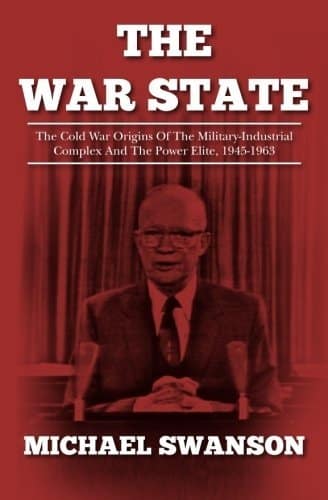
Michael Swanson is the author of The War State: The Cold War Origins Of The Military-Industrial Complex And The Power Elite, 1945-1963. This is the second interview in a series of in-depth discussions about the book.
10/18/13 Full Show
You are listening to the Scott Horton Show. 10/18/13 Full Show
10/18/13 – Amy Hagopian – The Scott Horton Show
Amy Hagopian, Associate Professor at the University of Washington's School of Public Health, discusses the Public Library of Science's (PLOS) study on mortality in Iraq from the 2003-2011 war and occupation; the results of other comparable studies done by different groups since 2007 or so; and the public's gross underestimation of the human costs of war.
10/18/13 – Barbara Slavin – The Scott Horton Show
Barbara Slavin, a journalist with Al-Monitor, discusses the centerpiece of Iran's new nuclear proposal; the concessions Iran is willing to make in exchange for seeing an "endgame" plan from the US; the unhappy hardliners on both sides; and why Iran's uranium enrichment serves little purpose other than as a bargaining chip.
Progress Report
All right, yall, welcome back to the show to the inaugural Scott Horton Show progress report! It's been an eventful year since the show and I (amicably) parted ways with Antiwar.com, so I thought I would highlight just a few of the show's important milestones, as well as preview some of the exciting projects to look for in the near future. I've conducted roughly 500 interviews in the last year, now bringing the archive to over 3,000 in the last 10 years, not including a lost Ivan Eland...
10/16/13 Full Show
You are listening to the Scott Horton Show. 10/16/13 Full Show
10/16/13 – Reza Marashi – The Scott Horton Show
Reza Marashi, Research Director for the National Iranian American Council, discusses the promising US-Iran talks that are no longer dominated by hardliners on both sides; the most cohesive Iranian political environment since the 1979 revolution; and George W. Bush's failure to make a deal 10 years ago when Iran's nuclear program was far less developed than it is now.
10/16/13 – Trevor Timm – The Scott Horton Show
Trevor Timm, co-founder and executive director of the Freedom of the Press Foundation, discusses the launch of SecureDrop, an open-source submission platform for whistleblowers; Glenn Greenwald's media venture with billionaire eBay founder Pierre Omidyar; and the bombshell revelations from NSA whistleblower Edward Snowden that haven't been revealed yet.
10/15/13 Full Show
You are listening to the Scott Horton Show. 10/15/13 Full Show
10/15/13 – Coleen Rowley – The Scott Horton Show
Former FBI agent Coleen Rowley discusses how whistleblowers check excessive government power and secrecy; NSA whistleblower Edward Snowden's Russian exile; and Senator Diane Feinstein's claim that the current NSA spying program would have prevented 9/11.
10/15/13 – Flynt Leverett – The Scott Horton Show
Flynt Leverett, professor at Penn State University's School of International Affairs, discusses the concessions and guarantees needed to make a deal on Iran's nuclear program; whether the UN Security Council's decrees supersede Iran's NPT/sovereign rights; Obama's willingness (or not) to use political capital to fight obstructionists; and the legal impediments to lifting sanctions, even if Iran capitulated to all demands.
10/14/13 Full Show
You are listening to the Scott Horton Show. 10/14/13 Full Show
10/14/13 – Philip Giraldi – The Scott Horton Show
Philip Giraldi, executive director of the Council for the National Interest, discusses CNI's fight against the Israel lobby's undue influence on US foreign policy; why a Syrian solution is not as hard as it seems; and how improved US-Iran relations would greatly reduce Middle East tensions.
10/14/13 – Rachel Levinson-Waldman – The Scott Horton Show
Rachel Levinson-Waldman, Counsel to the Brennan Center's Liberty and National Security Program, discusses what the government does with Americans' data; how the "fusion centers" established after 9/11 to fight terrorism quickly expanded their focus to all manner of criminal activity; whether public backlash can dial back the government's power; and the NSA's lies about oversight and the legality of their spying activities.